The first thing to understand about the Byzantine Empire is that nobody who lived in it called it that. The word Byzantine was a slur, more or less. It was coined long after the empire fell, by Western European scholars who wanted to distinguish the medieval Greek-speaking empire from the Roman Empire they considered the real one — the Latin-speaking, classical one centered on Rome itself. The actual citizens of Constantinople and Antioch and Thessaloniki called themselves Romaioi. Romans. Their state was Rhomania, the land of the Romans. Their Islamic neighbors called them the same thing — Bilād al-Rūm, the land of the Romans. The Seljuk Turkish state that eventually took most of Anatolia from them was called the Sultanate of Rum, because they had taken it from the Romans. The label Byzantine has stuck. A handful of modern historians want to abandon it precisely because it implies a break from Rome that the people involved did not recognize. The rest of us use it because there is no better shorthand for what we are talking about: the eastern half of the Roman Empire, which survived the fall of the western half by nearly a thousand years and which is one of the longest-running states in human history.
The Byzantine Empire — the Eastern Roman Empire — lasted from the founding of Constantinople in 330 AD to its fall to the Ottomans in 1453, surviving the collapse of the Western Roman Empire by nearly a thousand years.
Constantine Moves the Capital
There is no single date when the Byzantine Empire begins, because there was no founding moment. It is the same empire as the Roman Empire, slowly transformed by a series of decisions and pressures over a couple of centuries. If you have to pick a date, 330 AD is as good as any. That was the year Constantine the Great formally dedicated his new capital on the European shore of the Bosphorus, on the site of the old Greek colony of Byzantion. He called it New Rome, though everyone soon called it Constantinople — Constantine's City. The location was strategic in ways the old Rome had never been: at the junction of Europe and Asia, controlling sea traffic between the Black Sea and the Mediterranean, defensible by water on three sides and by walls on the fourth. Constantine had already made two other consequential decisions. He had legalized Christianity in 313, ending the persecutions and beginning the transformation of the Roman state into a Christian one. And he had stabilized the imperial currency by introducing the gold solidus — a coin so reliably maintained that it would still be circulating, essentially unchanged, seven hundred years later. The split between the eastern and western halves of the empire was already underway. Diocletian had created the Tetrarchy in the 290s, dividing administrative responsibility among four co-emperors precisely because the empire had grown too large to govern from one place. Constantine consolidated power again, but the division he had inherited proved more durable than his consolidation. After his great-grandson Theodosius I died in 395, the empire was permanently divided between his two sons — Honorius in the west, Arcadius in the east — and never reunited. The western half collapsed over the following century. The eastern half kept going.
Why the East Survived When the West Did Not
This is one of the genuinely interesting questions in late antique history, and historians have argued about it for centuries without fully resolving it. The simple answer is that the East had more money, better defenses, and luckier geography. The eastern provinces — Egypt, Syria, Anatolia, the Aegean coastlands — were the wealthier and more urbanized parts of the empire, with substantial cities, productive agriculture, and trade networks that had been generating revenue since long before Rome conquered them. The western provinces were poorer, less urbanized, more vulnerable to disruption. Constantinople itself was nearly impossible to take by force. Its triple line of Theodosian Walls, built in the early 5th century under Theodosius II's chief minister Anthemius, were the most formidable fortifications in the medieval world. They had a moat, then an outer wall, then a much higher inner wall studded with towers. Anyone attacking the city by land had to break through all three lines under fire from above the entire way. Anyone attacking by sea had to deal with the chain that could be drawn across the Golden Horn and the imperial fleet positioned to defend it. The walls held for over a thousand years. And the East had administrators. The western empire's collapse was substantially a story of barbarian warlords gradually replacing Roman civil administration in the provinces — Visigoths in Spain, Vandals in Africa, Ostrogoths in Italy, Franks in Gaul. The East had its own barbarian pressure but kept the civilian bureaucracy intact. When Attila the Hun arrived in the 440s demanding tribute, Theodosius II's officials paid it and used the time to strengthen their position. When Odoacer deposed the last western emperor in 476, the eastern emperor Zeno managed the situation by convincing Theodoric the Ostrogoth to take Italy from Odoacer rather than fight the empire directly. The East was good at this kind of work. It would remain good at it for centuries.
Justinian: The Reconquest That Almost Worked
Justinian I came to the throne in 527 and reigned for thirty-eight years. By most accountings he was the most consequential Byzantine emperor — for what he attempted, for what he achieved, and for the long shadow he cast over what came after. He inherited an empire that had stabilized after the chaos of the 5th century. He set out to do something nobody had seriously attempted since the western collapse: take back what had been lost. He sent his general Belisarius — one of the great military commanders of the entire late antique period — to Africa with a fleet in 533. The Vandal kingdom that had ruled there for a century fell within months. The Vandal king Gelimer was sent to Constantinople, given an estate, and lived out his days in quiet retirement. Africa was Roman again. Belisarius then crossed to Italy and began the much harder campaign against the Ostrogothic kingdom. It took twenty years. Rome itself changed hands several times. The fighting was brutal, and the Italian peninsula was devastated in ways that took centuries to recover from. But by 554, the Ostrogoths were broken and Italy was once again under Roman administration governed from Constantinople. Back in Constantinople, Justinian was doing other things. He commissioned the Corpus Juris Civilis — the systematic compilation of all Roman law into a coherent code — under his brilliant lawyer Tribonian. This work would become the basis of European legal tradition for the next fifteen centuries, taught in every law school in Europe from the Middle Ages onward. He rebuilt the Hagia Sophia after it was destroyed in the Nika riots of 532. The new building — designed by Anthemius of Tralles and Isidore of Miletus — was the largest enclosed space in the world for nearly a thousand years. Its dome seemed to float above the interior on light alone. People who walked into it for the first time wept. Justinian himself, on first seeing it completed, supposedly said: Solomon, I have surpassed thee. Then everything started to go wrong. In 541 the plague arrived. The Plague of Justinian — the first recorded outbreak of bubonic plague in the Mediterranean world — killed somewhere between a quarter and a half of the empire's population over the next two centuries of recurring outbreaks. The economic and military capacity of the state collapsed. The Persians under Khosrow I sacked Antioch in 540. The Italian campaign turned into a grinding war against the Ostrogothic king Totila. Justinian's advisors began to argue with each other and undermine the administration's responses. He died in 565. He had ruled longer than any emperor since Augustus. He had reconquered Africa and Italy, codified Roman law, and built the Hagia Sophia. He had also stretched the empire's resources past breaking and left it with frontiers it could not defend.
Justinian I reigned from 527 to 565 and presided over the last serious attempt to reunite the Roman Empire — reconquering North Africa from the Vandals and Italy from the Ostrogoths, codifying Roman law, and building the Hagia Sophia.
The Arab Conquests and Everything After
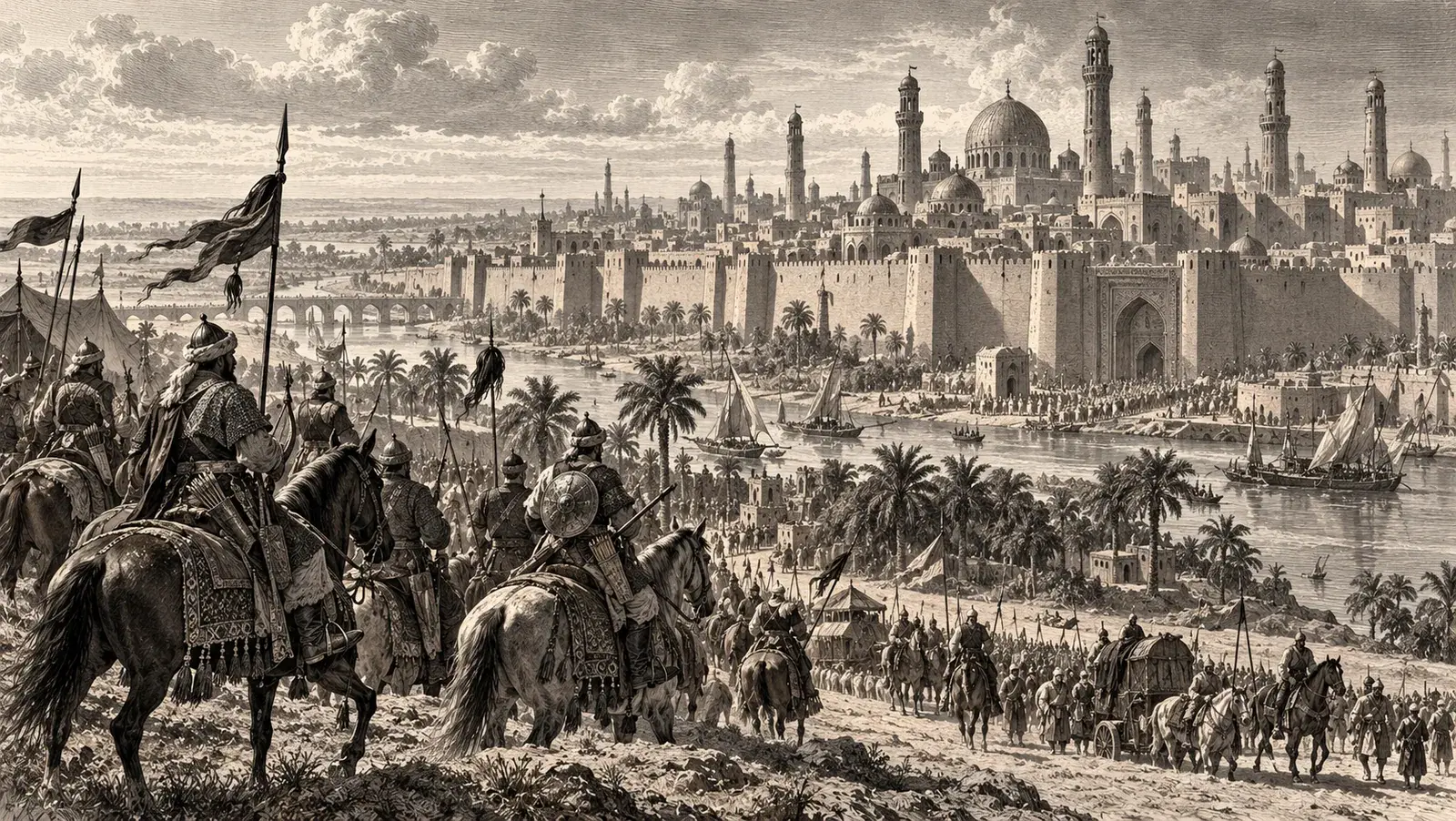
The empire's reckoning came in the 630s and 640s, and it came from a direction nobody had been watching. For most of the 7th century, Byzantine attention had been fixed on Persia. Heraclius had spent two decades fighting an apocalyptic war against the Sasanian Empire that ended in 628 with a complete Byzantine victory — Khosrow II overthrown, Persian armies destroyed, the True Cross recovered and returned to Jerusalem. It was the greatest military triumph in the empire's history since Justinian. It looked like the end of the eastern threat for a generation. Then Mohammed had been preaching in Arabia, and after his death in 632, the unified Arab tribes under the Rashidun Caliphate poured north into territory that two exhausted empires could no longer defend properly. The speed of the conquest was breathtaking. Syria fell within a few years. Egypt was lost by 642. The wealthy provinces that had been the empire's economic foundation for centuries were simply gone — Antioch, Alexandria, Damascus, Jerusalem all changed hands within a decade. The empire lost roughly three-quarters of its territory and three-quarters of its revenue in about twenty years. It should have ended there. It didn't. What saved Constantinople was a combination of the walls, the navy, Greek fire, and the fact that the Arab caliphate had its own internal problems. When the Arabs besieged the city from 674 to 678 and again in 717-718, the walls held and the imperial fleet broke the besieging forces with Greek fire — a chemical weapon whose exact composition remains uncertain even today, capable of burning on water and impossible to extinguish with anything available at the time. The 717-718 siege in particular is one of the genuinely decisive moments in European history. If Leo III had not held Constantinople that year, Arab armies would have had open passage into the Balkans and central Europe. The map of the modern world would look very different.
The Iconoclast Controversy: When the Empire Argued About Pictures
After Leo III stopped the second Arab siege of Constantinople in 718, he started a fight inside the empire that lasted for over a century. The issue was religious images. Eastern Christianity had developed an extensive tradition of icons — painted images of Christ, Mary, and the saints used in worship. By the 8th century, these images were everywhere: in churches, in private homes, carried as portable objects of devotion. The theological question was whether honoring them constituted legitimate veneration or actual idolatry. The political question was who got to decide. Leo III decided iconoclasm — the smashing of images — was the answer. So did his son Constantine V, who pressed the policy with the kind of bureaucratic systematicness that destroyed enormous amounts of figurative religious art. Mosaics were chiseled off church walls. Painted icons were burned. Monasteries that defended icons were closed and their monks scattered or killed. The reasons for the policy are still debated. Some historians point to Islamic influence — the recently triumphant Arabs forbade religious imagery, and the Byzantine military disasters might have suggested that God favored the iconoclasts. Others see it as a power struggle between the imperial government and the monasteries, which were the main producers and defenders of icons. Others read it as a genuine theological dispute that happened to align with political interests. Whatever the cause, the controversy went on for over a hundred years with one interruption. Empress Irene briefly restored icons in the 780s, then was deposed. Theophilos reimposed iconoclasm in the 820s. His widow Theodora restored the icons permanently in 843 — an event still celebrated in the Orthodox Church as the Feast of Orthodoxy. The damage was real. An enormous amount of pre-iconoclastic Byzantine art simply does not survive because the iconoclasts destroyed it. What we know about the period before 843 comes largely from archaeology and from copies and descriptions, not from the original images themselves. The Mediterranean lost most of a century of artistic production to a religious argument.
The Macedonian Renaissance
Basil I murdered his predecessor Michael III in 867 and founded a dynasty that would rule for nearly two centuries. He himself had started as an Armenian peasant boy who came to Constantinople, became a stable hand, caught the eye of the emperor, rose in court, and eventually arranged a midnight assassination. It was the kind of trajectory the empire occasionally produced. The Macedonian dynasty he founded — named for his region of origin rather than the ancient kingdom — presided over the empire's last great expansion. The two-century period from roughly 850 to 1050 is often called the Macedonian Renaissance. The economy revived. Constantinople was again the largest and wealthiest city in Europe — it remained so until overtaken by Paris in the 13th century. Population grew. Trade networks expanded. The cultural production of the period — illuminated manuscripts, ivory carvings, enamels, mosaics — represents some of the finest work the empire ever produced. Militarily, the empire took back territory. Basil II — Basil the Bulgar-Slayer — spent decades on the long campaign against the Bulgarian Empire that had been a regional rival for two centuries. He won decisively at the Battle of Kleidion in 1014, capturing 15,000 Bulgarian prisoners. According to the famous (and probably exaggerated) account, he had ninety-nine of every hundred prisoners blinded, leaving the hundredth with one eye to lead the others home. The Bulgarian Tsar Samuel reportedly died of shock when he saw what was left of his army returning. Bulgaria was annexed to the empire. Basil's reign ended in 1025 with the empire's borders extending from the Danube to the Euphrates, larger than they had been since before the Arab conquests. Then the dynasty ran out of capable male heirs. The empresses Zoe and Theodora — daughters of Constantine VIII — were the keys to power for thirty years, and the men who married them or were chosen by them held the throne. None of them was particularly competent. The military establishment was sidelined. The bureaucracy fought with itself. And the new enemies were already arriving on the frontiers.
Manzikert, 1071: The Day Anatolia Was Lost
The Seljuk Turks had been moving steadily westward from Central Asia through the 11th century. By 1071, they controlled most of Persia and were raiding into Byzantine Anatolia. Emperor Romanos IV Diogenes assembled a large army and marched east to settle the issue. The battle at Manzikert, near Lake Van in eastern Anatolia, was a disaster. The details are contested even today. There was certainly treachery involved — sections of the Byzantine army either deserted or actively betrayed the emperor in the middle of the battle. The Seljuk sultan Alp Arslan handled his cavalry brilliantly. Romanos IV himself was captured, which had not happened to a Byzantine emperor in centuries. Alp Arslan treated his captured emperor with extraordinary courtesy. He freed him after Romanos agreed to a ransom and a peace treaty. But by the time Romanos got back to Constantinople, a coup had taken place, his throne was gone, and he was blinded and exiled to a monastery, where he died shortly after. The peace treaty was therefore worthless. The Seljuks poured into Anatolia, and the political chaos in Constantinople meant nobody could organize an effective response. Within ten years, the Seljuks held most of Anatolia up to the Sea of Marmara. The territory that had been the empire's demographic and military heartland for seven centuries — the source of its soldiers, its food, its taxes — was simply gone. The empire would never fully recover from Manzikert. The dynasty that took over — the Komnenoi — managed an impressive partial restoration over the next century, but they could not undo what had happened in eastern Anatolia, and they could not bring back the Seljuk lands. The strategic position of the empire had permanently changed.
The Crusades and the Sack of 1204
Alexios I Komnenos took the throne in 1081 and inherited a state that was on the verge of dissolution. Through a combination of military skill, diplomatic intelligence, and ruthless concentration of power within his own family, he held it together. He repelled the Norman invasion under Robert Guiscard. He destroyed the Pechenegs in 1091. And he sent a message to Pope Urban II in 1095 asking for some Western mercenary help in recovering Anatolia from the Seljuks. He got the First Crusade instead. The scale of the Western response shocked him. Tens of thousands of armed Westerners arrived in Constantinople in 1096-97, expecting to march to Jerusalem rather than to provide auxiliary troops for Byzantine reconquests. Alexios managed the situation as best he could — getting the crusader leaders to swear oaths to return conquered territory to the empire, providing them with supplies and guides, helping them across the Bosphorus. Western Anatolia was recovered. Antioch was retaken. Jerusalem fell to the crusaders in 1099. The oath about returning territory was honored only partially. The Principality of Antioch became a Norman-controlled crusader state rather than a Byzantine province, beginning a century of tension between Constantinople and the western crusading powers. It got worse. The Second Crusade passed through Byzantine territory in the 1140s and the campaign's failure was blamed on Byzantine treachery, even though Emperor Manuel I had genuinely tried to support it. The Third Crusade saw Byzantine emperor Isaac II Angelos sign a secret alliance with Saladin against the German crusaders. Each crusade left the relationship more poisoned than the last. Then, in 1204, the Fourth Crusade arrived at Constantinople carrying every accumulated grievance of a century. The crusaders were supposed to be sailing to Egypt. They had taken a Venetian loan to pay for transport ships, could not repay it, and had been talked into a series of detours that ended with them attacking the Byzantine capital itself on the pretext of restoring a deposed emperor. The city fell in April 1204. What followed was three days of sack that did damage Constantinople never recovered from. The crusaders systematically looted nine centuries of accumulated wealth. The Hagia Sophia was stripped of its altar, its icons, its precious objects. A prostitute was reportedly placed on the patriarchal throne. The four bronze horses that had stood in the Hippodrome since the time of Constantine were taken to Venice, where they still stand outside St. Mark's Basilica. The crusaders divided the empire among themselves — a Latin Empire centered on Constantinople, with Greek successor states forming around the edges. The Byzantines retook Constantinople in 1261 under Michael VIII Palaiologos. But what they recovered was a husk. The economy was wrecked. The population had fled. Italian merchants — Venetians and Genoese — now controlled the trade networks. The empire was reduced to regional power status from which it would never escape.
The sack of Constantinople by the Fourth Crusade in April 1204 destroyed centuries of accumulated wealth and effectively ended Byzantine power as a major Mediterranean force. Constantinople was recaptured by the Byzantines in 1261, but the empire never recovered.
Two Centuries of Slow Death
The last two centuries of the Byzantine Empire are an exercise in managed decline. The territory shrank steadily. The economy never recovered from 1204. The Italian maritime republics took over the trade routes. The Ottomans appeared on the eastern frontier in the late 13th century and began the slow, methodical reduction of what remained. The Palaiologos dynasty produced some capable rulers, but they were managing a hopeless strategic situation. They tried diplomatic alliances. They tried negotiating church union with the Catholic West in exchange for military support — first at the Second Council of Lyon in 1274, then more substantially at the Council of Florence in 1439. The unions were repudiated at home each time. Byzantine public opinion preferred Ottoman conquest to losing Orthodox identity. The Ottomans took Adrianople in 1369 and made it their European capital. Manuel II spent his reign — 1391 to 1425 — traveling between European courts begging for help that never came. He was the first reigning Byzantine emperor to visit London, where Henry IV received him politely and provided some small sum that did not change anything. The empire was on its own. By 1450, the Byzantine Empire consisted of Constantinople itself, plus a few patches of land in the Peloponnese and around Trebizond on the Black Sea. The city's population had dropped from perhaps half a million at its peak to around fifty thousand. Whole districts were abandoned. Crops grew inside the old city walls. Mehmed II became Ottoman Sultan in 1451 at age nineteen and made the conquest of Constantinople his immediate priority.
May 29, 1453
The final siege began on April 6, 1453. It lasted fifty-three days. The walls had held against everything that history could throw at them for a thousand years. They did not hold against the cannon that Mehmed had commissioned from a Hungarian engineer named Orban. The largest piece — the Basilica — could fire a stone ball weighing over six hundred pounds. It required sixty oxen to move and could only be fired three times a day, because it overheated. It did not need to fire more often than that. Section by section, the walls began to crack and collapse under bombardment. The last Byzantine emperor was Constantine XI Palaiologos. He had perhaps seven thousand defenders, including a contingent of about two thousand Italian volunteers under the Genoese commander Giovanni Giustiniani. Outside the walls were eighty thousand Ottoman troops. On the night of May 28, Constantine attended a service at the Hagia Sophia — for the last time, as it turned out. The next morning the final assault came. Giustiniani was mortally wounded and carried from the walls. The Ottoman troops broke through near the Kerkoporta, a small gate that had been left open or unguarded. The defenders began to give way. Constantine, by every account, stripped off his imperial insignia and went into the fighting as an ordinary soldier. His body was never reliably identified. The Ottomans sacked the city for three days, according to custom. When Mehmed entered the Hagia Sophia and saw it was being looted, he struck the soldier with the flat of his sword and stopped further damage to the building. He converted it to a mosque. He renamed the city Istanbul. He sat on what had been the imperial throne and looked around at what was left of the empire of the Romans. The direct legal continuation of the Roman Empire — the state that had begun in 753 BC by the traditional founding date of Rome, that had crowned its first emperor in 27 BC, that had moved its capital to Constantinople in 330, that had survived the collapse of the western half by a thousand years, that had given the world Justinian's Code and the Hagia Sophia and Greek fire and the diplomatic protocols later European states would copy — was over. It had run for somewhere between fifteen hundred and twenty-two hundred years, depending on what you count as the start. No state in European history has come close to that.
Constantine XI was the last emperor of the Byzantine Empire. On May 29, 1453, he reportedly stripped off his imperial insignia and died fighting as an ordinary soldier when the Ottoman forces broke through the walls.
What the Byzantines Actually Gave Us
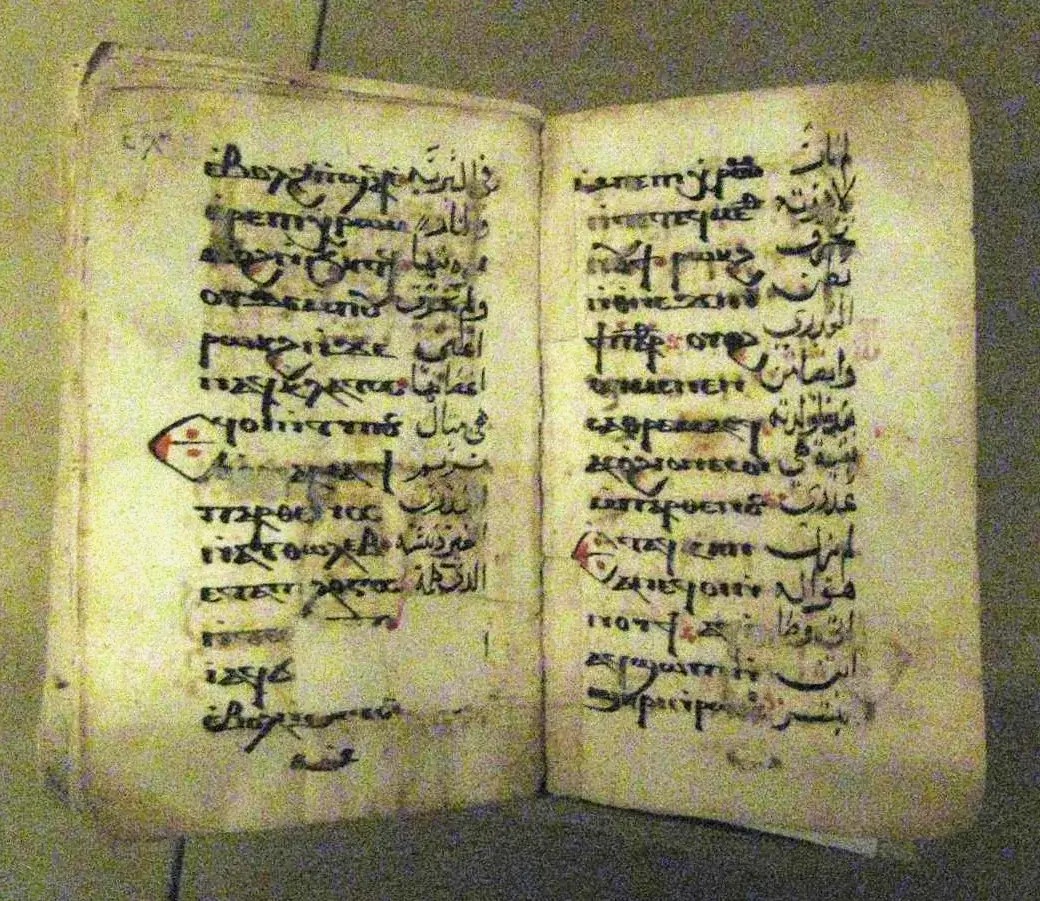
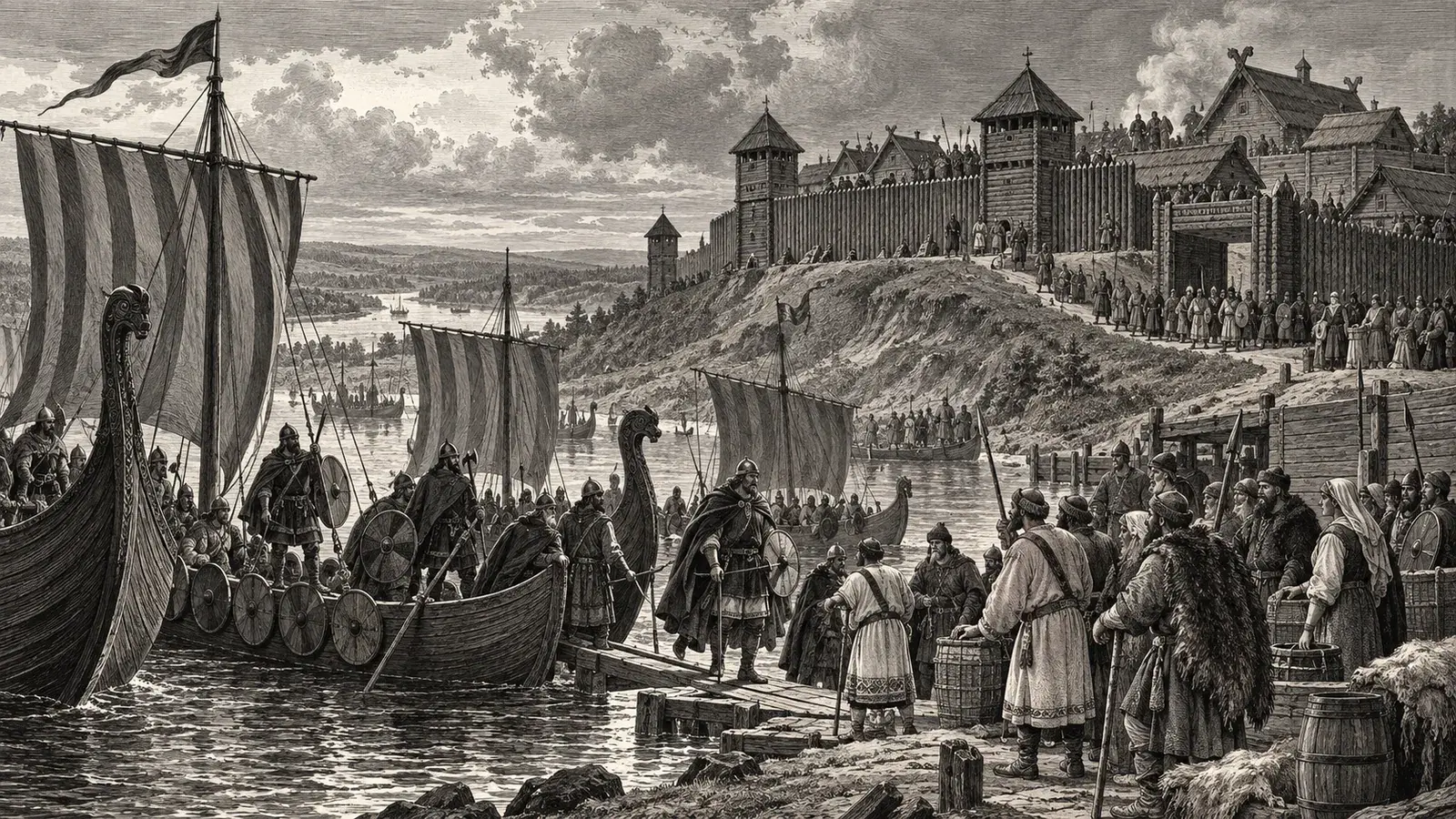
The standard Western European view of the Byzantines for a long time was that they had been decadent, treacherous, theologically obsessed, and ultimately not that important. The English historian Edward Gibbon devoted most of his Decline and Fall of the Roman Empire to the Western half and treated the Byzantine millennium as a long, slow ending of something more interesting. That view has been thoroughly discredited by modern scholarship, but it shaped how educated Europeans thought about the empire for centuries. What the Byzantines actually did is hard to overstate. They preserved the entire intellectual heritage of classical antiquity. Almost every surviving work of ancient Greek literature, philosophy, mathematics, and science — Homer, Plato, Aristotle, Euclid, Archimedes — survives because Byzantine scribes copied them, Byzantine scholars commented on them, and Byzantine refugees brought them west to Italy in the 14th and 15th centuries as the empire was dying. The Italian Renaissance was substantially fueled by Greek scholars and Greek manuscripts arriving from a collapsing Constantinople. Petrarch, Boccaccio, and their successors were reading texts that Byzantine librarians had been hand-copying for a thousand years. They codified Roman law. Justinian's Corpus Juris Civilis became the foundation of legal education in European universities from the 11th century onward and remains the basis of civil law systems across continental Europe, Latin America, and substantial parts of Asia and Africa. The legal terminology you encounter in any modern court draws ultimately on the framework Tribonian compiled in Constantinople in the 530s. They shielded Europe from the east. The Byzantine military held the line against Persians, Arabs, Bulgars, Avars, Pechenegs, and Seljuks for centuries before each of those threats reached the rest of Europe in diminished form, if at all. The two great Arab sieges of Constantinople — 674-678 and 717-718 — almost certainly prevented the Arab caliphate from extending its conquests into Eastern and Central Europe. Western Europe got to develop into its medieval form partly because the Byzantines were taking the punches in the east. They shaped Eastern European Christianity. The conversion of the Slavs and the Russians to Orthodox Christianity in the 9th and 10th centuries was a Byzantine project, executed by Byzantine missionaries — Cyril and Methodius foremost among them. The Cyrillic alphabet they developed for the Slavic languages is named for Cyril. The cultural and religious identity of Russia, Bulgaria, Serbia, Romania, and several other modern nations descends directly from Byzantine missionary work. When the Russian rulers later claimed Moscow as the Third Rome — after Rome itself and Constantinople — they were explicitly claiming the Byzantine inheritance. And they kept being Roman, for a thousand years after anyone in the West would have recognized them as such, with their Greek and their icons and their elaborate court protocols and their stubborn insistence that they were the same state that Augustus had founded. They were not wrong about that, exactly. They were just the only ones still claiming it.