Empires do not usually announce themselves at birth. In 1299, on the western edge of Anatolia where Byzantine territory met the broken remnants of the Seljuk world, a tribal leader named Osman won some battles and started gathering followers. His people were Turkish tribesmen and Byzantine renegades, some Muslim, some not. There was nothing about the operation that suggested he was founding anything that would still matter six hundred years later. He was just another local chief in a region full of them. The Ottoman Empire that descended from him would rule across three continents, take Constantinople and end the Byzantine Empire, push to the walls of Vienna twice, hold Mecca and Medina and Jerusalem and Baghdad and Algiers and Cairo, and survive long enough that its last sultan rode away from Istanbul in a British warship in 1922 — a direct male-line descendant of Osman I, still bearing the family name that traced back to the tribal chief who started winning battles on the Sakarya River. No European royal house lasted that long without a male-line break. The Habsburgs ran out of legitimate sons in 1740. The Ottomans did not.
At its peak in the late 16th century, the Ottoman Empire covered roughly 2.27 million square kilometers — from the Hungarian plains to Yemen, from Algeria to the western Caucasus. It would remain a major world power for over six hundred years.
Osman and the Frontier That Made an Empire
The Anatolia of Osman's youth was a region in fragments. The Sultanate of Rum — the last great Turkish power in the area — had been broken by the Mongols half a century earlier. What replaced it was a patchwork of small Turkish principalities called beyliks, each ruled by a chief, each looking to expand at the expense of its neighbors and what was left of Byzantine territory. Osman's beylik sat on the Bithynian frontier with the Byzantine Empire. That position mattered. Frontiers attract a particular kind of person — restless, mobile, ambitious, willing to take risks. Osman's earliest followers were a mix you would not have found in the more settled interior: Turkish tribal groups, Byzantine military deserters and renegades, men of every religion or none. The conventional 20th-century explanation called them holy warriors fighting for Islam against the Christian Byzantines. Modern historians no longer take that idea seriously. The early Ottoman state was a predatory confederacy operating for booty and slaves, with religion playing a much smaller role in motivation than it would later. Islam became central to Ottoman identity over generations, not at the start. In 1302, Osman defeated a Byzantine force at Bapheus. His reputation grew. His son Orhan took the city of Bursa in 1326 and made it the new capital. Within a generation, what had been one small beylik among many had begun pulling the others into its orbit and grinding away at Byzantine territory in Anatolia and across the straits in the Balkans.
Black Death, Slave Raiding, and the Push Into Europe
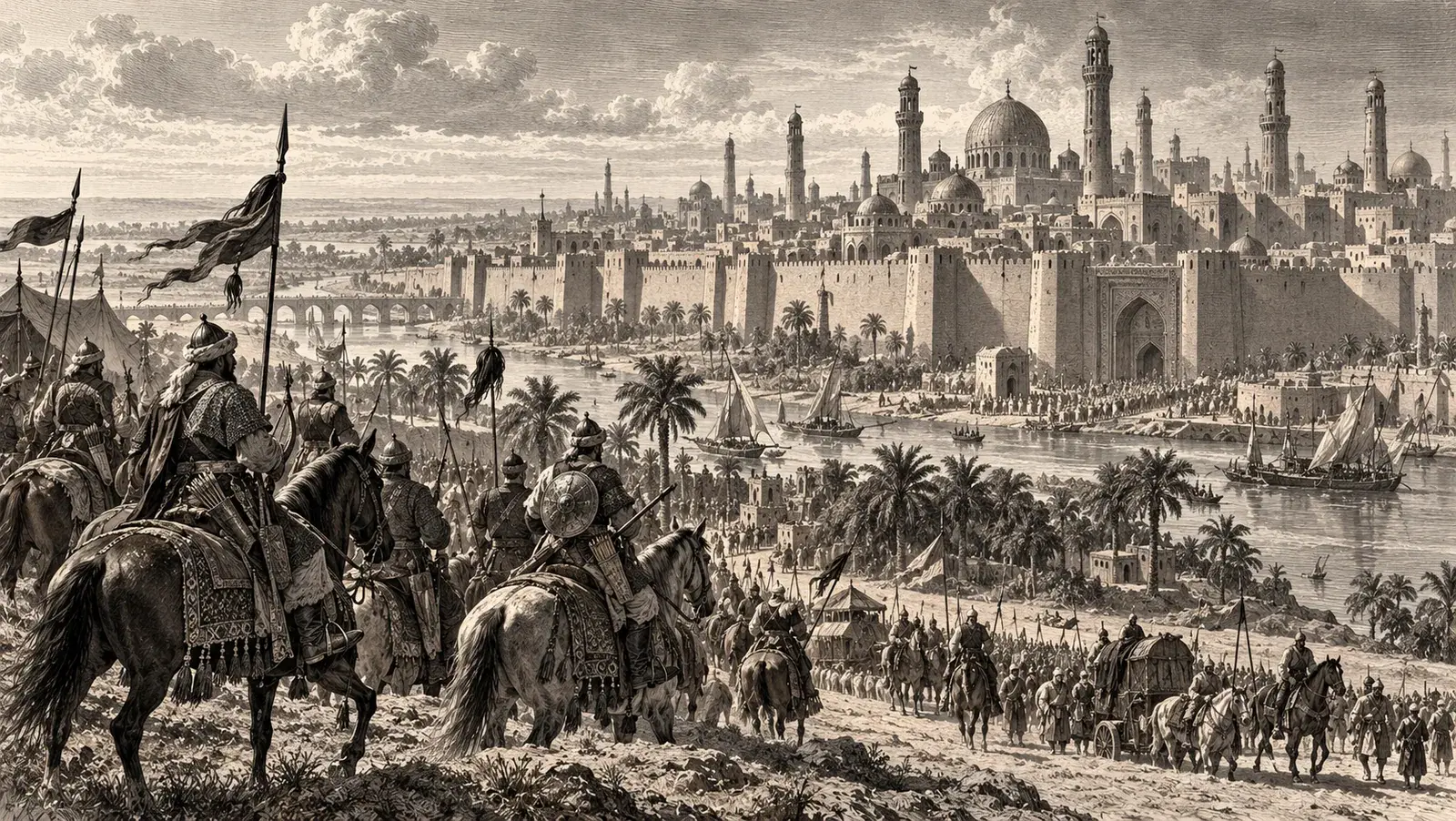
Two grim factors made the 14th-century Ottoman expansion possible at the speed it happened. The first was the Black Death. The plague struck Byzantine territories in the 1340s and reduced their population and military capacity catastrophically. Cities lost half their inhabitants. Field armies could not be assembled. Defensive lines that had held for centuries crumbled because there were not enough men left to hold them. The Ottomans, whose own losses were severe but whose tribal mobility helped them absorb shocks differently, pushed into the demographic vacuum. The second was slave raiding. Modern Ottoman historians have re-described the early conquest period as the akıncı phase — meaning the era of light cavalry raiders who spent eight to thirteen decades systematically destroying, capturing, and enslaving across the Balkans before formal administrative integration followed. The economic engine of Ottoman expansion was not just plunder. It was the slave trade. Ottoman armies moved through Bulgaria, Macedonia, Serbia, taking territory and taking people. The captured population fed the empire's slave markets and its institutions for generations. Key battles in the European push: the victory at Kosovo in 1389 effectively ended Serbian independence. Nicopolis in 1396 — sometimes called the last great crusade of the Middle Ages — saw a combined European force from Hungary, France, Wallachia, and elsewhere try to push the Ottomans back. They failed. The Ottomans took Thessaloniki from the Venetians in 1387 and sacked it. By 1400, Ottoman power was firmly established on both sides of the Bosphorus. Constantinople — the great prize, the city Romans had built and Byzantines had defended for over a thousand years — sat surrounded.
Timur Almost Kills the Whole Project
Then in 1402, the entire Ottoman enterprise nearly ended. Timur — the Turco-Mongol conqueror who had assembled the most terrifying army of his age in Central Asia — moved into Anatolia from the east. At the Battle of Ankara, he destroyed the Ottoman army and captured Sultan Bayezid I, who died in captivity not long after. What followed was an eleven-year civil war among Bayezid's sons over the succession. Any other dynasty would have ended there. The Ottomans, for reasons that historians still debate, held together. Mehmed I emerged as the sole sultan in 1413 and rebuilt what had been broken. His grandson Mehmed II — born in 1432, raised on the conviction that taking Constantinople was his life's purpose — finished what Osman had started.
On May 29, 1453, after a siege of fifty-three days, Mehmed II's army broke through the walls of Constantinople. The last Byzantine emperor died fighting in the streets. The city Romans had built became the capital of an Islamic empire.
May 29, 1453: The Day Rome Finally Died
Mehmed II was twenty-one years old when his army surrounded Constantinople in April 1453. The siege lasted fifty-three days. The walls had been the most formidable defensive system in the medieval world for over a thousand years. They had stopped Avars, Bulgars, Arabs, Russians, and assorted crusaders. They were the reason Constantinople had survived so long after the western Roman Empire collapsed. By 1453, the empire that defended them had shrunk to little more than the city itself plus a few patches of Greek territory, and the defenders numbered around seven thousand against an Ottoman army of perhaps eighty thousand. Mehmed had also brought something the walls had never faced before: a massive cannon, designed by a Hungarian engineer named Orban who had originally offered his services to the Byzantines and switched sides when they could not pay him. The cannon required sixty oxen to move and could fire a stone ball weighing over six hundred pounds. The walls were not built to absorb that kind of impact. On May 29, the final assault came. The defenders held the inner walls until almost dawn. The last Byzantine emperor, Constantine XI, stripped off his imperial insignia and went into the fighting as an ordinary soldier. His body was never reliably identified. The Ottomans poured through the breaches, sacked the city for three days as was customary, and Mehmed rode through the streets to the Hagia Sophia, where he prayed at what had been for nine hundred years the greatest church in Christendom. The Hagia Sophia became a mosque. The city was renamed Istanbul. The Byzantine Empire, which had been the legal continuation of Rome itself, had finally ended.
Selim I and the Conquest of the Islamic Heartland
The next great expansion came under Selim I — Selim the Grim, by his nickname — who ruled from 1512 to 1520 and effectively doubled the size of the empire in eight years. He went east first. The Safavid Empire of Persia under Shah Ismail was the new Shia power threatening the Sunni Ottomans, both as a religious rival and as a political competitor for influence over the Turkish-speaking peoples between them. Selim massacred forty thousand Anatolian Alevis at home — Shia Muslims he considered a fifth column for the Safavids — and then marched east. At Chaldiran in 1514, he defeated Shah Ismail and broke Safavid power in eastern Anatolia. Then he turned south against the Mamluk Sultanate of Egypt. The Mamluks had ruled Egypt and Syria for over two and a half centuries — a military caste of slave-soldiers turned rulers, holders of the holy cities of Mecca and Medina, hosts of the symbolic Abbasid Caliph in Cairo. In two campaigns in 1516 and 1517, Selim's army destroyed the Mamluk forces, took Damascus, took Cairo, took control of Egypt and the Levant and Hejaz. With Mecca and Medina now under Ottoman control, Selim claimed the title of Caliph — the politico-religious leader of the global Muslim community. The Caliphate had been a largely symbolic office for centuries, but now it sat with the Ottoman dynasty, and would remain there until the Republic of Turkey abolished it in 1924. Selim's son Suleiman would inherit an empire that was no longer just one power among many in the Mediterranean world. It was the dominant Islamic power on earth.
Suleiman the Magnificent: The Empire at Its Height
Suleiman the Magnificent ruled for forty-six years, from 1520 to 1566. By the end of his reign, the Ottoman Empire covered roughly 877,888 square miles across three continents and was the dominant power in the Mediterranean and a major player in European politics in a way no Islamic power had been since the Arab caliphates of the early Middle Ages. He took Belgrade in 1521. He destroyed the Kingdom of Hungary at the Battle of Mohács in 1526 — the Hungarian king Louis II died fleeing the battlefield, the army was annihilated, and Hungary effectively ceased to exist as an independent state. He laid siege to Vienna in 1529 and failed to take it, but the failure was largely about logistics: Vienna sat at the limit of how far an Ottoman army could march in a single campaigning season. He took Baghdad from the Safavids in 1535 and added Mesopotamia to the empire. His admiral Hayreddin Barbarossa — a former corsair who became the most feared naval commander in the Mediterranean — defeated the combined fleets of Spain, Venice, and the Papal States at Preveza in 1538 and made the Ottomans the dominant Mediterranean naval power for a generation. France, locked in its own conflict with the Habsburgs, allied with the Ottomans against Catholic Europe in a partnership that scandalized contemporaries and worked for both sides. French and Ottoman fleets jointly captured Nice in 1543. At home, Suleiman's reign was the cultural and administrative high point of the empire. The architect Mimar Sinan designed the Süleymaniye Mosque and dozens of other monumental buildings that still define Istanbul's skyline. The legal code was systematized in ways that earned Suleiman his Turkish nickname, Kanuni — the Lawgiver. The empire's economy grew, its institutions matured, and its bureaucracy became one of the most sophisticated in the world. He died in 1566 in his tent during the siege of Szigetvár in Hungary. His Grand Vizier kept the death secret for forty-eight days, propping the dead Sultan up to maintain the army's morale, while the news traveled back to Constantinople and the succession was secured.
Suleiman the Magnificent reigned for forty-six years and presided over the cultural, legal, military, and political peak of the Ottoman Empire — earning him the Turkish nickname Kanuni, the Lawgiver.
How the Empire Actually Worked
The Ottoman Empire ruled an enormously diverse population — Turks, Arabs, Greeks, Armenians, Slavs, Kurds, Jews, Circassians, Bosnians, and many others speaking dozens of languages and practicing several religions — and it did so for centuries without the kind of constant rebellion that should have torn the system apart. The central institution that made this work was the millet system. Each major religious community — Greek Orthodox, Armenian Apostolic, Jewish, and others — was organized as a millet under its own religious leadership. The Ecumenical Patriarch of Constantinople governed the Orthodox millet. The Chief Rabbi governed the Jewish one. Each community managed its own internal legal affairs, taxes, schools, and religious practice, subject only to overall loyalty to the sultan and payment of the jizya tax on non-Muslims. This was not equality. Non-Muslims paid higher taxes, could not bear arms, could not have their houses built taller than Muslim ones, and operated under various other restrictions. But it was tolerance of a kind that was rare in the early modern world. Jews fleeing the Spanish Inquisition in 1492 settled in large numbers in Salonica, Istanbul, and other Ottoman cities, where they were welcomed by Sultan Bayezid II — who reportedly remarked that the King of Spain was a fool for impoverishing his own country by expelling such valuable subjects. The military backbone of the empire for centuries was the Janissary corps — an elite infantry force originally recruited through the devshirme, a system in which Christian boys from the Balkans were taken from their families, converted to Islam, trained intensively in military and administrative work, and made personal servants of the Sultan. From a modern perspective the devshirme falls within the definition of genocide; from a 15th-century perspective it was how the empire built the most professional army in Europe at a time when most western armies were still feudal levies. The Janissaries were also recruited into the palace school, the Enderûn — about three thousand boys a year, trained for the highest administrative positions. The Grand Vizier, the most powerful office in the empire after the Sultan himself, was often a devshirme recruit. Bosnia, in particular, produced extraordinary numbers of Grand Viziers. A Bosnian boy taken from his family at age ten could rise to govern an empire of thirty million people. There was no equivalent ladder in any other contemporary state.
Vienna, 1683: The Tide Turns
For most of the 17th century, the Ottoman Empire was still functioning effectively. The older historical view that the empire began declining the moment Suleiman died has been thoroughly rejected by modern scholarship. The Köprülü family of grand viziers, who effectively ran the empire from 1656 to 1703, won back territory, conquered Crete from the Venetians in 1669, and expanded into southern Ukraine. Then came 1683. Grand Vizier Kara Mustafa Pasha — ambitious, energetic, overconfident — led an enormous army to attempt a second siege of Vienna. The first had failed in 1529. This one was meant to succeed. The siege lasted two months. The Viennese defenders held. On September 12, 1683, a relief army under King John III Sobieski of Poland arrived at the Kahlenberg heights overlooking the city. The famous Polish winged hussars — heavy cavalry whose feathered wings reportedly made an unearthly sound when they charged — led the attack that broke the Ottoman lines. Kara Mustafa was strangled by order of the Sultan for the disaster. More importantly, the failure at Vienna marked the beginning of a long Ottoman retreat from central Europe that would continue for the next two centuries. The Treaty of Karlowitz in 1699 forced the Ottomans to cede Hungary, Transylvania, and most of Croatia and Slovenia to the Habsburgs. For the first time in the empire's history, it had made permanent territorial concessions in Europe. This was not yet collapse. The 18th century saw an Ottoman recovery, with continued cultural sophistication and significant economic growth. But the dynamic had shifted. Europe was now the offensive power and the Ottomans were on the defensive — first in the Balkans, then everywhere.
On September 12, 1683, King John III Sobieski's Polish-led relief force defeated Kara Mustafa Pasha's besieging Ottoman army at Vienna — a defeat that marked the beginning of two centuries of Ottoman territorial retreat.
The Sick Man of Europe
By the mid-19th century, the Ottoman Empire had acquired a nickname that summed up its situation: the Sick Man of Europe. It was used by Tsar Nicholas I of Russia in conversations with British diplomats about how to divide the inevitable corpse. The sickness was real. Russia had been pushing south for over a century, taking the Crimea in 1783 and pressing on the Black Sea coasts. The Balkans were producing nationalist movements one after another. Greece won independence in 1829 after an eight-year war that drew in the navies of Britain, France, and Russia. Serbia became autonomous in 1830 and independent later in the century. Bulgaria, Romania, Montenegro — each broke away in turn. Muhammad Ali of Egypt nearly took down the empire from inside it. He was the Albanian commander the Sultan had sent to put down the Wahhabi revolt in Arabia in the 1810s, succeeded brilliantly, and then turned his French-trained army against the Sultan himself in 1831. His son Ibrahim Pasha drove an Ottoman army back across Anatolia to within two hundred miles of Constantinople. Only Russian intervention saved the Sultan. The Egyptian governor was the man who almost became Sultan. The response was the Tanzimat — the great reform period from 1839 to 1876. Western-style laws were introduced. Religious courts were supplemented by secular ones. The military was modernized along French lines. Railways and telegraphs were built. Samuel Morse received an Ottoman patent for the telegraph in 1847, personally tested by Sultan Abdülmecid. A constitution was promulgated in 1876. The first Ottoman parliament met. It lasted two years before Sultan Abdul Hamid II suspended it and ruled autocratically for the next thirty years. Under Abdul Hamid, the empire experienced something contradictory: continued modernization in infrastructure and education combined with increasingly paranoid authoritarianism. He refused to let his army conduct training exercises in case they were cover for a coup. He massacred between 100,000 and 300,000 Armenians in the Hamidian massacres of 1894-96. He kept the empire together by playing the European powers off against each other and surviving on debts to European banks.
The Young Turks and the Last Sultan
In 1908 a movement of military officers, intellectuals, and reformers known as the Young Turks forced Abdul Hamid to restore the constitution. The Committee of Union and Progress — CUP for short — took effective control of the empire over the following years. The hope of 1908 lasted barely a few years before reality caught up with it. Italy attacked and took Libya in 1911. The Balkan Wars of 1912-13 saw Bulgaria, Serbia, Greece, and Montenegro combine forces and drive Ottoman power out of almost all of European Turkey except a small strip around Istanbul. The empire that had taken centuries to build in Europe was lost in a year. The CUP became increasingly radical, increasingly nationalist, and after a coup in 1913 it was effectively a dictatorship of three men: Enver Pasha, Talat Pasha, and Djemal Pasha. They entered World War I on the side of Germany and Austria-Hungary in October 1914 by ordering a surprise attack on Russian ships in the Black Sea. What followed was the worst chapter in Ottoman history. The military defeats were severe but not unusual — Gallipoli, the Mesopotamian campaign, the Caucasus front, the Arab Revolt that started in Mecca in 1916 with British backing. What set the period apart was the systematic destruction of the empire's Christian minorities. The Armenian Genocide began in 1915. The CUP government ordered the deportation of the entire Armenian population of Anatolia, ostensibly for security reasons after defeats on the Caucasus front. The deportation was carried out as mass killing. Adult Armenian men were taken from their communities and shot or worked to death. Women, children, and the elderly were marched into the Syrian desert without food or water and died on the way. Estimates of the death toll range from six hundred thousand to over a million and a half. Similar campaigns of ethnic cleansing were conducted against the Empire's Assyrian and Greek populations during the same period. The empire lost the war. The Armistice of Mudros was signed on October 30, 1918. Allied troops occupied Istanbul. The Treaty of Sèvres in 1920 proposed to partition Anatolia itself among Greeks, Armenians, Kurds, French, Italians, and British zones of influence.
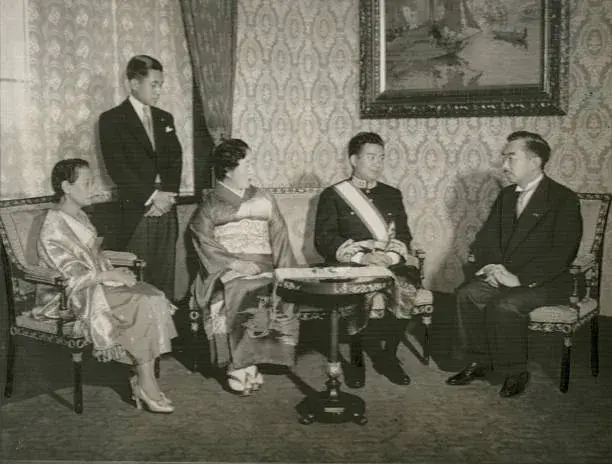
Mehmed VI left Istanbul aboard a British warship on November 17, 1922, ending six and a half centuries of unbroken male-line Ottoman rule. The sultanate had been abolished sixteen days earlier by the Turkish Grand National Assembly.
Atatürk and the End
The Treaty of Sèvres was never implemented because the Turkish nation refused it. Mustafa Kemal — a brilliant military officer who had been the only commander to win major victories for the Ottomans in the war, holding the Gallipoli peninsula against the British landings in 1915 — organized resistance in central Anatolia. He set up a rival government in Ankara, fought a four-year war against Greek invasion in the west, Armenian and French forces in the east, and ultimately against the Sultan's own government in Istanbul. He won. The Greek army was driven into the Aegean in 1922. The Treaty of Lausanne in 1923 replaced Sèvres and recognized Turkish sovereignty over Anatolia and Eastern Thrace. The Sultanate was abolished by the Turkish Grand National Assembly on November 1, 1922. Sixteen days later, the last Sultan, Mehmed VI, left Istanbul aboard a British warship. The Republic of Turkey was declared on October 29, 1923, with Ankara as its new capital. Mustafa Kemal — soon given the surname Atatürk, Father of the Turks — became its first president and proceeded to dismantle the institutional and cultural legacy of the empire with deliberate, accelerated thoroughness. The Caliphate was abolished on March 3, 1924. The last Caliph, Abdülmecid II, was exiled to France. The religious schools were closed. The Arabic script was replaced with a Latin alphabet. The ulama lost their power. Women got some political rights. The state was secularized along French Republican lines. Osman I, the tribal chief on the Bithynian frontier in 1299, could not have recognized what his line had become. But the line itself — the male-line descent from him to Mehmed VI — remained intact across six hundred and twenty-three years. No European royal family came close.
What the Ottomans Left Behind
The territorial inheritance is the most obvious legacy. The modern borders of Turkey, Iraq, Syria, Lebanon, Jordan, Israel, Palestine, Saudi Arabia, Egypt, Libya, parts of the Balkans and the Caucasus — all of these were shaped, often arbitrarily, by the partitioning of Ottoman territory after 1918. The political instabilities of the modern Middle East are not unrelated to how that partitioning was done. The cultural legacy is everywhere. Ottoman architecture defines the skylines of Istanbul, Sarajevo, Skopje, Damascus. Ottoman cuisine is the basis for what is now described as Turkish, Greek, Lebanese, Balkan, and Levantine cooking. The traditions of carpet weaving, Iznik tiles, miniature painting, and calligraphy continue. Ottoman classical music shaped what came after it across an enormous geography. The institutional legacy is more complicated. The millet system of confessional autonomy has clear echoes in modern Lebanese politics. The development of Ottoman law influenced legal systems across the post-empire region. The Janissary corps was an early experiment in professional standing armies that pre-figured later European developments. And the dynastic record is unique in world history. Six hundred and twenty-three years of unbroken male-line rule by one family is a fact that does not have a comparable parallel in the historical record. The Habsburgs came close and ran out of sons. Various Chinese dynasties lasted longer in terms of years but never as a single uninterrupted male line. The House of Osman did something demographically extraordinary, and it survived in the male line until the Republic of Turkey told it to leave.