The Kappel Wars were two armed conflicts between Protestants and Catholics in Reformation-era Switzerland. The first ended with shared bread and milk in 1529. The second, in 1531, ended with 500 dead — including Huldrych Zwingli, the man who pushed for both. This is the story of how a reform movement nearly destroyed itself, and how one quiet theologian rebuilt it.
Two armies met near the Swiss village of Kappel am Albis in the summer of 1529, and nobody fired a shot. One side was Protestant. The other was Catholic. Both had marched out ready to fight. But instead of a battle, soldiers from both camps walked up to the dividing line, mixed milk and bread in a pot, and shared a meal. That moment — now called the Milk Soup of Kappel — is the best starting point for understanding the Wars of Kappel. These were two armed conflicts that grew out of the Swiss Reformation. The first one, in 1529, ended before a single soldier died. The second, in 1531, did not. Five hundred Protestants were killed at the Battle of Kappel, including the man who had pushed hardest for both wars: the reformer Huldrych Zwingli. And the church movement he had built very nearly collapsed with him.
A Priest Who Started Asking Questions
Zwingli was born on January 1, 1484, in a small Swiss mountain village. He became a Catholic priest in 1506 and, for a while, did what Catholic priests did — ran services, followed the approved liturgy, answered to the Church in Rome. Then things started shifting. In 1513, he traveled with soldiers from his parish as their chaplain on a military campaign. Swiss men were routinely hired out as mercenaries to fight other countries' wars, and watching that system up close changed him. He came back deeply opposed to the whole thing. Around the same time, he started reading the works of the scholar Erasmus, who was asking uncomfortable questions about corruption inside the Church. By 1519, Zwingli had become the head priest at the Grossmünster — the Great Church — in Zürich. On his first Sunday there, he scrapped the standard order of service and started reading the Gospel of Matthew straight through, verse by verse, explaining what it meant as he went. People came back the next week. And the week after. The city council noticed. Things accelerated fast. In 1522, Zwingli publicly broke the Lent fasting rules and argued there was no biblical basis for them at all. The Church in Rome demanded the city fire him. Zürich held a public debate instead. At the First Disputation of 1523, Zwingli defended his 67 Articles of reform against Church representatives — and he won so completely that the city council walked away on his side. From there, the changes came hard and fast. His friend Leo Jud preached against religious statues and icons. Supporters went through Zürich's churches pulling down stone figures and knocking out stained glass windows that had been there for generations. The young preacher Heinrich Bullinger heard both of them and started doing the same thing in his own municipality. Church traditions that had stood for centuries were gone in months.
Two Sides, One Country
Switzerland in the 1520s wasn't the neat, unified country you picture today. It was a loose grouping of 13 mostly independent regions called cantons, each running its own affairs. Some were warming to Zwingli's ideas. Others weren't moving an inch. For the people in those Catholic cantons, Zwingli's movement wasn't just bad theology — it was a spiritual threat that went bone-deep. The Church had taught for centuries that choosing the wrong faith put your soul at risk of eternal punishment. That wasn't abstract. People believed it the way you believe fire is hot. Rejecting Zwingli felt like survival. But faith wasn't the only thing on the line. For generations, the Church had organized everyday life across Switzerland — how births, deaths, and marriages were marked, what happened on holy days, who handled charity and community disputes. Tearing all that out meant rebuilding from nothing, and a lot of people just didn't want to, whatever they personally thought about theology. By 1528, the powerful canton of Bern had flipped Protestant. That changed the balance. Protestant cantons started forming a political bloc called the Christian Civic Union. Zwingli pushed it hard toward aggressive expansion — he believed Switzerland should be entirely Protestant, and he wasn't shy about saying force could be the way to get there. The Catholic cantons responded. They formed their own alliance, the Christian Alliance, and signed a defense treaty with Austria. Now both sides had structure, had allies, and had leaders who believed the other side was catastrophically wrong about something that mattered far more than politics.
The War That Didn't Happen — Yet
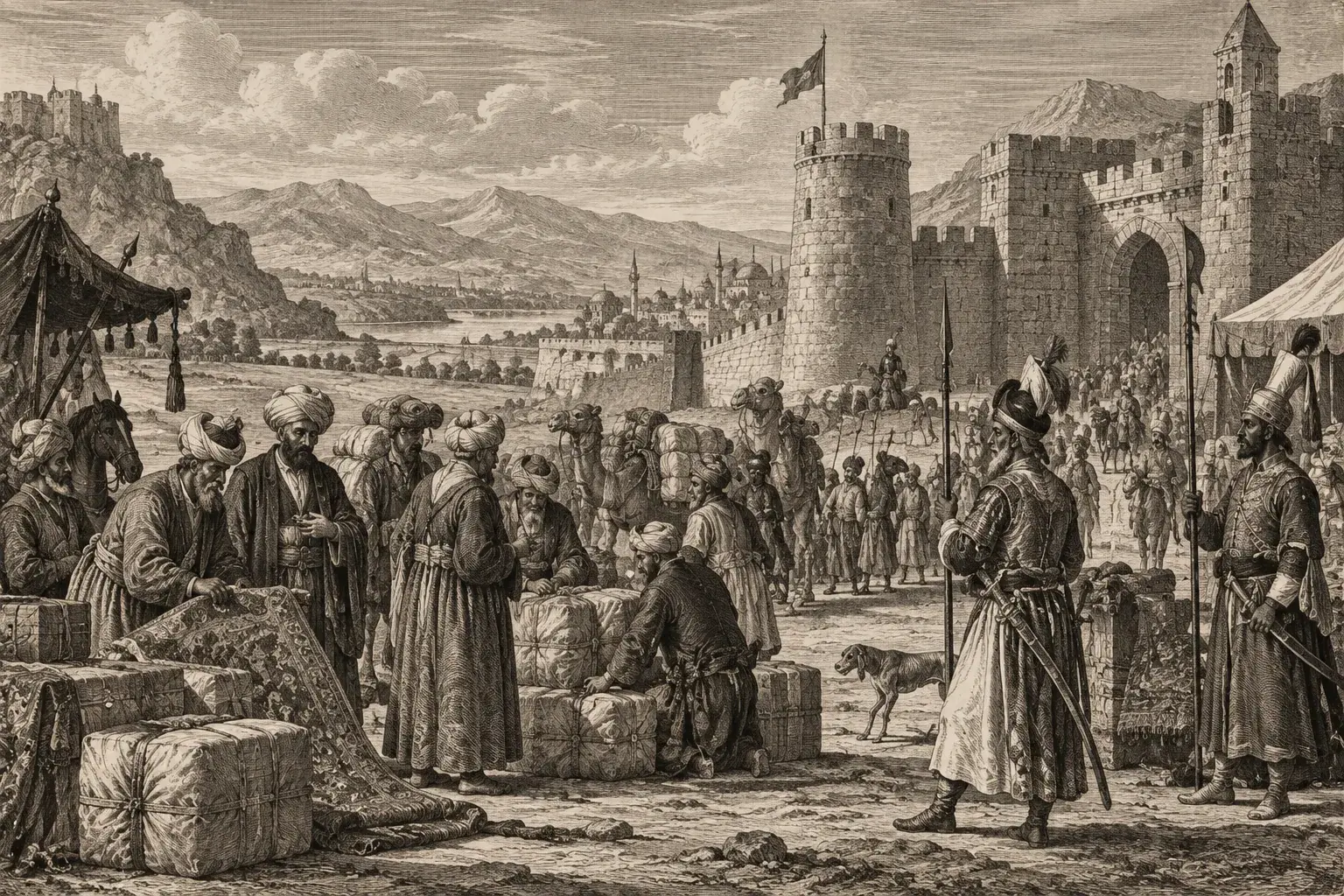
The first real crisis broke out in 1529. A Protestant preacher was arrested and executed as a heretic in the Catholic canton of Schwyz. Zwingli, who had once been a committed pacifist, called it the moment to act. He pushed Zürich to mobilize, and the city marched troops toward Kappel am Albis. The Catholic cantons came out to meet them, but Austria hadn't sent the soldiers it had promised. Both armies ended up on opposite sides of a border, watching each other. Then a delegation from Bern arrived to negotiate. The armies waited. And while they waited — according to the Catholic playwright Johannes Salat, who was actually there that day — soldiers from both sides started talking across the line. The Catholics had milk. The Protestants had bread. Somebody made a pot of soup, and they shared it. Bullinger wasn't present, but he wrote about it years later. His account turned the milk soup into a symbol of what peaceful coexistence between the two faiths could look like. Whether it happened exactly as he described it, something like it did — enough soldiers from both camps were willing to share food that the story had real roots. A peace deal was signed on June 26, 1529. The Catholic cantons gave up their Austrian alliance and agreed to let Protestant preachers work in shared territories. Majority voting would settle the religion of shared communities. Zwingli got most of what he wanted on paper. But he didn't feel like he'd won. He thought the terms were too easy on the Catholics and started pushing almost immediately for another confrontation.
The quiet village near Zürich that gave its name to two wars. In 1529, soldiers from both sides reportedly stopped here to share a meal. In 1531, there was no such pause.
The Blockade That Made Everything Worse
Two years of tense peace followed the First Kappel War. Zwingli kept pushing for military action. His Protestant allies kept saying no. So in May 1531, they settled on something in between: Zürich cut off supplies of grain and salt to the five Catholic cantons. The logic was simple enough. No food, more suffering, eventually they'd give in and accept Protestant preachers. Zwingli sold it as pressure rather than war. The Catholic cantons didn't see it that way. From where they stood, their neighbors were trying to starve them for practicing a religion their families had followed for generations. Supplies got through by other routes anyway — the blockade was never airtight — so it wasn't even working. But it was enough. Being blockaded feels a lot like being attacked, even when nobody calls it that. By October 1531, the five Catholic cantons had made their decision. They weren't going to wait around and see what Zürich tried next.
A Battle Over in Less Than an Hour
Reports of a large Catholic army moving toward Zürich reached the city in early October 1531. The council heard the news and didn't act on it fast enough. When Zürich finally scrambled to get organized, it was almost too late. On October 11, 1531, a Catholic force of roughly 8,000 men reached Kappel am Albis. The Protestant force waiting for them was around 2,000 strong. The other Protestant cantons — Bern included — refused to send help. They had decided this was Zürich's problem. The battle lasted less than an hour. Five hundred Protestants died. Zwingli was among them. He had gone along as the army's chaplain and ended up in the thick of the fighting. He was wounded and then killed by a Catholic soldier. Afterward, his body was put on trial for heresy — the physical body, not a living person, which tells you something about the mood that day — found guilty, cut into pieces, and burned. The ashes were mixed with pig offal so that nothing could be saved as a religious relic. On October 24, Catholic forces attacked again and beat Zürich a second time. It was done.
The Catholic forces caught Zürich badly unprepared. The battle lasted under an hour. Huldrych Zwingli died on the field, and the damage to the Reformation lasted years.
Peace Terms Nobody Expected
The peace treaty signed on November 20, 1531 surprised a lot of people. Given how badly Zürich had lost, most expected harsh terms from the victors. The Second Peace of Kappel wasn't harsh. The Catholic cantons got to stay Catholic — no Protestant preachers would be forced on them. But Protestant cantons got to stay Protestant too. Each canton would choose its own religion. Nobody would be forced to convert. That sounds basic now. At the time, it wasn't. Europe had been operating for decades on the assumption that a territory should have one religion, enforced from the top if necessary. The Second Peace of Kappel said something different: two versions of Christianity could share a political space without one side wiping out the other. That principle slowly spread. The Peace of Augsburg in 1555 applied similar logic to the Holy Roman Empire. What came out of a small Swiss village in 1531 fed into the long, grinding shift toward religious coexistence that Europe would spend the next century working through. In Zürich, though, nobody felt like they'd contributed something to history. The city had lost 500 men, its main political alliances, and its most prominent preacher. People blamed Zwingli squarely. He had pushed for the blockade. He had pushed for military action long before that. He had pushed until something broke, and now 500 people were dead — including Zwingli himself.
The Man Who Kept It Together
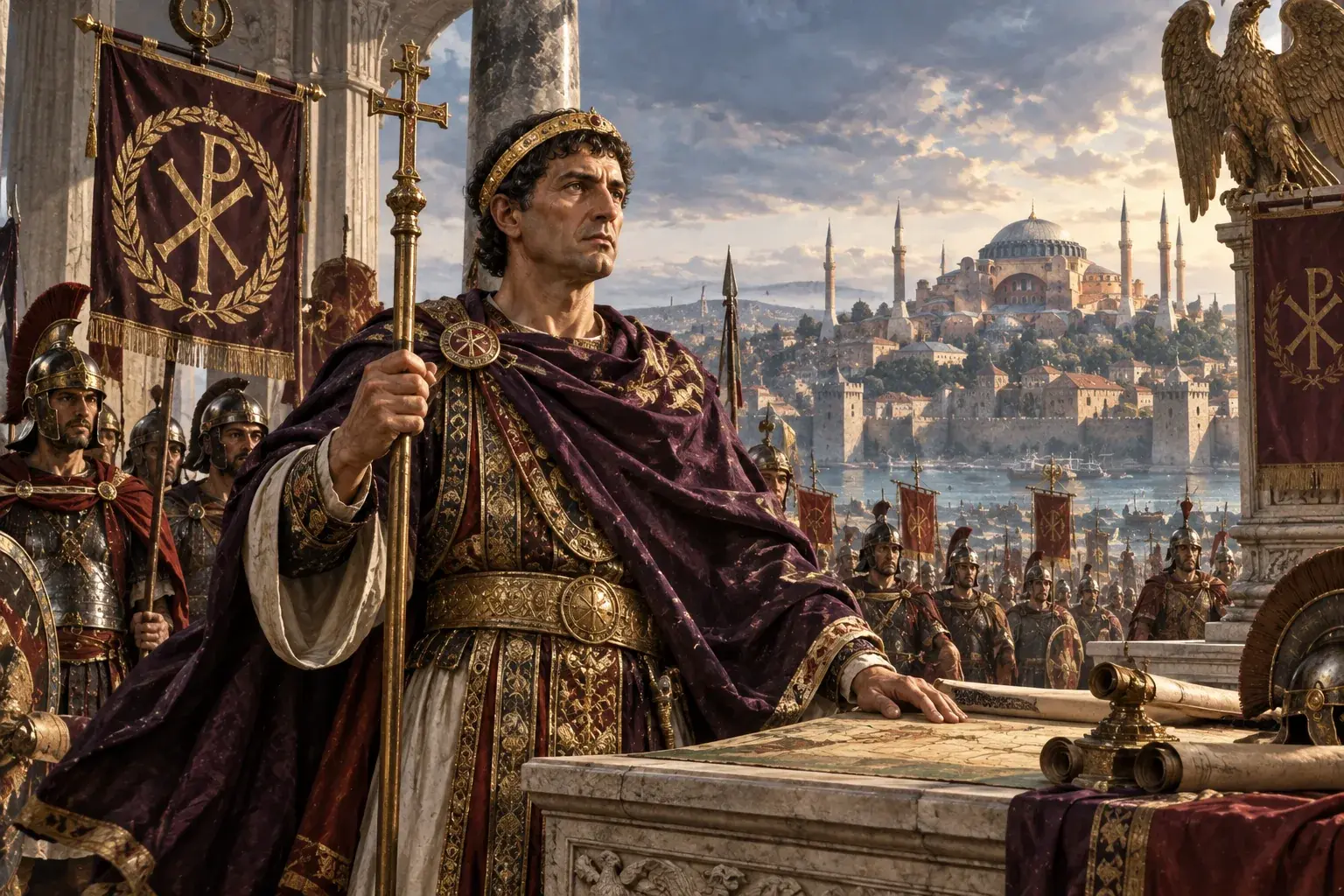
Heinrich Bullinger stepped into Zwingli's position at the Grossmünster in December 1531. He was 27 years old. He had believed in what Zwingli was doing. But he had also watched Zwingli's approach drive the whole movement off a cliff. Bullinger made a quiet but firm decision: the church was staying out of politics. He told priests to stop making official political statements. He kept close watch on every parish under his care, checking regularly on what was being preached and how people were responding to it. He caught problems early before they turned into the kind of firebrand radicalism that had cost Zürich so dearly. It was less dramatic than what Zwingli had done. It worked a lot better. Over the following years, the Reformed movement in Zürich rebuilt its footing. Bullinger corresponded with Protestant leaders across Europe — his surviving letters fill multiple volumes, making him one of the most connected figures in the entire Reformation. In 1536, he and Leo Jud co-wrote the First Helvetic Confession, the first unified statement of Swiss Reformed belief. In 1562, Bullinger completed the Second Helvetic Confession, which became a foundational document for Reformed churches in France, Scotland, Hungary, Poland, and eventually North America. John Calvin in Geneva built his theological work partly on the framework Bullinger had developed. The global Reformed tradition — Presbyterian churches, Reformed churches, many Congregationalist lines worldwide — traces back through Bullinger just as much as through Calvin, and possibly more so. Zwingli started the fire. Bullinger stopped it from burning the house down.
Bullinger succeeded Zwingli as head of the Reformed church in Zürich and steered it away from political confrontation. His confessions of faith shaped Protestant Christianity across Europe and beyond.
The Kappel Wars don't get much attention next to the bigger Reformation stories. Luther gets the church door and the ninety-five theses. Calvin gets Geneva. Zwingli gets a battlefield and a bad ending. But what happened in Switzerland between 1529 and 1531 mattered. The peace that followed gave Europe one of its earliest working models of religious coexistence — two faiths, one country, neither forcing the other out. Nobody planned that outcome. It came from exhaustion, and from the hard limits of what each side could actually do to the other. And the movement that nearly fell apart after Kappel ended up shaping Protestant Christianity worldwide — because one 27-year-old stepped in and decided that quiet, careful work mattered more than winning arguments with armies. Sometimes the people who hold things together are harder to remember than the ones who blew everything up. Bullinger held things together. That part is worth knowing.