Cape Town in the eighteenth and early nineteenth centuries was a place unlike anywhere else — Dutch gabled houses with great stoeps, a stately population smoking its way through the day, tables groaning with leg of mutton at breakfast, and monthly balls where sailors, Malays, Boers, and colonial ladies all mixed under the great shadow of Table Mountain. The story of old Cape Colony life, told through the eyes of visitors who were baffled and charmed in equal measure.
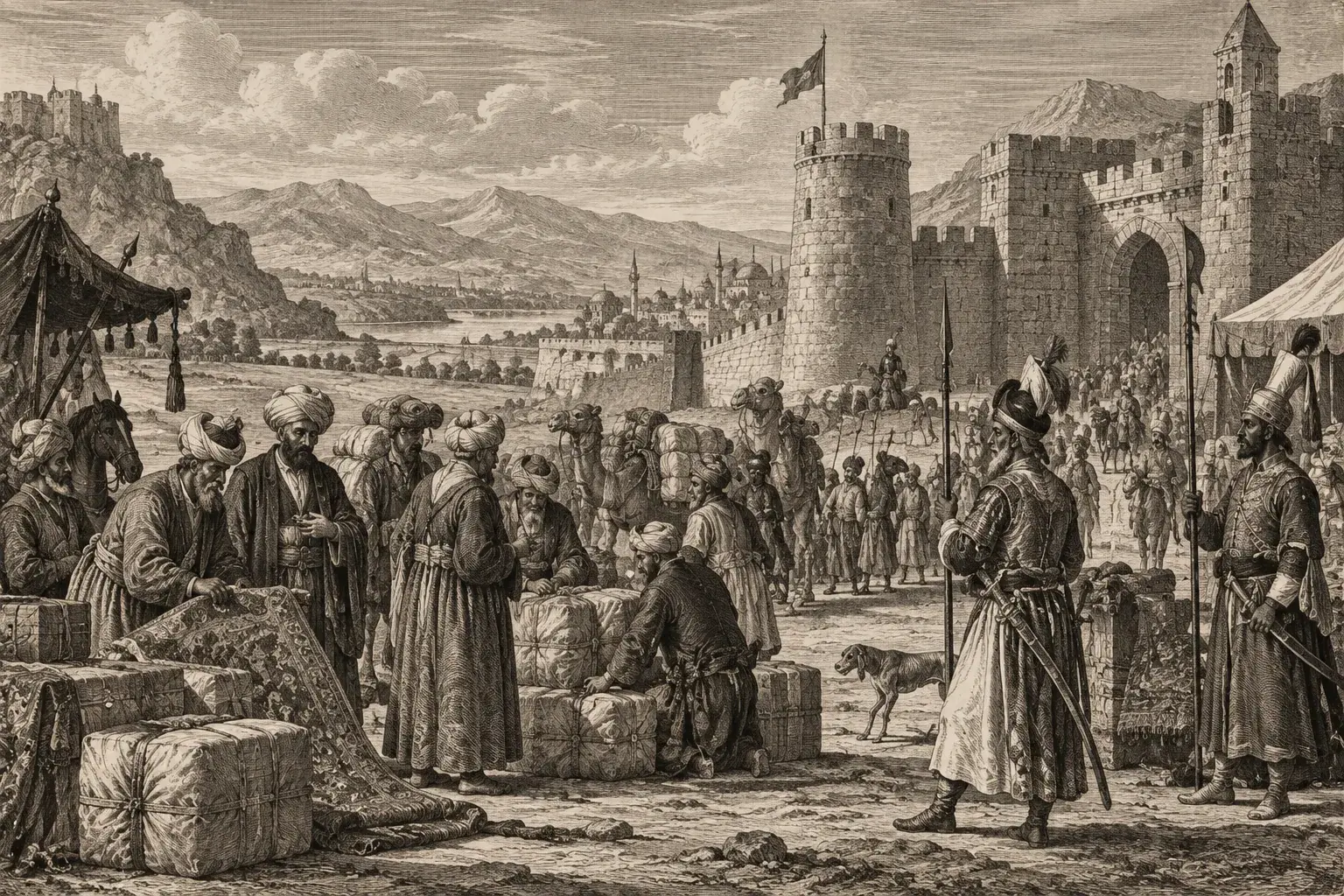
Before Port Elizabeth existed, before Grahamstown or Durban or Bloemfontein or Pretoria, all the social life of South Africa was concentrated in Cape Town. And Cape Town in the eighteenth and early nineteenth century was a place unlike anywhere else on earth. It was a Dutch colonial Amsterdam, set under the most dramatic mountain in the world, at the edge of an African continent that pressed in from the north with all its strangeness. Tarry pig-tailed sailors rolled from the tavern. Malay slaves in bright robes and turbans threaded through the streets. Cape Malay women in gay kerchiefs and amber necklaces. Boers come in from the country with their wagons, sixteen oxen to each, and a great cracking of enormous whips. A Hottentot servant trotting behind his master wearing nothing but a piece of leather and a sheepskin.
The Houses and the Stoeps
The houses of Cape Town were stately and beautiful. A white expanse of wall, relieved by great teak doors with long brass hinges, a fanlight above with lattice-work, small-paned windows with ribbed green shutters folded back against the wall. The roof was either flat cement or thatched with velvety-brown reed, and roof and wall met in gracefully shaped fiddle-gables, sometimes ornamented with figures by the sculptor Anthon Anreith. Every house of any consequence had a stoep — a broad stone platform in front, with deep stone benches and often a pergola hung with vine or pomegranate or climbing roses. Here the Dutch spent most of the day. The men sat and smoked with a dignity that nothing could disturb. The ladies embroidered on their tambour frames. Captain Percival, an English visitor of sharp opinions, noted that some men got up two or three times in the night just to enjoy a pipe. Inside, the hall cut the house in two. The front half was a reception hall from which rooms opened on either side. The back half was the dining room. Four other great rooms, and sometimes a second storey, and in the finest houses a courtyard behind with vine or pomegranate and a fountain playing in the centre. The floors of polished red tiles, the walls stuccoed or painted, the wainscoting adorned with looking-glasses. The furniture was, to English eyes, clumsy — but it was in fact very charming. High Dutch clocks in mahogany cases with brass dials and moving suns and moons and ships; great cedar-wood armoires big enough to hold all the linen and silk dresses; settees of antique design; capacious chairs suited to the generous proportions of their owners.
The great gabled Cape Dutch homesteads, many of which still stand in Stellenbosch, Paarl, and the Franschhoek valley, represent one of the most distinctive architectural traditions in the Southern Hemisphere.
What They Ate — and How Much
The Dutch ate in a manner that appalled even their sturdy English visitors. At breakfast — at eight in the morning — there was ordinarily a boiled leg of mutton with perhaps a dish of stewed beef. Before even that came a cup of tea or coffee served in the bedroom. At dinner and supper there would be roasted beef, mutton, venison, fowls, all cooked with what one English captain called "rather too much grease." "A goose swimming in oil," he says, "is no uncommon dish; or a piece of veal roasted to rags, and covered with rancid butter turned into oil, with which the meat, when it gets cold, is quite encrusted." The fat was procured from the sheep's tail — one solid lump of fat weighing twelve to fifteen pounds, which was quite a feature of the pastoral landscape. With every meal there were piles of fruit in their season — peaches, nectarines, grapes, pears, oranges, musk melons, water melons — which ought to have made up for everything else. And many of the Dutch housewives were admirable cooks who made syrups, curries, and liqueurs with a rare spicy flavour suggestive of the East. Lady Anne Barnard, whose husband was secretary to the First British Governor and who was one of the wittiest observers of the Cape, had a tolerant view of the local wine: "I never saw the force of prejudice more apparent than in the way Englishmen here turn up their foolish noses at the Cape wines because they are Cape wines." A certain military big-wig, she reports, filled his glass by mistake with Cape wine and exclaimed "Lord bless me, what a fine wine this is!" — and when told of his error, "in a moment the colonel found fifty faults in it."
The Ladies — Livelier Than the Men
All accounts agreed that the Dutch women of the Cape were much livelier than the men. "Lively, good-natured, familiar and gay," says a sea captain who was naturally inclined to notice. The ladies loved music — nearly all played the harpsichord — and were fond of dancing and singing. The Governor gave a public ball once a month, and the people of distinction followed his example. A week seldom passed without several balls. Lady Anne Barnard, herself a great beauty and social figure, looked at the Cape Town ladies with rather a sharper eye: "They danced without halting at all, a sort of pit-a-pat little step, which they had probably learned from some beauty on her way to Bengal." But the naturalist Burchell, who had the best opportunity of observing them over time, was more generous: "For personal beauty they ought not easily to yield the prize even to our own fair countrywomen." The farms out in the country were rougher. Sparrman the Swedish botanist describes a typical Boer in a distant valley greeting a traveler: "Good-day! Welcome! How are you? Who are you? A glass of wine? A pipe of tobacco? Will you eat anything?" The guest was brought lamb and stewed carrots by a daughter of twelve or fourteen, "with so good a grace that I hardly knew which to prefer, my entertainment or my fair attendant." Stellenbosch had its own particular character — Lady Anne Barnard called it the perfection of coolness in the most sultry weather, with its long streets of large oaks shading the houses, its hundred-odd families and their gardens. "It seems rather an asylum for old age than anything else, and I am told people live longer in it than in any other part of the colony." That much has not changed.
Lady Anne Barnard attended Cape Town's monthly balls and wrote about them with sharp wit — the dancing, the wines, the ladies' clothes, and the curious mixture of cultures in this unlikely outpost at the bottom of Africa.