In the spring of 1279, a fleet of Song ships sat trapped in a narrow channel called Yamen, off the coast of southern China. Mongol warships surrounded them on every side. Below deck on one of those ships sat a seven-year-old boy named Zhao Bing. He was the emperor of China, though by that point there was barely a China left for him to rule. When the battle turned hopeless, the boy's chancellor, a man named Lu Xiufu, made his decision. He picked up the young emperor, walked to the edge of the ship, and jumped into the sea. According to the official history written afterward, tens of thousands of soldiers, officials, and family members followed him into the water in the days that followed, choosing the sea over surrender. That is how the Song Dynasty ended: not with a treaty or a slow fade, but with a drowning.
A General Takes the Throne
To understand how China ended up on those ships at Yamen, you have to go back more than three hundred years, to the mess that came before the Song Dynasty even existed. By the early 900s, the once-mighty Tang Dynasty had collapsed, and China had splintered into a patchwork of competing kingdoms, each ruled by its own warlord. Armies rose and fell constantly. No one held power for long. Out of that chaos came a military commander named Zhao Kuangyin, a general skilled enough, and trusted enough, that in 960 CE his own soldiers made him emperor. He took the name Taizu, meaning something close to 'Grand Progenitor,' and set about stitching China's broken kingdoms back together. Taizu understood something important: he had taken power because a general could. So he made sure it would be much harder for the next ambitious general to do the same thing to him. He rotated military commanders regularly so none of them could build a loyal power base of their own. He shifted real authority toward the civil service, the educated officials who ran the day-to-day business of government instead of the army. It was a strange kind of insurance policy, built by a man who knew exactly how fragile a throne could be. His younger brother, Taizong, continued the work after him, and for a while, it paid off. China had peace. China had order. What China did not have yet was safety from its neighbors.
Paying to Keep the Peace
Just north of Song territory, near the Great Wall, sat the Khitan Liao Dynasty, and their soldiers were a serious problem. Rather than fight constant, expensive wars they might not win, the Song emperors made a calculated choice: they paid the Khitan rulers a yearly tribute of silver and silk to keep them from invading. It's easy to read that as weakness. In some ways, it probably was. But it also worked. After losing a war against another northern neighbor, the Tangut Xia, in 1044, the Song struck a similar deal with them too. These arrangements were expensive, but they were far cheaper than endless warfare, and they let the Song government focus on running the rich, heavily populated lands of central China, home to something like 100 million people. There was an unexpected upside as well. A lot of that tribute silver ended up flowing right back into Song China through trade. Paying for peace turned out to be, in its own strange way, good for business.
Cracks Beneath the Gold
Peace with its neighbors did not mean peace at home. Inside the Song court, a new intellectual movement called Neo-Confucianism was gaining ground, reviving older Confucian values with a sharper, more philosophical edge. Its followers pushed back hard against Buddhism, which they viewed as a foreign import that didn't belong in Chinese life. The resulting arguments split the court into rival factions, and Song politics grew more unstable with every decade. Underneath all of it sat an older, simpler problem: the widening gap between rich and poor. Most people living under Song rule were farmers, and they worked punishing hours while paying taxes that ate into everything they earned. Meanwhile, the wealthy elite lived in comfort most of the population could barely imagine. One official, Wang Anshi, tried to fix it. In the 1070s, he introduced a sweeping set of reforms known as the New Policies: replacing forced labor obligations with fairer taxes, offering low-interest loans to struggling farmers, and reassessing land taxes so wealthy landowners couldn't dodge their share. It was a genuinely ambitious plan. It was also deeply unpopular with the local officials who stood to lose the most, and their resistance wore the reforms down piece by piece. Wang Anshi's changes never went far enough to fix what was broken, and the gap between rich and poor stayed a problem for the rest of the dynasty's history.
Political infighting simmered at court, but Kaifeng's markets and industries kept the Song economy roaring.
The Richest City on Earth
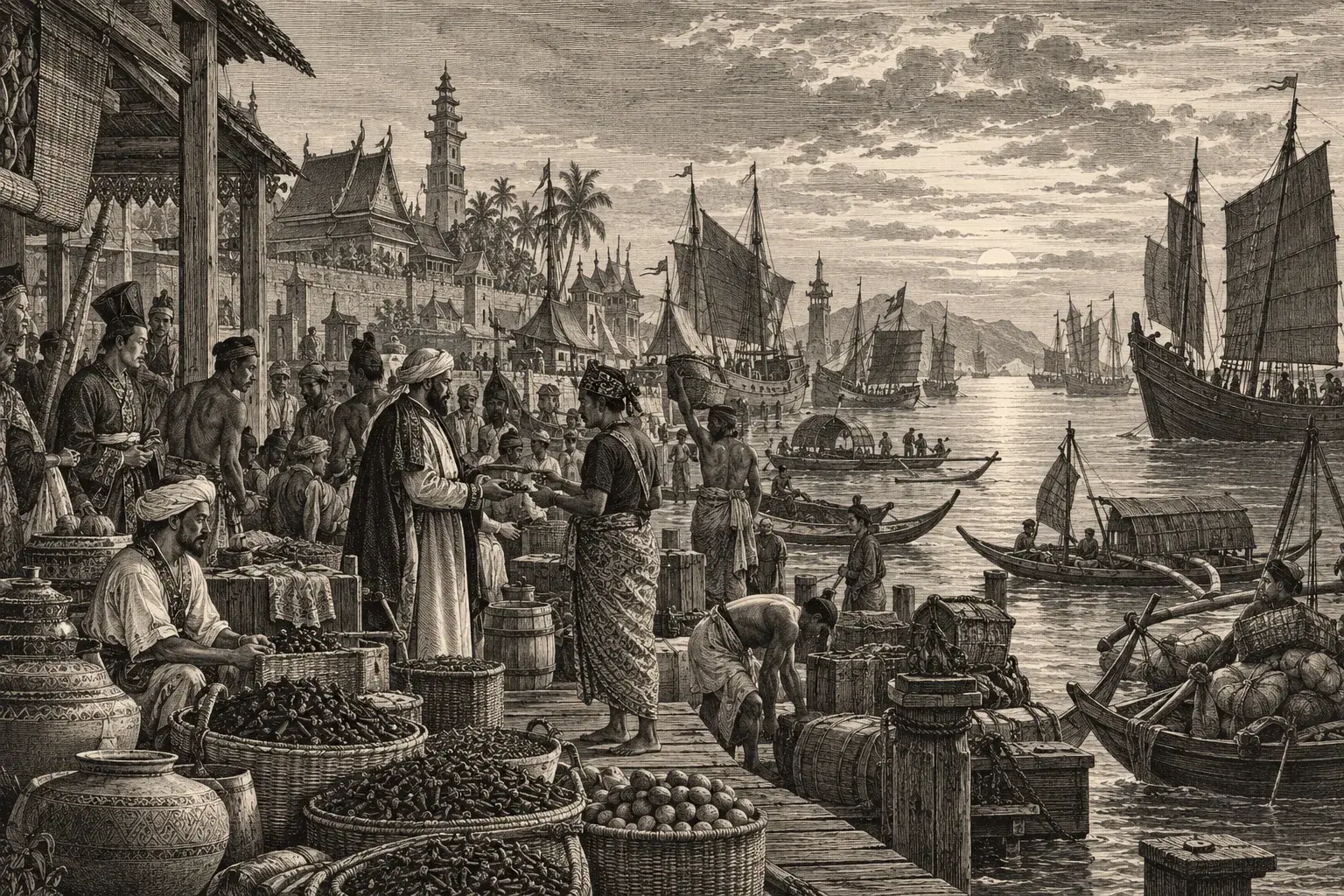
Whatever problems plagued the Song court, the economy below it was thriving. By the early 1100s, Kaifeng, the Northern Song capital, had grown into one of the largest cities on the planet, home to roughly a million people, at a time when London held maybe fifteen thousand. Nearby coal and iron mines fed booming industries in printing, papermaking, textiles, and porcelain, and Song merchants shipped their goods along the Silk Road and across the Indian Ocean. China exported tea, silk, rice, and copper, and imported horses, cotton cloth, ivory, gems, and spices from distant lands. Farmers got in on the wealth too, shifting toward high-value crops like sugar, tea, cotton, oranges, and silk instead of just staple grains. With food surpluses freeing up labor, cities swelled and markets multiplied. To move all of this along China's rivers, canals, and coastlines, the Song built ships by the thousands, turning shipbuilding into a massive industry of its own. Business itself grew more sophisticated too, with merchants organizing into guilds, partnerships, and early stock companies, structures that wouldn't look wildly out of place in a modern economy.
Machines, Money, and Masterpieces
The Song era produced an almost absurd concentration of new ideas. Engineers built paddle-wheel ships that didn't rely on oars or sails. Chemists developed gunpowder. Navigators refined the compass. Officials issued the world's first government-backed paper money. Printers perfected moveable type, generations before it reached Europe. Iron and steel production climbed to levels that made better tools, better farm equipment, and, inevitably, better weapons and armor. Art and literature kept pace. The poet Su Dongpo wrote about love and heartbreak with an honesty that still reads as fresh centuries later. Li Qingzhao, one of China's most celebrated poets, wrote candidly about personal loss and grief at a time when few women's voices were preserved in writing at all. Painters like Fan Kuan created towering, almost photographic landscapes, his Travelers among Mountains and Streams among the most admired paintings in Chinese history. Demand for fine porcelain and decorative art grew right alongside a rising middle class, and some pieces became so valuable that counterfeiters started faking them, a strange kind of compliment to how good Song craftsmanship really was.
Song engineers and craftsmen produced gunpowder, the compass, paper money, and moveable type, inventions that would eventually reshape the world.
An Ally Turns Enemy
By the 1100s, the Song faced pressure on two fronts: the long-standing Liao Dynasty to the north, and the Tangut Xia to the northwest. Looking for an edge, the Song struck a new alliance with the Jurchen, a rising group of tribes who had just established their own state, the Jin. Together, Song and Jin forces crushed the Liao. Then the Jin turned on their new ally. Song military weakness, exposed during the fight against the Liao, made an inviting target, and Jin armies swept south into Song territory. Kaifeng, the glittering capital, fell to a Jin siege in January 1127, in an event Chinese history remembers as the Jingkang Incident. The reigning emperor, Qinzong, and his father, the retired Emperor Huizong, a gifted painter and calligrapher who had cared more about art than about defending his borders, were both captured and dragged north into captivity, along with thousands of members of the court. Neither would ever see home again. One member of the royal family escaped: Zhao Gou, Huizong's ninth son, who had been away from the capital when it fell. He fled south, declared himself the new emperor, and eventually settled a new capital at Hangzhou, in the fertile Yangtze Valley. The Northern Song was over. The Southern Song had just begun.
Even after losing the north, the Song rebuilt a thriving capital at Hangzhou, famous for its silk, gardens, and waterways.
A Second Life in the South
Losing northern China should have crippled the dynasty. Instead, the Southern Song kept right on thriving. Southern ports like Quanzhou and Fuzhou blossomed into major hubs of international trade, drawing merchants and immigrants from across Asia. The south's fertile farmland kept food supplies strong, and Hangzhou grew into a spectacular capital of its own, famous for its gardens, its canals, and its silk production. The government even ran food and medical programs for the poor in the capital, an early attempt at something like a safety net. For well over a century, the Southern Song looked less like a defeated remnant and more like proof that the dynasty's wealth had never really depended on the north at all.
The Mongols Close In
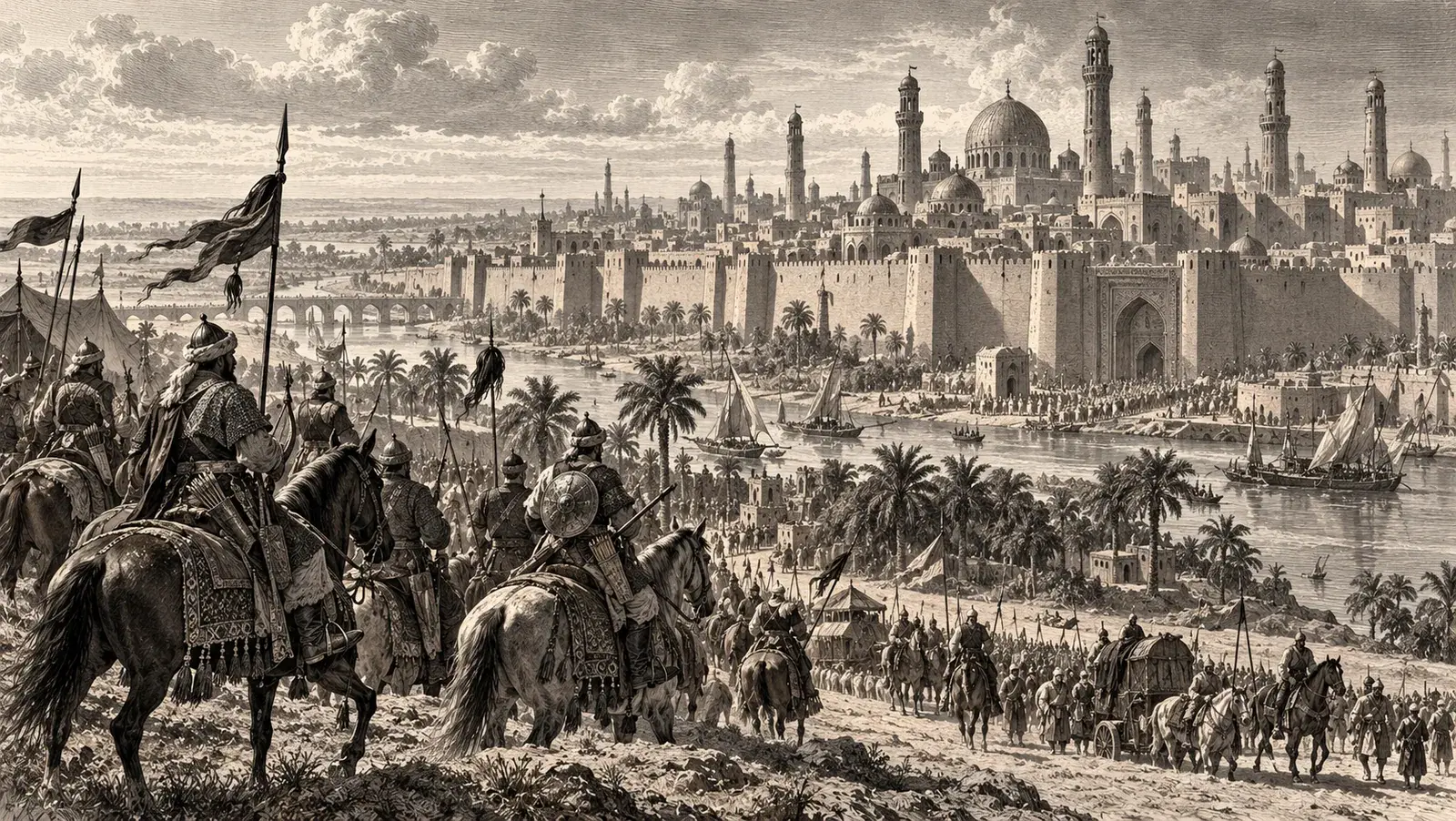
The calm didn't last. A new power was rising on the steppes to the north: the Mongols, led first by Genghis Khan and later by his grandson, Kublai Khan. The Mongols crushed the Xia and, eventually, the Jin, the same Jin that had driven the Song out of Kaifeng generations earlier. Then Kublai Khan turned south. The invasion of southern China began in earnest in the late 1260s. The heavily fortified city of Xiangyang held out for years before finally falling in 1273 after a grinding siege. By 1275, Mongol forces had crossed the Yangtze River, and Song defenses started to collapse. Some Song generals surrendered outright. Others switched sides and joined the Mongols. The Song court, paralyzed by infighting, couldn't organize a real defense. In early 1276, Mongol troops took the Song capital of Hangzhou. The young reigning emperor, a boy known as Emperor Gong, was captured and sent north. It should have been the end. Instead, loyalist officials smuggled the boy emperor's two younger brothers south, determined to keep the dynasty alive a little longer.
Back to Yamen
The older brother was crowned emperor in Fuzhou that summer, taking the name Duanzong. He didn't live long. Sick and exhausted after his ships nearly capsized in a storm, he died in 1278, and loyalist officials crowned his younger brother, seven-year-old Zhao Bing, in his place. There was almost nowhere left to run. General Zhang Shijie gathered what remained of the Song fleet, nearly a thousand ships, at a narrow channel called Yamen, near the southern coast. He chained the ships together into one giant floating fortress, hoping to stop his own soldiers from deserting as much as to hold off the enemy. It backfired. When Mongol forces broke through in March 1279, the chained fleet couldn't scatter, couldn't retreat, couldn't do anything but sink together. That is where the story began: Lu Xiufu, the emperor's chancellor, carrying a seven-year-old boy into the sea rather than handing him over. Three hundred and nineteen years after a general named Zhao Kuangyin first took the throne, the dynasty he built, one of the richest, most inventive civilizations the world had yet produced, ended in the water off the coast of Guangdong. Kublai Khan's Yuan Dynasty now ruled all of China. The gunpowder, the compass, the paper money, the poetry of Su Dongpo and Li Qingzhao, none of that sank at Yamen. It spread, it lasted, and in more ways than anyone drowning that day could have guessed, it never really stopped shaping the world.