Along with the Middle East, North Africa is one of the few regions of the Muslim world which was both Islamized and Arabized. Turkey became Muslim and kept Turkish, Iran became Muslim and kept Persian, Indonesia became Muslim and kept every language that was previously there, and the Maghreb became Muslim and changed its Amazigh languages to Arabic, except that it isn't actually complete, and so far it's been in the twenty-first century that people can be found in the Atlas mountains of Morocco talking to each other only with limited knowledge of Darija (the Moroccan dialect), both young and old and especially women.
Two questions lie at the centre of this, one being why some populations gave up their languages and others didn't, and whether Islamization is really the decisive cause of Arabization or not, which tends to fall apart on closer inspection.
The Amazigh before the Arabs: Phoenicians, Rome and Carthage
The Arabs were certainly not the first invaders the Maghreb had to deal with. The Amazigh, the indigenous peoples of the region, dating from the time of the Pharaohs, watched as invaders came and went from antiquity to the end of the French colonial rule.
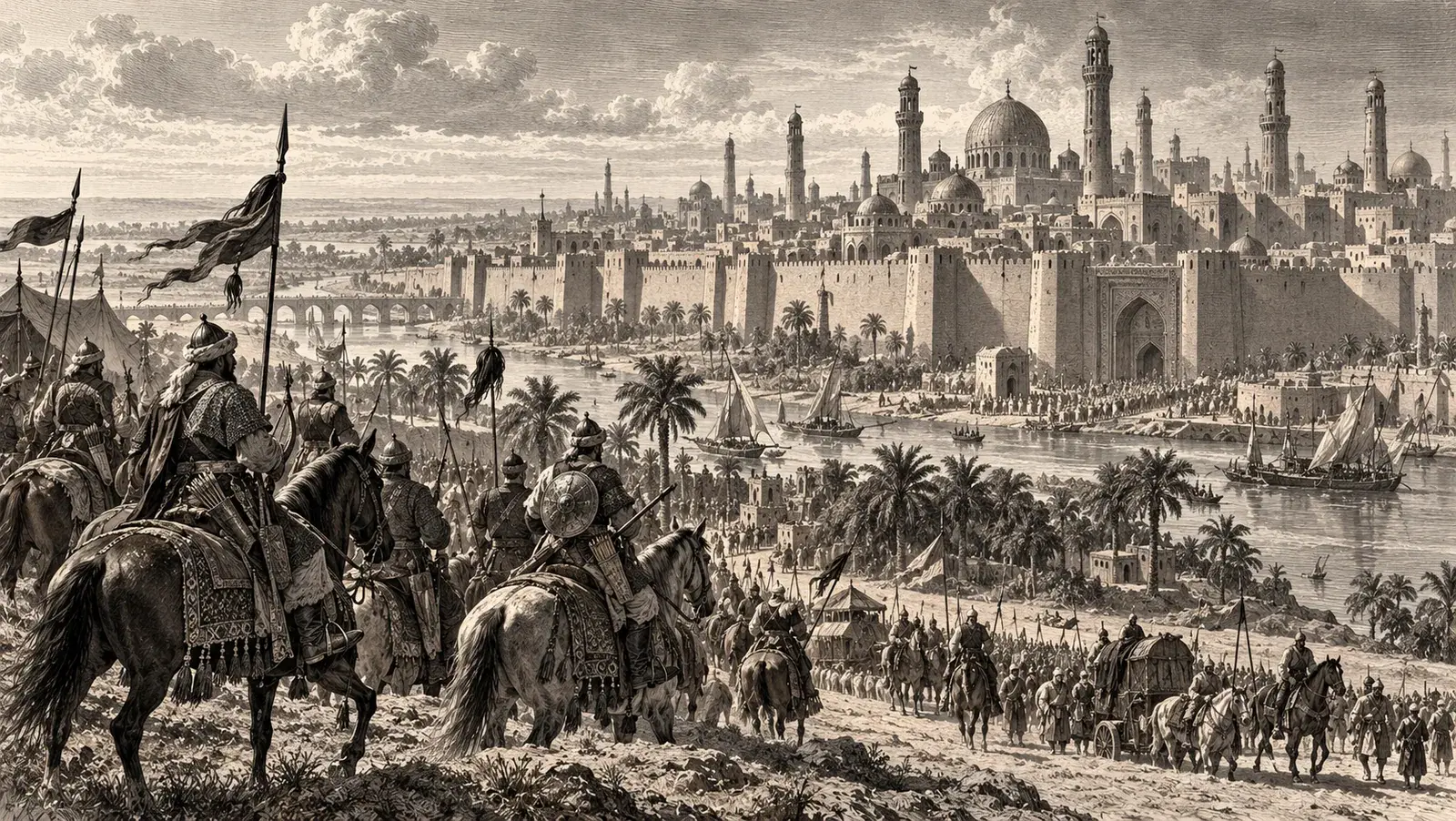
The Phoenicians arrived first of all, in the ninth century BC. Coming from where modern-day Lebanon is, they established Carthage which became a rich and prosperous city-state. Punic was the language there, almost certainly alongside the Berber languages of families drawn in by the trade. From the sixth century, Carthage became independent and expanded into a substantial empire along the western coasts of the Mediterranean until it fell to the Romans in 146 BC after the Punic Wars.
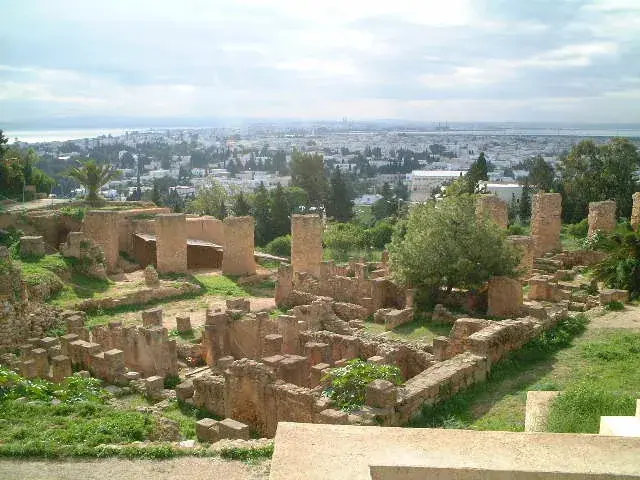
Carthage, founded by Phoenician settlers, became the wealthiest city of the western Mediterranean before falling to Rome in 146 BC.
Image Credits: Rais67, via Wikimedia Commons (CC BY-SA 3.0)
Over the next four centuries the Romans Latinized and Christianized the African Mediterranean coasts, but this varied, and in the east, where Africa Proconsularis and Numidia were more densely populated and prosperous, the Roman influence ran right to the edge of the desert. By contrast, the two Mauretanias in the west were of lesser importance, restricted to cultivable land and serving mainly as a rear guard guarding Hispania against Amazigh incursions into Europe, and they later became the centre of major revolts which seriously destabilized Rome.
The important thing is how limited all of this was, because the Romanization and Christianization were largely concentrated in the urban areas of Numidia and the Mauretanias. The rural populations, especially the steppe and mountain tribes organized in confederations, kept their beliefs and customs throughout.
Vandals, Byzantines and the collapse of Settled North Africa
The fifth century upset this balance as the Western Roman Empire's decline meant that Rome's grip was loosening, leading to greater unrest.
In 429 the Vandals, a Germanic people from the Iberian Peninsula, crossed the Strait of Gibraltar and invaded Roman Africa. They quickly took the rich provinces of eastern Algeria and captured Carthage in 439, founding a kingdom which lasted nearly a century.
Their rule was never secure due to the lack of resources. Too few in number to control such a large amount of territory, the Vandals faced constant revolts from Amazigh populations, particularly the Zenata, a pagan camel-herding nomadic tribe, and they generated chaos themselves. Being Arians, followers of a doctrine which denied the divinity of Jesus, the Vandals persecuted local Catholics and confiscated Church land, disrupting local elites held responsible for holding together the region. Prosperous cities were abandoned or destroyed, and the regional economy deteriorated.
In 533 the Byzantine emperor Justinian launched a reconquest, and the Byzantine forces crushed the Vandal kingdom quickly. This was only a pause in the chaos, and they were unable to impose any real order in the interior beyond the coast, not even managing to subdue the Amazigh.
Worse still, North Africa was absorbing the gradual advance of the Lawata, a nomadic camel-herding people from the east who had infiltrated the southern regions of Byzacena in Tunisia and Numidia in the northeastern Algeria, which had previously been prosperous. Their arrival caused the decline of the region which was then eventually abandoned. This is a genuine turning-point, marking a change in the pattern of life, which fed directly into the Arabization which followed.
As for the two Mauretanias (modern Morocco and western Algeria), the documentation for the two centuries which follow Rome's fall is so sparse it's hard to know what was going on. What is known is that the Maghreb the Arabs encountered was made up of a patchwork of Romano-Africans, non-Romanized Moors, nomadic Zenata, Vandal descendants and Byzantines.
The Arab conquest, Kairouan and the limits of Islamization
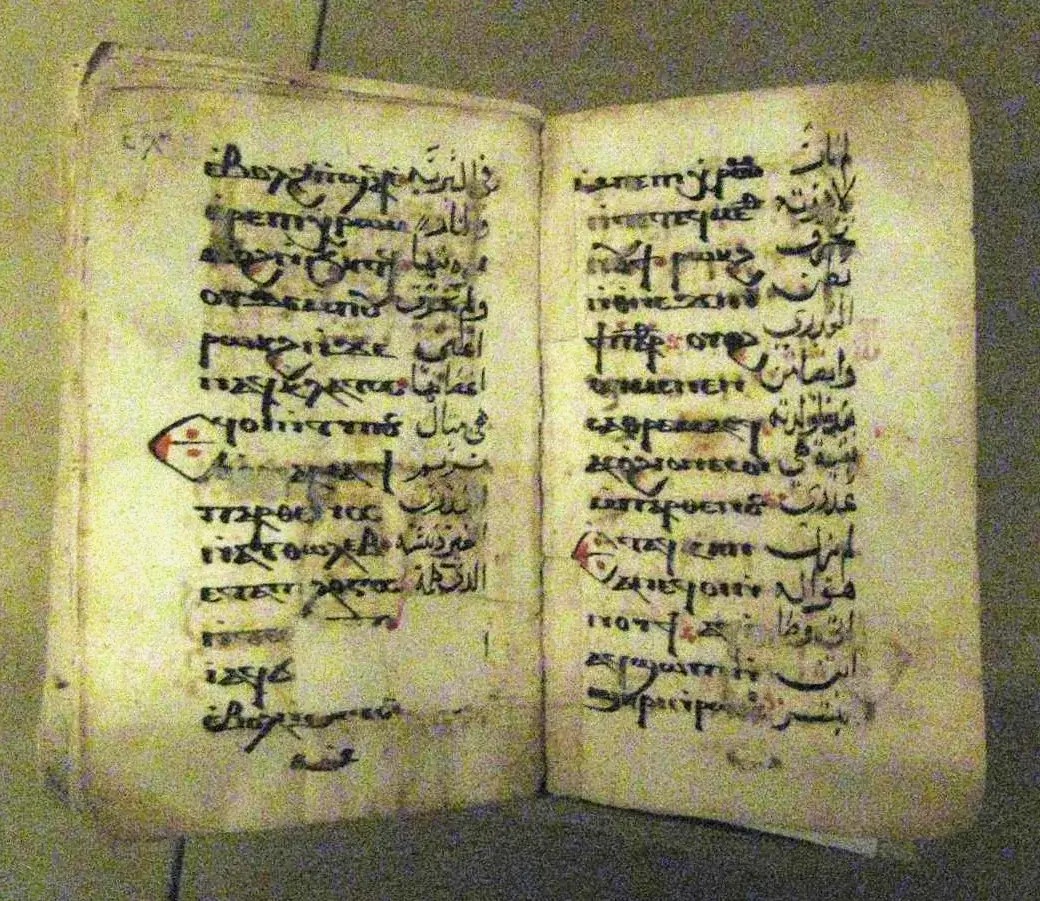
Islamic armies took Egypt, Cyrenaica and Tripolitania rapidly after the Prophet's death in 632. In 647 a small Arab force defeated the Byzantines in Tunisia, and then withdrew after plundering the country. Real conquest began in 666 under the Umayyad Caliph Muawiya, and in 670 his general Uqba ibn Nafi founded Kairouan. Raids into Morocco failed initially against a strong Amazigh resistance, but it collapsed around 700.
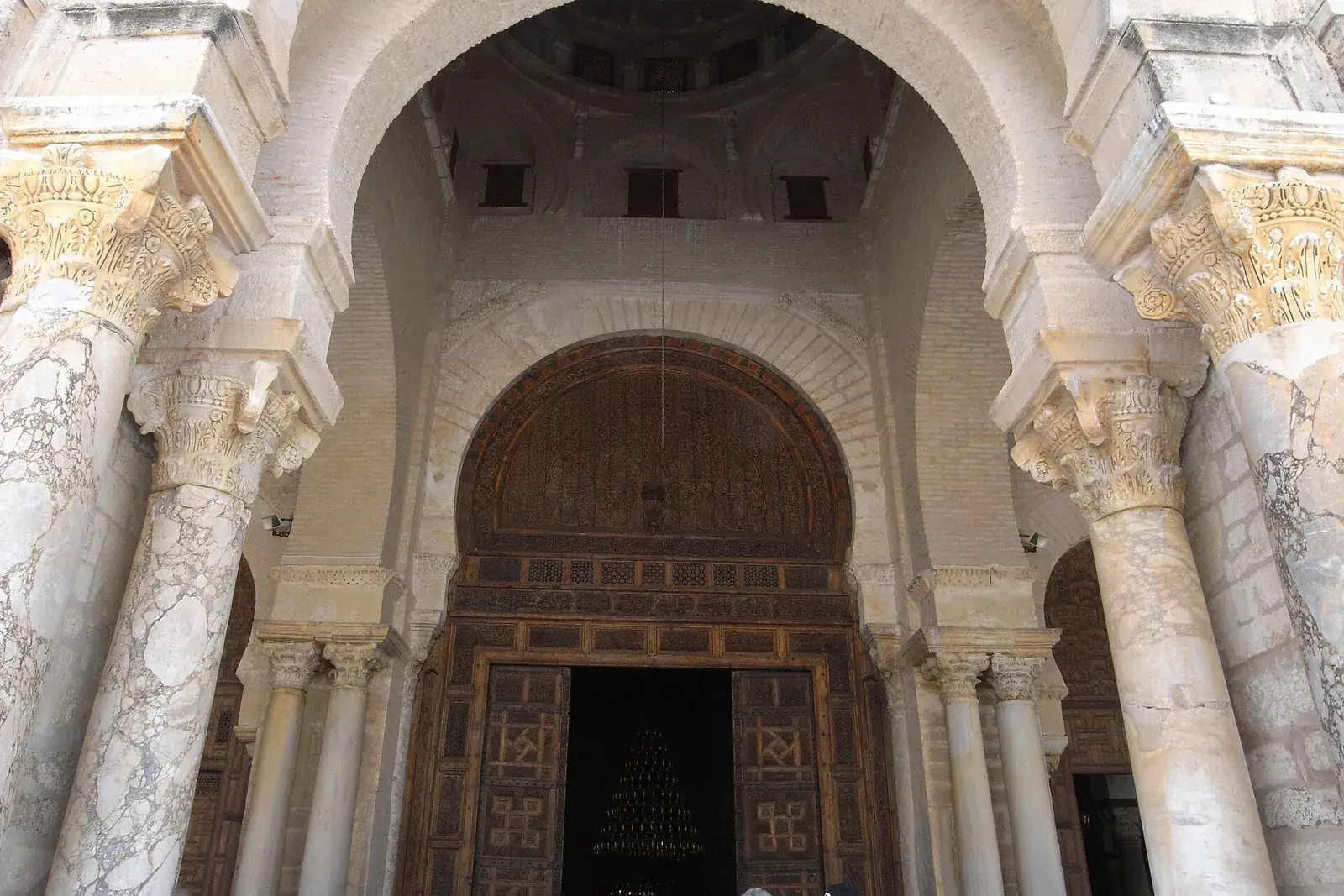
Kairouan, founded around 670 as a military base, became the first great Islamic city of the Maghreb and a stronghold of early Arabization.
Image Credits: Yukiko Yamamoto, via Wikimedia Commons (CC BY 2.0)
The Arabs managed it partly because there wasn't anything organized to oppose them. No state existed in North Africa capable of stopping their arrival, and despite the small numbers, they faced a fragmented resistance from the Byzantines and various Amazigh leaders. The urban Roman-African population, exhausted by years of unrest, surrendered quickly, and the taxes paid under Arab rule were comparable to Byzantine levels, making the change largely accepted, at least at first. Islam then began to spread rapidly, helped along by administrative and fiscal reforms which favoured those who converted.
Islamization does not necessarily mean Arabization, however. The Amazigh maintained their languages and traditions while adopting Islam, a distinction which should be obvious enough but is often overlooked.
Islamization itself was also extremely uneven. New cities such as Kairouan and Fez became strongholds of Islam, but conversion of rural Amazigh tribes was far slower. Some groups converted early, but the large nomadic tribes of the Sahara only began converting in the fifteenth century. The Guanches of the Canary Islands never converted at all. Christianity endured in North Africa until the twelfth century when it was finally eradicated by the Almohads, themselves a Moroccan Amazigh dynasty.
The Great Berber revolt and the end of Umayyad rule in Morocco
Here's where the 'conquerors impose their language' model runs into trouble. In the western Maghreb the Umayyad Arab power only lasted for so long that it barely could have imposed anything.
The great Berber revolt of 739-740 put an end to Arab rule in Morocco definitively. It began as a reaction to the policies of the Umayyad governors at Kairouan, who were responsible for both the Maghreb and Al-Andalus. Despite the Amazigh having played a crucial role in the conquest of Spain, and despite most of them having converted to Islam, Arab authorities treated them as second-class subjects, burdening them with unjust taxes even after conversion, which directly contradicted Islamic principle. Caliph ʿUmar II had forbidden these practices, but military defeats in the 720s and 730s forced the authorities to reinstate both taxes and slavery under new religious interpretations.
In order to re-establish their position, Amazigh tribes in Morocco and Algeria allied themselves with the Kharijites, an Islamic sect from the East whom the Umayyads were persecuting. Having fled the Maghreb the Kharijites found willing support among disgruntled tribes, and their message of a society where all Muslims are equal and Islamic laws are strictly applied, landed well with them.
The revolt succeeded, and the Umayyads were expelled from Maghreb al-Aqsa (modern Morocco) and Al-Andalus. They held Ifriqiya (modern Tunisia and eastern Algeria), while the rest of the Maghreb broke up into a series of small Amazigh states independent of the Arabs. It is one of the greatest military setbacks the Arabs suffered, and produced the first Muslim states outside the control of the caliphs.
Fez, Idriss I and the first phase of Arabization
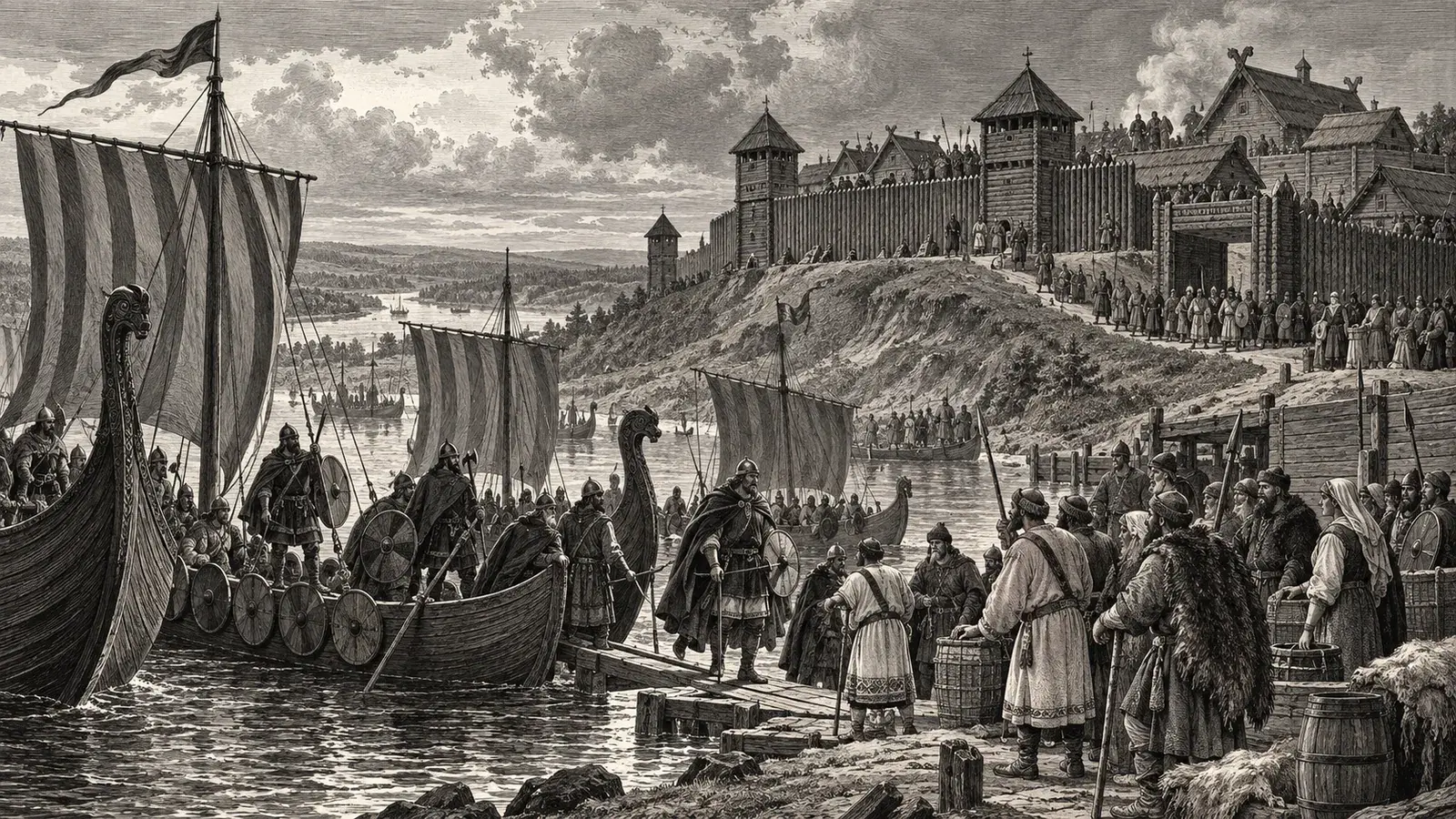
Arabization happened in two distinct phases, and the first was almost entirely urban, running from the seventh to the eleventh century, centred on cities such as Kairouan, Tunis, Tlemcen and Fez.
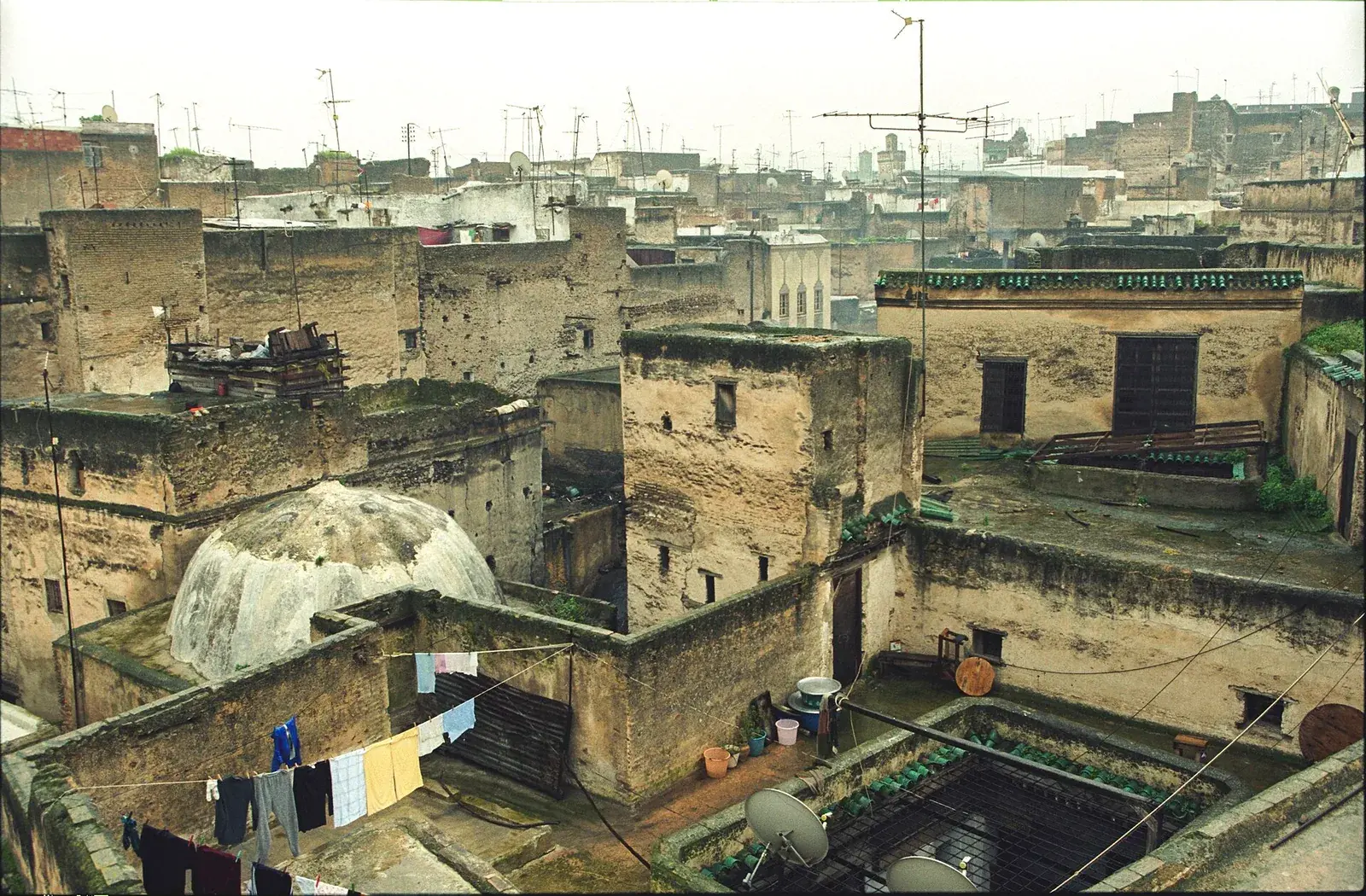
Fez, founded by the Idrisids, became a crucial centre of Arabization in Morocco.
Image Credits: Jerzystrzelecki, via Wikimedia Commons (CC BY 3.0)
Fez is the instructive case. Founded by Idriss I, who was considered an Arab descendant of the Prophet and the founder of Moroccan statehood, it became a crucial centre for Arabization. Moroccan Amazigh tribes who had fought the conquerors, the Awerba among them, recognized his authority because they could see the advantages - to integrate into the state administration and strengthen their own positions by attaching themselves to a lineage which held legitimacy.
In these urban centres Arabic became the language of administration naturally, and not only because it belonged to the ruling class. There was no alternative, as Amazigh languages were unwritten at the time, and the different regional varieties were numerous enough that none could have been served as a common tongue.
Bedouin migration, Fatimids and the Arabization of the countryside
Deeper Arabization had to wait until the eleventh century, coming with nomadic Bedouin tribes who introduced Arabic into rural areas for the first time, transforming Amazigh language and culture far beyond anything urban administration had been responsible for.
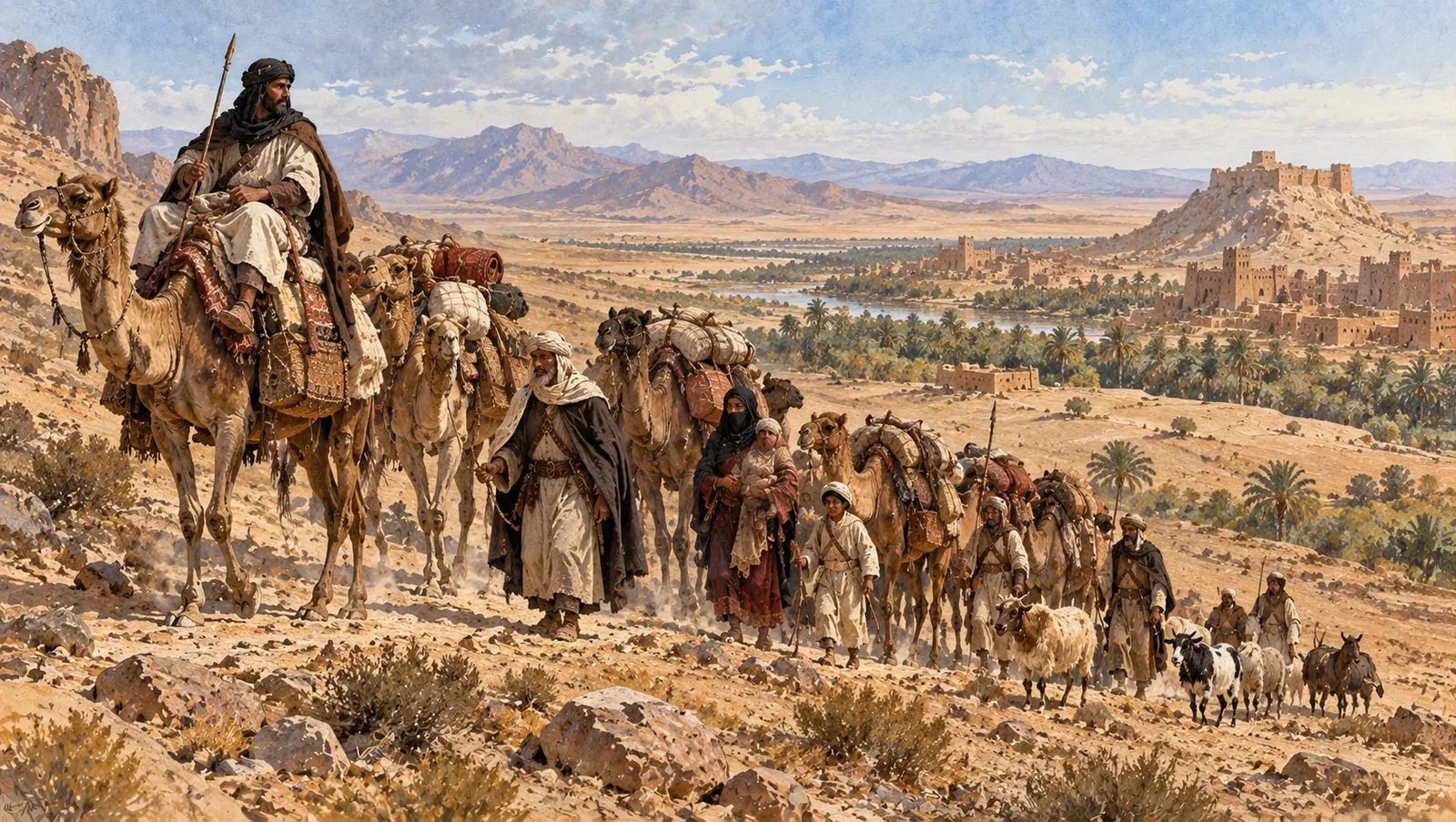
Nomadic Bedouin tribes such as the Banu Hilal carried Arabic into the Maghreb's countryside from the eleventh century.
Why such a long wait? In the tenth century the Fatimids conquered Egypt with the help of local discontent, and established their capital at Cairo in 973, leaving the Maghreb in the hands of an Amazigh lieutenant. Strategic, and destabilizing. Within three generations a new Amazigh dynasty, the Zirids, broke from Fatimid vassalage and allied itself with the Abbasids. To restore order, the Fatimids sent several Arab nomadic tribes west.
These Bedouin were not systematically conquering the Maghreb. They plundered cities and dispersed. What actually happened is that the Amazigh themselves used them. The Zirids and the Hammadids, who had also broken with the Fatimids, used these tribes as military forces in their internal conflicts, which in turn handed victory to the Arabs who took over Ifriqiya plunging the region into chaos. Arab leaders took advantage of the instability to found small kingdoms, although these were short-lived and limited.
A century later the Bedouin were still in Ifriqiya but now faced the rising Almohad dynasty as a serious Amazigh power, and the Arabs were defeated in Algeria in 1153. The defeat did not stop their expansion so much as change its nature: the Almohads incorporated Bedouin contingents into their forces, and relocated several groups to various regions including Al Haouz in Morocco, spreading Arabic further into the countryside. Over the following centuries there is another pattern to it - alliances between Arabs and Amazigh at the founding of each new dynasty.
| Phase one: urban | Phase two: rural | |
|---|---|---|
| Period | 7th to 11th century | From the 11th century |
| Main setting | Cities such as Kairouan, Tunis, Tlemcen and Fez | Countryside, steppe and plains |
| Main agents | Arab administrators and the states built around new cities | Bedouin tribes, later resettled by the Almohads |
| Why Arabic won | It became the language of administration; Amazigh languages were unwritten and divided | Prestige of a sacred language, higher status, and claims to prophetic lineage |
Why Arabic prevailed despite Arab military defeats
Which brings us to the real question. Arabs were repeatedly defeated in the Maghreb. Why did their language win out?
The most obvious hypothesis is demographic. Such a number of Arabs arrived that the Amazigh were simply absorbed. It doesn't survive closer inspection. All those Bedouin tribes arriving from the east, taken together, numbered at most a hundred thousand people spread out across more than a century of migration. For comparison, the Vandals numbered around eighty thousand in 429, and yet their influence entirely disappeared after the re-conquest by the Byzantines, while Bedouin influence persisted and contributed to the massive Arabization of the region.
Nor can it be explained by exceptionally high Arab fertility or extermination of the Amazigh. As we've seen, the local dynasties generally defeated the disruptive elements from the Arabs and then integrated them into their ranks.
The likelier explanation is that Amazigh and Arabs were connected in similar ways of life. Nomadic Bedouin, much like the Zenata or the Lawata during the Byzantine period, weakened settled societies with raids and constant threat to the countryside, continuing the trend of camel-herding nomads from the sixth century in Africa Proconsularis and Numidia. The Zenata assimilated easily with the new arrivals, who carried significant prestige due to their language being considered sacred. It offered the Amazigh the advantages of higher social status, and the possibility for them to claim prophetic lineage by declaring themselves a Sharif. The process was so thorough that nomadic Zenata dialects have nearly disappeared today, surviving only in mountain regions and the oases of the northern Sahara.
A second hypothesis concerns the distance of language. Arabic and Amazigh languages belong to the same family and share a common ancestor, and so structural similarities may have made the shift easier than a shift from Amazigh to Latin would have been. There is an interesting pattern to suggest this. Latin established itself durably on Indo-European substrates, while Arabic mostly took hold in Semitic or Afroasiatic regions. Some have taken it further and suggested that remnants of Punic persisted in Tunisia, and this might explain why Arabic was so readily adopted there. However evidence currently supports the latter claim.
Demographic growth from trade and territorial expansion resulted in migration from the mountains to the plains and the cities. In principle this could have resulted in an Amazigh cultural and linguistic revival. In practice it usually meant abandoning Amazigh languages for Arabic, because Arabic was the language of state administration and therefore of the city.
The absence of a centralized Amazigh state
The comparison with Iran and Turkey provides what can be the decisive factor: the Maghreb did not have a centralized state capable of enforcing a uniting language of its own.
The Persians came to the Arab conquest with a thousand years as a united nation and a strong tradition of state administration, which likely did a great deal to preserve their language - even though they had themselves used Aramaic as an imperial lingua franca. The Amazigh did not have a unified state or a language, and the variance between regions made communication with each difficult.
Running the counterfactual it becomes clearer. Had the Arab conquests arrived when the North African states had been unified, and a dominant tribe had established its language across the territory - Tachelhit, for instance - it could plausibly have become the region's unifying tongue, much as Amharic did in Ethiopia. History simply ran in the other order.
It's worth ending on the fact that this process is not finished. Arabization in both Algeria and Morocco is still incomplete, which is why those Atlas villages still exist. With the current revival of Amazigh identity the linguistic history of the region may yet take another turn. That is one that is still open.