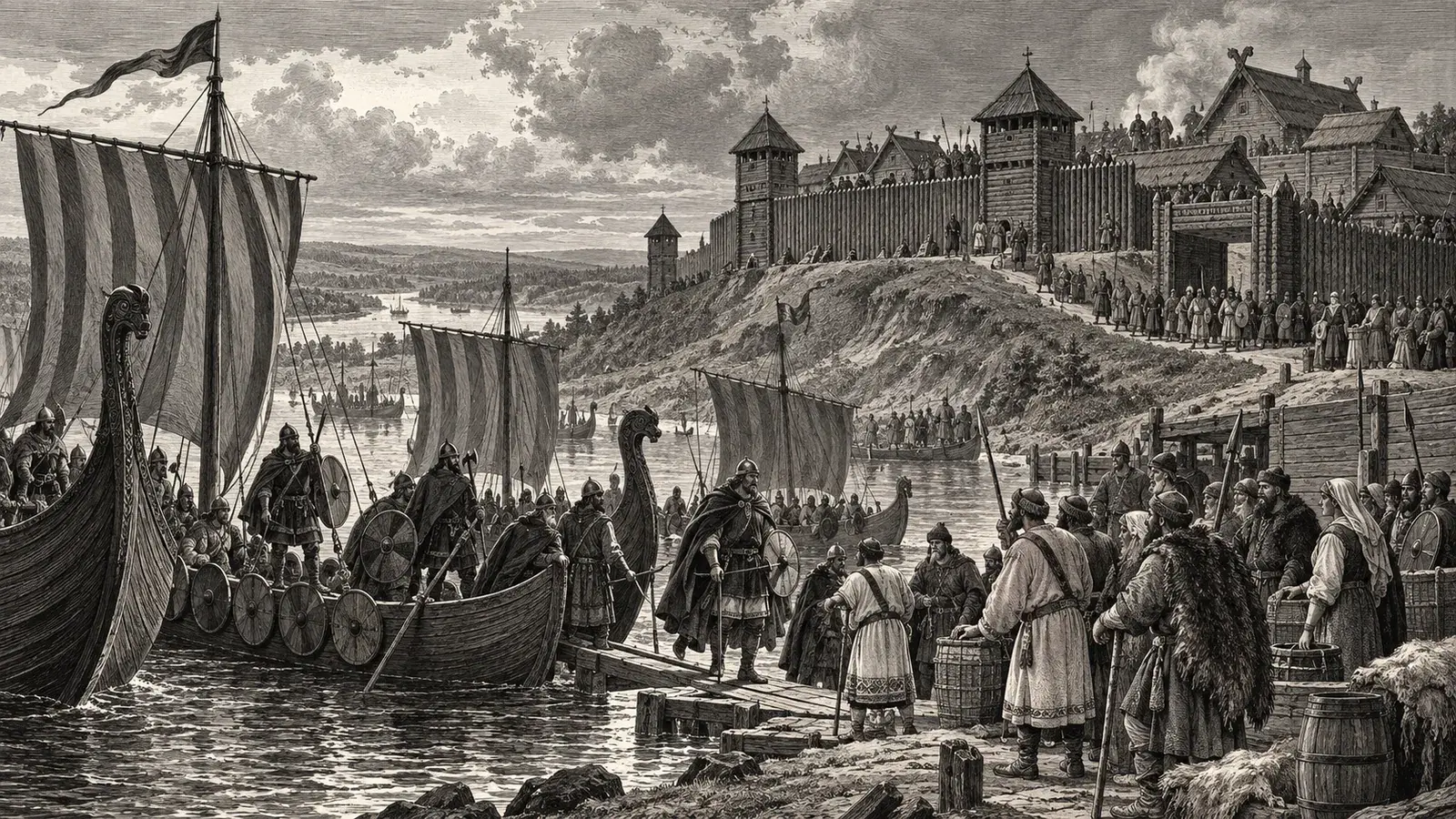
Manzikert in 1071 is a fulcrum on which much of what follows turns, and is interpreted differently in different regions. A point where a long confrontation between Christianity and Islam begins, or a Turkish victory opens up a new chapter in the history of conquerors. But the battle itself did not finish up the Eastern Roman Empire. If anything, in 1071 Constantinople underwent a century's worth of slow decay, which the battle accelerated and from which it barely emerged. The empire lost a battle but mostly recovered its army, and then the Anatolia it needed was lost in the civil war that followed.
The Crisis of the Third Century and the Division of 395
We can start our narrative in 395 with the formal division of the Empire and then turn to the Crisis of the Third Century to understand that.
Between 235 and 284 Rome faced barbarian invasions on her northern frontiers, war with Sasanian Persia, epidemic disease and severe fiscal contraction all at once.
At its core Rome was a fiscal-military system. As long as the state could extract agricultural surplus, turn it into coinage and spend that coinage on armies the Empire retained its unity. This broke down when population declined since the cycle requires the continuous extraction of surplus and then its reinfusion as coinage for the payment of troops. Political instability ensued directly because emperors were unable to buy military loyalty. Late Roman reforms, which reorganised the administration and divided authority between different bodies, failed to prevent this because the Empire had grown too large and too disparate to be efficiently managed as one unit. Hence the division of 395, which did not create two empires so much as recognised two which had already existed.
The western provinces were less urbanised, less monetised and fiscally weaker than the east. As revenues declined western emperors increasingly invested in land in the form of Germanic military officers, the foederati, who provided them with men and defence in return. This served as a stopping measure and the gradual decentralisation of authority paved the way for autonomous barbarian kingdoms. By 476 the Western Empire ceased to function.
Why the Eastern Empire Survived the Fall of the West
The East started from a better position, possessing the richer provinces with more fertile land and cities, who had retained their trading connections and had a sound fiscal basis despite the third century crisis.
Moreover it possessed two institutional pillars which the West did not possess: a functioning tax bureaucracy and a stable gold currency (the solidus). The regularity of taxation ensured regular payments to soldiers and the currency allowed the state to buy loyalty, manpower and diplomatic leverage.
None of this saved it from similar structural problems, however, and it too faced the eastern front against Persia and repeatedly fought over the Caucasus, Armenia and Mesopotamia. Its frontier in the Balkans was a revolving door for migrating and raiding groups seeking tribute, the Goths and then the Huns under Attila in the 440s being particularly troublesome. Its manpower was in short supply and the empire too faced the problem of foederati, but in the east they were largely paid in gold and the land grants conditional and revocable. Rebellions were a regular occurrence (notably by Gainas in 400) but the state always retained its role as the ultimate military commander and thus the instability never manifested itself in fragmentation of the Empire.
Succession remained a perennial weakness and not because of any particular emperor. Contrary to popular conception Rome did not have a formalised set of laws for handing over power, and succession was always a matter of dynastic inheritance, military backing and bureaucratic wrangling. Strong generals were necessary for the defence of the Empire and simultaneously held sway over their troops and local patronage, which repeatedly led to civil wars and usurpations which further weakened the frontier.
Religion was a further divisive force. Constantine's decision to incorporate the Church into the imperial administration in 313 was meant to bind the Church as a whole to the Emperor, and create a unified body of faith. But this never happened, and a century later the dispute between Chalcedon and the Miaphysites continued to resonate through the Empire. It was not just a doctrinal dispute but mapped onto broader regional fault lines which frequently cut across political and fiscal interests. The doctrinal position of the Chalcedon creed was that Jesus was both divine and human but the Egyptian and Syrian churches continued to reject this and remained Miaphysite for centuries. Local elites frequently used this as a way to resist taxation and keep provincial wealth and administrative power from Constantinople. The imperial response to this alternated between repression and concession and the vacuum in between was frequently exploited by separatist movements. The resulting mistrust of the capital was a long standing issue in the Eastern Empire, affecting its administrative and fiscal relationships with the richer provinces.
Justinian, the Renovatio Imperii and the Plague
The sixth century began on a positive note for the Eastern Empire with the reforms of Anastasius I, who reigned decades after the collapse of the Huns that followed the death of Attila in 453, and saw internal revolts put down and a careful policy of limited engagements with Persia, where he preferred making regular payments to avoiding full-scale war.
This meant that trade could resume between Europe and Asia and when the economy was expanding and the state was spending less, taxation could be kept low. The Balkans remained a problem after the repeated devastation wrought by the Goths and the Huns, but the core provinces of Asia Minor and Egypt were productive and fiscally secure. For the first time in a century the Eastern Empire did not have to worry about its finances.
Justinian came to power in 527 with a programme of renovation of the Empire and expansion of its frontiers (the Renovatio Imperii) which required large-scale spending and manpower.
His reforms began with law, the Corpus Juris Civilis codifying centuries of Roman law, reducing regional variation and ensuring greater central oversight, and he introduced a more systematic approach to taxation. At the same time he increased religious orthodoxy, making Chalcedonian Christianity the integrating principle and closing pagan institutions such as the Neoplatonic Academy in Athens in 529, which has been seen as the end of ancient Greek philosophy. It should perhaps be seen as merely the suppression of further challenges to imperial authority, for elite education and advancement continued to be dependent on the state-controlled Christian education system. It is fair to say that these measures made matters worse in the disaffected western provinces.
Justinian's programme of reconquest also required large-scale spending and taxation was increased, but the combination of high taxation, corruption and the centralisation of power provoked mass discontent and the Nika Riots in 532. Their suppression allowed Justinian to stage a successful show of force and he used money from the tax-raised to fund massive building projects such as the Hagia Sophia, which served to underline his position as God's chosen Emperor.
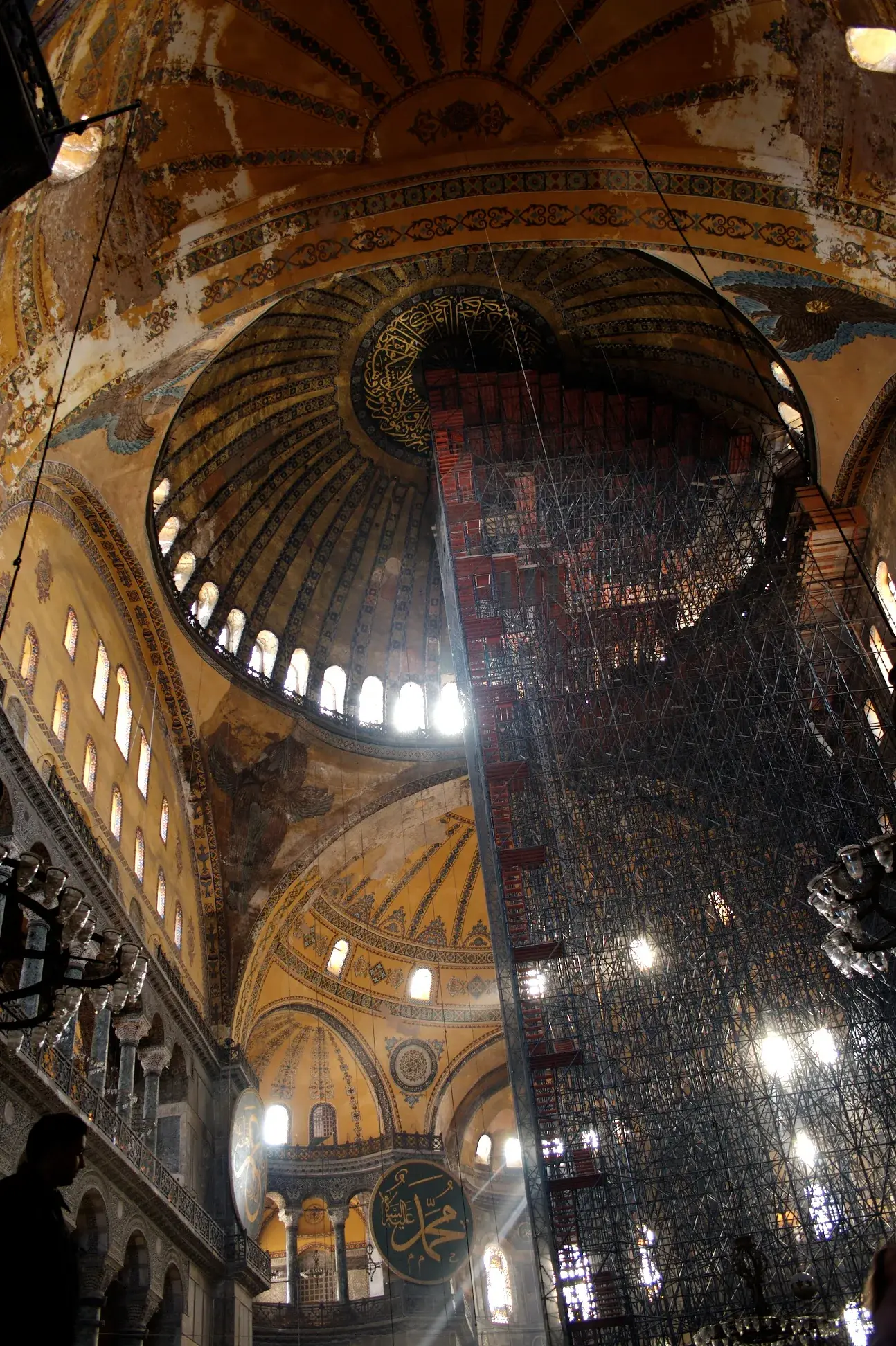
Justinian's Hagia Sophia, raised in the wake of the Nika Riots, was built to project imperial authority as much as devotion.
Image Credits: Matthew Badger bad_germ, via Wikimedia Commons (CC BY-SA 3.0)
What the programme failed to do was take account of the fragility of the western provinces and their capacity to withstand prolonged military engagements. The campaigns in North Africa, Spain and Italy had reopened the western front and although they were successful in reconquering lost territory, the lands were left devastated. It was a military victory without strategic gain, for the Empire's vulnerabilities were simply transferred to the shoulders of the western provinces, which were not prepared to bear them. Troops were withdrawn from the eastern front, exposing it to renewed nomadic incursions and new tribes (presumably remnants of the Hunnish power such as the Utigurs and Kutrigurs) were probing the frontiers. The Sassanids took advantage of the interregnum to attack at will. Then in 542 the Plague of Justinian struck, with waves of it recurring for decades, exhausting the Empire's resources. With fewer soldiers and taxpayers to fund the military machine, Justinian's Empire tottered on towards 565 when he finally died.
First Contact: Byzantium and the Göktürks
It is commonly assumed that the Romans first met Turks during the eleventh century Seljuk incursions, but the Empire had sporadic encounters with Turkish tribes five hundred years earlier.
The empire faced renewed pressure from the Slavs who filtered south through the Danube in the sixth century, partly encouraged by the arrival of the Avars - a steppe people who had incorporated the remnants of the Rouran Confederation after its defeat by the Göktürk Khaganate. The Avars dominated the Slavs and pushed deeper into the Balkans, provoking a series of shifting pacts, tributary relationships, raids and treaties with Constantinople.
The Göktürks who ruled Central Asia wished to dominate the silk trade and required a route which bypassed the Persian trade routes, and so a mission was sent to Constantinople in 568 to negotiate the opening of a route to the north. This was the first direct encounter the Empire ever had with Turks, and was motivated by the shared interest in countering Persia.
It was not long before the commercial relationship became a military one, as the war with Persia resumed in the sixth century and the Sassanids suffered a series of revolts in Armenia, disputes over tribute and finally the Sassanid seizure of Syria and Egypt. These pressures forced Heraclius to ally with the western Göktürks and he launched a successful campaign deep into Persian territory. Both empires emerged weakened, and the Western Göktürk Khaganate was in any case dissolving under internal pressures, leaving a vacuum in Central Asia. Across the Empire there was a reduction in the old structures of power with the frontiers unmanned and populations thinned out. It was into this vacuum that a power neither Constantinople nor Persia had anticipated was to rise.
The Arab Conquests and the Theme System
The Arabs were not an unknown entity to the Empire, having featured in the strategic calculations of the late Roman commanders, who used them as auxiliaries. They were client kings in the Syrian desert who provided the Empire with military aid because they knew the terrain and possessed a fast mobile cavalry, which enabled them to raid Persian territory and serve as scouts for the Roman frontier. Constantinople was well aware of who they were - what changed in the 630s was that the Arab forces which marched north were employing an operational method which had been revolutionised by their desert warfare.
They were extremely mobile, crossing inaccessible dry ground which the Roman war machines could not follow, and their camel logistics enabled them to carry supplies to where the Roman supply chains failed. The defensive system of the Empire, the Limes Arabicus and the walled cities, was already faltering under the strain of the war with Persia.
With the fall of Syria and Palestine in the 630s and Egypt between 640-642 the Empire had lost its economic core to the Arabs. The impact of losing these territories was felt throughout the Empire and its ability to function fiscally and bureaucratically was severely compromised. The mid-seventh century was marked by a structural crisis as the Empire faced the prospect of losing its revenues and finding itself unable to fund its administration and military.
The region which had been its economic core was now a liability as its population shrank, its land was vast but underutilised and it was under frequent attack by the Arab cavalry. The response to these attacks was the Theme system, under which soldiers were given plots of land to farm and in return for their service these farms provided them with food and military equipment. In essence it was a system which created self-sustaining soldiers - they fed themselves and the Empire. Each Theme combined agriculture with taxation and military service and over time these units grew in power, until finally the division of the empire into territorial units with a strategos who controlled both civil and military administration began.
By the early eighth century the Empire had transformed into an agrarian and military state, with its focus on Anatolia. It had changed from being a cosmopolitan and urbane power in late antiquity to a military-dominated society.
The Twenty Years' Anarchy, Leo III and the Tagmata
This theme system had the potential to undermine the Emperor. Since they were self-sustaining military units the strategoi controlled their local manpower and finances, and soldiers often owed allegiance to their generals rather than the Emperor. Strong strategoi such as those of the Anatolikon and Armeniakon could mobilise more men and resources than the Emperor.
This led to a period of opportunism in which seven emperors were elected within twenty years, most of them through thematic revolts. This anarchy allowed the Arabs to make gains in the east and the Slavs and Bulgarians to make inroads into the empire's European possessions. It was not until 717 that Leo III, stratigos of the Anatolikon, came to power, and the circumstances of his rise to power are instructive.
Leo (who is reported to have spoken fluent Arabic) had joined with the Arabs to march on Constantinople, but had then deceived them and taken over the city for himself and had to face the army he had betrayed.
He found unexpected allies in the newly arrived Bulgarians, with whom the Empire had drawn up a treaty regulating tribute payments in 716. The Bulgarians were a Turkic people who had emerged from the Göktürk dissolution in the 650s and by the eighth century, taking advantage of the Avar weakness, had established themselves in the Danube region and became a permanent fixture in the Balkans. Like everyone else the Bulgarians were less interested in Arab expansion but when the Arabs laid siege to Constantinople in 717 and large forces were stationed in Thrace right along the Bulgarian frontier it became clear that they faced an existential threat. The Bulgarians struck the Arab forces with devastating effect and contributed significantly to the failure of the siege. Leo also had the advantage of the city's walls and the Greek fire, a substance whose formula has since been lost.
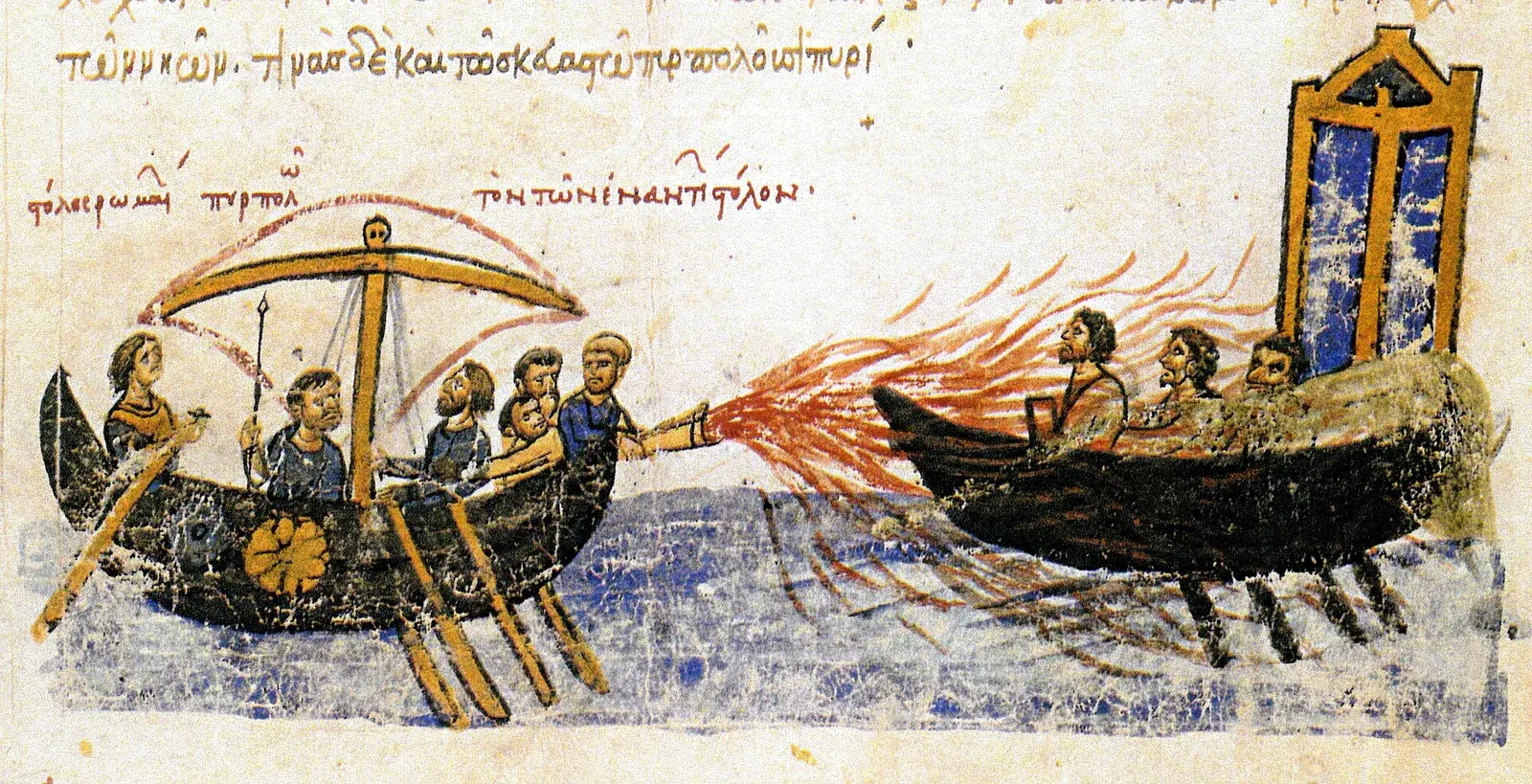
Greek fire, a flammable weapon whose formula is now lost, helped Constantinople survive the Arab siege of 717.
Image Credits: Wikimedia Commons (Public domain)
It was not enough on its own and Leo and his son Constantine V took action to ensure that such anarchy would not occur again. First they broke up the large themes into smaller units so that no single general could again hold too much power. Coups were still possible since military success was a viable route to the throne but they were less frequent and less damaging. Secondly they reformed the fiscal and legal system which was necessary for maintaining central authority, particularly through the exercise of Iconoclasm. The reasons for Image-breaking have not been totally agreed upon, but it may well have been a fiscal decision as much as anything else, as the state's control of church wealth and its redirection into the army was necessary for its survival. The centralising tendencies were a matter of survival in a crisis.
The most significant reform was the creation of the Tagmata, professional regiments stationed near the capital and paid for directly from the treasury, which served three purposes: as an offensive unit, as a stabilising force against thematic rebellions and as a countervailing power to the strategoi. The Empire now found itself with two military systems: the themes which provided local defence and the Tagmata which ensured imperial authority and could mount offensive campaigns.
Under Constantine V the building of passes and outposts in the frontiers, the staging of forward-defensive posts and counter-raids stabilised the frontier against the Arabs. Following more than a century of contraction the Empire's demographics were on the rise and land which had been laid waste was being farmed again, and trade had begun to flow once more along Anatolia's trade routes and coastal cities.
Abbasid Fragmentation and the Macedonian Reconquests
By the time of the Macedonian dynasty, Byzantium was turning from defence to attack - not because it had become stronger but because its opponent was growing weaker.
The Abbasid Caliphate was too big to govern from one capital and the autonomy of the provinces meant that the tax revenues and armies which should have gone to Baghdad were being pocketed by the provincial governors, and rich regions such as Egypt, Syria, Persia and Mesopotamia became self-governing fiscal-military units. A series of regional dynasties (the Tulunids in Egypt, the Ikhshidids, the Hamdanids of Aleppo) paid lip service to Baghdad but ruled themselves. This was a logical extension of a tributary state whose fiscal resources exceeded its administrative reach.
Strategically this meant that the pressure on the Empire was eased. Under a united Caliphate, which had existed up to the 860s, the Byzantines had faced a united front. After fragmentation, crucially, these regional dynasties were not united and competed with each other as fiercely as they did with the Empire. They were unable to coordinate attacks and their competition over trade routes and regional hegemony meant that any expansionist designs were checked. They continued to raid but the assaults were no longer cumulative and could not overcome the overall strategic defensive position of the Empire. From the 860s onwards a series of successful Byzantine counter-raids enabled the Emperors to recover much of the lost territory.
Worth remembering that the reconquests did not occur because the Empire had become stronger, but rather because the Caliphate's weakness had created a power vacuum.
The Dynatoi and the Decay of the Theme System
Military success had its costs, but these proved particularly high, as far as the reconquests were concerned. The new territorial gains brought a political order characterized by the dominance of the dynatoi, the powerful, who dominated the higher ranks of the military, the churches, and the administration as a landowning aristocracy.
The main reason for this development was that trade and industry were strictly controlled by the state, making land the only viable investment for private capital. At the same time, the campaigns created an increased demand for professional soldiers, who could be effectively raised only by the cash taxation of the landowners. For the peasant-soldiers, the burden was particularly severe, as they continued to bear direct taxation while being obligated to perform military service on top of that, with limited access to liquidity. For the stratotai, a bad harvest or a personal emergency could easily turn into a debt, and the situation was exacerbated by the fact that population growth, which was to be the source of fresh recruits, put additional pressure on the land market.
The only way for the peasants to meet their cash obligations was to sell their holdings, and the dynatoi were the ready buyers. This development, combined with the similar tendencies among the stratotai, led to the dynatoi securing substantial land estates as their permanent source of revenue and military recruits. This in turn created a permanent drain of manpower from the themes, while the military potential of the state was increasingly concentrated in the hands of the aristocracy. Thus, the class of the dynatoi formed, which controlled land, military, and state offices, with the free peasant landownership being increasingly replaced by the estates of the landowning class. The fiscal and military policies of the state were now determined by the needs of the landowning aristocracy, which controlled huge land concessions and private armies. The most prominent among them were the Doukai, Phokai, Skleroi, and Maleinoi, who hired their own retinues of soldiers and consequently possessed significant regional influence.
Dynatoi were a problem for the state, as the emperor and his bureaucrats had to secure their revenues and the military now depended on them. Romanos I and Basil II addressed the issue by passing a series of laws designed to protect the landownership of the peasants, including the right to sell one’s land, with the dynatoi’s estates being subject to confiscation in several cases. Obviously, the laws did not solve everything, as many provincial officials belonged to the landowning aristocracy and consequently had little interest in diminishing their wealth. At the same time, Basil II feared that his rivals would attempt to usurp him and consequently increased the number of foreigners in the army, which once again placed the state’s military strength at the mercy of mercenaries. Romanos III and Constantine IX followed suit, demanding more cash payments from the theme soldiers, who consequently became even more dependent on their feudal superiors.
While the empire continued to prosper on the outside, its internal structure continued to deteriorate. From the outside, the financial and military potential of the state appeared to be high: at the turn of the eleventh century, the empire reached its maximum territorial extent. However, once the emperor Basil II died in 1025, no subsequent ruler was able to control the dynatoi, and the continued fiscal and military pressure led the landowning aristocracy to expand its territorial holdings. The themes continued to lose their military potential, the central government lost authority over the generals, who were now effectively feudal lords, and the mercenaries became even more expensive and consequently less reliable.
Armenia, the Turkmen and the Battle of Manzikert
The first front to feel the pressure from the Seljuk Turks was not Anatolia, but the Armenian region, which was strategically located on the empire’s northeastern border. Previously, the Byzantine authorities had employed a policy of autonomy, granting the Armenian princes the status of allies, who, in turn, provided the empire with military support in its wars against the neighboring Sassanid Persia. The relationship was cut due to the Arab domination, but in the tenth century, it was re-established, as the Armenians once again acted as vassals, providing the empire with troops and military intelligence. Their autonomy was limited to their lands and the right to collect revenues, which, in the eleventh century, were seen by the state as an unnecessary expenditure.
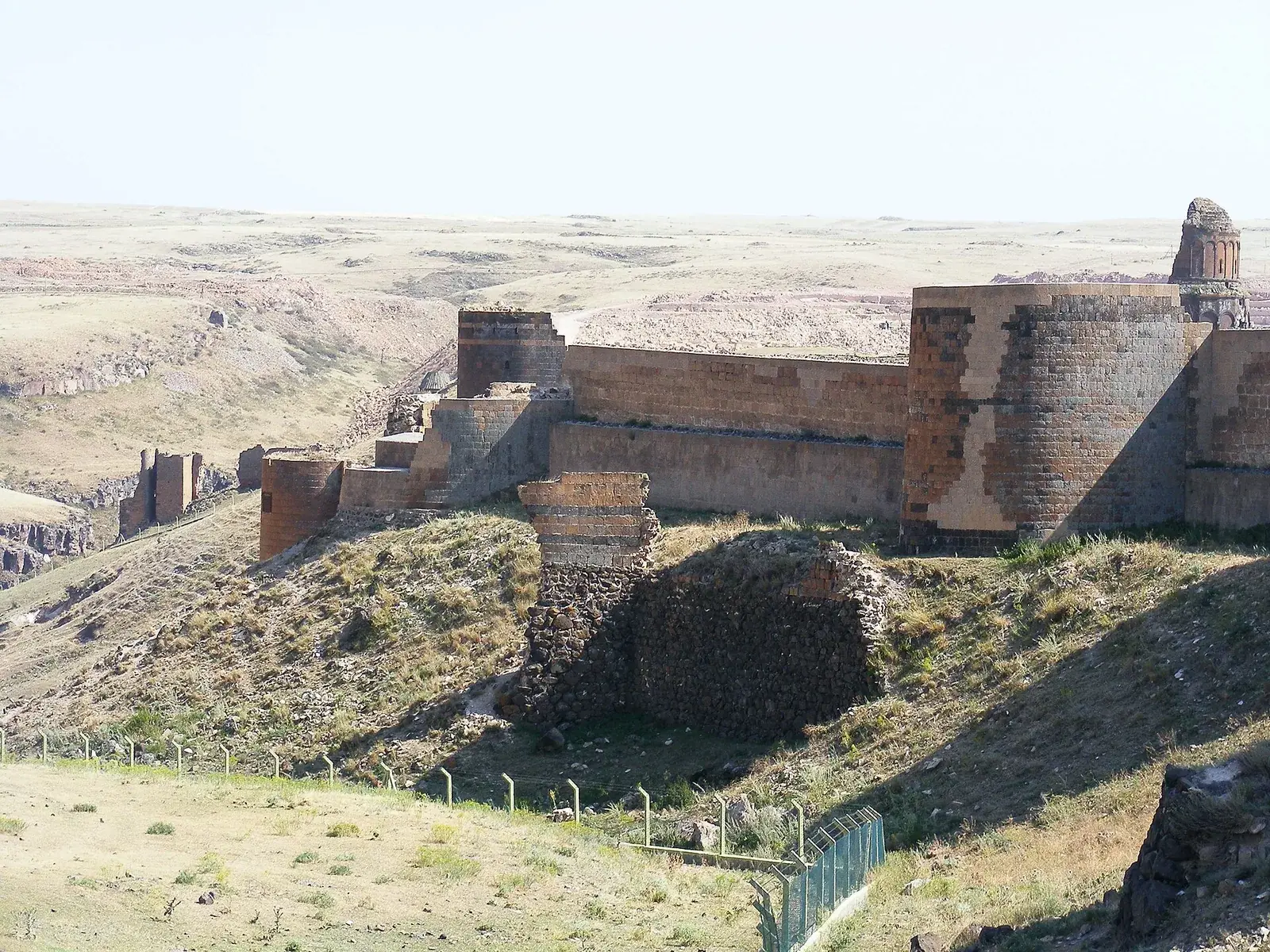
Ani, capital of the Armenian kingdom the Byzantines annexed in 1045, later fell to the Seljuks.
Image Credits: Marko Anastasov, via Wikimedia Commons (CC BY 2.0)
Accordingly, in the eleventh century, the imperial government decided to bring the Armenians fully under the control of the state. At first glance, the decision was logical, as Anatolia was a strategically important region, which generated considerable revenues. Nevertheless, this policy failed to take into consideration the unique position of the Armenian buffer zone, which, to a certain extent, secured the empire’s borders. The removal of the Armenians resulted in the appearance of a vulnerable front, as the Seljuk Turks no longer had to engage in large-scale battles with a fully organized army. The first wave of attacks was carried out by Turkmen tribesmen, who, at the request of the sultan Alp Arslan, headed for the Armenian Highlands in order to secure pastures and riches.
A similar campaign was launched by the Seljuk Turks, who, according to historians, sought to expand their dominance beyond Syria and Mesopotamia. In reality, Alp Arslan focused on securing his capital, as he saw his military campaigns in Syria as a means of promoting his religious authority as well as securing trade routes. Consequently, Anatolia was not the priority, and the attacks on the Armenians were primarily limited to skirmishes and sieges of minor fortresses. Nevertheless, they did take their toll, and the attacks of the Turkmen tribes led to the weakening of the Byzantine defenses.
With the death of Constantine X, the emperor who had cut the army back and neglected the frontier defences, the situation further deteriorated. In 1068, his successor Romanos IV Diogenes was elected emperor and immediately began reinforcing the border defense. Nevertheless, as late as 1071, he realized that the situation required a more comprehensive approach. At the head of an army consisting of tagmatic troops, thematic soldiers, Armenians, and mercenaries, he marched towards the enemy in order to inflict a major defeat on the Seljuk Turks and hold back their expansionist ambitions.
The army that marched to Manzikert, one of the strongholds of the Seljuk Turks, was extremely heterogeneous. Part of the troops were regular tagmatic soldiers, while the rest consisted of mercenaries, Armenians, and thematic troops. The latter were poorly armed and equipped and, according to historians, played a negligible role in the battle. The composition of the army is indicative of the overall weakness of the military as an organization. When news of a large-scale attack on Manzikert reached Alp Arslan, he gave up his plans in Syria in order to deal with the attack on his territory.
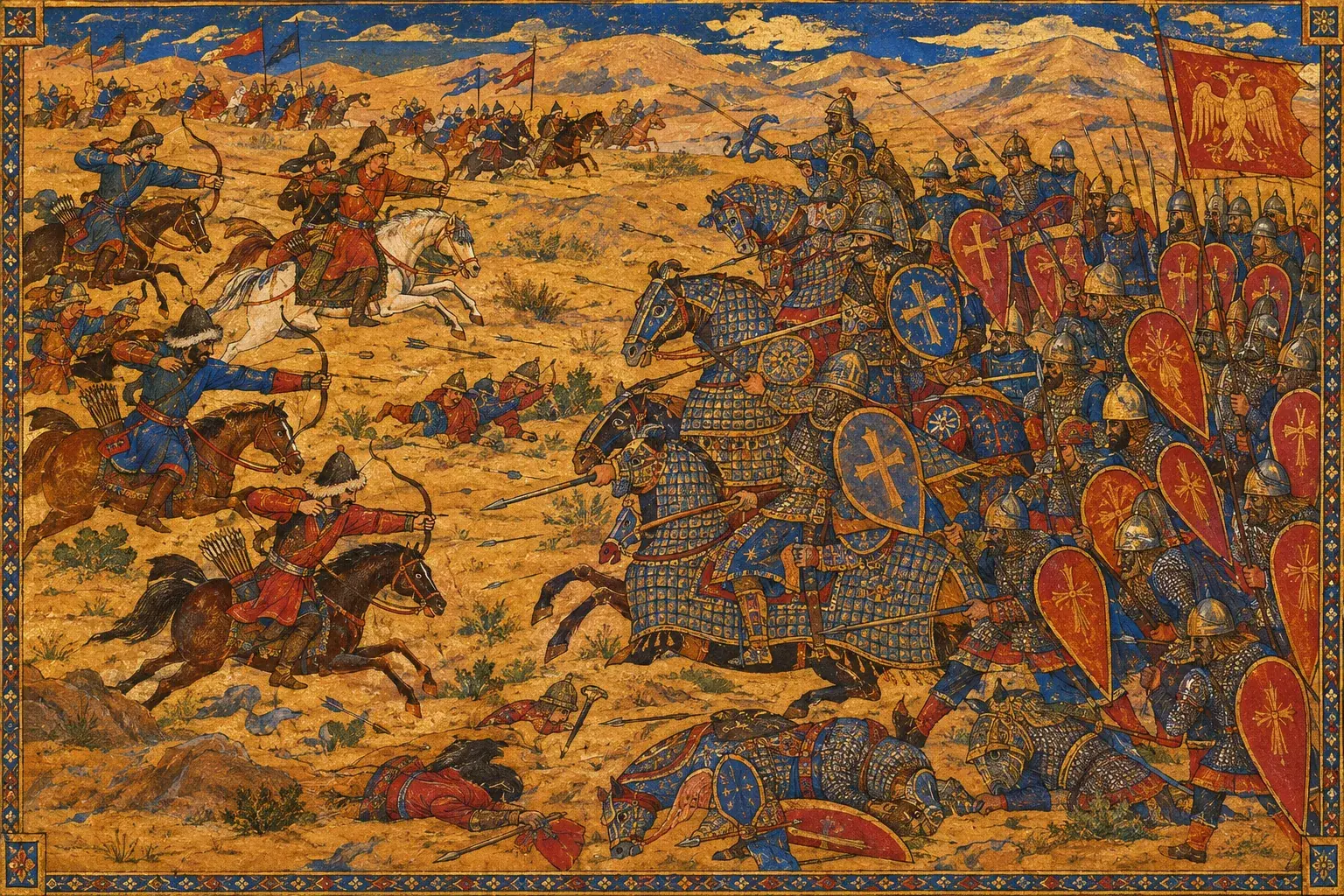
Seljuk horse archers harassed the Byzantine lines at Manzikert before the army broke apart.
It was the fragmentation of the Byzantine military that dictated the outcome of the battle with the Seljuk Turks. The various units became disorganized and failed to withstand the assaults of the Turks. According to historians, there were reports of the emperor’s death, which led to the desertion of several units, including Normans and Pechenegs. Eventually, the emperor was forced to surrender to the sultan, who, however, allowed him to leave the territory of Anatolia.
Even though the Byzantine army was defeated, the battle of Manzikert was not the reason why Anatolia was gradually lost. Thus, most of the fighting forces were able to retreat and, despite the defeat, remained intact. Even more remarkably, Alp Arslan did not hinder the withdrawal of the Byzantine troops but, instead, concluded a treaty with them. Nevertheless, the treaty was not honored, but the Seljuk Turks continued their attacks on the Byzantine Empire.
Civil War and the Loss of the Anatolian Interior
The battle of Manzikert did not lead to the immediate loss of Anatolia, but the events after it did. Romanos IV returned to Byzantine territory, where he found that the Doukas faction had already moved against him, as the court blamed him for the defeat. He also failed to gain the support of the aristocracy, and the emperor found himself caught in a crossfire between rival factions. The subsequent civil war significantly weakened the empire’s defense capabilities, but Romanos underestimated the threat posed by the Turkmen. He hired mercenaries to fight against rivals in the civil war and, subsequently, against the Seljuk Turks. The Turkmen received detailed information about the fortifications and geography of the region and, in addition to being mercenaries, became permanent residents in search of plunder.
It is not entirely accurate to say that the Turkmen settled Anatolia as a result of a successful campaign, since there was no such campaign. The Turkmen began to arrive gradually and, wherever they went, they took over the forts and cities, cutting off the local population from the central government. The mercenaries, as the mainstay of the army, began to occupy the land in exchange for service and significantly influenced the course of the fighting. The most critical factor that led to the loss of the Anatolian region was not the battle of Manzikert but the civil war. In fact, it was the internal struggles between various rulers that led to the weakening of the defense against the Seljuk Turks. From 1071 to 1081, Anatolia ceased to be a single front. It was the Turkmen who were the driving force behind this development, but they were only one component of the complex military-political struggle.
It is notable that while the Arab rulers were fairly strong and economically potent, they failed to achieve anything comparable to the Turks in Anatolia. The main reason for this was the differences in ethnic composition, military resources, and even the time factor.
Why the Turks Were Successful in Anatolia and the Arabs Were Not
It is hard to deny the superiority of the Arab forces at the time of the first attacks on Anatolia. The Umayyad and Abbasid Caliphates were powerful and influential states with strong economies and well-developed administrative systems. Nevertheless, they were unable to consolidate Anatolia, which the Turks did fairly quickly. There are three reasons for this, and the most obvious is that the Turkmen who entered Anatolia were used to the climate and terrain of the region, while the Arab warriors were accustomed to the desert.
The natural barrier, which the Turks faced in Anatolia, was much more daunting than the Arabian desert. This climatic barrier, as well as the mountainous and forested landscape, significantly hampered the Arab military operations. Consequently, while the attacks could be seasonal, the siege of cities was seasonal as well. The Arab forces were limited in their ability to harass the local population. Although they could raze villages and weaken the cities’ defenses, a permanent occupation was difficult to establish. On the other hand, the Turkmen were accustomed to a life in the steppe and therefore felt right at home on the Anatolian plateau.
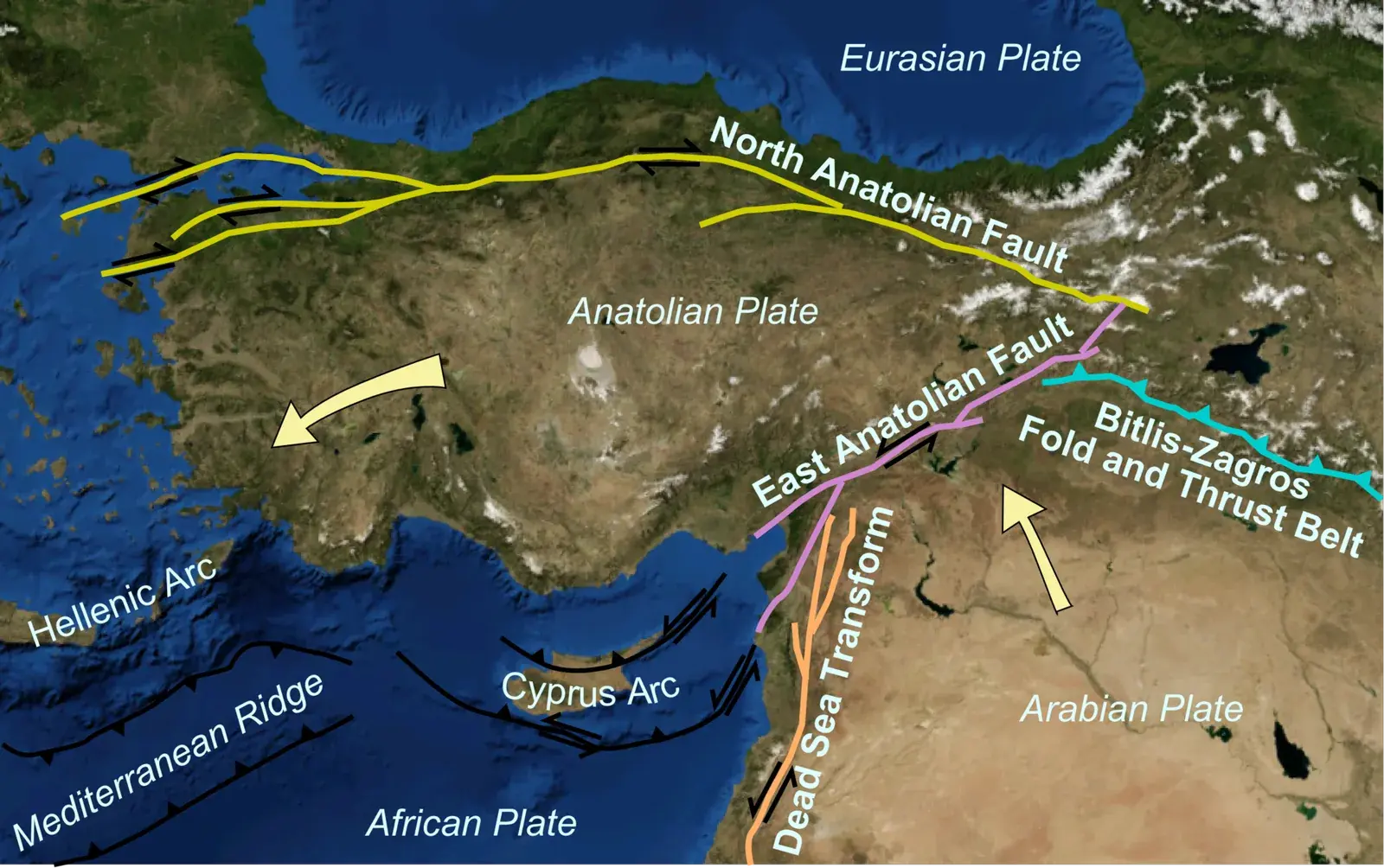
The high, open Anatolian plateau suited Turkmen pastoralists far better than it suited Arab armies.
Image Credits: Game: Wildfire Games Screenshot: PantheraLeo1359531 😺 ( talk ), via Wikimedia Commons (CC BY-SA 3.0)
Although the Arab rulers focused on attacking the Byzantine Empire from the south, their impact was significantly diminished by the resistance put up by the empire. The main strength of the Arabs was their troops, but they were not numerous, and their victories were not decisive. The campaigns of the Arab rulers were long, and the resources of the empire were strained, but the successes were mostly localized. The Arab forces were unable to settle the region, and their victories were largely tactical. On the other hand, the Turkmen were able to establish permanent settlements and conduct campaigns throughout Anatolia.
The decisive factor, however, was that the Turks were the first to enter Anatolia when the empire’s defenses had already weakened. The Arab expansion took place when the theme system was still strong, and the empire was able to withstand the attacks. The Turks, on the other hand, entered Anatolia at a time when the empire was already struggling to maintain its military infrastructure. The campaigns of the Turkmen were continuous, and they did not give the empire a chance to recover.