Ancient Egypt had one of the longest-standing civilizations in the world, which accounted for the numerous ancient landmarks linked to the country. Mention pyramid construction and most will think of Egypt first. Yet, the perception of it being a civilization obsessed with death is completely misplaced.
The archaeological and written record rather points to a people that had an immense appreciation of life and sought to prolong it, not through means of living in fear of the inevitable but by enjoying each moment as it comes. This and other characteristics of ancient Egypt, including mummies, sarcophagi, and mythology, are better understood in context of the country as a place, not an afterplace.
Life Versus Death
The simplest piece of evidence comes from the tombs built and the mummies prepared for burial, meant to keep the deceased comfortable in the eternal journey. The elaborate rituals and practices point not to a fear of death but rather to a philosophy of life lived and its continuation in a different form. Death is seen as a change, albeit a necessary one, rather than an end that should be feared.
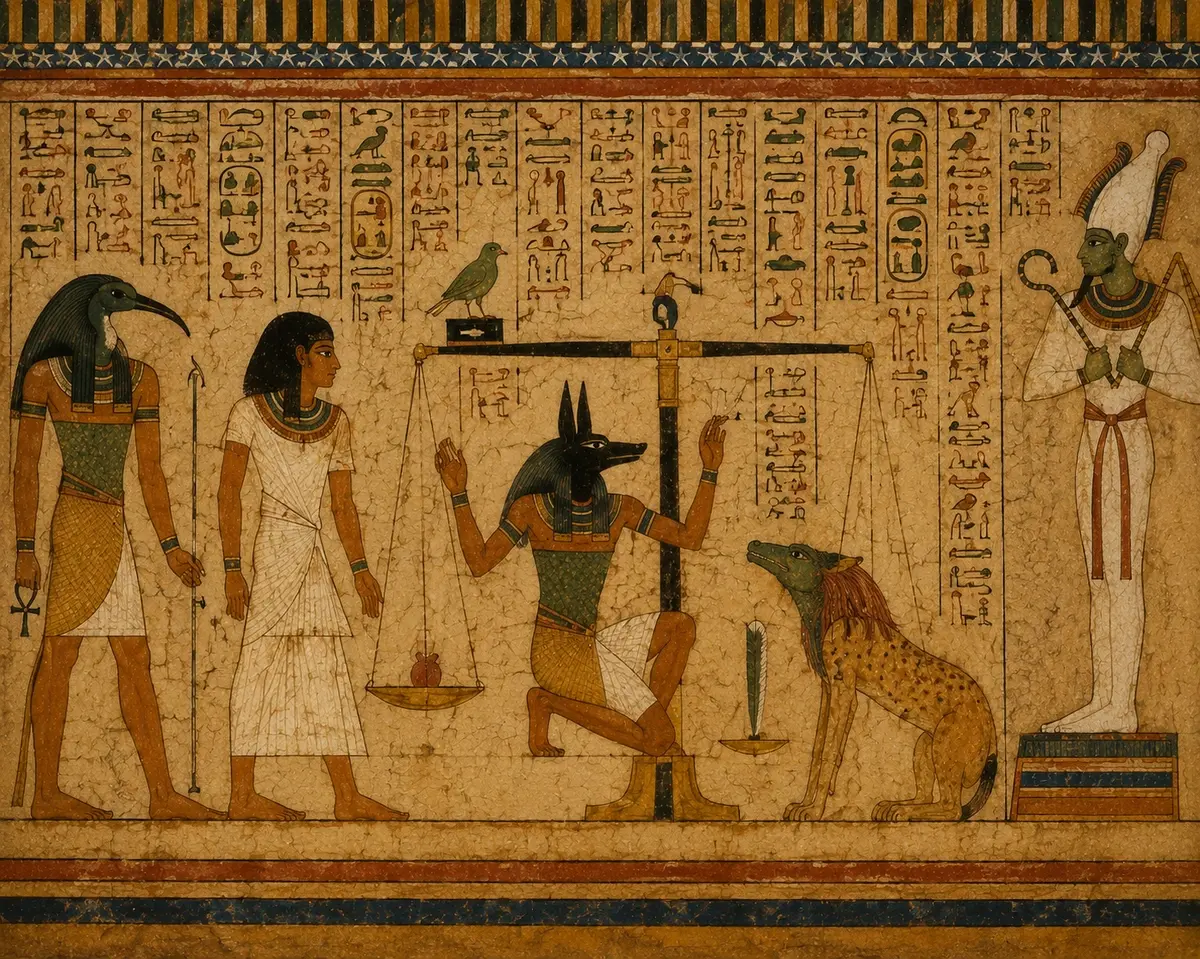
The Weighing of the Heart against the feather of Ma'at, a scene from the Book of the Dead illustrating how death was viewed as a transition rather than an ending.
Even the common people had rituals surrounding birth and life that helped them enjoy each day. Particular attention was paid to gratitude as a way to ensure happiness. Some households held the tradition of the Five Gifts of Hathor, where on fingers of the left hand one was to state what they are grateful for with each of the five fingers. Though it may seem unimpressive, the tradition was widespread. It was common enough that not even the poorest Egyptians were deprived of feeling grateful and, therefore, happy.
The gods and the creation story tell of the origin of the world and the necessity of maintaining order. According to Egyptian mythology, god Atum created the world from chaos, and he did so by exercising Heka on the world. Heka is the force that created everything in existence, essentially the divine power that created the universe. Once the world was created, it needed to be maintained, which was entrusted to gods and, eventually, humans. The notion of ma'at, the principle of ma'at, is intrinsically linked to the creation and maintenance of order and harmony in the world and is a central pillar of Egyptian religion, philosophy, and, ultimately, life.
The Complexity of the Soul
The ancient Egyptians believed in an immensely complex set of souls, each of which lived an individual but interconnected existence. The physical body was only one of them, with others including the soul, Ka, shadow, and secret name. The body was sacred, with all parts being necessary to the proper burial rites. Mummification existed exactly to preserve it as a vessel for the Ka, the shadow, and the soul, with failure to do so resulting in the loss of the said soul.
The afterlife was not seen as an end but rather as a continuation of life as one knew it. The belief in the afterlife dictated the manner in which the body had to be prepared at the time of death. The preservation of the body had to be perfect in order to preserve the integrity of the Ka and allow it to continue its journey along the celestial river. As part of the rites, the body was embalmed and wrapped in linen with special care taken to ensure that the connection between the physical and spiritual parts of the self remained undisturbed.
Ancient Innovations
Even without the religious practices, the achievements of the ancient Egyptians speak volumes about their admiration of their country and its unique role in the lives of its citizens. The Egyptians took great care in inventing and perfecting items related to dentistry and hygiene, such as toothpaste, toothpicks, and breath fresheners. Surgery, cosmetics, brushes for hair and teeth, and hairpieces also hailed from Egypt. Even the architectural feats of the ancient world, including the construction of the pyramids and temples, speak of the incredible skill of the ancient Egyptians who were able to measure, dig and build them with remarkable precision.
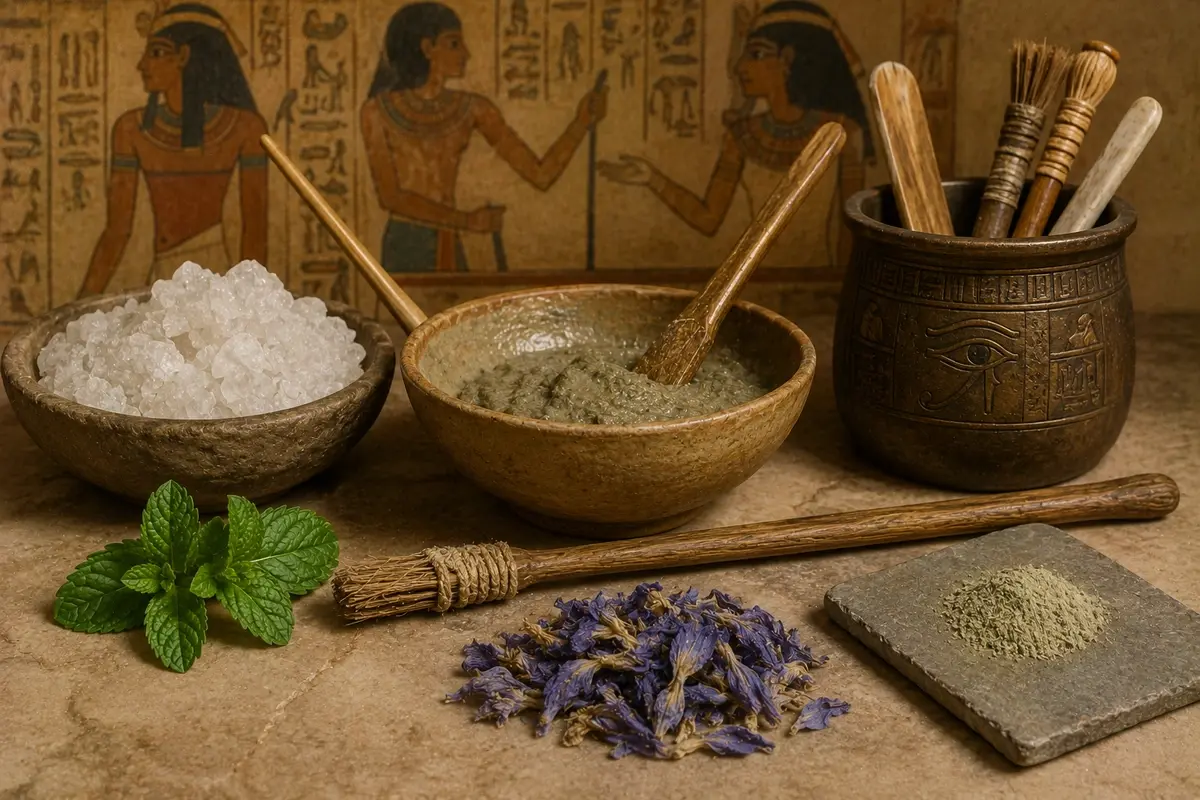
Long before modern dentistry, Egyptians were mixing rock salt, mint, and dried iris flowers into an early form of toothpaste.
The understanding of mathematics and timekeeping was equally impressive, with the Egyptians using early clocks and calendars to track weeks, months, and years. Some historians even believe that the Egyptians discovered electricity, although most remain unconvinced that such achievements were within the power of the ancient world.
The Belief in the Superiority of the Homeland
One of the reasons for the incredible appreciation of their homeland was the belief that it was the only country on earth fit for living or, rather, the only one a soul could return to. It is evident in the insistence on returning the dead to Egypt, with the bodies of the deceased being brought back to the homeland no matter where they died. The belief in Egypt as the center of the world also dictated the manner in which people lived their lives.
Even in the afterlife, the concept of rebirth in Egypt was one of continuation and familiarity, for it represented the only world familiar to the soul. The same scenery and landscape that one saw during their life were recreated for the afterlife as a reflection of this philosophy. As a consequence, the ancient Egyptians held their homeland dear to them and strove to enjoy the life here as much as possible. It is yet another reflection of their love for their country in all its forms.
Homes and Domestic Life
The homes of the less prosperous citizens differed significantly from the homes of the wealthy. The domestic residences of the latter had the ability to offer light and air, while the less privileged had to make do with the night air, letting their children play outside when the warm weather permitted. Upper-class households tended to have more room, as did their larger-than-average material wealth permit. Overall, however, they were not significantly different from the homes of the middle and lower classes.
The domestic life of the ancient Egyptians was largely defined by the house in which one lived, which, in turn, was dependent on one's wealth and, to some degree, social standing. Common houses were constructed of sun-dried bricks, with their walls serving as the sole indicator of prosperity. Those who could afford to build their homes using bricks of double or triple thickness did so, using the amount of materials as a display of affluence. Wood was a rarity in Egypt, which is why it was only used for furniture and decorations, with the upper classes tending to favor it more. Upper-class and middle-class households also had the ability to furnish their homes more, using items made of wood, stone, or other materials.
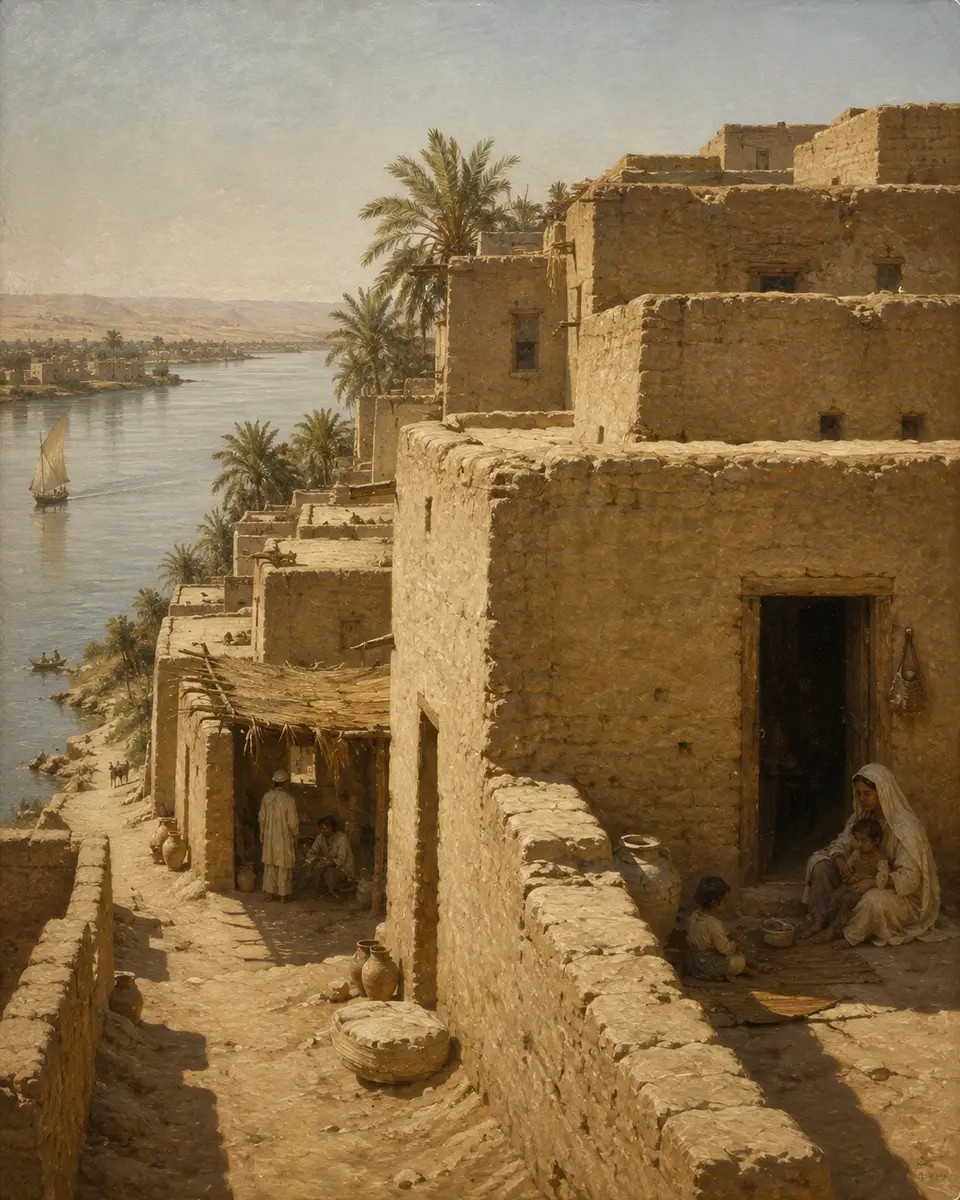
A home's wall thickness, built from sun-dried Nile mudbrick, was one of the clearest markers of a family's prosperity.
As for clothing, it was mostly woven from locally available linen and consisted of knee-length skirts or loincloths for men and flowing dresses or plain, knee-length robes for women. The more modest clothing was linked to the social status of the owner, with the rich women wearing closed, covered dresses in public, while entertainers and servants were often depicted as naked or nearly naked in art.
The differences between the dress codes of men and women in Egypt were not viewed as immodest or indecent in any way. Rather they were a simple reflection of their differing roles in ancient society. The goddess Isis was believed to have granted men and women with equal measure of protection, which in part accounts for their perceived equality in Egypt. Children, both boys and girls, were typically naked until reaching puberty.
Marriage, Family, and Women
The ancient Egyptians generally married young, with the girls getting married at around the same age as the boys. Marriages, especially among the lower classes, were arranged, but few traditions persisted from the arranged union process. A suitor would present gifts to the bride's family, and if it was accepted, the marriage was legally binding. Marriages by contract were made to ensure a woman's financial security. They ensured that a husband's property and finances would be distributed among his children, with the wife's contribution to the marriage being accounted for as well. A contract marriage could only be dissolved in cases of adultery.
Women had more rights in ancient Egypt than in most other ancient countries, although they did not have the right to vote or engage in politics. They could own property, run businesses, and sometimes hold offices as priests or doctors, although the latter was inaccessible to most due to the need for education. Family was one of the central pillars of social life in ancient Egypt, and the respect from all family members was required to maintain a functional household. Socially, the family was the basic unit of organization, and the family life in Egypt was centered around its organization and structure. While laws and contracts were made to ensure a harmonious relationship between married couples, family dynamics in Egypt placed a much stronger emphasis on familial harmony than on legal matters.
Raising Children in Ancient Egypt
The upbringing of children generally followed a set pattern, which reflected the perceived differences between men and women. Boys were generally instructed in their father's profession from around the age of five or sent to school to receive religious education. Girls, on the other hand, were expected to stay at home, helping their mother with household chores, learning the ins and outs of managing a home, and raising younger siblings.
There were also some women who received an education, and the scholars and priests among the female population were notable for their ability to read and write. While most women were not afforded such opportunities, their presence disrupted the perceived notion of the complete segregation of genders. Girls who received the education were more likely to enter the priesthood, where their skills were needed and respected. Such women, however, were exceptions, with most of them being confined to traditional gender roles.
Leisure Activities in Ancient Egypt
Whatever their social position was, most Egyptians spent their leisure time doing much the same activities. One of the most popular games in ancient Egypt was Senet, which was played by people of all classes, albeit on different board designs. Sports were also a popular way to spend free time, and they were played by people of all ages and social positions. Nobles favored sports such as wrestling and swimming, but people of all classes were fond of them. Sports such as archery and footraces were also immensely popular, with competitions being held to determine the best athlete.
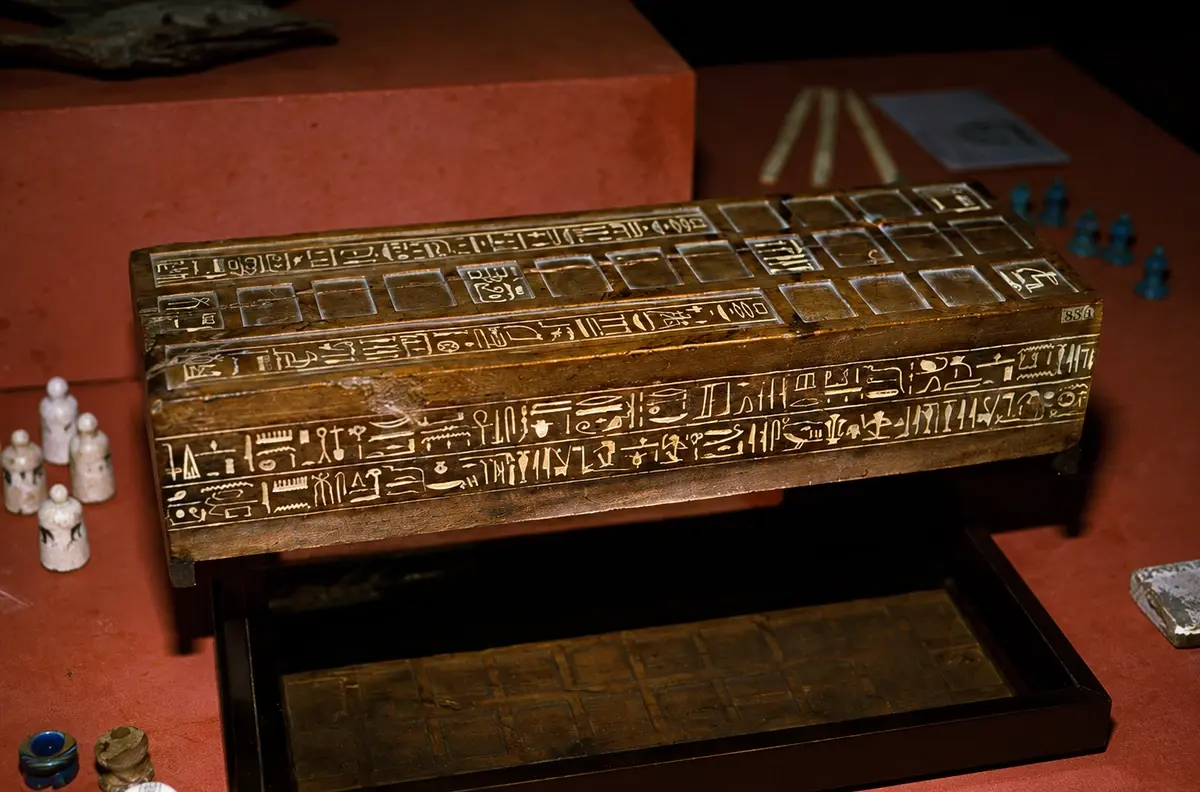
Senet, a race game of thirty squares, was so beloved that it was played by pharaohs and peasants alike, and even carried into tombs for the afterlife.
Most sports, with the obvious exception of those related to combat, incorporated the use of water. Since the river was the lifeblood of the city, it was unsurprisingly integral in activities done for leisure. The most notable one was the competition between two boats trying to knock the opponent's crew into the water, which was an early but recognizable form of water jousting. All in all, the leisure time of the Egyptians, rich and poor, was surprisingly similar, with Senet, wrestling, and boat jousting being among the most popular pastimes.
Gardens as a Hobby and a Part of the Everlasting Life
Gardens also served as a popular leisure activity in ancient Egypt, both for the rich and the poor, although they were used for different purposes. They provided an outlet for those who did not wish to spend their time working, playing, or tending to their homes. The work itself could also be a relaxing activity for those accustomed to the exhausting labor on the field. For the poor, the gardens provided food and an opportunity to grow one's own vegetables and herbs. They also had recreational benefits, as one could enjoy the fruits of one's labor.
The love of nature, particularly the Nile and natural vegetation, extended to the land one owned. The people of ancient Egypt valued the land, and their inscriptions and carvings suggest that the simplest pleasure of sitting by the water was something they enjoyed. Moreover, one of the earliest notions of eternal life came from people requesting to be able to walk by the river or sit under one's favorite tree even in the afterlife. It demonstrates their incredible appreciation of the world around them and their desire to enjoy their existence in this life and in the next.