Mesopotamia is the birthplace of many fundamental concepts and objects used in the modern world. Writing systems, cities, laws, the wheel, boats, and even the division of an hour into minutes – the origins of these can all be traced to this region located in the Middle East.
Historians often refer to it as the ‘cradle of civilization’, as it is where the earliest known examples of civilization in history have been found. A cradle is something used to rock a baby to sleep – Mesopotamia rocked humanity to sleep! Although, over the course of history, Mesopotamia has had many different civilizations ruling over the region.
What Was Ancient Mesopotamia?
The name Mesopotamia is derived from Greek and means “between two rivers.” These rivers are the Tigris and the Euphrates, which flow down from Turkey, through Iraq, and into the Persian Gulf.
Most of ancient Mesopotamia lay in modern-day Iraq, but it also included parts of Iran, Syria, Kuwait, and Turkey. This region is bounded on the east by the Zagros Mountains and on the west by the Arabian desert. The Mesopotamian region was further subdivided into numerous polities and kingdoms throughout history. South of the Zagros Mountains lies a region called Al-Jazirah, which the Arabs called the island, because of its resemblance to one.
In historical studies, Mesopotamia is sometimes referred to using the term Fertile Crescent. This name was invented by an American Egyptologist named James Henry Breasted in 1916 CE. The Fertile Crescent refers to the belt of fertile land between the Persian Gulf, the Arabian Desert, the Sinai Peninsula, and the Mediterranean Sea.
Why Is Mesopotamia Referred to as the Cradle of Civilization?
The first true cities and writing systems in history were created in Mesopotamia, specifically in its southernmost part called Sumer, during the 3rd millennium BCE. The development of these two crucial aspects of modern civilization transformed Sumer from a collection of agricultural villages into a civilization of cities.
Writing systems have appeared in many ancient civilizations, including Egypt, the Indus Valley, China, and Mesoamerica. However, Mesopotamian writing is among the oldest and has given rise to many of the modern systems of writing used today.
Apart from the first writing system, there are numerous “firsts” of ancient Mesopotamia. A famous scholar, Samuel Noah Kramer, wrote a historical account titled History Begins at Sumer. In it, he lists 39 different “firsts” peculiar to ancient Mesopotamia. For example, Kramer notes that the first libraries, schools, and legal codes were developed by the Sumerians. Interestingly, Kramer also reports that the first love songs, lullabies, proverbs, and tax-exemption notices were also invented by the people of Sumer. This demonstrates that the cultural and social aspects of the lives of people in ancient Mesopotamia were very similar to the ones experienced by modern humans.
The First Farmers and Villages of Mesopotamia
Prior to the development of the first writing systems and cities, Mesopotamia was populated by hunter-gatherers. Archaeologists, who started excavating ancient Mesopotamian settlements in the 1840s CE, discovered that Mesopotamia has been inhabited by people since roughly 10000 BCE.
The reason why people chose to settle nearby the Tigris and the Euphrates rivers was because the alluvial plains deposited highly-fertile soil near the riverbanks. This allowed people to cultivate grains and domesticate animals, which formed the basis of the first agrarian societies.
The transition from hunter-gathering to settled agrarian life was a gradual process, which took place over several millennia. Marc Van De Mieroop, a historian specializing in ancient Mesopotamia, notes that for a considerable period of time, Mesopotamians would still engage in hunting and fishing, even when they had already domesticated animals and started cultivating staple crops.
Between 7000 and 6000 BCE Mesopotamian people learned to make pottery from clay and more sophisticated stone tools. This is when permanent settlement began to replace nomadic hunting tribes. The villagers of ancient Mesopotamia were often at odds with each other, as the fertile lands and pastures were of a limited supply. As a result, the first ancient conflicts and wars occurred.
Ancient Mesopotamians entered the Copper Age, and the climate became steadily warmer. This prompted them to build the first permanent structures made from sun-dried bricks. During the Ubaid period (6500-4000 BCE) Mesopotamians built numerous temples, and villages evolved into organized city-states.
Uruk, Eridu and the World's First Cities
Ancient Mesopotamia's first cities appeared during the Uruk period (approximately 4000 – 3100 BCE). The most notable of these were Uruk, Ur, Eridu, Kish, Lagash, and Nippur. There also existed a Sumerian city called Susa, which was located in the east of Mesopotamia.
The city of Uruk is considered to be the first in Mesopotamian history, although many believe that Eridu predates it. Eridu was a religious center that had been established many centuries before the Uruk period. The Sumerians, an ancient Mesopotamian people, often credited Eridu with being the birthplace of the Sumerian culture. Many ancient Mesopotamian cities were built near religious centers, which explains the close relationship between temples and civic life in ancient Mesopotamia.
Mesopotamia has always been highly urbanized; Van De Mieroop notes that it probably had the highest percentage of urban residents of any ancient civilization. The Mesopotamian cities were centers of regional and international trade; due to their affluence, they could sustain large populations.
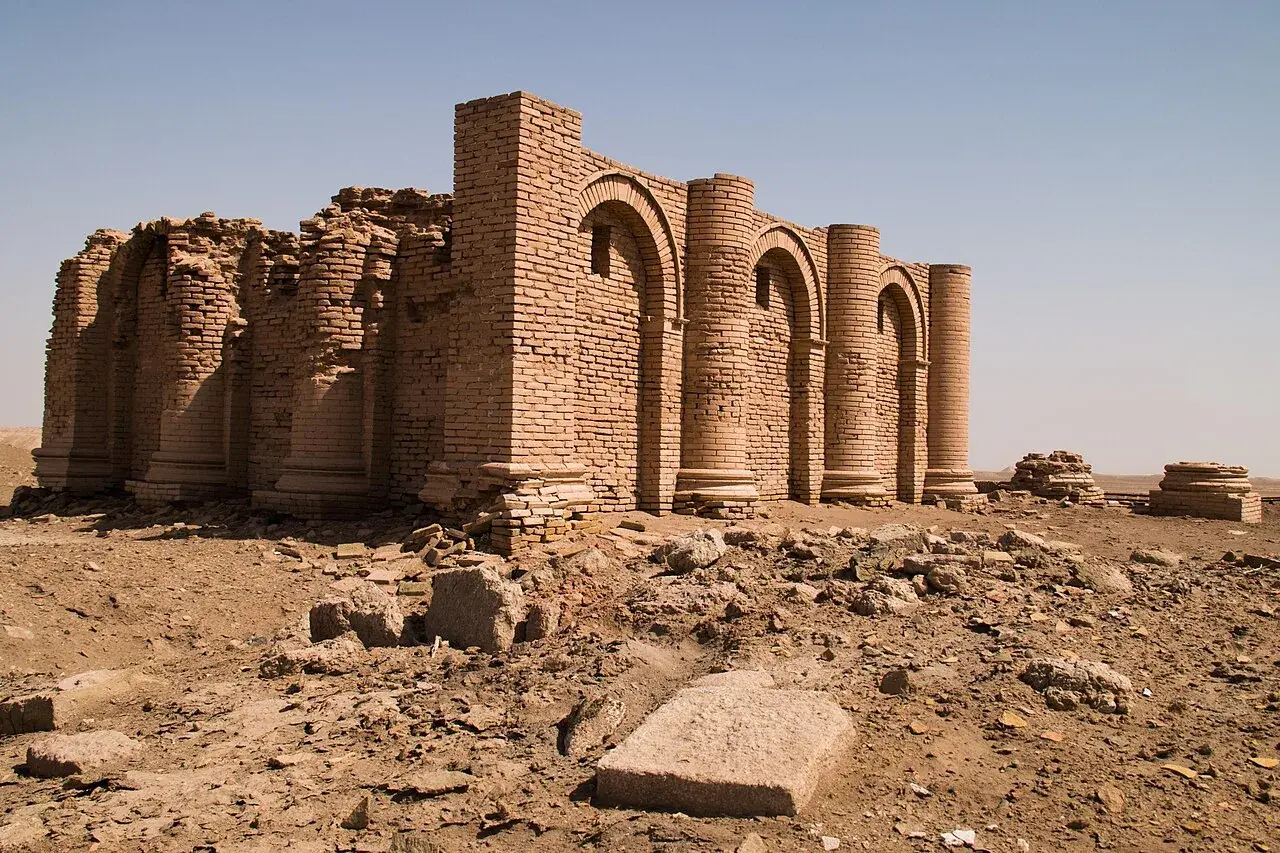
Uruk and Eridu were among the world's first true cities, built where temple and civic life grew up together on the southern Mesopotamian plain.
Image Credits: By Osama alqasab - Own work, CC BY-SA 4.0, https://commons.wikimedia.org/w/index.php?curid=62276087
Cuneiform Writing and the Invention of the Wheel
One of the main reasons why writing was invented in Sumer was for record-keeping. Sumerians needed to keep track of trade goods. Ancient Mesopotamia was a trade crossroads, where numerous goods were exchanged for copper, sheep, wool, and silver. The invention of abstract notation allowed the Sumerians to document the transactions, which in turn led to the development of cuneiform writing.
Cuneiform translates as “wedge-shaped” in Greek; this writing system was originally used for recordkeeping and correspondence. Scribes wrote this script with a reed stylus on clay tablets by pressing wedge-shaped impressions into the clay.
This method of writing proved to be very durable; many clay tablets with Sumerian writing have been discovered by archaeologists. Unlike papyrus, parchment, and paper, which degrade over time, baked clay is highly resistant to environmental factors. Documents written in cuneiform script range from commercial accounts to letters, legal contracts, tax assessments, medical prescriptions, and literature. Some tablets contained a wax seal; this is considered to be the precursor of the modern envelope, as it protected its contents from being viewed by unauthorized people.
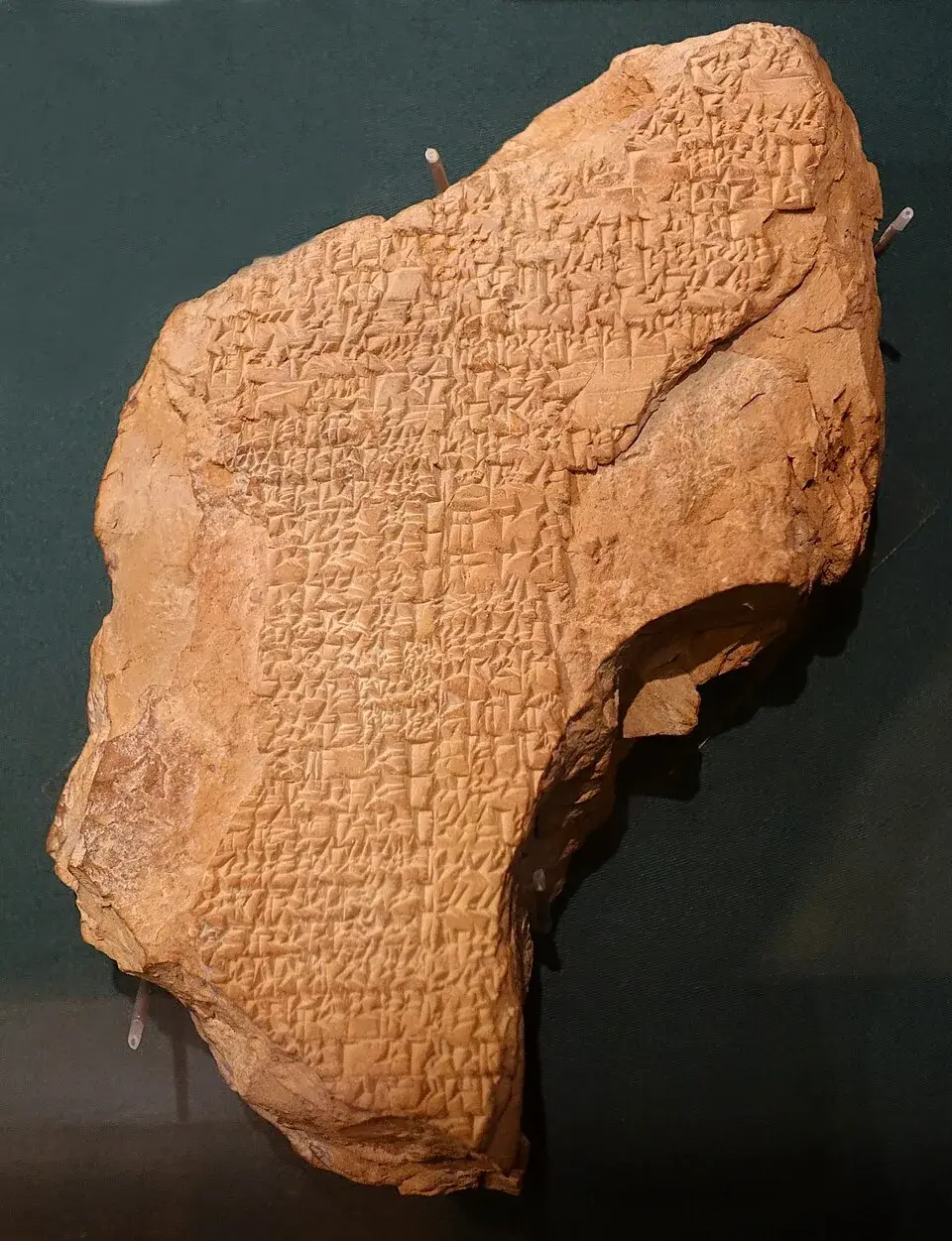
Cuneiform was pressed into wet clay with a reed stylus, which is why so many everyday Sumerian records have survived for thousands of years.
Image Credits: By Daderot - Own work, CC0, https://commons.wikimedia.org/w/index.php?curid=40839123
The invention of the wheel in Mesopotamia dates back to around 3500 BCE. The renowned archaeologist Leonard Woolley discovered the remains of ancient Mesopotamian vehicles in Ur. These primitive carts used leather tyres and were pulled by oxen.
The invention of the wheel has advanced transport and facilitated trade greatly; the wheel also allowed the Mesopotamians to invent the plough and the boat.
Ancient Mesopotamians used stone cylinder seals to impress patterns onto soft clay. The owner of the seal would roll it across the surface of the clay to make an imprint.
Seals were used to sign documents and distinguish one's goods from those of others. They also served the purpose of signatures and personal identification. Losing one's seal was similar to losing one's ID and credit cards in modern society. Cylinder seals were often beautifully decorated; historians consider them to be the most distinctive form of visual art in ancient Mesopotamia.
Ancient Mesopotamia was a land of wonders that produced the world's first cities and writing systems. Mesopotamian people managed to build beautiful edifices and invent some of the most complicated technologies known to man. However, this ancient civilization had no resources to build these constructions and invent these technologies.
Ziggurats, Mud Bricks and Mesopotamian Buildings
There was no timber, stone, or metal in southern Mesopotamia. The people of Sumer had to acquire construction materials from their environment. The local resource available to the Mesopotamians was clay; reeds were also used to make reed bundles that could be used as construction material.
This is why the Sumerians used sun-dried bricks made from clay and reeds to construct their buildings and monuments. Larger and more sturdy constructions, such as temples, ziggurats, and city walls, were made from baked bricks. These bricks were sometimes painted with bright colors such as blue, red, and black. Bertman notes that the use of mud bricks allowed the Sumerians to become the ‘pioneers of column and arch construction.’
A ziggurat was a monumental Sumerian building designed to resemble a mountain. These constructions are considered to be the precursors of modern skyscrapers. Ziggurats were typically located in the center of the cities; they were the religious centers of the Mesopotamian city-states.
Each Mesopotamian city had its patron god or goddess, to whom the citizens would pray for protection and prosperity. Wealthier and more influential cities would have multiple ziggurats. It is believed that the Sumerians devised the ziggurat construction technique to elevate the temple so that it was closer to the heavens. The Sumerians also believed that their gods and goddesses could communicate with the people of the city through dreams.
Even when constructing more mundane buildings, the Sumerians believed that the gods were watching over their every move. The Mesopotamians had to perform specific rituals and prayers in order not to offend the gods. Stephen Bertman notes that priests would even hold the construction of a building hostage until the construction company would pay them a bribe.
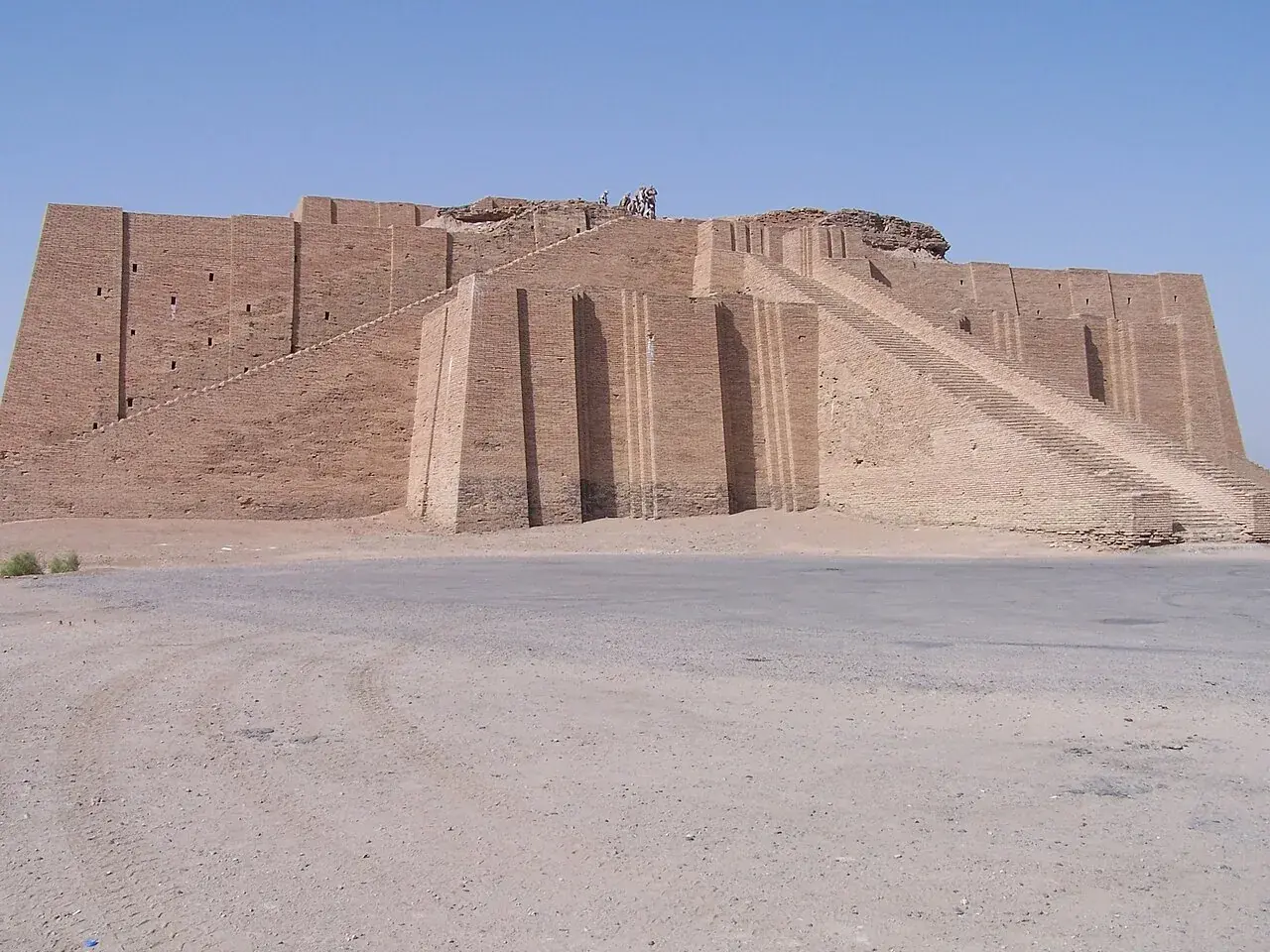
Ziggurats were built from sun-dried and baked mud brick and served as the religious heart of each Mesopotamian city-state.
Image Credits: By Hardnfast, CC BY 3.0, https://commons.wikimedia.org/w/index.php?curid=3544015
Ancient Mesopotamia has a vast pantheon of gods and goddesses. The ancient Mesopotamians practiced a polytheistic religion; in other words, they believed that there were many gods. Mesopotamian gods had different roles and responsibilities; they were also associated with specific elements of nature.
Many of the gods' names and titles have survived to this day. However, the association between gods and these elements has been largely forgotten. The gods' names would often change depending on the era and the city they were popular in. Nevertheless, the basic themes and ideas have remained consistent throughout the history of ancient Mesopotamia.
Ancient Mesopotamian religion involved a belief that the world and everything in it had been created by the gods. Gods were responsible for bringing order to the chaos that existed prior to the creation of the universe. According to Kramer, the gods were constantly at war with the chaos, which had no order in it.
In order to achieve world peace, the people of Mesopotamia had to appease the gods. The gods demanded ritual sacrifices and observance of various rites and ceremonies. The Mesopotamians also believed that the spirits of the dead continued to exist after death and that they could harm or benefit the living.
Ancient Mesopotamian mythology produced some of the most fascinating stories ever told. Many of these myths and legends were initially recorded on clay tablets. Today, historians have the chance to reread the world's earliest literature. Some of the most notable pieces of ancient Mesopotamian literature include the myths about the creation of the universe Enuma Elish and the epic of love and loss about Gilgamesh.
The Mesopotamians were a people of faith; they believed in gods, spirits, and the power of prayers. Their myths and stories often involved the triumph of good over evil. Interestingly, the Mesopotamian myths bear striking similarities with some of the most prominent literary works of the Bible, the Jewish sacred text.
Ancient Mesopotamia has produced some of the most prominent scholars and astronomers of the ancient world. Kramer notes that there is evidence that suggests that schools existed in many Mesopotamian city-states. Education was the primary function of the teachers, priests, and physicians.
Ancient Mesopotamians were aware that the stars, the moon, and the movement of the planets could be used to predict future events. This is why Mesopotamian priests spent their life studying the skies in an attempt to decode their meanings. Kramer points out that the ancient Greek philosopher Thales of Miletus (6th century BCE) studied in Mesopotamia and was the first person to speak about the abstract ideas of water being the origin of all life. This statement has been likened to the Babylonian beliefs about the power of water.
Daily Life, Jobs and Women in Mesopotamia
The majority of Mesopotamians lived in rural villages and worked as farmers or shepherds. However, the Mesopotamians were a diverse people, so there were many different types of jobs represented. Some of the most common professions include scribe, teacher, physician, potter, weaver, cobbler, fisherman, and priest or priestess.
Priestesses and priests played an important role in the social and spiritual life of the Mesopotamians. The most influential people of ancient Mesopotamia were its kings and priests. They were assisted by large staffs of servants, advisors, and guards at their courts and temples. The profession of a soldier became more prominent as the number of ancient battles increased.
Another interesting fact about Mesopotamian society is that it afforded more rights and freedoms to women than many other ancient societies did. Mesopotamian women could own land and other property. They could also engage in business, trade, and get divorced.
According to Kramer, the first beer-brewers and the first physicians were women. Some of the oldest Mesopotamian beer receipts date back to around 2050 BCE and originate from Mesopotamia. Men later monopolized brewing and medicine, possibly due to the fact that these professions were very profitable.
According to the Mesopotamians, the primary function of labor was not to enrich a person or to improve their lifestyle. Work was a necessary evil that served a greater, divine purpose. It was essential in pleasing the gods and ensuring peace and prosperity for the city or village.
Children had the opportunity to enjoy the delights of childhood. Archaeologists have discovered various toys, including dolls and carts. Some of the games and rituals that children of Mesopotamia played are still popular among modern children.
From Priest-Rulers to Kings in Sumer
The earliest Mesopotamian cities were ruled over by priests. They were in charge of administering justice and making decisions for the general welfare of the city. The priests of the early Sumerian city-states interpreted omens and performed rituals to ascertain the will of the gods.
However, around 3600 BCE, a new social class of kings emerged in Mesopotamia. The Mesopotamian kings continued to perform the duties assigned to the priests of earlier times, although they started to make their own laws in addition to interpreting the will of the gods.
The king was seen as the representative of the gods on Earth. If the king ensured the prosperity and well-being of the people, he received the approval of the gods. Kingship became hereditary; the throne was passed from one king to his son upon his death.
The concept of kingship was also intimately linked with the idea of war. Around 2700 BCE, Sumerians and Elamites engaged in a war, which has been recorded by historians as the earliest known military conflict. During the Early Dynastic period (2900-2350 BCE), the Sumerian city-states grew prosperous and influential. They built magnificent temples and monuments as well as developed exquisite pottery.
Sargon of Akkad and the First Empire
Akkad was an ancient Mesopotamian kingdom, which was ruled over by one of the most famous kings in history – Sargon. Around 2334 BCE, Sargon of Akkad embarked on a successful military campaign, which added numerous city-states to his empire. Akkad had been the first empire to be formed by many different peoples.
This large territory had a diverse culture. It also differed in religion; Mesopotamia's diverse peoples had different mythologies and cults. The Akkadian Empire was difficult to govern as it was vast and covered a large area. There were also many political factions, which made the rule of Sargon challenging. Thus, Sargon spent a lot of time and effort suppressing rebellions.
Enheduanna, the daughter of Sargon, was a famous high priestess. She was also a gifted poet; she composed many hymns to the goddess Inanna. Sargon's grandson, Naram-Sin, claimed to be a living god. Another well-known figure of Akkadian history is the queen of Mari. Mari was a wealthy and influential Mesopotamian city-state. Its palace was one of the largest and most exquisite buildings of Akkad. The city's archives contained over 20000 clay tablets with inscriptions.
Mesopotamia's most famous warlord, Lugal-Zage-Si, managed to drive the Akkadians out of Sumer. There followed a period of instability and unrest as the Gutians from the north overran Mesopotamia. However, soon enough, the Mesopotamian kings of Ur rose to power and ruled over a large part of Mesopotamia between 2112 and 2004 BCE. The Mesopotamian civilization of Sumer came to an end with the fall of Ur. The language of Sumer was never used by the common people again, although it survived in temple and scholarly writings, much like Latin did in ancient Rome.
Hammurabi's Code and the Rise of Babylon
One of the most notable ancient Mesopotamian rulers was Hammurabi, the first king of Babylon. He reigned from 1792 to 1750 BCE and managed to conquer much of Mesopotamia during his rule. Hammurabi is most famous for his code of laws, which consisted of nearly 300 statutes. These laws were written on a diorite pillar, which was placed in the city square so that everyone could see them. The laws applied to commerce, private property, family life, and criminal law. The violation of these laws often resulted in cruel punishment. The punishment also depended on the social class of the person, whether they were rich, poor, or enslaved. Nevertheless, the fact that all laws were put in writing is considered to be a major breakthrough.
During Hammurabi's reign, Babylon became a cultural center of the region. Its legacy continued for many centuries. However, it did not last long, as in 1595 BCE, Babylon was sacked and burned by the Hittites. The Kassites, a tribe that lived in the Zagros Mountains to the east, took over Babylon.
The Kassites ruled over Babylon for a long time. It was not until the 12th century BCE that the Babylonians were able to repel the invaders and retake their city. The late Bronze Age saw many civilizations collapsing and entering what historians call a dark age. Around the 12th century BCE, a large number of kingdoms in the Near East and the eastern Mediterranean were destroyed or severely weakened.
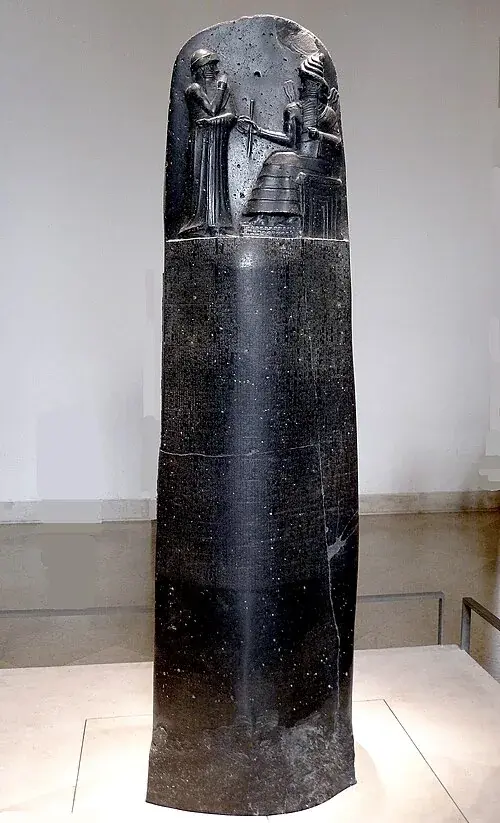
Hammurabi had his nearly 300 laws carved into a stone pillar and set up in public, so that the rules he expected people to follow could not be denied or hidden.
Image Credits: By Mbzt - Own work, CC BY 3.0, https://commons.wikimedia.org/w/index.php?curid=16931676
The Assyrian Empire at Its Height
An ancient kingdom of Assyria, which was located in the northern part of Mesopotamia, prospered for a long time. Its major cities include Ashur, Nimrud, and Nineveh.
After the Bronze Age, Assyria was ruled by powerful kings such as Tiglath-Pileser I and later Ashurnasirpal II (884-859 BCE). A series of military conquests started by Tiglath-Pilesar III in 745 BCE put Assyria on the path to expansion and dominance. The Neo-Assyrian Empire was the strongest and most influential one in the history of the region. The kings that ruled during this period are considered some of the most successful military strategists in history. They include Sargon II, Sennacherib, Esarhaddon, and Ashurbanipal.
Esarhaddon was the father of Ashurbanipal, one of the most renowned kings of Assyria. Ashurbanipal ruled the empire between 669 and 627 BCE. He was also a scholar and amassed a large library of writings. Much of the texts that modern historians study were recovered from this library. The fall of the Assyrian Empire happened soon enough in 612 BCE, as the Babylonians, Medes, and Scythians entered Nineveh, and set it on fire.
Nebuchadnezzar II and the Neo-Babylonian Empire
The Neo-Babylonian Empire was a successor state to the Assyrian Empire. Its most famous king was Nebuchadnezzar II, who ruled between 605 and 562 BCE. He was one of the last and most influential kings of the ancient Babylonian empire.
Nebuchadnezzar II is most remembered for his role in the destruction of the Kingdom of Judah. In 587 BCE, the walls of Jerusalem were breached, and many of the Jews were exiled to Babylon. This happened because of the war that was waged between the Babylonian Empire and the Judah Kingdom. Nevertheless, Nebuchadnezzar is also remembered for the building projects that he initiated during his reign.
The most notable ones include the construction of the Ishtar Gate, an elaborately decorated entrance to the city of Babylon. The gate was made from blue glazed bricks and was decorated with carvings of lions, eagles, and bulls. Another notable construction is the Etemenanki, a ziggurat, which is thought to be the inspiration for the Tower of Babel in Judean mythology.
In 539 BCE, Babylon was conquered by Cyrus the Great of Persia. The Persian Empire became a dominant force in the region and beyond.
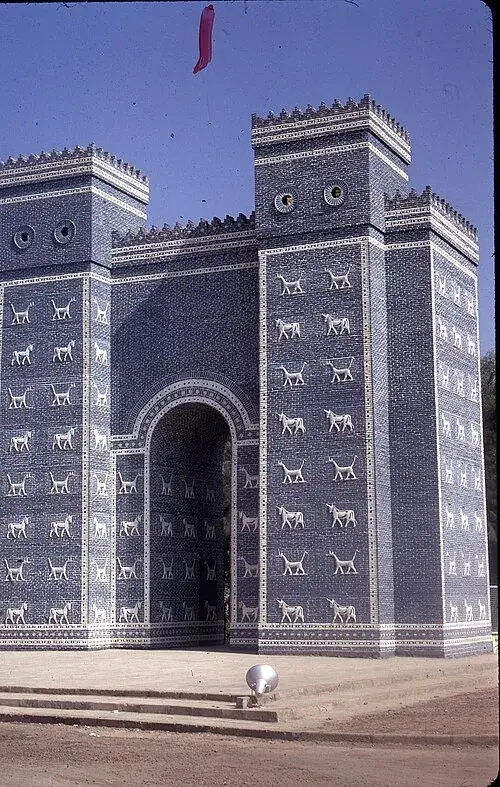
Nebuchadnezzar II's Ishtar Gate was covered in glazed bricks showing lions, bulls, and dragons, and marked one of the grand ceremonial entrances to Babylon.
Image Credits: By Maison méditerranéenne des Sciences de l'homme/ National Center for Scientific Research/ University of Provence - Aix-Marseille I - Fonds Lucien Golvin (1908-2002) - Iraq - Babylone - Porte d'Ishtar, Licence Ouverte, https://commons.wikimedia.org/w/index.php?curid=156871104
Persians, Greeks and Romans in Mesopotamia
After the conquest by the Persians, Mesopotamian traditions gradually changed. Aramaic replaced Akkadian as the vernacular language, and fewer and fewer people were familiar with cuneiform. This pictographic script survived until the first century AD and then was forgotten for two millennia.
In 331 BC, Alexander the Great defeated the Persians and introduced Greek culture to Mesopotamia. The conqueror even planned to restore Babylon to its former glory and died there in 323 BC. Seleucus, Alexander's general, was the first to rule Babylon and later founded the Seleucid Empire.
It was ruled by the Parthians from Iran and then the Sassanian dynasty from 224 to 651 AD. The Sassanians respected the old cultures and contributed to their preservation. In addition, the Romans penetrated deep into Mesopotamia. They occupied it twice – once in 116-117 AD and again in 198 AD. Although the Romans built many roads in this territory and brought their laws, local traditions, and history were largely neglected due to prolonged wars with the Sassanian Empire.
The history of ancient Mesopotamia ended with the Islamic conquest of the region by the Arab Muslims in the seventh century. For the most part, various cultures of the region became integrated under the common culture of Islam. Historian Stephen Bertman writes, “With the Islamic conquest of 651 CE the history of ancient Mesopotamia ends.”
George Smith, Gilgamesh and the Flood Tablet
For centuries, the cradle of civilization was buried under layers of debris and forgotten. It was not until the 19th century that excavations began on this site under the auspices of European officials. They were convinced that relics of the biblical past would turn out to be under these ruins.
Most scholars of that time believed that the Bible was the most ancient document in the world, and they firmly believed that all the stories written there happened in real life. The excavators' findings kept changing the worldview.
They unearthed thousands of clay tablets, on which mysterious characters were etched. At first, they assumed it was some kind of meaningless hieroglyphics. However, already in the 1850s, linguists managed to decipher these hieroglyphs.
Then, in 1872, while reading one of the many tablets from the collection of Ashurbanipal, George Smith found a description of the flood. A certain patriarch saves his belongings and passengers on a large vessel that was commanded by a god. It is almost identical to the story of Noah's Ark, but the manuscript is centuries old. Smith could hardly believe his eyes when he discovered this passage. Smith was so happy about the find that he immediately jumped up and started dancing around the room. This find was sensational in its way because it showed that many stories from the Bible were once part of Mesopotamian history long before the Christian era began.
In addition, this discovery was also significant because it provided evidence that the world had known highly developed civilizations many centuries before the birth of Jesus Christ. It prompted thousands of questions about the integrity of the canon and the authenticity of many biblical stories. Moreover, although this assumption cannot be confirmed with complete certainty, many minds in the late nineteenth century were poised to challenge the established truth, and Mesopotamia provided the right motivation for this.
Mesopotamia's Legacy in the Modern World
The legacy of Mesopotamia in the modern world is not only in the preserved architectural structures. Although today many of the cities described in the sources are transformed into ruins. Mostly because farming and city-building, as well as natural processes, turned the once-flourishing region into a desert.
However, Mesopotamia lives today in our everyday life. For example, our modern clocks and calendars are based on units of time developed in ancient Mesopotamia. The number 60, according to historians, was sacred to the Sumerians. There are 60 seconds in a minute and 60 minutes in an hour. The Sumerians also divided the circle into 360 degrees. Historian Helen Chapin Metz writes that these were the priest-astronomers who developed a sexagesimal (base 60) system, knowing the movements and positions of the bodies in the heavens. They observed nature closely, as they needed to adapt agricultural cycles to specific climatic conditions and soil fertility.
Every day, every person writes a message or reads books that were written in a language and alphabet developed in Mesopotamia. We use a stylus for drawing and writing, as the Sumerians did several millennia earlier. The principles developed by the Sumerians and Assyrians lie at the heart of modern mathematics and astronomy. Mesopotamia influenced the development of writing, mathematics, engineering, urban planning, and legal norms. Through the cultural connections of trade, Mesopotamia transmitted its legacy to the Egyptians, Greeks, and Etruscans. These, in turn, passed it on to the Romans and, with them, to all of Europe. It is this and the ancient Mesopotamian achievements that have had a lasting impact on the cultures of the world, making it one of the most influential civilizations in history.