The Houthis are a rebel group from Yemen, a country at the southern tip of the Arabian Peninsula. Their official name is Ansar Allah, which means "Supporters of God." Most people just call them the Houthis, after the family that has led them for more than twenty years.
You might have heard their name in the news. They've fired missiles at Israel and Saudi Arabia. They've attacked ships sailing through the Red Sea, one of the busiest shipping routes on the planet. And they control a big part of Yemen, including its capital city, Sanaa.
But the Houthis didn't start out as an army. They began as a small religious youth group in the 1990s. How they grew from summer camps into a force that can shake up world trade is a strange and surprising story.
What Is the Houthi Movement?
The Houthi movement is both a political group and a military group. It wants power in Yemen, and it has fighters, weapons, and its own government in the areas it controls.
Most of its members belong to a religious group called the Zaydis. The top leaders mostly come from one family, the al-Houthi family. That's where the nickname comes from. It was actually their opponents and foreign news reporters who started calling them "Houthis," after an early leader named Hussein al-Houthi.
The group is backed by Iran. Many experts see it as part of what Iran calls the "Axis of Resistance," a loose team of groups across the Middle East that oppose the United States, Israel, and Saudi Arabia. Some countries officially label the Houthis a terrorist organization. The group has also been widely criticized for hurting civilians and for reportedly using child soldiers.
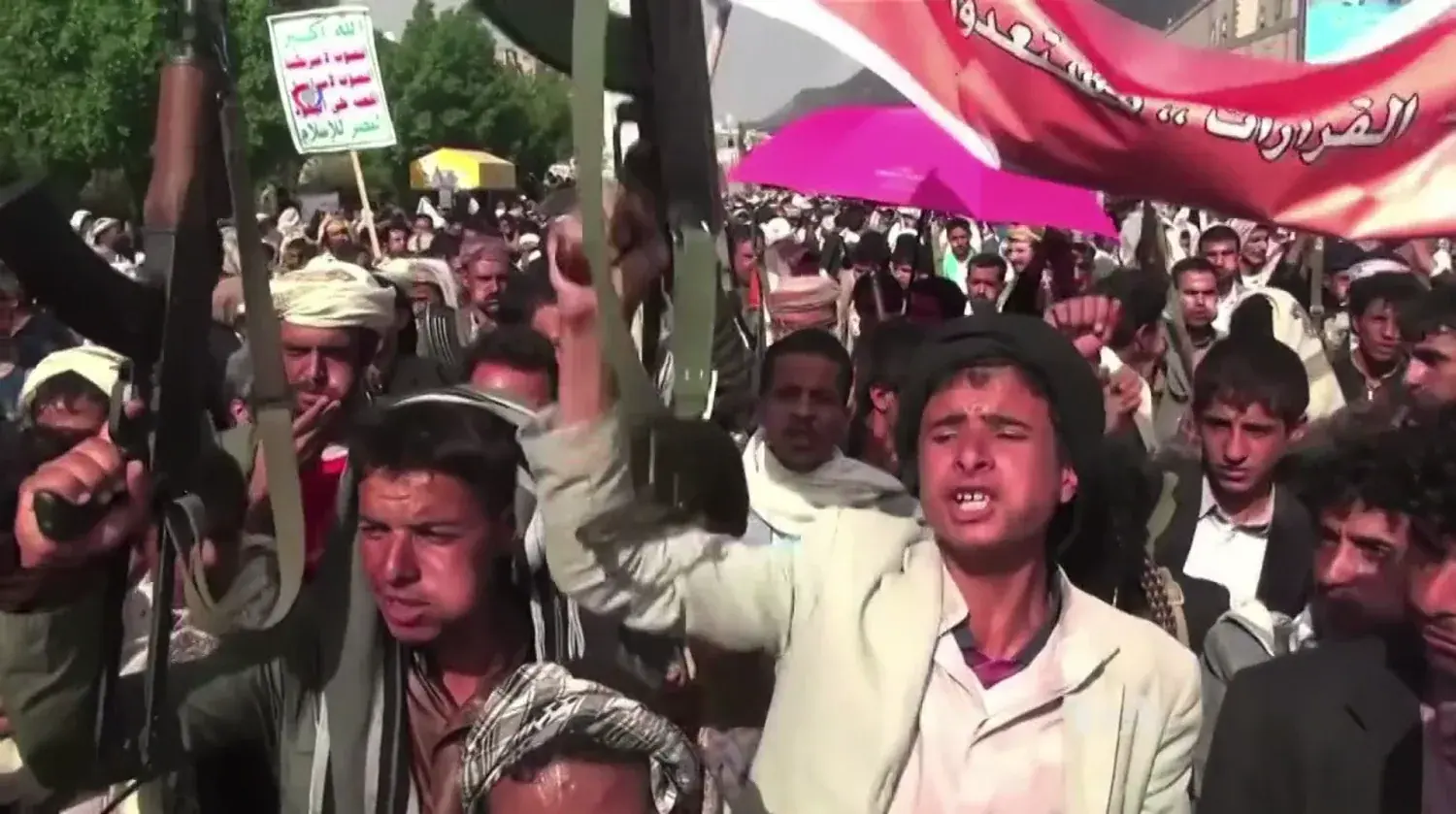
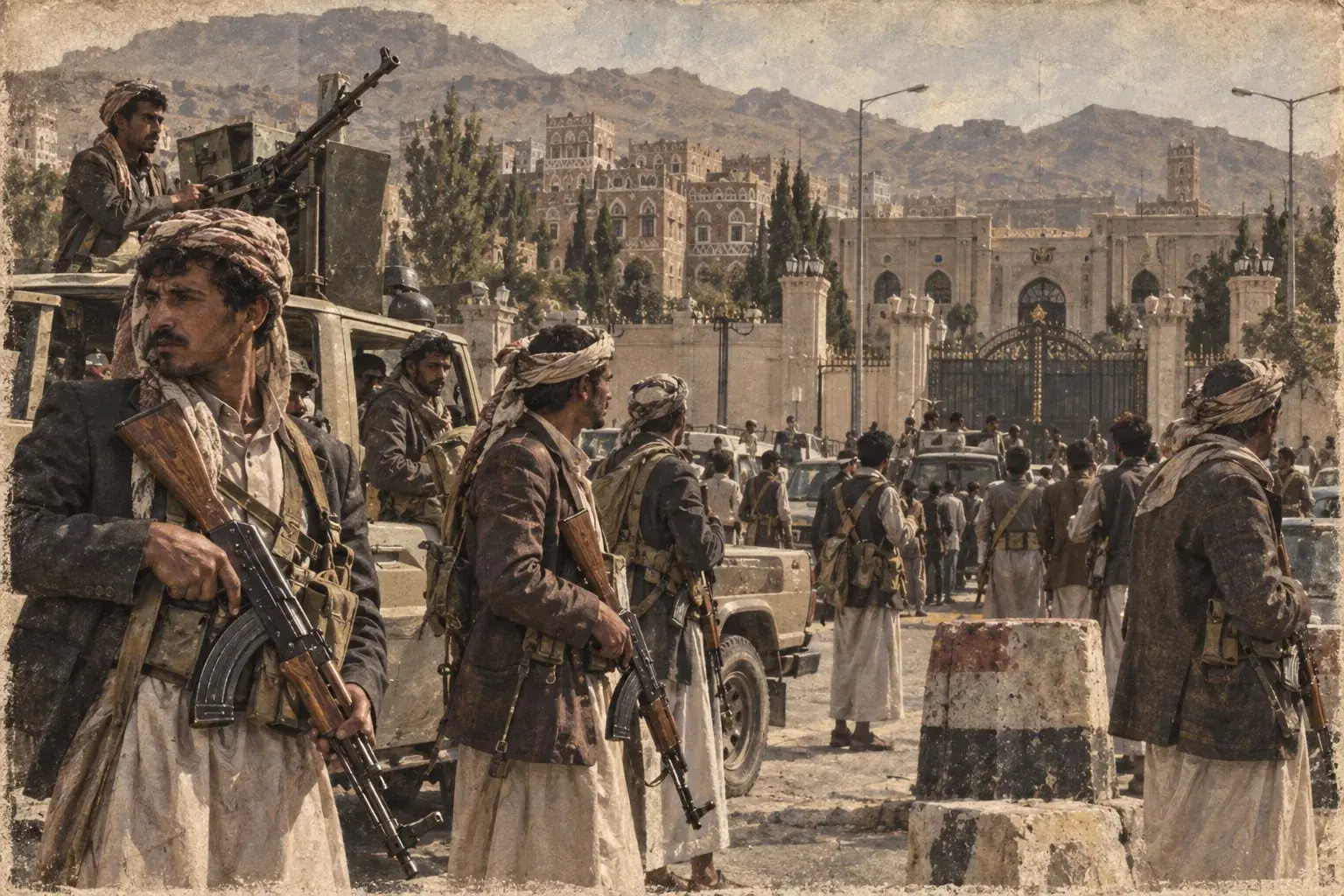
The Houthi movement runs its own fighters, checkpoints, and government administration across the large stretch of Yemen it controls.
Image Credits: By Henry Ridgwell (VOA) - Yemen Fighting Intensifies as Fears Grow of Sectarian Conflict, Public Domain, https://commons.wikimedia.org/w/index.php?curid=70173465
Zaydi Islam and Yemen's Religious Mix
To understand the Houthis, you need to know a little about religion in Yemen.
Islam has two main branches, Sunni and Shia. Zaydism is a small branch of Shia Islam, and it's found almost only in Yemen. About a third of Yemenis (roughly 34%) are Zaydis. Most of the rest, about 65%, are Sunni Muslims.
Zaydis have deep roots in Yemen. For about a thousand years, Zaydi rulers governed the country. That ended in 1962, when Yemen became a republic.
After that, many Zaydis felt pushed aside. In the years before the Houthis rose up, some Sunni groups called Salafis grew stronger in northern Yemen, with help from Saudi Arabia and from Yemen's own government. Some of these Salafis harassed Zaydis and damaged Zaydi places, including cemeteries. That anger helped set the stage for what came next.
The Believing Youth and Hussein al-Houthi
The Houthi story begins in 1992 in Saada, a province in Yemen's far north. That year, a group called the Believing Youth was founded. Sources disagree on whether it was started by Mohammed al-Houthi or his brother Hussein.
At first, the Believing Youth ran school clubs and summer camps. The goal was to bring Zaydi beliefs back to life among young people. It worked. By 1994 and 1995, somewhere between 15,000 and 20,000 students had gone to their camps. Some of the lessons included talks by Shia leaders from Lebanon, including the head of Hezbollah, a powerful Shia militant group.
According to Ahmed Addaghashi, a professor at Sanaa University, the movement started out fairly moderate. He describes it as open-minded and accepting of all Yemenis.
That changed over time. Hussein al-Houthi became the movement's most important voice. He was angry about corruption in Yemen's government. He was angry that his home region of Saada was poor and ignored. And he strongly disliked Yemen's friendly ties with the United States.
The Sarkha Slogan and the 2004 Houthi Insurgency
In 2003, the United States invaded Iraq. That event pushed some of Hussein al-Houthi's followers in a much harsher direction.
The same year, inspired by Hezbollah, the group adopted an official slogan. It's called the Sarkha, which means "the scream." It reads: "God is great, Death to America, Death to Israel, Curse on the Jews, Victory to Islam." Young followers began chanting it after Friday prayers at a large mosque in Sanaa.
This worried Yemen's president at the time, Ali Abdullah Saleh. His security officials feared that a group chanting against America today might chant against the president tomorrow.
In 2004, about 800 supporters were arrested in Sanaa. Saleh invited Hussein al-Houthi to meet him, but Hussein said no. So on June 18, 2004, Saleh sent troops to arrest him. Hussein fought back, starting a rebellion. He was killed by the Yemeni military on September 10, 2004.
His death didn't end anything. It started a long, on-and-off war in northern Yemen that lasted until a ceasefire in 2010. Hussein's brother, Abdul-Malik al-Houthi, took over as leader, and he still leads the movement today.
Saudi Arabia joined the fight against the Houthis during those years. Even so, the Houthis held their ground against both Yemen's army and the Saudi military. According to the Brookings Institution, this was deeply embarrassing for Saudi Arabia, which had spent huge amounts of money on its armed forces.
The 2011 Revolution and the Houthi Takeover of Sanaa
In 2011, protests swept across the Arab world. Yemen had its own revolution, and the Houthis joined in. They marched in street protests and worked with other opposition groups. They also took part in Yemen's National Dialogue Conference, a big meeting meant to plan the country's future.
They didn't like the final deal, though. The Houthis rejected a peace plan pushed by Yemen's Gulf neighbors, saying it would split Yemen into rich areas and poor areas. Their anger grew after their representative at the talks was assassinated.
Meanwhile, the Houthis kept grabbing land. By late 2011, they controlled two provinces, Saada and Al Jawf. By 2012, they held most of a third, Hajjah, and had reached the Red Sea coast.
Then came a twist nobody expected. In 2014, the Houthis teamed up with their old enemy, former president Saleh. With his help, they pushed into Sanaa. On January 20, 2015, they seized the presidential palace. A few weeks later, on February 6, they dissolved Yemen's parliament and declared themselves in charge.
The Houthis weren't the only armed group in the fight, either. On March 20, 2015, suicide bombers from the Islamic State attacked two mosques in Sanaa during prayers. The blasts killed 142 Houthi worshippers. It was the deadliest terrorist attack in Yemen's history.
The Houthi seizure of the presidential palace in January 2015 forced Yemen's government to resign and set off the wider civil war.
Saudi-Led Intervention and Yemen's Civil War
Saudi Arabia wasn't going to let the Houthis run Yemen. On March 26, 2015, it led a coalition of countries, including the United Arab Emirates, Egypt, Jordan, and others, in a bombing campaign against the Houthis. The goal was to bring back Yemen's internationally recognized government, led by President Abdrabbuh Mansur Hadi.
The United States helped plan airstrikes and provided intelligence and supplies. The US Navy also took part in a naval blockade of Houthi-held areas. Humanitarian groups say that blockade was the main reason famine broke out in Yemen.
This started a civil war that has dragged on for years. The Houthis fired missiles and drones deep into Saudi Arabia and the UAE. In January 2022, one Houthi attack on the UAE set fuel trucks on fire and killed three foreign workers. Saudi Arabia struck back days later, hitting a detention center in Yemen and killing at least 70 people.
Because Iran supports the Houthis and Saudi Arabia leads the other side, many people see Yemen's war as a "proxy war." That's a war where two rival powers fight each other indirectly, by backing different sides in someone else's country.
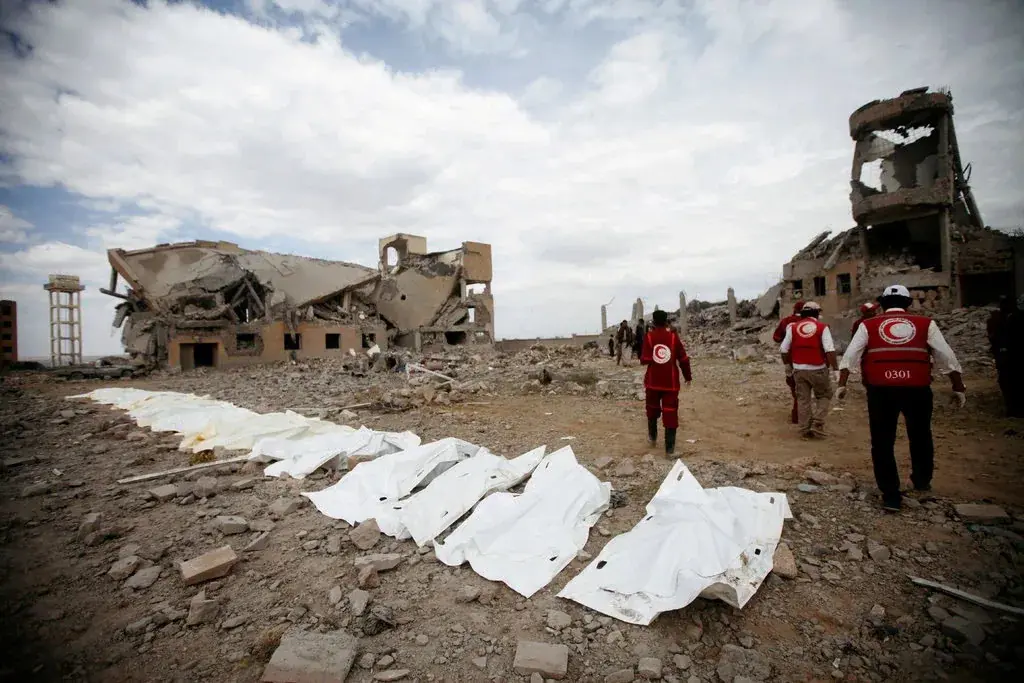
The Saudi-led coalition's air campaign, backed by US intelligence and logistics, began in March 2015 and has continued in various forms for years.
Image Credits: By Felton Davis - https://www.flickr.com/photos/felton-nyc/48664359477/, CC BY 2.0, https://commons.wikimedia.org/w/index.php?curid=141884941
Ali Abdullah Saleh's Alliance with the Houthis and His Death
The partnership between Saleh and the Houthis was never built on trust. It fell apart in late 2017.
Fighting broke out between the two sides in Sanaa at the end of November. On December 2, Saleh went on TV and announced the split. He called on his supporters to take the country back and said he was open to talks with the Saudi-led coalition.
Two days later, on December 4, 2017, Houthi fighters killed him as he tried to flee Sanaa by convoy after his forces lost control of the capital. The Houthis accused him of treason. A Houthi spokesperson later claimed Saleh had been secretly messaging the UAE and other countries for months.
Killing Saleh came at a cost. The Houthis lost a lot of support among Sunni tribes afterward.
Houthi Red Sea Attacks and the Gaza War
For a long time, the Houthis were mostly a Yemeni problem. That changed when the war in Gaza began in October 2023.
The Houthis started firing missiles at Israel and attacking ships near Yemen's coast in the Red Sea. They say they're doing this to support Palestinians and to help get aid into Gaza. They've said the attacks will stop only if there's a ceasefire in Gaza and Israel ends its blockade there.
On October 31, 2023, Houthi missiles aimed at Israel were shot down by Israel's Arrow defense system. Israeli officials said it was the first combat ever to happen in space, since the interceptions took place so high up.
The world responded. In January 2024, the United States and Britain bombed Houthi targets in Yemen. The US also placed the Houthis on its terrorism list again. (It had first labeled them terrorists in January 2021, but reversed that a month later over fears it would block food aid to Yemen.) In March 2025, the US launched another major bombing campaign.
The attacks haven't stopped. In February 2026, the Houthis said they were attacking ships again, this time in response to US and Israeli airstrikes on Iran. In March 2026, they fired missiles toward the Israeli city of Beersheba.
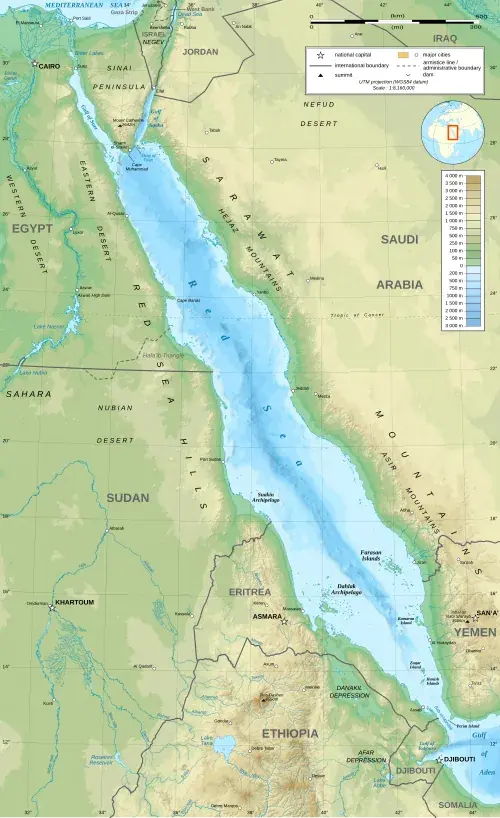
The Bab-el-Mandeb Strait is one of the world's busiest shipping chokepoints, which is exactly why Houthi attacks there have rattled global trade.
Image Credits: By Eric Gaba (Sting - fr:Sting) - Own work ;Topographic data : NASA Shuttle Radar Topography Mission (SRTM30 v.2) (public domain) edited with 3DEM and dlgv32 Pro ; UTM projection ; WGS84 datum ; shaded relief (composite image of N-W, W and N lightning positions) ;Bathymetric data : NGDC ETOPO1 ;Shor
Houthi Ideology and Political Goals
So what do the Houthis actually believe? That's harder to answer than you'd think.
Their beliefs mix religion, Yemeni pride, and big promises to ordinary people. Many outside experts say the group's ideas are vague and sometimes contradict each other. American historian Bernard Haykel says Hussein al-Houthi borrowed from so many different religious and political traditions that he's hard to fit into any box.
Haykel points to two core religious ideas. The first is what the Houthis call the "Quranic Way," the belief that the Quran contains everything a Muslim society needs, with no need for scholars to interpret it. The second is the belief that descendants of the Prophet Muhammad have a special, God-given right to rule.
In everyday politics, the Houthis talk about things most Yemenis care about. They promise to fight corruption, fix the economy, bring fair fuel prices, and create jobs. Fighting corruption is the centerpiece of their program. They've also said they support a republic with elections and that women can vote and hold office.
Their critics don't buy it. Opponents say the Houthis really want to impose Zaydi religious law. Some analysts think they may someday try to bring back the old Zaydi religious monarchy, though the Houthis have never openly said so.
Houthi Treatment of Sunnis, Jews, and Baháʼís
The Houthis have a complicated relationship with other religious groups in Yemen.
With Sunni Muslims, it's mixed. The Houthis have recruited Sunnis and formed alliances with them. But they've also closed Sunni mosques and mostly put Zaydis in charge of the areas they control. Not all Zaydis like them, either. Many Zaydis see the Houthis as tools of Iran, and the group often clashes with traditional Zaydi religious leaders.
Yemen's tiny Jewish community, only about 50 people, has suffered. The Houthis have been accused of forcing Jews out or limiting their lives, and some Houthi supporters have bullied or attacked them. Houthi officials deny this and say their fight is with Israel, not with Yemeni Jews. Still, a Yemeni rabbi reportedly said many Jews are terrified of the movement's slogan.
Members of the Baháʼí Faith have also been targeted. The Houthis have been accused of arresting, torturing, and holding Baháʼís without contact with their families, on charges that can carry the death penalty. Abdul-Malik al-Houthi has attacked Baháʼís in his public speeches.
Houthi Missiles, Drones, and Naval Weapons
The Houthis don't have much of an air force. They have a single fighter jet, taken from Yemen's government, plus some helicopters. What they do have are missiles, drones, and a surprising set of weapons for fighting at sea.
Early on, they looted Yemen's army weapon stockpiles, including old Scud missiles. Later, with Iranian help, they built upgraded versions. In 2016, they unveiled the Burkan-1, a longer-range Scud that could reach the Saudi capital, Riyadh. In December 2017, the United Nations studied debris from a similar Houthi missile and concluded Iran had supplied it.
In 2017, they showed off their drone program. One of their drones, the Qasef, can carry about 30 kilograms (66 pounds) of explosives. In 2019, the Houthis claimed an attack on major Saudi oil facilities at Abqaiq and Khurais, though the United States said Iran was behind it.
In 2024, they revealed a missile called the Palestine-2. The Houthis claim it's homemade and can fly at 16 times the speed of sound. Defense experts doubt both claims, and Israel and the US say it isn't truly hypersonic. Still, one of these missiles landed in an open area near Israel's main airport after flying about 2,000 kilometers in 11 minutes.
At sea, the Houthis started small, just rocket-propelled grenades fired at boats near shore. They've come a long way since. They use anti-ship missiles, naval mines, and explosive drone boats that ram into ships. In 2016, a single Houthi missile hit a UAE navy ship so hard it had to be retired.
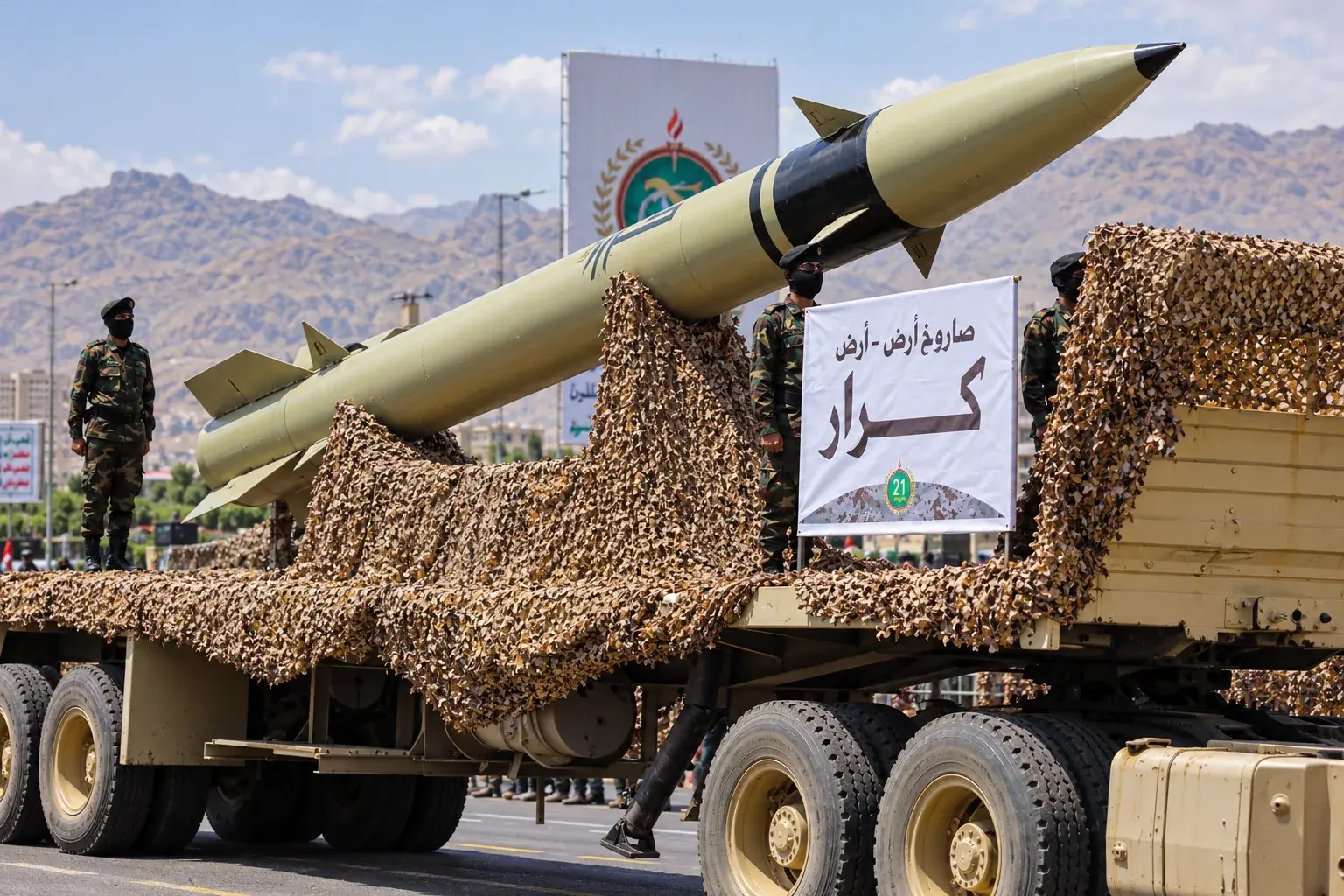
Houthi forces regularly parade their expanding missile arsenal, though independent experts often dispute the group's claims about range and speed.
Iran and the Houthis: Proxy or Partner?
Here's one of the biggest debates about the Houthis. Are they just Iran's puppets? Or are they their own boss?
There's plenty of evidence that Iran helps them. Ships loaded with Iranian weapons have been caught heading to Yemen many times. Hezbollah has trained Houthi fighters for years. In 2018, an Iranian military commander was quoted saying Iran told the Houthis to attack two Saudi oil tankers, though Iran quickly called the quote a lie. And in 2024, Reuters reported that Iranian and Hezbollah commanders were in Yemen helping direct the Red Sea attacks.
But many experts say Iran doesn't give the orders. In April 2015, a spokesperson for the US National Security Council said Iran did not have command and control over the Houthis. Joost Hiltermann, writing in Foreign Policy, pointed out that the Houthis flatly ignored Iran when it told them not to take over Sanaa. Researchers like Marieke Brandt and Charles Schmitz argue that the "Iranian puppet" idea mostly comes from the Houthis' enemies.
It's also worth noting that the Houthis don't agree with Iran about everything. They praise Iran for standing up to America and Israel, but they've criticized Iran's official branch of Shia Islam.
The honest answer is probably somewhere in the middle. Iran gives real help, and that help has grown. But the Houthis seem to make their own choices.
Russia, China, and North Korea's Links to the Houthis
Iran isn't the only foreign country tied to the Houthis.
United Nations investigators found that North Korea tried to sell weapons to the group. In 2024, South Korean news reported that Korean writing had been found on missiles fired at Israel, suggesting weapons had traveled from North Korea through Iran.
Russia has been linked, too. Reports say the Houthis have Russian-made anti-ship missiles and that Russia gave them satellite information to help target Western ships. One report even said Russian military intelligence officers were stationed in Houthi areas.
As for China, the US has punished Chinese companies for sending parts used in Houthi missiles and drones. The US State Department also says a Chinese satellite company gave the Houthis images to help target American warships.
Closer to home, the Houthis and al-Qaeda's branch in Yemen, once enemies, have had a ceasefire since 2022. The Houthis have also built ties with al-Shabaab, a militant group in Somalia, across the water.
Human Rights Abuses in Houthi-Controlled Yemen
The Houthis have been accused of many serious human rights abuses.
One of the worst is the use of child soldiers. UNICEF has said children make up as much as a third of all fighters in Yemen, counting the Houthis and other armed groups. A UN report found the Houthis recruited boys as young as seven. Human Rights Watch says the Houthis have shelled civilian neighborhoods and planted landmines in the city of Taiz, hurting many civilians.
The group has also taken people hostage to demand money from their families. The UN's World Food Programme accused the Houthis of stealing food aid meant for starving people and selling it.
Women in Houthi areas face strict rules. They often can't travel without a male guardian, even to see a doctor. Female prisoners have reported abuse and torture. The Houthis have also punished people for same-sex relationships, with courts handing out death sentences, floggings, and prison terms. Migrants from Africa passing through Yemen have been beaten and abused, according to Human Rights Watch.
To be fair, there's another side to how the Houthis govern. Back in 2009, some reports said they brought order to places Yemen's government had ignored, helping settle fights between tribes and cutting down on revenge killings. But those early reports sit alongside a long list of abuses that has only grown since.
How Yemenis See the Houthis Today
Even inside their own territory, the Houthis aren't very popular. A 2024 survey by the Sanaa Center for Strategic Studies found that only 8% of people in Houthi-controlled areas viewed the group positively, while 20% viewed it negatively. In other parts of Yemen, just 3% had a good opinion, and more than a third had a bad one.
Outside Yemen, pressure keeps building. The US and Britain have placed sanctions on top Houthi leaders. In 2025, the US punished shipping companies for delivering oil to a Houthi port. In April 2026, Costa Rica became one of the latest countries to officially call the Houthis a terrorist group.
Why the Houthis Matter Beyond Yemen
It's easy to think a rebel group in a faraway country doesn't affect you. The Houthis prove that idea wrong.
A huge amount of the world's trade moves through the Red Sea. When Houthi attacks make that route dangerous, ships have to take much longer trips around Africa. That can mean higher shipping costs and slower deliveries for goods that end up in stores everywhere.
The Houthis also show how a small local movement can grow into a major player when it gets caught up in bigger rivalries. What started as summer camps for Zaydi teenagers in the 1990s is now tangled up with Iran, Israel, Saudi Arabia, the United States, Russia, and China.
Meanwhile, the people of Yemen have paid the biggest price. Years of war, blockades, and famine have left Yemen one of the hardest places on Earth to live. Whatever happens next with the Houthis, the big open question is whether Yemen's ordinary families will finally get a chance at peace.