The Anglo-Saxons, who arrived in Britain after the Romans, behaved in an unusual way for a conquering people. They did not integrate.
Compare them with the Franks, who conquered Roman Gaul and adopted the language of the conquered people. The Anglo-Saxons did the reverse: they kept their language, their gods and their traditions. These gradually evolved into the oldest form of English.
They had little contact with the rest of the Mediterranean world and so their culture remained more insular and less sophisticated than its continental equivalents.
This cultural isolation pervades the narrative and explains both a violent clash with the existing Christian Britons and the survival of their traditions long after the Anglo-Saxons themselves had become Christians. In turn the isolation explains something unique to Anglo-Saxon England - a literature in the local language that rivalled Latin writings.
Here is an outline of who they were, what they believed before they were converted, how things changed and how much stayed the same up to the year 1066.
Angles, Saxons and Jutes in Britain
The Anglo-Saxons originated in today's Germany and Denmark. The term is a convenience, but three groups appear most frequently in the accounts: the Angles, the Saxons and the Jutes. There were others, and they came both before and after the first Anglo-Saxon migrants.
There was an established Celtic and Roman culture already present in Britain, with its own language, religion and governmental systems, and one would expect some level of integration. Instead the Anglo-Saxons held on to their own traditions and their own tongue, which developed into Old English rather than the more Roman-like idiom that could have emerged.
Cut off from the Mediterranean trade and cultural networks that had shaped Frankish culture, they developed their own traditions. Nearly everything that follows has strong Germanic influences rather than Roman ones.
Woden and the Old Anglo-Saxon Gods
Physical and martial excellence formed the core of Anglo-Saxon values, and literature does not disguise it. Beowulf, the best example of Anglo-Saxon poetry, is all about strength and the reputation that comes from it.
Their religion was also one of gloom, for their gods accepted that the world was approaching an inevitable end, possibly a bad one, and the correct response was endurance. They did however believe it was possible to influence events, and charms and spells suggest a pragmatic as well as a fatalistic approach.
The Anglo-Saxon gods were not unique to them, but Woden was chief among them and he was popular enough for royal families to claim him as an ancestor. On the whole the Anglo-Saxons had little interest in the afterlife - they may have had ideas on what happened next, but it was not a central part of their religion. This is a sharp contrast to the beliefs that were later to replace them.
Weregild and Anglo-Saxon Family Life
The family was the basic building block of Anglo-Saxon society, and those without one did not fare well. People without any relatives were objects of pity, and the reason for this will become apparent.
Should a member of your family be assaulted or killed the responsibility for redress lay with your relatives, and there were two acceptable courses of action. Revenge could be taken, or a payment made, and it is this second option that gives the concept its Old English name, weregild. This could be an alternative to an ongoing feud, and its function was to prevent further bloodshed between families by establishing a negotiated settlement. Where there were no families to speak of, there was no obligation on anyone to take revenge or accept a payment.
Relations between men and women were very different to anything that would later develop in Christian England. A man could marry his stepmother if his father died, a fact that would horrify the Christian Britons, and divorce was much easier than it would later become. These are not just variations on a theme, but fundamental differences. There were completely different social and legal expectations about what constituted a family, on top of a religious divide, and the Christian Britons were not alone in their disapproval of Anglo-Saxon pagan practices. The Anglo-Saxons did not show any interest in converting for a very long time.
Did the Anglo-Saxons Replace the Britons?
This debate, which remains unresolved, is complicated by everything that has gone before.
Here is what we know. Virtually every aspect of the culture changed. So did the language, the religion and the laws and social customs relating to family life. Across much of Britain, the way of life that had been Roman and Celtic ceased to be found.
Here is what we do not know. It is impossible to say whether the Anglo-Saxons themselves changed, because we do not have sufficient evidence either way. One explanation is that the Britons were simply displaced or exterminated, and the other is that the Anglo-Saxons and the Britons intermarried and the culture changed, but the Anglo-Saxons did not completely replace the population. Historians are so evenly divided between these two views that it is hard to say which is the more likely, because the two scenarios represent widely differing interpretations of the available evidence.
Missionaries From Ireland and Rome
When the Anglo-Saxons did convert to Christianity, the impetus came from outside the British Church. The successful missionaries came from Ireland and from Rome.
A few names stand out, and one was Augustine, an Italian who played a leading role in the early stages of conversion. Later Theodore, a Greek, became one of the most influential figures in the Church in England. This demonstrates the international nature of the new Christian establishment in comparison to anything that had come before.
Conversion did not mean abandoning everything that had gone before, and there are many examples of pagan practices continuing for centuries. Christian kings claimed descent from Woden, which would have been unthinkable in later years. Conversion involved acceptance rather than rejection of the existing social order.
The Synod of Whitby in 664
The existence of two missionary traditions led to arguments, and one of the points of contention was the dating of Easter. The fact that such an apparently minor issue could lead to the kind of discord that could see an entire kingdom celebrating the feast on two separate days demonstrates the extent of the differences between the traditions.
The dispute was resolved in 664 at a church meeting called the Synod of Whitby, where the Anglo-Saxon Church decided to adopt the Roman practices. This decision was important beyond the calendar, for it meant that Anglo-Saxon England was now part of a larger network stretching across France and into the Mediterranean, and ideas were exchanged along with missionaries and pilgrims.
The pilgrimage routes carried much of this intellectual traffic, and Anglo-Saxons were frequent visitors to Rome and other holy sites, and they returned home with new ideas. Notably they introduced the use of glass windows in churches, though they tended to mix such innovations with existing Anglo-Saxon ideas and techniques.
Christ as Warrior in Anglo-Saxon Poetry
The Anglo-Saxon love of heroic literature did not die with their pagan beliefs, but adapted to the new religion and produced some of the most extraordinary writings of the period.
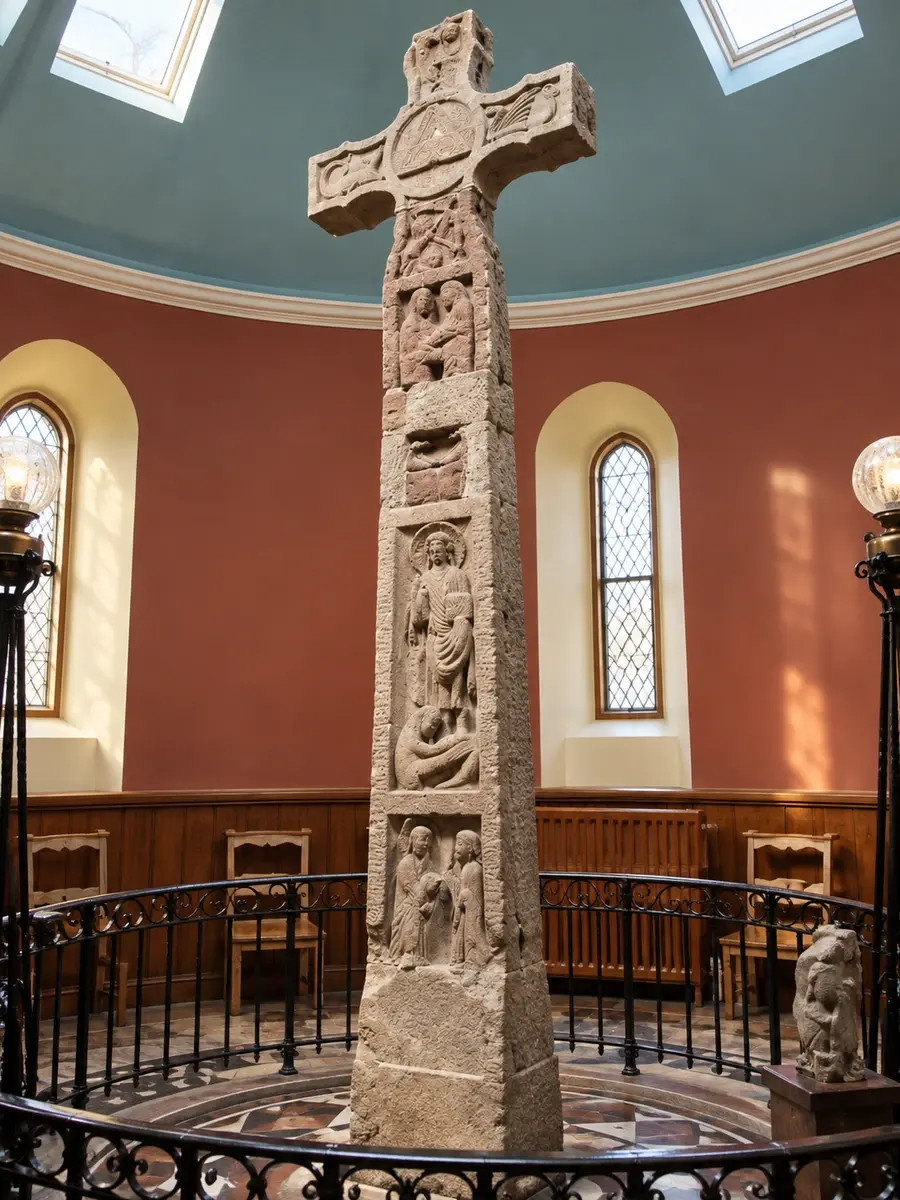
Standing stone crosses carried carved figures and runic verse, putting Christian scenes into recognisably Anglo-Saxon visual language.
The Dream of the Rood is the most remarkable single example, as its author describes the crucifixion from the perspective of the cross itself, but the subject matter is far from the only innovation. The Christ portrayed is not one of suffering, but of youthful courage leading a band of similarly stalwart followers. This is not a Christian view of the crucifixion but the typical Anglo-Saxon heroic tradition, and the author seems to have had no problem with combining the two into one work.
Beowulf takes the other approach, telling the story of a pagan hero, but the version we have contains clear Christian influences, and its closest literary model is the Aeneid, a Roman poem by Virgil. Two traditions, possibly three, were merged by Anglo-Saxon authors who felt quite at home with literary property belonging to other cultures.
Saint Cuthbert and the English Church
During the 7th and 8th centuries the English Church became less reliant on foreign missionaries and developed its own identity.
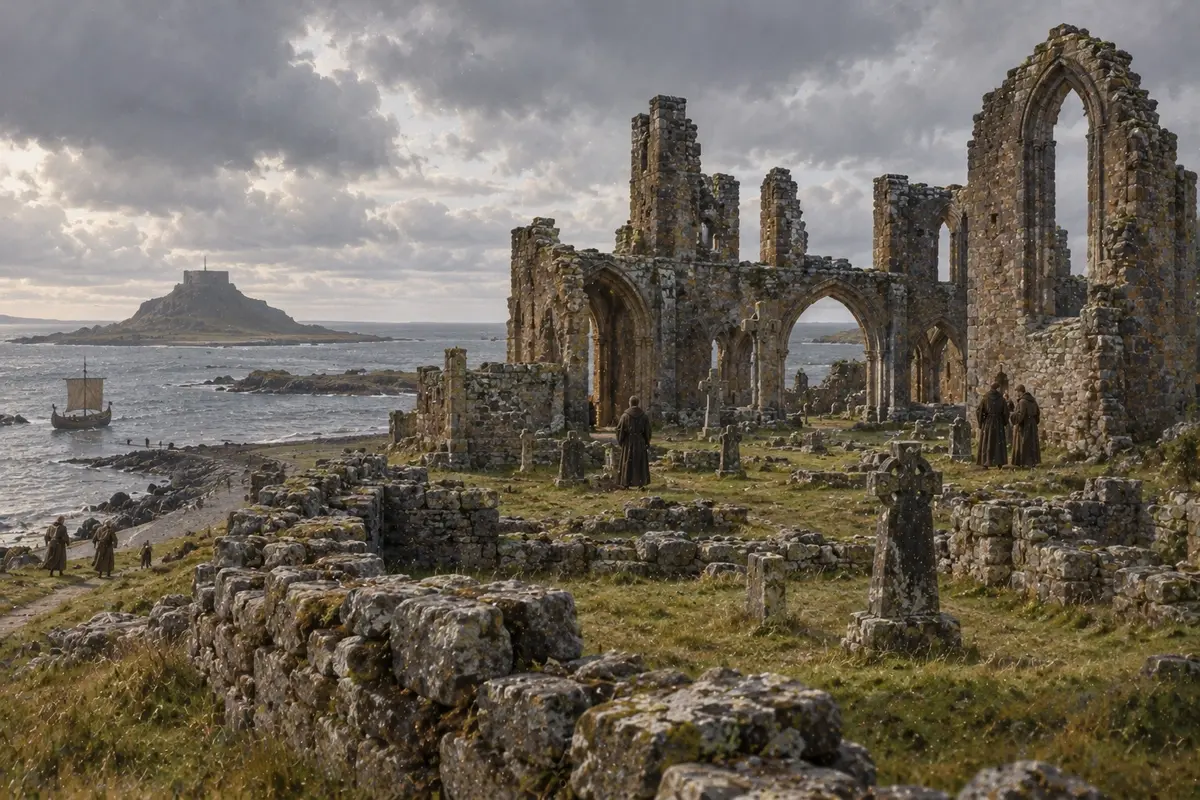
Island monasteries in Northumbria combined isolation with access by sea, which made them centres of learning and, later, easy targets.
An indication of this was the flowering of local saints, and it is interesting to note that many of these were from families with wealth or status. This was a recognition that the Church had become one of the ways in which people could acquire status, alongside military service.
One of the most influential was Saint Cuthbert, a monk and hermit based in northern England. Devotion to him continued long after his death and was strongest in Northumbria, a region that was to become the heartland of English Christianity.
Bede, Caedmon and the Northumbrian Renaissance
Northumbria produced a rich harvest of learning and artistic achievement, known to historians as the Northumbrian Renaissance. This is surprising coming from a region that was poor and remote by medieval European standards, but the monasteries played a crucial role.
Monasteries are communities of monks living and working together, and they were the meeting places for the flow of learning from Ireland and mainland Europe. Bede was a product of this, a monk and scholar of considerable ability who wrote the Ecclesiastical History of the English People, one of the most important surviving works on Anglo-Saxon history. Caedmon was also a product of the same system, as the first named Anglo-Saxon Christian poet to emerge in this period.
The artistic output of Northumbria, particularly the illuminated manuscripts, is equally as impressive. These combine elements from Anglo-Saxon, Celtic and even Byzantine traditions in astonishingly intricate designs, all created by hand and taking many hours to produce.
Northumbria was not the only area in Anglo-Saxon England to thrive in this period. Other centres of learning and art developed, notably in Wessex in the West Country as the Wessex kingdom grew in power, taking over Devon and Cornwall. Other areas lost out, particularly Kent, which was heavily involved in the missionary work of Archbishop Theodore but declined dramatically after his death in 690.
Boniface, Alcuin and Missions to Europe
The Anglo-Saxons were quick to spread the religion to which they had converted, and within a couple of generations they were sending missionaries across the Channel themselves.
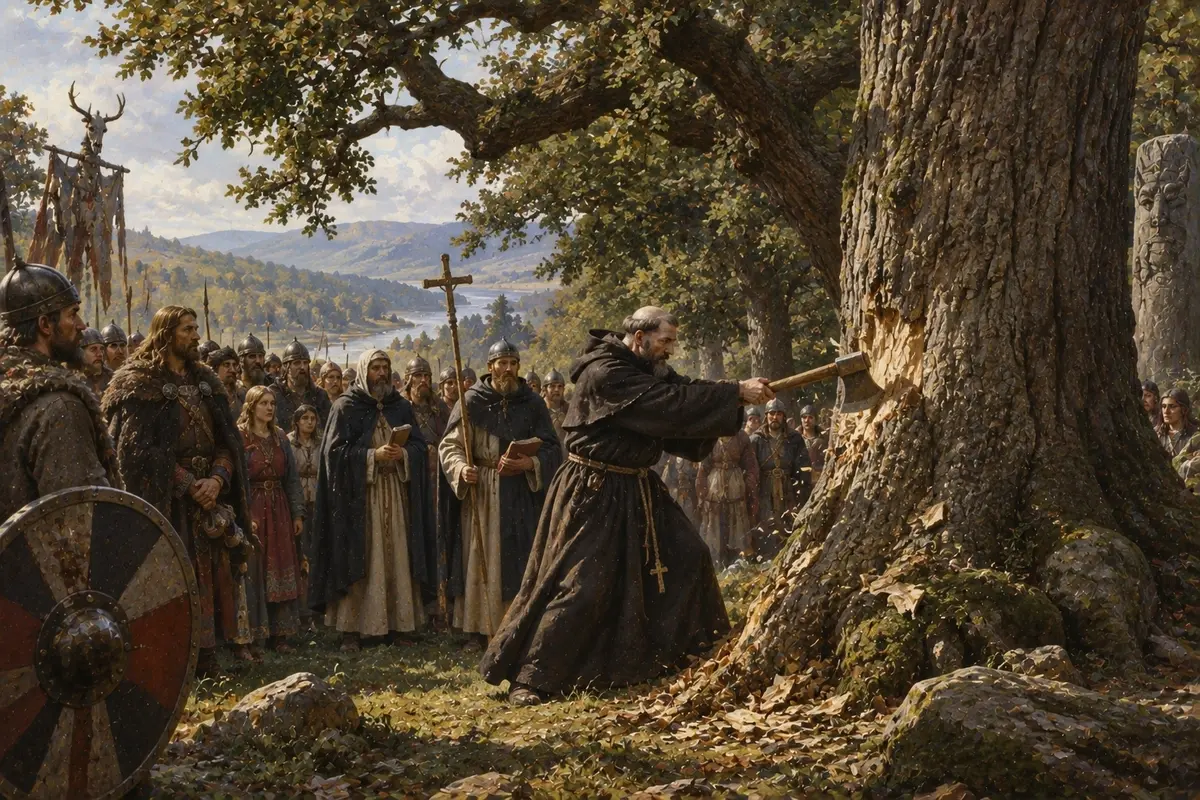
Felling a sacred tree in public was an argument as much as an act of destruction: the old gods were invited to defend their own shrine.
Boniface is the most notable example, born in Wessex around 680, and he engaged in missionary activity in Frisia without great success. Undeterred, he travelled to Rome and gained the support of the pope, and focussed his efforts on Germany instead, where he was to have a huge impact. He was a flamboyant figure, famed for felling pagan sacred trees in broad daylight as a demonstration that the old gods could not protect their worshippers. Large numbers of Anglo-Saxon missionaries followed him into Germany, where they added to the existing Christian foundations and made a major contribution to the organisation of the Church. He also reformed the Frankish Church, making it more directly accountable to the pope, and was eventually murdered by pagans on another mission to Frisia.
Anglo-Saxon influence spread to the very top of European politics. Alcuin of York, a scholar from Northumbria, was a key figure in Charlemagne's programme to reform European education and scholarship. He was instrumental in the development of the educational system and curriculum of the court of Charlemagne, and thus a man from one of the poorer areas of Europe ended up educating its most powerful emperor.
Viking Raids and the Loss of Monasteries
The Anglo-Saxon golden age ended from the late 8th century onwards, and this was due to developments in Scandinavia.
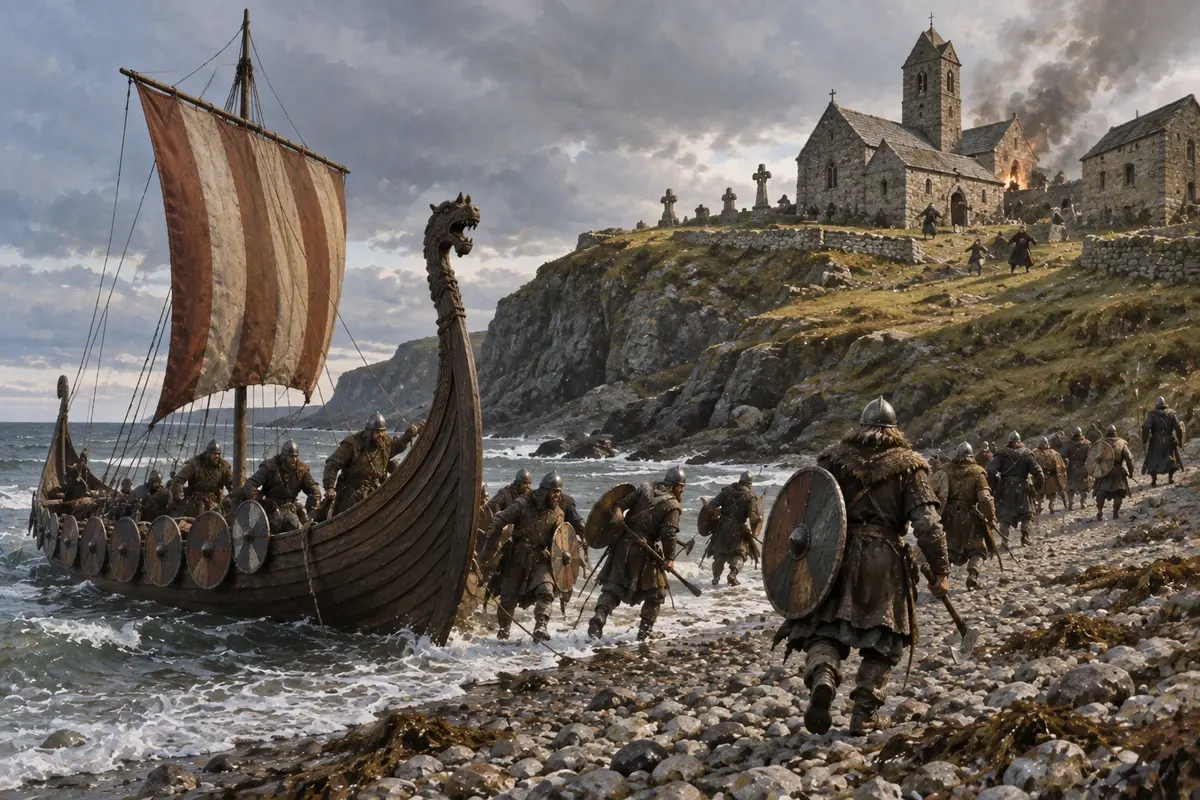
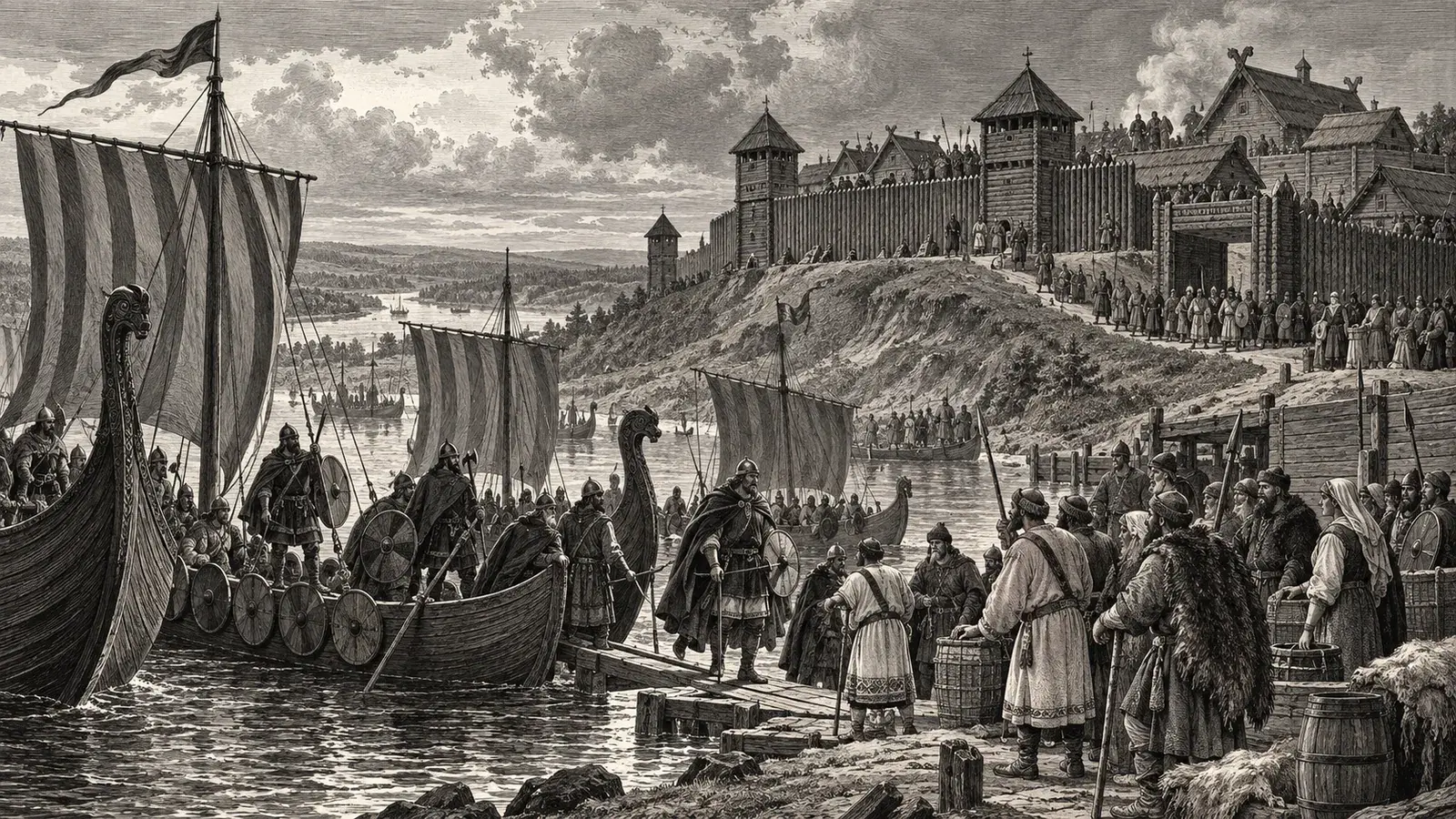
Shallow-draught longships could land directly on a beach, which put undefended coastal monasteries within reach of a single day's raid.
Viking raids devastated England in a way that Anglo-Saxon society was not equipped to deal with, and the places that suffered the most were the monasteries. This was partly because Anglo-Saxon Christian warriors left them alone, meaning their wealth was easily plundered. Pagan Vikings did not have the same inhibitions about attacking religious sites.
In areas controlled by the Vikings, monastic life did not merely suffer decline but was entirely destroyed, taking with it hundreds of years of accumulated learning and knowledge.
Alfred the Great and Old English Books
By the 9th century King Alfred of Wessex was concerned that learning and religion in England were at risk, and he set about rectifying the situation.
Alfred was unusually well-educated for a king of his time, and he put this to good use, gathering scholars at his court from all over Britain and Europe. He also undertook some literary translations himself, including Boethius's Consolation of Philosophy. Alfred encouraged the production of other works in Old English, including Bede's Ecclesiastical History, and in all cases the intention was that the target language should be accessible to ordinary readers.
Alfred's reign also saw the beginnings of the Anglo-Saxon Chronicle, a work that was written in Old English and kept up to date by monks for centuries afterwards, providing a continuous narrative of events in a language that most people could read. This is remarkable because, except in England, serious literature and history in this period was usually written in Latin.
Alfred's contributions to history and learning saved Anglo-Saxon knowledge from disappearing and provided a sense of national identity for a fractured people.
Canute and How Vikings Changed English
The Scandinavian connection with England did not end with the raids. In the 11th century King Canute of Denmark controlled all of England, and his reign was very different from its Anglo-Saxon predecessors.
Canute ruled wisely and discreetly, was a Christian and respected the English Church, and this is what allowed him to govern so effectively. The Vikings did not bring chaos but order, and they brought a more European sophistication with them.
The most lasting effect, perhaps, was on the language. The similarity between Old English and the Scandinavian languages meant that new vocabulary was adopted with ease, and English took in many new words. At the same time it was shedding some of its complexities of grammar, including grammatical gender and case endings. The result was a much simpler language, easier to learn for people unfamiliar with it.
Dunstan and the Return of Monasteries
Alfred had hoped to revive monastic life and never succeeded. The real renaissance came in the 940s, and the man responsible was Dunstan.
Dunstan was born into a noble family and eventually became Archbishop of Canterbury. He was instrumental in rebuilding the monastic system and introducing the Rule of Benedict, a set of detailed regulations for how monks should live. The new monasteries became important elements in the Church, providing its leaders and offering advice to the kings.
A wider renaissance followed, with cathedrals damaged or destroyed during the Viking period being repaired or replaced, and the manuscript-making industry flourishing. This was particularly notable in Winchester, where the quality of products was of outstanding standard. It is important to emphasise that this was not happening in isolation, and that the transmission of ideas and fashions from mainland Europe was well under way before the arrival of the Normans.
Edward the Confessor and Westminster Abbey
One of the last Anglo-Saxon kings is an excellent example of the convergence between England and Normandy, and it is apparent from the architecture. Edward the Confessor spent years in France before becoming king, and he brought continental tastes with him. Westminster Abbey, built during his reign, was constructed in the style known as Norman Romanesque, using stone imported from Caen in Normandy and with round arches.
This adds a different perspective to events of 1066, for although the Conquest was a massive upheaval it should be seen against the background of a longer-term convergence with European culture.
Anglo-Saxon Culture After the Norman Conquest
Much of the Anglo-Saxon culture did not end in 1066. The Anglo-Saxon Chronicle was still being written nearly a century later, in Old English rather than the Norman French that might have been expected. Monks continued to update it, clearly feeling that the preservation of history was more important than expressing loyalty to the new regime. Anglo-Saxon literary traditions survived, including poetry.
The legacy that continues to this day is the one that people encounter without thinking. A culture that came to Britain disinclined to adopt any other language created a literary tradition in their own tongue. This was further adapted by Viking influences into a language with far fewer grammatical complications than its neighbours.
Modern English is still recognisably Germanic, and it still has relatively simple grammar. This is a remarkable survival for a people whose defining characteristic at the beginning of their history was a disinclination to allow themselves to be incorporated into anybody else's culture.