For three centuries, medieval Europe ran on a deceptively simple trade: land for loyalty, protection for service. It built the Domesday Book and the Magna Carta, hardened a peasantry into a class with no legal way out, and then unraveled within two centuries once plague and cash entered the picture. Historians still can't fully agree on what to call it.
Feudalism was medieval Europe's answer to a governing problem that had no good answer. A ruler couldn't personally visit, defend or administer most of the land he claimed, and has no bureaucracy capable of doing it for him. So, between roughly the 10th and the 13th centuries the standard approach across much of Europe was to give the land away.
A landowner gave up a parcel of territory. The man who received it owed something back, usually service with a weapon in hand, sometimes a steady flow of produce or coin. Both men were free, and the bond between them was personal. There was no salaried army sitting in barracks waiting for orders. There was a man with land, a man who wanted land and a promise.
That arrangement decided who fought, who ate, who could travel and who inherited what, for something like three centuries. It also produces the Domesday Book, the Magna Carta and a peasantry that legally couldn't walk away from the field it was born beside.
Here's how the deal actually worked, who was honestly included, and why a structure so permanent broke in the space of a couple of hundred years.
How the Feudal System Worked
Strip away the castles and the ceremony and feudalism comes down to a single transaction. A lord gave a unit of land, called a fief to another man. Along with the land came a promise of protection, both military and legal. In return the recipient, the vassal owed the lord a payment of some kind.
That payment usually took the form of feudal service. Most often it meant turning up armed when the lord needed soldiers. It could also mean handing over produce or money on a regular schedule, which suited tenants who had land to farm but no talent for war.
The detail that trips people up is who this covered. Both parties in that exchange were freemen. The serfs and villeins working the soil weren't part of the bargain at all, which is why most historians don't stretch the word feudalism over them. Their situation had a different name and different rules and we'll get to it.
The Origins of Feudalism in Europe
The vocabulary gives away the priorities. Feudalism comes from two medieval Latin words, feudalis meaning fee and feodum meaning fief. The fee was the land itself, granted as payment for military service performed on a regular basis. Land as wages, essentially.
The roots run back well before the Middle Ages. The Roman manorial system had the basic shape of it, with workers living on enormous estates and receiving protection as their compensation. By the 8th century the kingdom of the Franks had added the piece that mattered most, a king granting land to a loyal noble for the length of that noble's life, an arrangement called a benefice, with service expected in return.
What turned a regional habit into the dominant structure of Western Europe was conquest. From the 11th century onwards the system spread rapidly and the Normans deserve most of the credit or blame for that. Wherever their armies won, their rulers carved up the territory and distributed it and the machinery came with the land.
Land Grants From Kings to Nobles
At the top of the arrangement sat the monarch and William the Conqueror is the sharpest example of what that meant. Ruling from 1066 to 1087 he treated the entire landmass of England as his personal property, not the nation's. His.
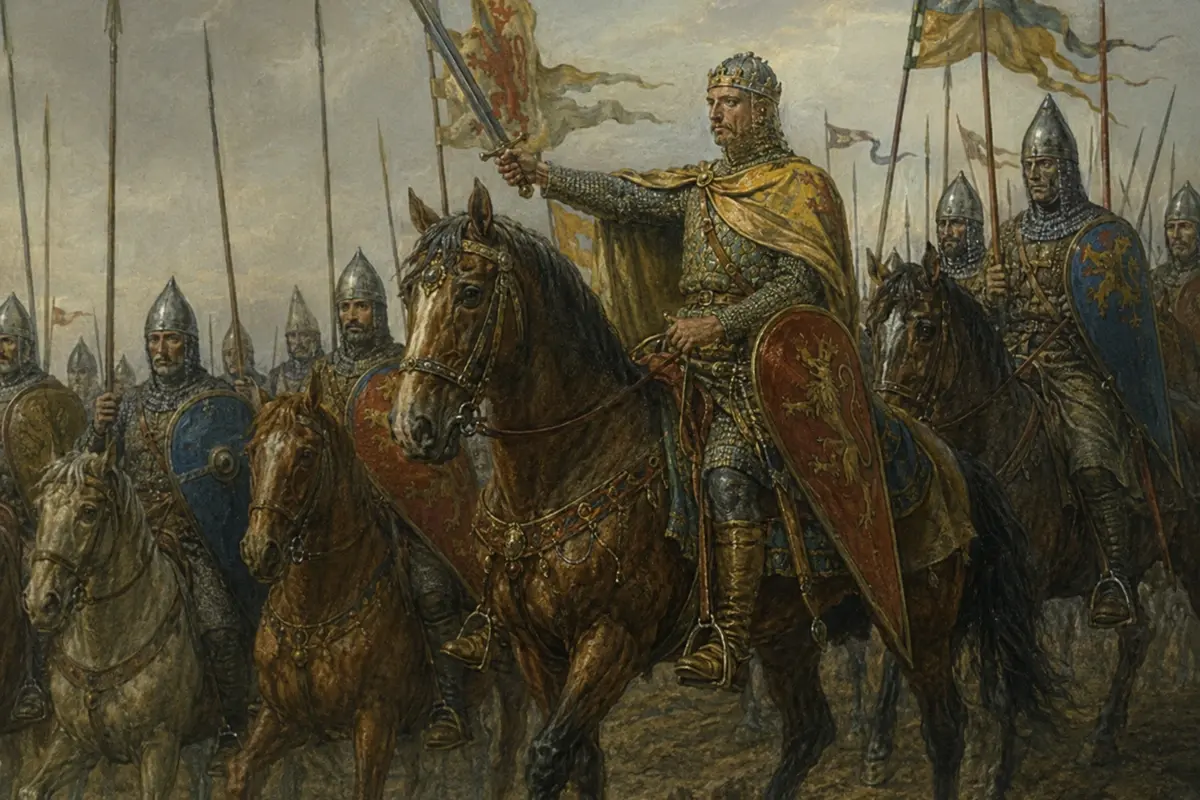
As king, William treated the whole of England as his personal property, granting it out to nobles as he saw fit.
From that position he could grant a noble a parcel of land, no fixed size involved and in accepting it the noble became his vassal, with loyalty promised, service promised, whenever it was called for. What existed afterwards was a personal bond between two individuals rather than an office or a contract.
Military obligation was the service the Crown wanted most, whether that meant fighting in the royal army or garrisoning and defending Crown assets like castles. There was an alternative for those who preferred to stay home. A cash payment called scutage could be offered instead and the monarch would turn that money into hired mercenary soldiers.
The vassal, meanwhile got a great deal out of the arrangement. He kept whatever income the land generated. He held authority over the people living on it and he could pass every one of those rights down to his heirs, which is how a temporary reward hardened into a permanent aristocracy.
Subletting Land to Tenant Vassals
Nobles who received these grants, sometimes called suzerain vassals often ended up holding far more than they needed or could realistically manage. The obvious move was to sub-let. Pieces got carved off and handed to tenant vassals on essentially the same terms: use the land, profit from the land, owe me a service for it.
For a knight, that service was likely to be military, since that was the skill he had. Plenty of tenants sat lower on the social ladder though. Still free men but without the training, the horses or the equipment that made a man useful in a battle. Those tenants paid in a different currency, usually a percentage of the revenue their land produced, in coin or in crops. Later in the medieval period this often simplified into a fixed rent, which is the point at which the whole thing starts to resemble a landlord and a tenancy in the modern sense.
Then there were the extras, the irregular fees that fell due at particular moments in a lord's family life. When his eldest daughter married, his tenants paid. When his son was knighted, they paid again.
Homage, Oaths and Feudal Protection
The ceremony that created a vassal was called homage and it was as physical as the word suggests. The man would kneel before his lord and swear an oath of loyalty. What he received in exchange wasn't only the land. It was the lord's protection, available whenever it turned out to be needed.
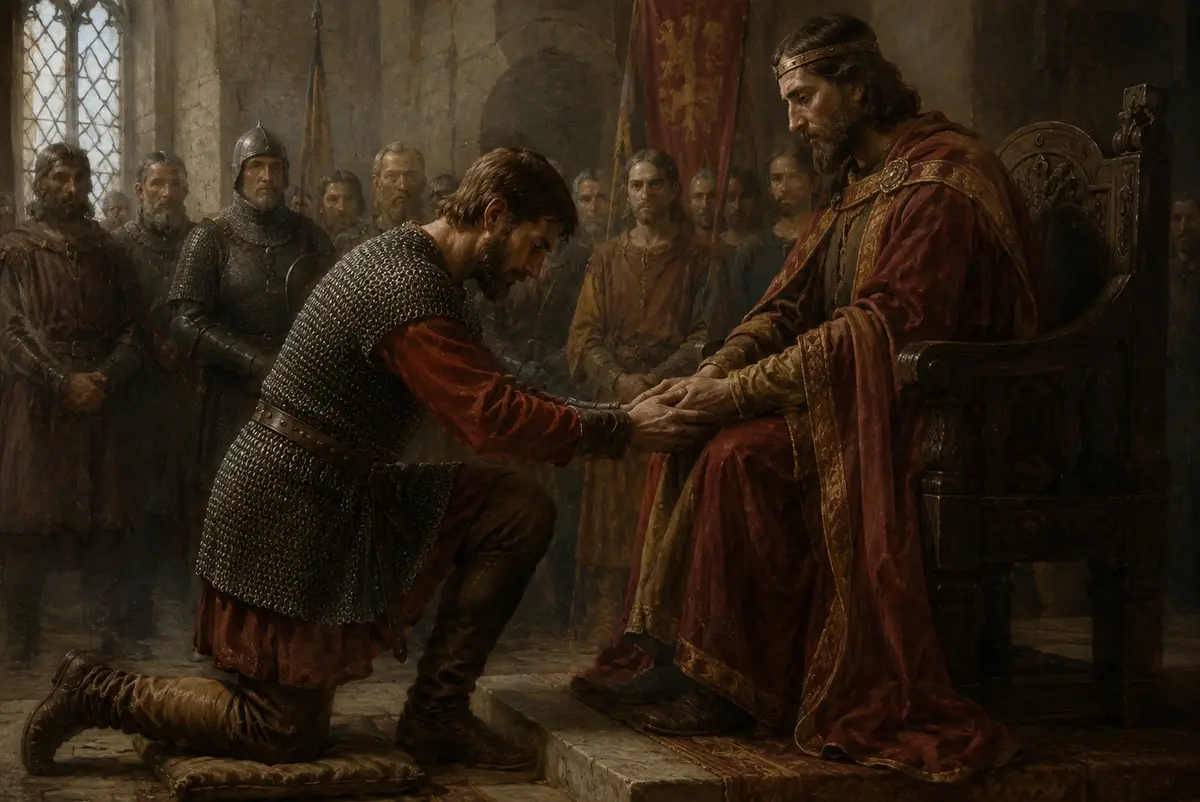
Homage was a physical ritual, not just a legal formality: kneeling and an oath sealed the bond between lord and vassal.
That second half of the bargain is easy to underrate from a distance. War was a recurring feature of life. Raids from hostile neighbouring states were frequent. Ordinary banditry was a constant background threat with no police force to answer it. Having a powerful man formally obligated to defend you was worth genuine money.
Protection wasn't limited to armed men either. If a vassal ended up in a civil court or a church court, his lord provided legal support and spoke for him. Tenancy itself usually passed down to an heir, though it could sometimes be sold on to a third party, provided the lord who actually owned the land signed off on the sale.
One arrangement sat awkwardly outside all this, particularly in medieval Germany and France. It was called an allod, a property that couldn't be taken back from its holder. Someone holding an allod still owed a form of allegiance to the powerful lord in the area, but that allegiance wasn't anchored to a grant of land. Take away the land as leverage and the loyalty becomes very difficult to enforce.
Why the Feudal System Perpetuated Itself
The reason feudalism proved so hard to dislodge is that its two halves locked together. Holding land meant being able to perform military service. But performing military service meant buying weapons, armour and horses, all of it ruinously expensive which meant you needed land to fund it. Land demanded service, service demanded land and the circle closed.
What that circle produced was a permanent divide. On one side stood the landed aristocracy meaning monarchs, lords and a portion of the tenants beneath them. On the other stood everyone who actually worked the ground, some of them free and some of them not.
Serfs, Villeins and the Manorial System
At the base of the pyramid were the serfs, also called villeins and they made up the overwhelming majority of the population. That figure reframes the whole subject. The knights and the oaths and the fiefs describe a thin layer at the top of a society made mostly of people who didn't own anything.
Serfs worked without pay on land owned or rented by other men. They grew food to keep themselves alive and, more to the point of the arrangement, food and profit for their masters. They were often treated as little better than slaves. They couldn't leave the estate they lived and worked on which removed the only real leverage a worker has.
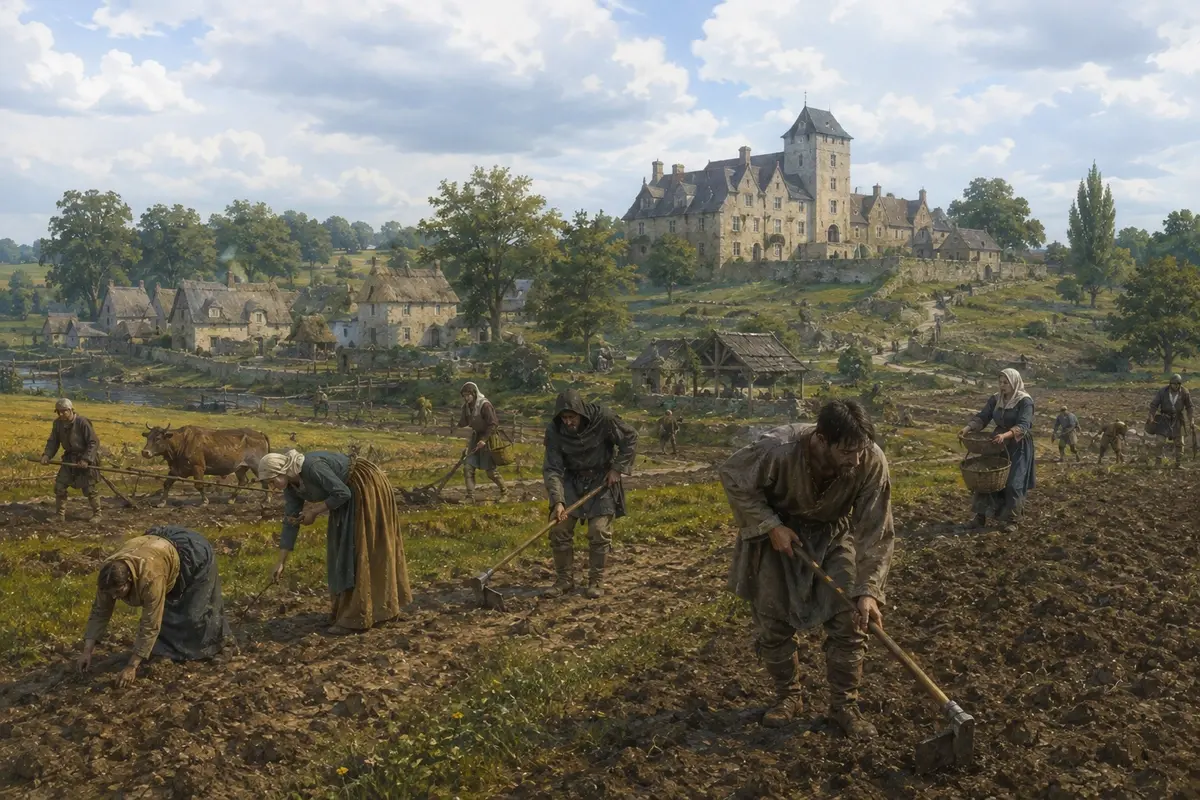
Serfs made up the overwhelming majority of medieval society, tied to the land they worked without pay or the freedom to leave.
Modern historians generally reserve the word feudalism for what happened between lords and vassals and give this relationship its own name. The manorial system, after the manor, the most common unit of land in the period.
Historians Still Debate What Feudalism Means
Now the awkward part. For a term that appears in every textbook on the period, feudalism has never had a definition scholars actually agree on.
The word wasn't used by anyone living in the Middle Ages. It was applied backwards onto medieval Europe from the 16th century onwards and once it existed it kept travelling. Historians stretched it over the Zhou period in China, running from 1046 to 256 BCE, and over Edo period Japan between 1603 and 1868. A label invented in one century to describe another, then exported across continents is carrying a lot of weight.
It doesn't even hold together within Europe. Laws and customs varied between regions and shifted across centuries so a definition that fits one place and moment will misdescribe another. That's why a substantial number of historians treat the term as being of only limited use for understanding these societies at all.
The Oxford English Dictionary manages one of the tighter definitions available, and it's worth summarising because it captures the layers. Nobility holding land from the Crown in return for military service. Vassals sitting beneath them as tenants of those nobles. Peasants obliged to live on their lord's land and give him homage, labour and a share of what they grew, with military protection offered as the notional return. Three tiers, one logic, repeated downwards.
Effects of Feudalism on Medieval Europe
The first consequence was intensely local power. Communities owed their loyalty to one specific lord nearby and within his domain his authority was absolute. Not delegated, not reviewable, absolute.
Because fiefs tended to be hereditary, the split between those who held land and those who rented it hardened into a permanent class divide within a generation or two. The system did retain a bias towards the man at the very top however. When a noble died without an heir, his estate reverted to the monarch, who could keep it or hand it to someone else entirely.
Kings used that power deliberately. Land could be distributed for political reasons, breaking up a noble's holdings so they no longer formed a bloc or shifting a man geographically further from court. The obvious administrative headache was keeping track of who held what across an entire kingdom and the Domesday Book of 1086 exists because that record-keeping problem became unmanageable.
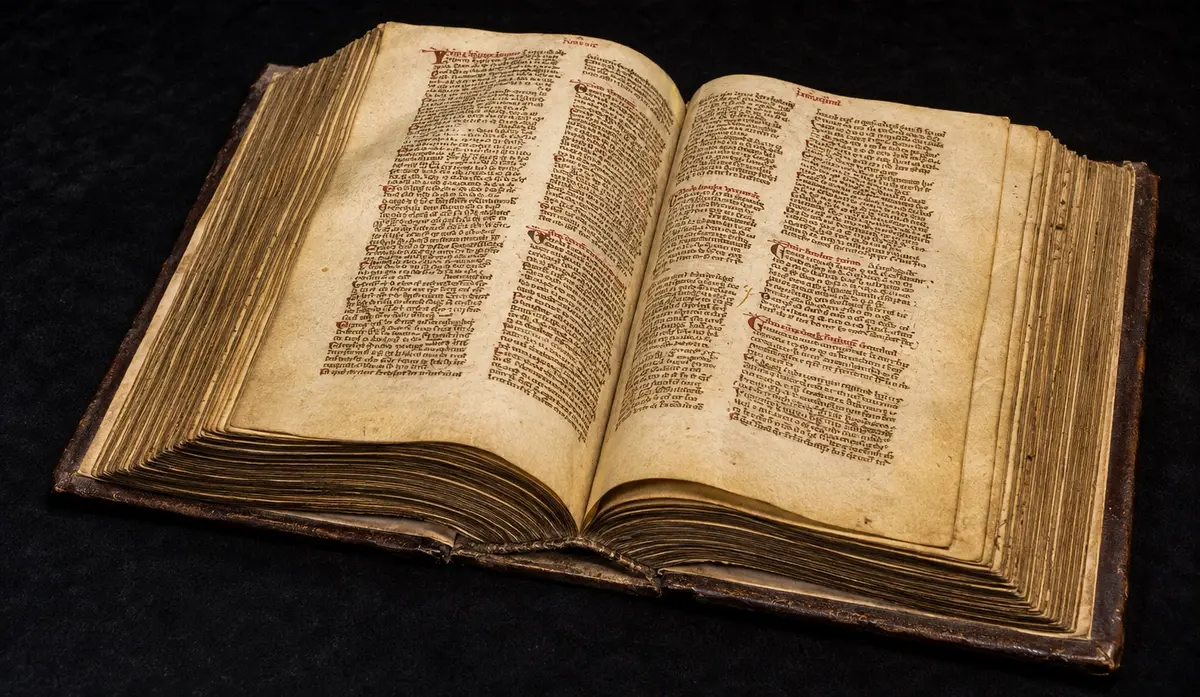
Commissioned to record who held what land across England, the Domesday Book survives as one of the period's most detailed administrative records.
Then there was the courtroom problem. Vassals sat in the local courts that ruled on cases involving their own lord's estates. The conflict of interest was structural rather than accidental and impartiality was never realistically available, even though the most serious criminal cases were referred upwards to the courts of the Crown.
The Barons' Revolt and Magna Carta
The weakness in a system built on personal promises is that promises can be declined. A monarch fighting a war might demand active military service and find his nobles simply unwilling to provide it. That's what happened to King John of England in 1215 when the Barons' Revolt led directly to the signing of the Magna Carta.
The threat in 1215, and in the revolts that followed through the rest of the 13th century wasn't only that the barons said no. It was that they said it together. Feudalism ran on individual lords and individual vassals negotiating private arrangements, one relationship at a time. Barons acting collectively, as a class with shared interests attacked the structure at its foundation.
There were attempts to ease the pressure. Military service was capped at fixed terms, typically 40 days in England, so that nobles weren't stuck away from their own estates indefinitely. The flaw showed up immediately. Forty days rarely sees a campaign through to its end, which left monarchs obliged to hire mercenaries for the remainder and every mercenary contract chipped away at the tradition of service and vassalage that justified the whole system.
Conflicting Loyalties Between Lords and Vassals
Feudalism worked because two men owed each other something specific. As the arrangement aged it got tangled.
Lords accumulated multiple estates. Vassals ended up holding parcels of land from several different lords at once. Once a man owes service to three or four people whose interests don't align, loyalty stops being a duty and starts being a choice and people made that choice according to whichever relationship happened to serve them best. The reciprocity that held the whole thing upright quietly drained out of it.
The Black Death and Labour Shortages
Then the population fell off a cliff. Wars and plagues cut sharply into the number of living workers and the Black Death, peaking between 1347 and 1352 did the most damage. Peasant revolts added to the disruption, the English rising of 1381 being the one everyone remembers.
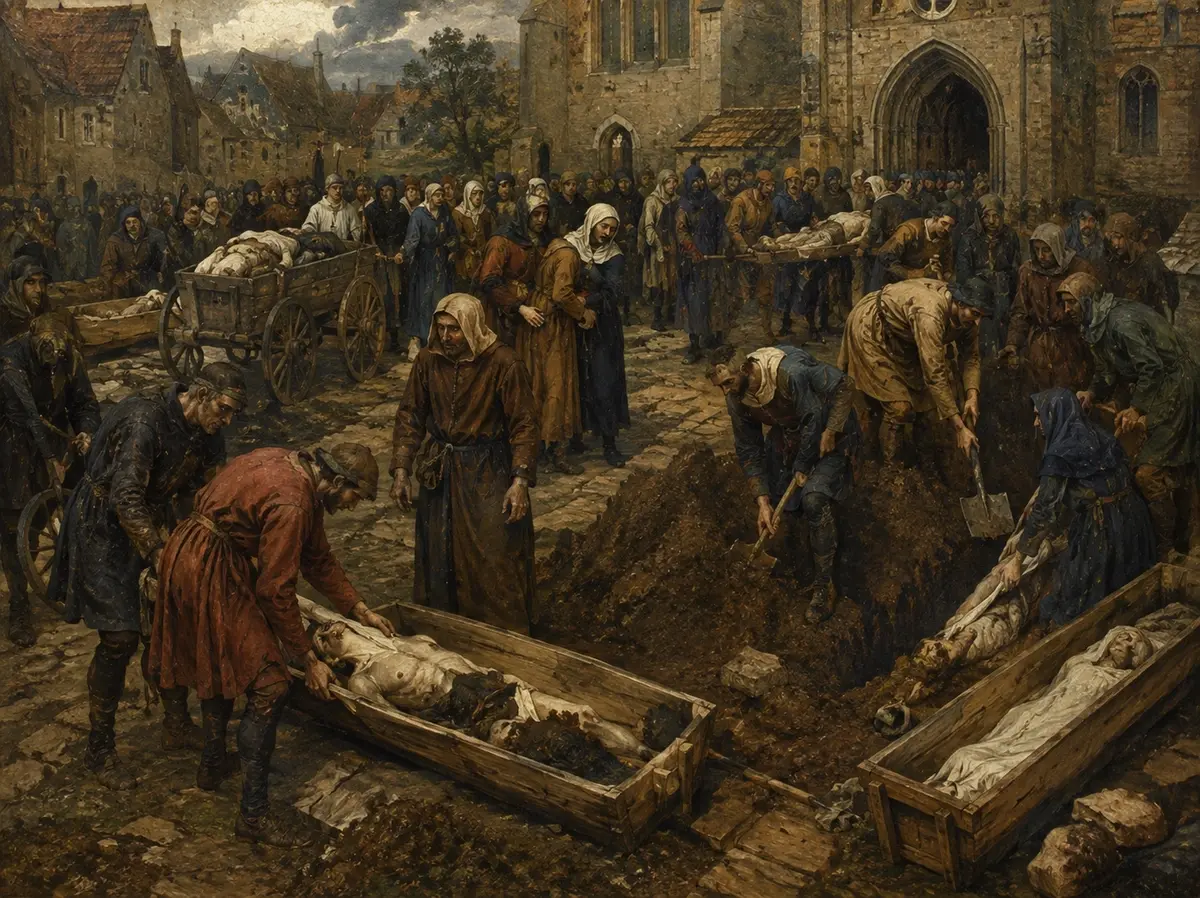
Between 1347 and 1352, the Black Death cut sharply into Europe's population, leaving estates without enough workers left to farm them.
The result was a chronic shortage of labour. Estates were abandoned outright, not because nobody wanted them but because there was nobody left to work them. Land without workers generates nothing and a system that measured wealth in land suddenly had a problem it couldn't solve by granting more of it.
The growing towns and cities pulled in the same direction. New jobs and the prospect of a better future drew people off the countryside and every one of them who left made rural labour scarcer still.
Money, Commerce and the Decline of Feudalism
By the 13th century commerce was expanding and coinage was in much wider circulation and cash quietly dismantled what plague had weakened. A feudal lord could now pay his sovereign rather than serve him. The sovereign spent that money on mercenaries. Follow that through and the barons themselves became less important to defending the realm, which was the entire basis of their standing.
It worked in reverse too. A monarch could distribute money as a reward instead of distributing land and money doesn't create hereditary claims the way a fief does. Meanwhile a wealthy merchant class was rising with no feudal ties of loyalty to anyone beyond their sovereign, their suppliers and their customers. Even serfs could occasionally buy their freedom outright and escape the circumstances they'd been born into.
None of this killed feudalism on a particular date. Forms of it persisted well past the medieval period in various places. But a structure built on land and personal service can't survive a world that has started measuring obligation in currency.
Feudalism as a Modern Historical Label
Here's what makes feudalism genuinely strange as a historical subject. Every person who lived inside it went their whole life without hearing the word. It was assembled afterwards, by scholars looking back, and then carried off to describe societies in China and Japan that had nothing to do with Norman knights or English barons.
That doesn't make it useless. It's the best shorthand available for a real pattern: land traded for service, protection traded for loyalty, obligation running downwards through a hierarchy that couldn't be escaped from below. Anyone reading about medieval Europe needs some word for that.
It's just worth holding the term a little loosely. What actually existed was thousands of separate bargains between individual men, varying by region and by century, most of them never written down. Feudalism is the shape we can see from a distance once the individual arrangements blur together. The question historians keep circling is whether that shape was ever really there or whether we drew it ourselves.