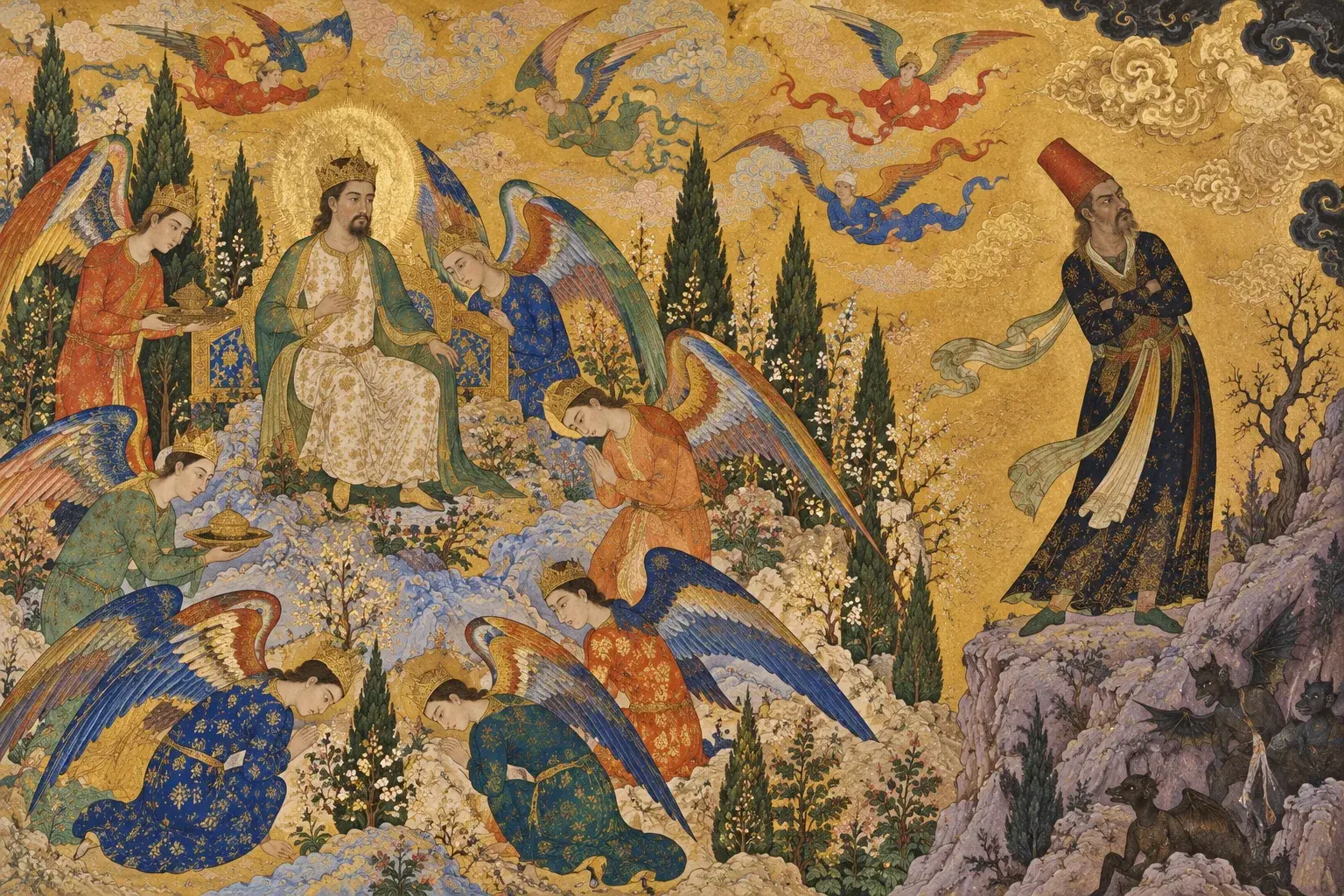
On 24 November 1221, on the bank of the Indus river in what is now Pakistan, a young prince named Jalal al-Din rode his horse off a cliff into the water because it was better than being captured.
He was the last of the Khwarazmian shahs, and his army had just been destroyed. Genghis Khan watched him go. When Mongol archers reached the edge and got ready to shoot, Genghis Khan told them to stop, because he wanted to see whether the man would make it.
That single moment is the most famous thing in the whole Mongol campaign in the west. This article covers how he got there, and then the harder half of the story: how the Mongols actually took cities, and what happened to the people inside them.
A Prince Who Inherited a War
Jalal al-Din was born in 1199 at Gurganj, the Khwarazmian capital. His father, Muhammad II, died in December 1220 on a small island in the Caspian Sea while running from the Mongols, and named Jalal al-Din his heir there.
What he inherited was not a kingdom. It was a war that was already being lost, and a family that had spent years arguing about him. His mother had been a concubine rather than a royal wife, so his powerful grandmother had spent years pushing a younger brother forward instead.
He raised what troops he could and went back to fighting. He was never strong enough to meet the main Mongol army head-on, so instead he shadowed them, hit their columns, and slipped away. He lost most of the fights and kept part of his men every time.
At one point he almost quit. After a bad defeat he took what was left of his men to a mountain fortress and told its commander he was done. The commander talked him out of it, arguing that a prince from a family like his should not give up because his luck had turned. So he went out again, gathered an army, and had the best few months of his life.
Straw Dummies and a Quarrel Over a Horse
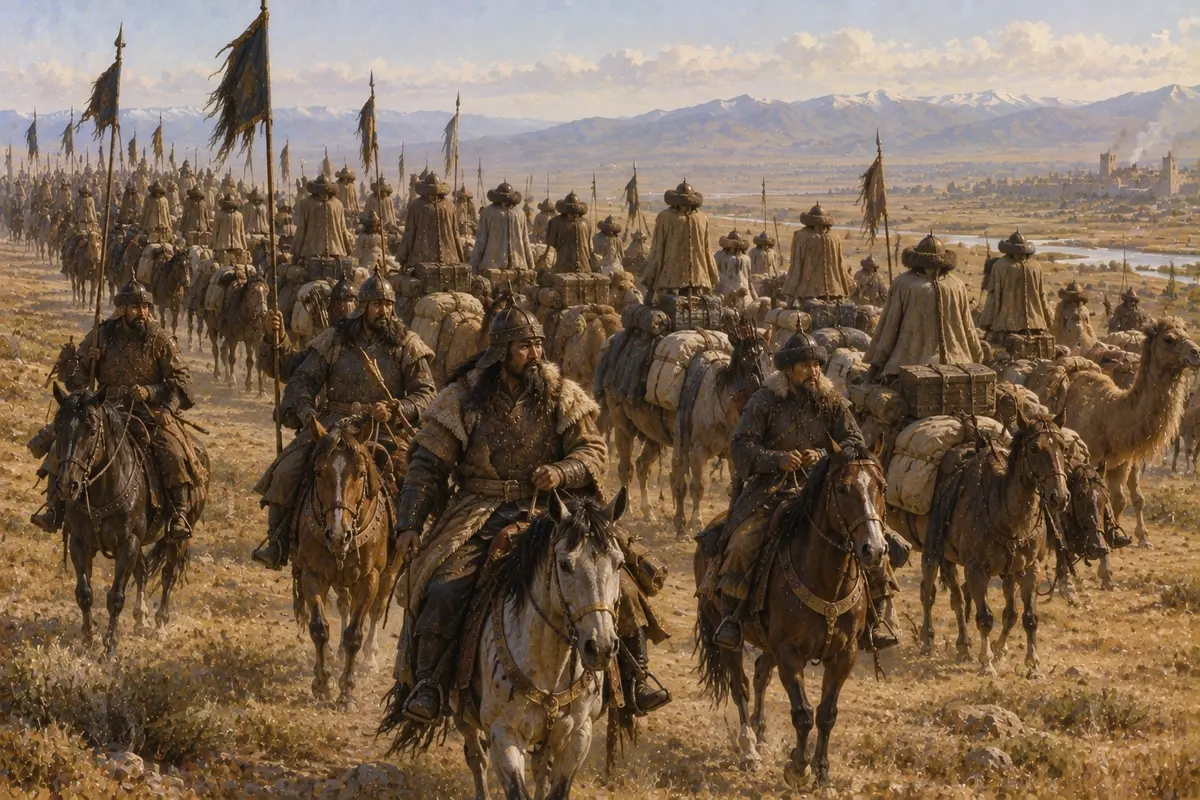
Every spare cap and cloak went onto a pack animal, to turn a small force into the outline of a large one.
In the autumn of 1221 Genghis Khan sent a commander called Shigi Qutuqu against him with a large force. Jalal al-Din beat him at a place called Parwan.
Part of what makes that battle famous is a trick that did not work. The Mongol commander stuffed spare felt caps and cloaks with straw and tied them onto baggage horses and camels, lined up behind his real soldiers, so that his army would look far bigger than it was. Jalal al-Din saw through it, attacked hard, and won.
Then his own side ruined everything. Two of his generals both wanted the same beautiful Arabian horse from the captured loot. The argument got worse until one of them hit the other across the face with a whip. Jalal al-Din tried to settle it without picking a side, and failed. The insulted general rode off in the night and took his whole contingent with him.
So the man who had just beaten a Mongol army lost roughly half of it over a horse. Genghis Khan came up in person soon afterwards, and Jalal al-Din had to run for India.
The Battle at the Indus
The Mongols caught him on the bank of the Indus while he was still getting boats ready to cross.
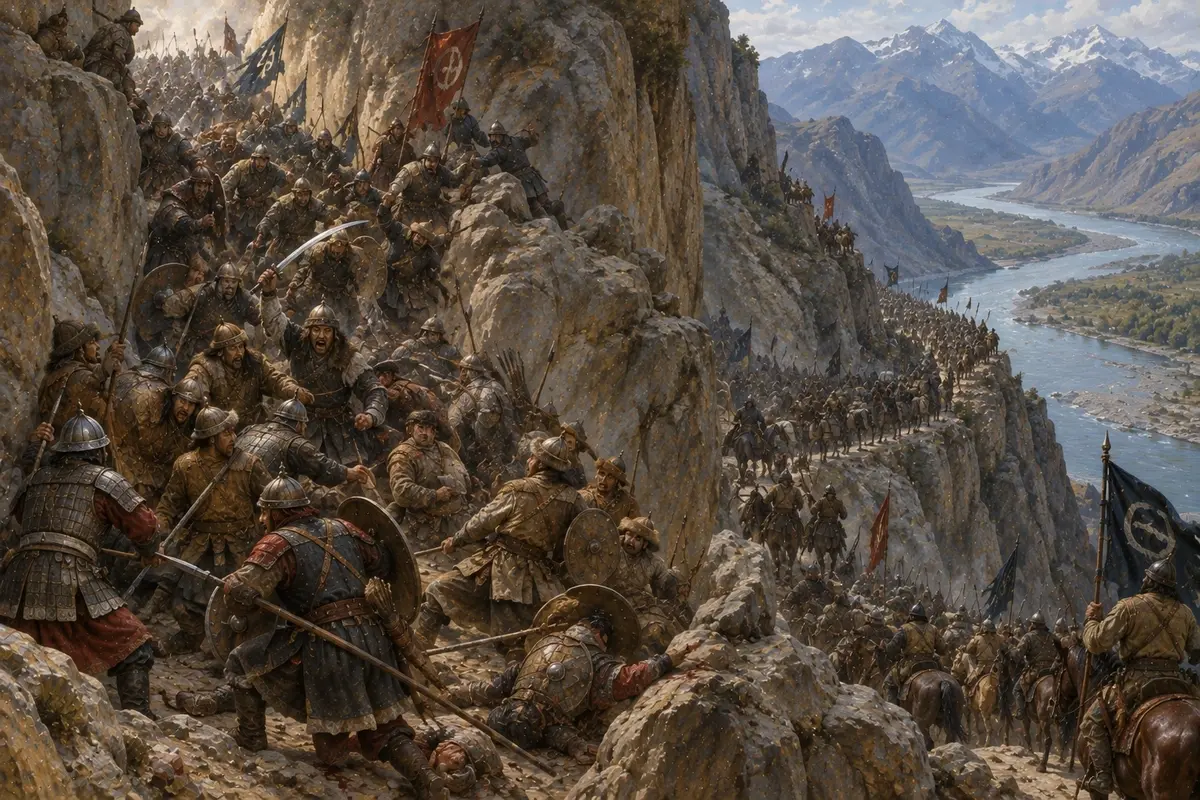
He picked ground where numbers counted for less: a ridge on one side, a bend of the river on the other.
He had somewhere over thirty thousand men, most of them not professional soldiers. Genghis Khan had about fifty thousand cavalry. That is a serious difference, but it is nothing like the ten-to-one gap some older accounts describe.
Jalal al-Din also picked his ground well. He put one flank against a ridge running down to the water and the other against a bend in the river, so the Mongols could not use their speed to get around him. Genghis Khan formed a crescent to pin him against the water.
The first Mongol charge was beaten back. Jalal al-Din counter-attacked and very nearly broke through the Mongol centre. For a while it looked possible.
What ended it was geography. Genghis Khan sent a detachment of around ten thousand men up over the ridge and down behind the defenders. Attacked from two sides at once, the Khwarazmian army came apart.
Riding Off the Bank
Jalal al-Din went first to say goodbye to his mother, his wives and his children, who had travelled with the army as families did. Then he took off most of his armour so it would not drag him under, kept his sword and his bow, and got on a fresh horse.
The bank was around thirty feet above the water. He spurred the horse straight off it.
Mongol archers ran to the edge with their bows ready. Genghis Khan stopped them. He said there was nothing they could do with a man like that, and that any father would be proud to have such a son. Then he stood and watched him swim.
Jalal al-Din reached the far bank with his sword still in his hand, leading his horse up out of the water. Genghis Khan did not send anyone after him, and turned instead to finishing off the Afghan territories.
What the Crossing Cost
The next morning the Mongols took his camp, and the price of his escape became clear.
Every male member of his family was killed, including a son of about seven and a baby. His treasure had been sunk in the river to keep it from the Mongols; they found out roughly where and sent divers down for it.
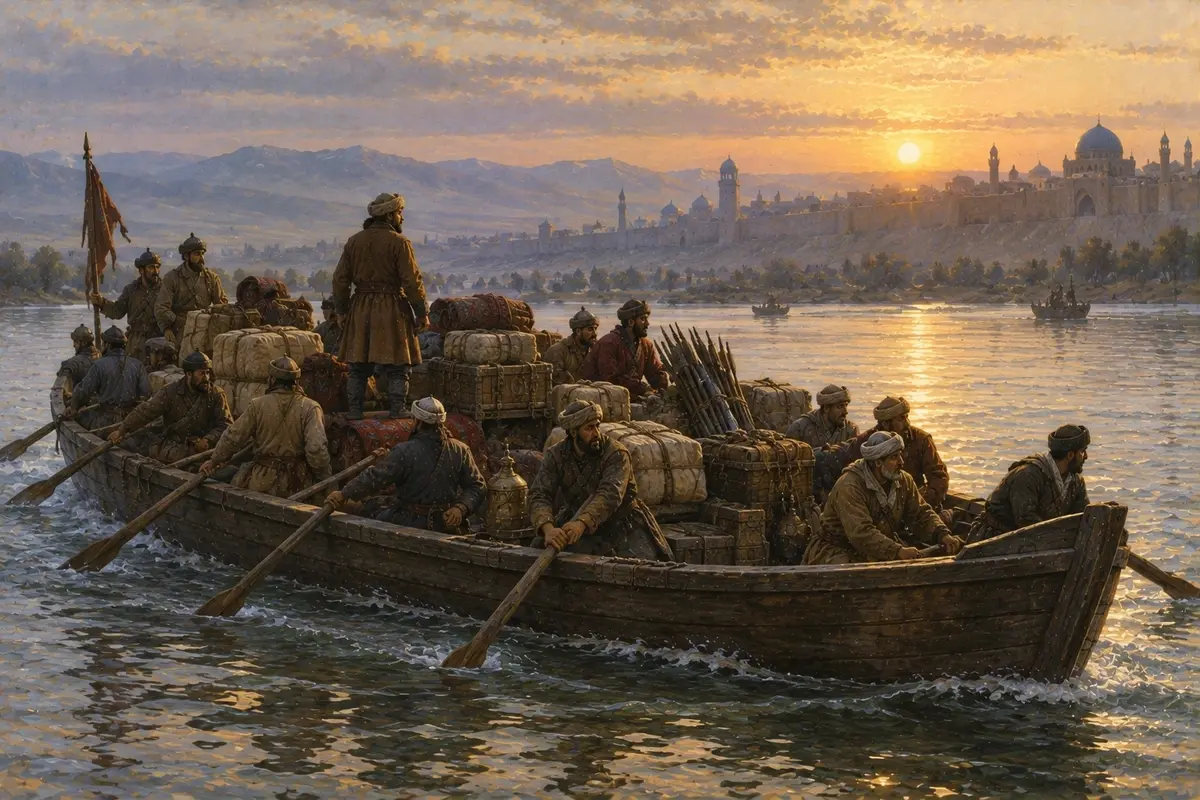
One household officer loaded a boat through the night and got it across before the Mongols worked out what he was doing.
On the far bank Jalal al-Din spent the first night up a tree, because the country was empty and full of predators. In the morning he found a handful of officers who had crossed in a boat, then three hundred horsemen who had swum further downstream, and finally around four thousand more.
They had escaped with nothing. What saved them was one of his household officers still stuck on the Mongol side, who spent the night loading a large boat with food, weapons, money and cloth, and got it across the river before anyone stopped him.
Jalal al-Din did not die in India. He fought on for another ten years, eventually returning west, and was killed in 1231 near Diyarbakir in what is now Turkey. He never got his empire back.
How the Mongols Took Cities
The other half of this story is less dramatic and more important. By 1221 the Mongols were extremely good at siege warfare, which is not something a nomadic army starts out being good at.
Every town faced the same choice. Surrender at once, hand over the keys and some expensive gifts, and the soldiers would usually strip the place but leave the people alive. Resist, and the engines came out.
Their biggest practical problem was ammunition. Catapults threw stones, and much of this country was flat river-plain with no stone in the ground at all. Once the local supply ran out, they cut down big trees along the roads, sawed the trunks into short blocks and threw those instead. A block of heavy timber landing on a roof does nearly as much damage as a rock.
Towns understood this and tried to use it. If people heard the Mongols were coming, they would sometimes go out for days beforehand, gather every loose stone for miles, and dump it all in the river.
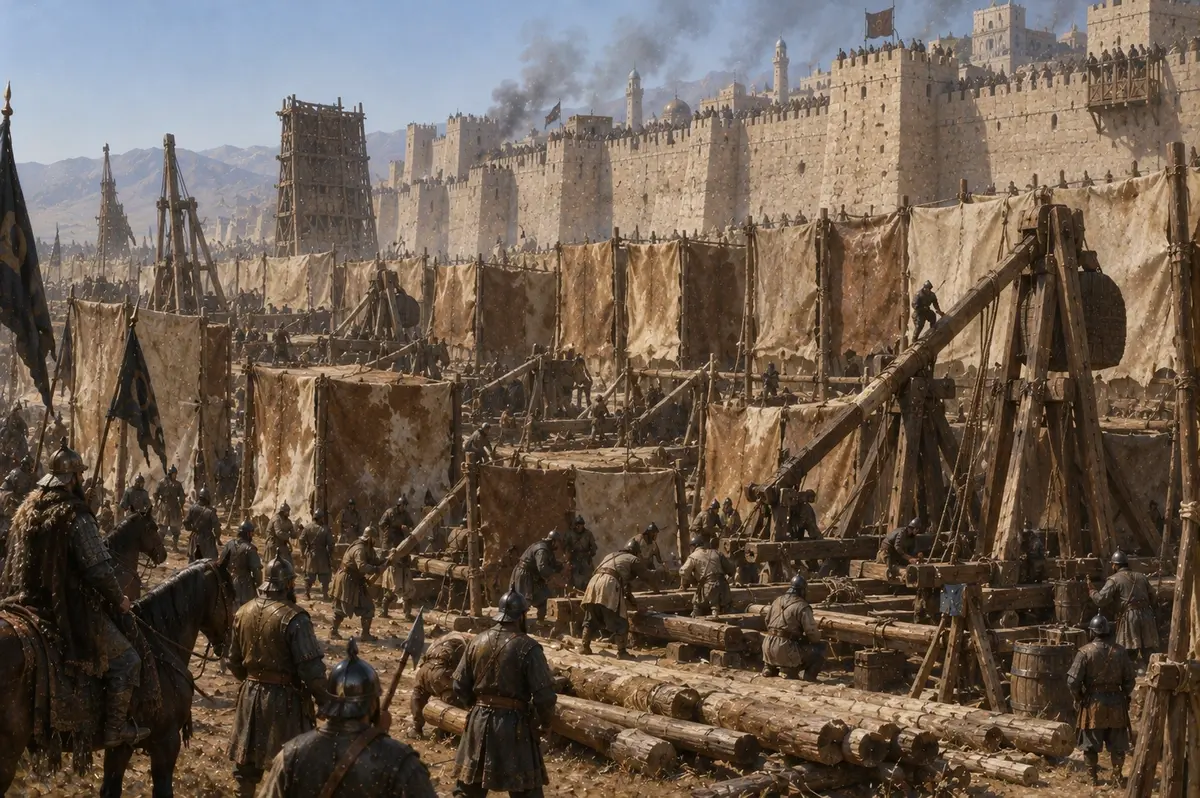
Everything wooden had to be wrapped in wet hides before it could be used, which is part of why the Mongols slaughtered captured herds.
Most of the labour was done by prisoners taken in earlier campaigns. They carried the engine parts, assembled them under the walls, and worked them. Other prisoners walked in front of them holding wooden shields covered in raw animal hides, to stop the fire-arrows shot down from the walls. The engines themselves were wrapped in hides for the same reason, which is one reason the Mongols slaughtered so many captured cattle and horses. They needed the skins.
Defenders fought back against the machines rather than the men. Garrisons would suddenly throw the gates open and rush out in large parties carrying torches, set fire to the engines and run back inside before the Mongols could organise a response. They destroyed a great many of them that way, and it was some of the most dangerous work anyone did in these campaigns.
None of this was invented on the spot. The Mongols had learned siege warfare in northern China a decade earlier, largely by recruiting the engineers of the people they had just beaten. An army that could not take a walled town in 1211 was, by 1221, taking the largest cities in the Islamic world.
Nishapur, April 1221
Nishapur shows what happened when a city fought and lost.
The city had killed a Mongol commander from its walls, and that commander was married to one of Genghis Khan's daughters. In April 1221 his son Tolui came back for it.
Persian writers list the equipment brought up: three thousand large siege crossbows, a hundred catapults and stone-throwers, a thousand assault platforms, four thousand scaling ladders and seventeen hundred machines for throwing burning naphtha. Those numbers should be read as a way of saying the scale was enormous rather than as an exact count. Medieval writers used big round numbers the way we use the word countless.
When the city fell the population was massacred, and the severed heads were built into three separate pyramids.
A story is often attached to this siege about the dead commander's widow riding in with the troops to take revenge, and demanding that nobody be spared. Historians treat it carefully, because it may be a storytelling motif rather than a real event. What is not in doubt is what happened to Nishapur.
The Sheikh Who Would Not Leave
Not everything in these campaigns is faceless. One man is worth knowing about.
Najm al-Din Kubra was a famous Sufi teacher who founded a whole religious order, the Kubrawiya. He was about seventy-six when the Mongols reached his city.
Because his reputation reached even the Mongol commanders, he was offered safe passage out. He was told he could take ten people with him. He refused. The offer was raised to a thousand. He refused that too, saying he could not accept unless it covered everyone in the city, because he was bound to his people and would take his chances with them.
The city fell in 1221 and he was killed in the street fighting, in his seventies, refusing to leave.
Bamiyan and the City of Sorrows
The worst single order of the campaign came after a personal loss.
At the siege of Bamiyan in the spring of 1221, an archer on the wall shot and killed a young man named Mutukan. He was the eldest son of Genghis Khan's son Chagatai, and by every account his grandfather's favourite grandson.
Genghis Khan's response was an order that everything in Bamiyan be killed. Not only every person, but the animals and the birds as well, and no exceptions were to be made for anyone. The ruins were known afterwards as the city of sorrows.
It is worth noticing what that tells you. A man who had ordered the deaths of enormous numbers of other people's children reacted like this when it was his own. Grief did not make him gentler. It made him worse.
A Conversation About Religion
There is a story told about Genghis Khan at Bukhara that is worth ending on, partly because it is strange and partly because it may not be true.
He is said to have asked some Muslim scholars what the main duties of their religion were. They told him five: believing in one God, giving part of your income to the poor, praying five times a day, fasting for one month each year, and making the pilgrimage to Mecca.
He said he agreed with the first four. The fifth he rejected, on the grounds that the whole world is God's house, so no single place could be more suitable than any other for worship.
Whether the conversation happened or not, there is something worth sitting with in it. The man having this polite discussion about worship had burned that same city and ridden a horse into its main mosque. People are not always consistent, and the ones who do enormous damage are rarely cartoon villains. That makes them harder to think about, not easier.