The Melanesians are indigenous to the region known as Melanesia, stretching from the mainland of New Guinea through the Solomon Islands, Vanuatu, New Caledonia, and Fiji. These people are among the oldest continuous cultures outside Africa, and their settlement is directly linked to the first migration waves of modern humans into the Asia-Pacific region. The genetic makeup of the Melanesians thus represents some of the deepest roots of contemporary humanity, tracing back to the earliest migrations of homo sapiens into southern Asia and the Australian region of ancient Sahul. Contemporary scientific consensuses regarding the genetic, archaeological, and linguistic history of the region demonstrate that the Melanesian population was most likely formed by a complex combination of various proto-Australo-Papuan groups, later Austronesian-speaking migrants, and Denisova hominins. Due to the long period of isolation and concomitant genetic drift that occurred throughout the region, Melanesia hosts several extremely isolated populations speaking related languages that are significantly diverse today. For this reason, the region plays a special role in studying the migration of people into the Oceanic region and their history there. In particular, recent genomic studies have revolutionized traditional understandings of the origin and migration patterns of the Melanesian people. In particular, this population has one of the most extensive genetic lineages with direct ties to ancient hominins. However, the coastal populations of Melanesia have also been influenced by later arrivals of Austronesian-speaking migrants from the neighboring region of Island Southeast Asia, resulting in genetic admixture that varies significantly throughout the area (Friedlaender et al. 2008).
First Settlement of Sahul
The first chapter in the history of the Melanesian region is the history of modern humans. The prevailing view states that humans began leaving Africa 60,000-70,000 years ago, following a southern route through South Asia and the region of Island Southeast Asia before arriving on the Australian continental shelf of Sahul. When current sea levels were lower during the Pleistocene period, Australia and New Guinea formed a single large continent. These two regions were connected by a land bridge, which the first immigrants traveled through the Torres Strait. Evidence suggests that human arrival on the Australian continent began 50,000-37,000 years ago, making Sahul one of the first continents to be visited by early modern humans. The ancestors of the present-day Papuans and Australians are called Australo-Papuans or Australasians. Genetic research suggests that they represent a group of people from whom other Eurasian populations have separated from the earliest stages of the expansion of modern humans into Asia. Genomic analysis results indicate that the separation of the ancestors of Papuans and Australians from other Eurasians occurred 51,000-72,000 years ago, while the split between these two populations took place later, between 25,000 and 40,000 years ago, after a long period of isolation on the Australian continental shelf. The history of the Melanesian region and its inhabitants is part of the deepest branches of the modern human history outside of Africa. Because of their early separation from other populations, Papuans and Australians differ significantly from the people of East Asia and West Eurasia. According to Friedlaender and colleagues, this is reflected in the genome, since the settlement of Near Oceania was followed by a long period of independent survival of the population (Friedlaender et al. 2008, p. 1882). However, such a prolonged separation from other populations was made possible by the specific geography of the region. The complex river system and mountainous terrain of Australia isolated individual groups of people. The separation of New Guinea from Australia by sea also contributed to this, which occurred approximately 10,000 years ago. Nevertheless, the researchers note that the inhabitants of New Guinea maintained contact with each other and with the islands of Near Oceania throughout the period of isolation. Thus, the long history of both the regional isolation of the population from other people and the migration of groups within the region have made significant contributions to the genetic structure of the Melanesian people. The antiquity of this population history is one of the reasons why humanity should be interested in studying the Melanesian region and its people. This continent was one of the earliest to be settled by modern humans and is one of the few places where they settled long before the development of agriculture, metallurgy, and civilization in general.
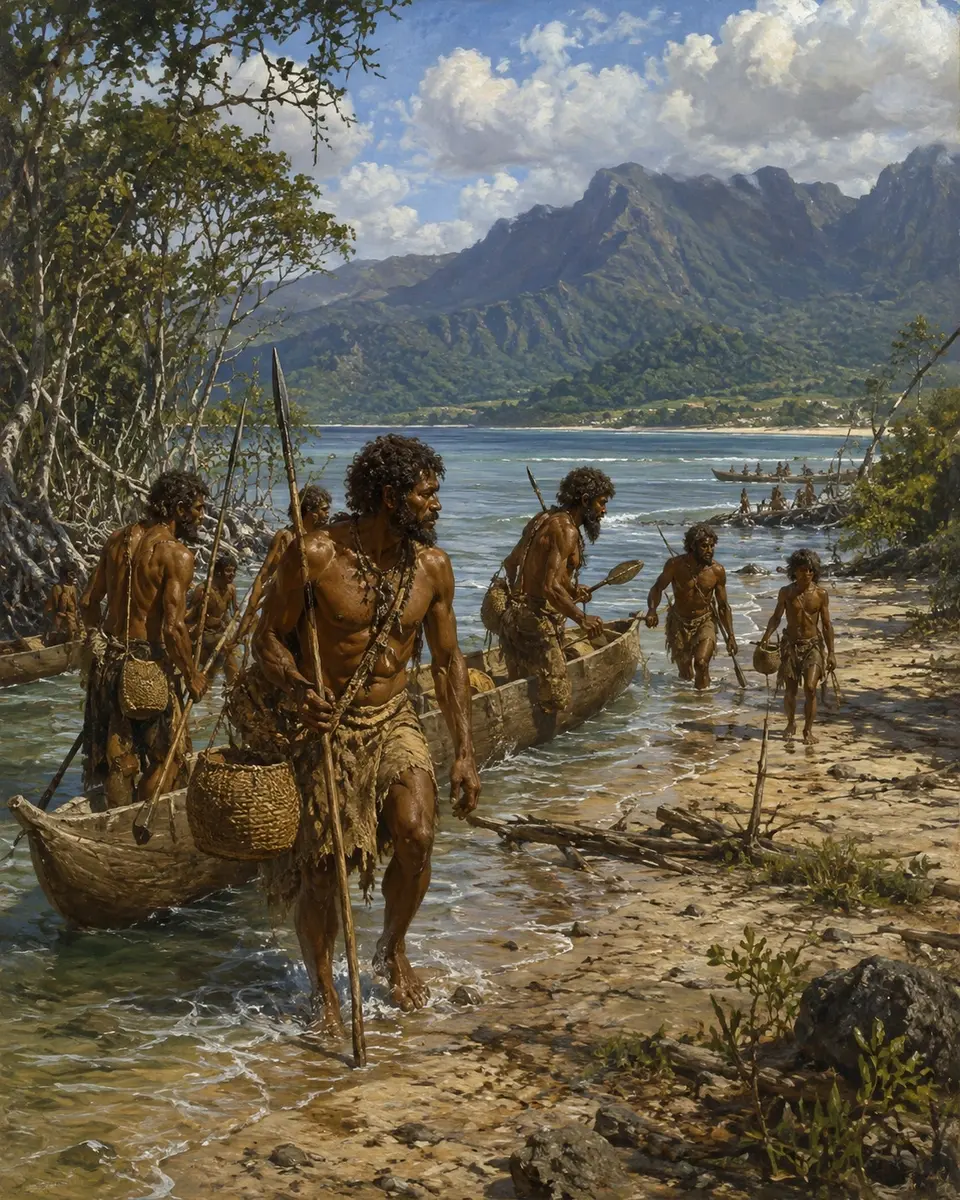
The first settlement of Sahul required maritime crossings from Island Southeast Asia into the combined landmass of New Guinea and Australia during the Late Pleistocene.
Denisovan Admixture and Archaic Ancestry
One of the most significant breakthroughs in understanding the Melanesian origin was made recently, when the first fossil remains of the mysterious Denisovan group were discovered in Denisova Cave, Siberia, as part of ancient DNA research projects. The genetic analysis of Denisovan revealed that contemporaries of modern-day Papuans and Melanesians had the highest level of Denisovan admixture among non-Oceanic groups. Therefore, the ancestors of the Melanesians and Papuans must have met and interbred with Denisovans while passing through Southeast Asia on the way to Sahul. The DNA tests showed that contemporary Papuan people have around 4-6% Denisovan admixture, which is substantially higher than in any other outside of Oceania population and much higher than the level of Neanderthal admixture in contemporary non-African populations, proving that interactions between different ancient hominins occurred more widespread than previously thought. According to Reich and his colleagues, Denisovan admixture occurred in the ancestors of present-day New Guineans and people from other regions of Near Oceania prior to their separation within Oceania (Reich et al. 2011). This conclusion provides new insights into the understanding of human prehistory and the relationships between these three closely linked but still separate hominin groups. The findings allow the researchers to suggest that Denisovans were not solely restricted to Asia, but rather also wandered across Southeast Asia and further down to meet the ancestors of the modern Papuans and Indigenous Australians. Pääbo and his colleagues came to the conclusion that there is one population of contemporary people who have the most extensive Denisovan ancestry, which is not found in anyone else outside of Africa (Pääbo et al. 2021). Furthermore, subsequent research showed that Denisovan ancestry is unevenly distributed both within Oceanic and Southeast Asian regions, suggesting that multiple Denisovan populations might have survived in isolation and interacted with the ancestors of Melanesian, Aboriginal Australian, and Papuan people (Peyrégne, Slon, and Kelso 2024). It is vital to note that Denisovan ancestry should not be considered as unique or separate from all the other ancient hominin admixture, but it rather proves that the interactions between three different hominin groups occurred. All the non-African populations today have a certain percentage of Neanderthal admixture, but only people outside of Australia still have Denisovan ancestry, which can be thought of as the remnants of the contact between early ancestors of Melanesian and Denisovans. Thus, the discovery of Denisovan DNA in the genome of the Papuan people is one of the most astonishing findings in the field of genetics.
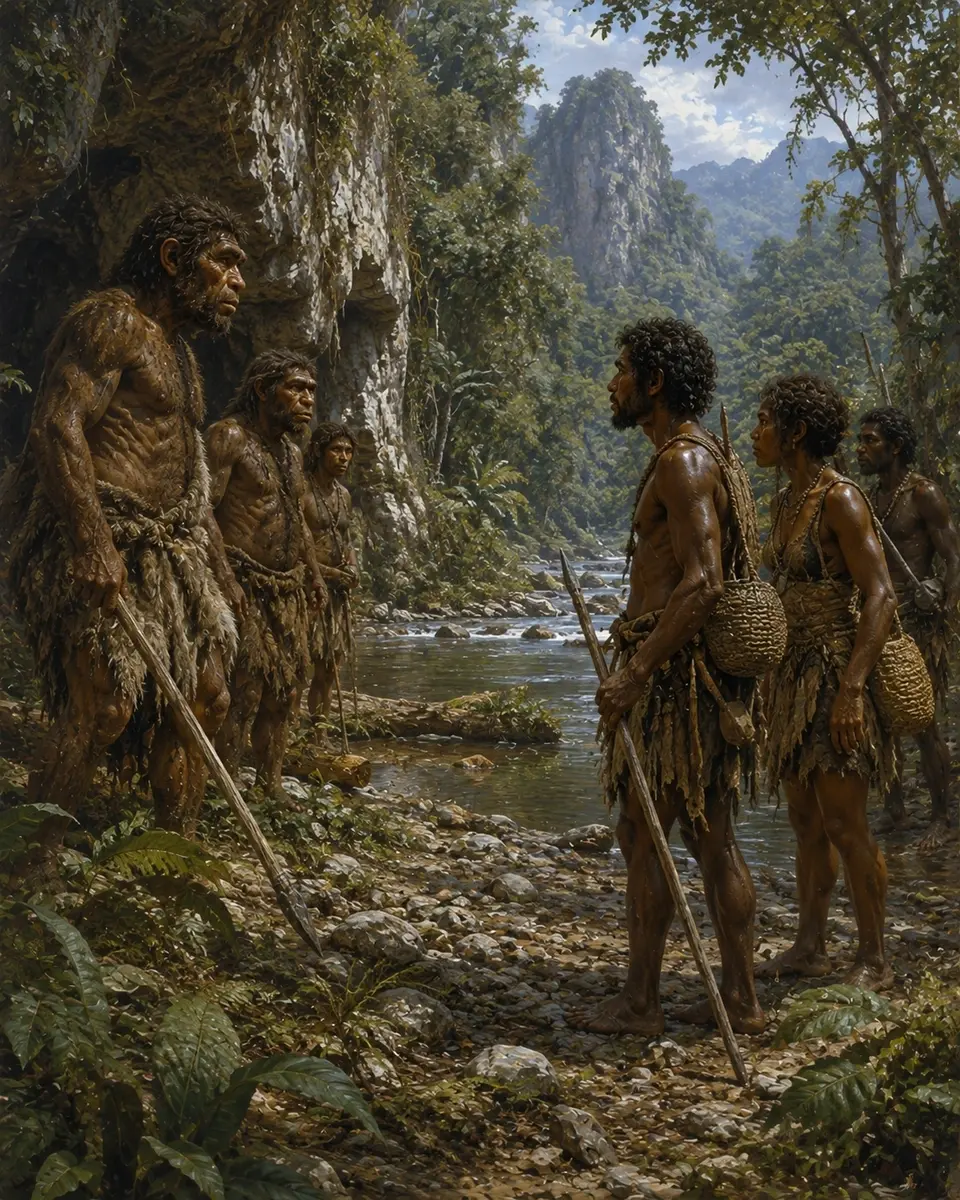
Genetic evidence indicates that the ancestors of Melanesians interbred with Denisovans before the settlement of Sahul, leaving a lasting legacy in Papuan genomes.
Isolation and Extraordinary Genetic Diversity
Although Melanesia is often thought of as a single region, genetic studies have shown that it is remarkably diverse, with significant differences often observed between neighboring populations. Genome-wide studies of Oceanic peoples have revealed an extraordinary degree of genetic variation, which has proved difficult to explain given the relatively small geographic size of the region. Analysis of population structure of Pacific populations indicates that genetic diversity is distributed discontinuously across Melanesia, being particularly pronounced in inland areas of New Guinea, among populations speaking a Papuan language. Genetically, coastal populations are more admixed with little later Austronesean input, hence retaining few characteristics of the immigrant community, such as their language, less than twenty percent (Friedlaender et al. 2008, p. 1884). Genetic variation observed among the peoples of Melanesia is partly explained by the combination of isolation, founder effects, and adaptation in small populations, which persisted across many generations. Large linguistic differences in the mountainous interior of New Guinea, which is isolated by high mountains, indicate the presence of extremely old divergences between languages. This is corroborated by analysis using principal components which showed that Australian Aboriginal peoples and Papuans are the most divergent non-African populations in the world. The remarkable degree of genetic diversity in Melanesia serves as a powerful reminder that there are no racial classifications in humanity, which would have had limited explanatory power even if such a concept was not completely wrong. Melanesia is a region where prolonged biological isolation has led to the formation of numerous distinct populations, with significant genetic differences that are observed within small areal divisions. While the genetic differences between the Aboriginal Australians and Papuan peoples are great, the differences between indigenous regional populations also appear considerable. The diversity of the Papuan languages is one of the clearest examples of the long process of divergence and isolation that has been observed among the peoples of Melanesia. For this reason it is not surprising that researchers have devoted a lot of time to the study of these populations and that the study of the genetic diversity of the peoples of Melanesia and the adjacent region has great importance for determining the migration history of peoples.
Austronesian Expansion and the Lapita Horizon
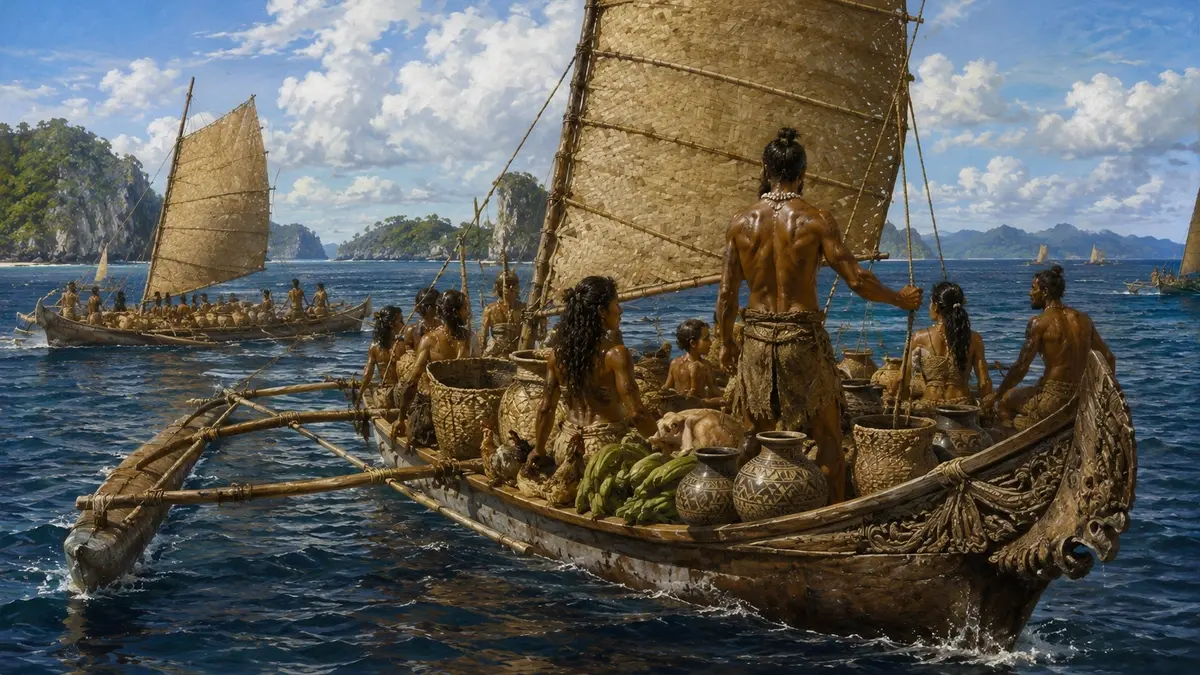
The second major demographic process influencing the history of Melanesia dates back to a later period, when the first Austronesian-speaking peoples migrated from Island Southeast Asia into the western Pacific in the late Holocene. This dispersion of the Austronesian-speaking population resulted in the appearance of archaeological culture known as Lapita that appeared in the region of present-day Near Oceania approximately 1600-1500 BC and quickly spread to Remote Oceania. This huge migration involved the most capable maritime populations of the time that managed to reach the shores of distant islands with their distinctive long vessels. The territories of Melanesia colonized by the newcomers included the islands of Vanuatu, New Caledonia, and Fiji, with their populations being the first to encounter the Austronesian language and culture in the region. Thus, the most extensive migration waves in the history of Melanesia occurred within the last several thousands of years, resulting in a lasting Austronesian presence on the territory of the modern-day Melanesian nations. It is important to note that the previously present populations on the islands of Papua and New Britain, speaking the Papuan languages, were not displaced by their Austronesian neighbors. Instead, the interaction between the two cultural groups produced a wide range of new phenomena that were unique to the region. The Austronesian-speaking immigrants who arrived on the northern coast of New Guinea and the southeastern coast of the mainland established relatively stable relations with the Papuan-speaking locals. This interaction involved a significant level of cultural exchange and is reflected in the linguistic and cultural history of the region. As Bellwood notes, when discussing the impact of the Austronesian migration on the islands of Melanesia, the emphasis should be placed on the connections between maritime societies rather than the migration of single isolated groups (Bellwood 2013, pp. 117-121). The influence of Austronesian languages can be seen in the linguistic history of the region, which is particularly complex and diverse. Although the languages of Melanesia remained predominantly Papuan, the Austronesian elements penetrated deep into the linguistic and cultural traditions of the locals. The interactions between the Papuan- and Austronesian-speaking populations were long and complex, so they became the subject of various historical theories. More specifically, for a considerable period, mainstream belief among historians and archeologists was that the interactions between the two cultures resulted in the appearance of the Polynesians. According to this hypothesis, the Polynesians were most likely the immigrants of the Austronesian-speaking population that settled in the territory of the Bismarck Archipelago, where they mixed with the local Melanesian populations. This theory gained significant ground among historians due to the strong correlation between the migration of the Lapita-speaking people and the later colonizing efforts of the Polynesian tribes. Additionally, the theory was supported by numerous similarities shared by Polynesians and Melanesians. However, genetic research has since confirmed that the relationships between the Polynesians and the Melanesian-speaking populations were far more complex than previously thought.
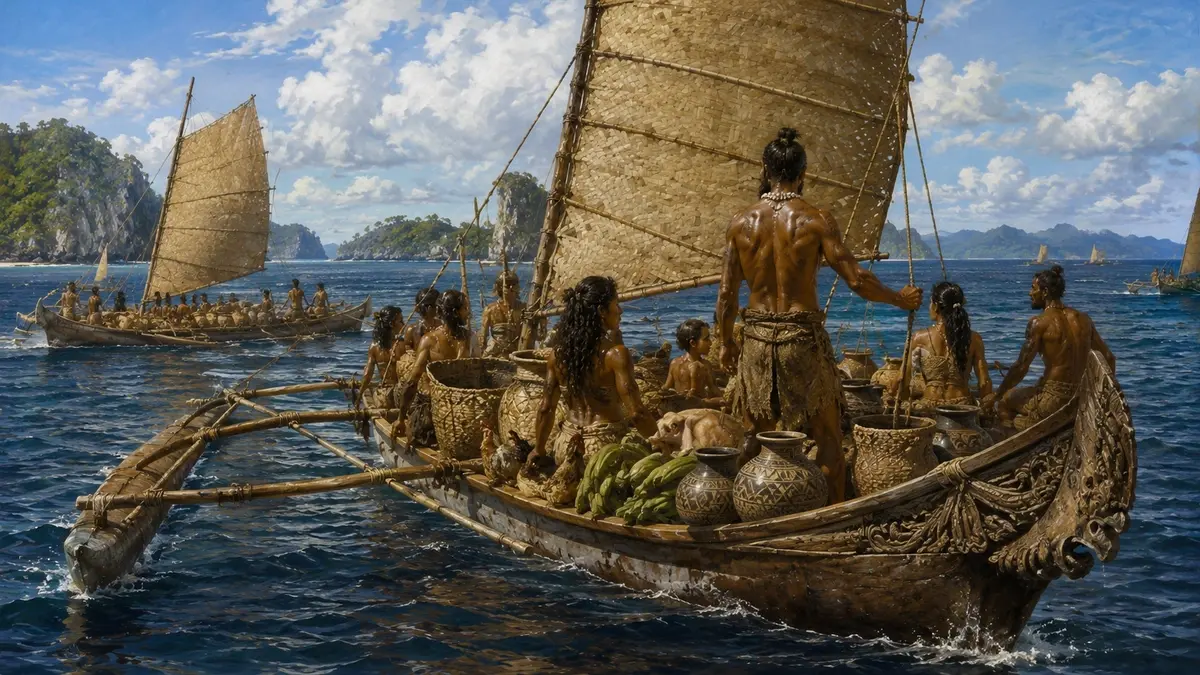
Austronesian-speaking Lapita communities carried advanced maritime technology and distinctive pottery traditions across eastern Melanesia during the late Holocene.
Polynesian Connection
The relationships between Melanesian and Polynesian have long been controversial in Pacific anthropology, and genomic analyses of the early twenty-first century have finally provided evidence that dramatically changed the understanding of where Polynesians came from. The study conducted in 2010 on hundreds of genetic loci revealed that the closest connection was Polynesians and Micronesans with East Asians, especially Taiwanese aboriginals, while connection with Melanesians was much more distant. It implies that “Austronesian-speaking populations, including Papuan-speaking groups, possess only small amounts of [Austronesian], if any, whereas most populations of Melanesia speak languages of non-Austronesian origin,” the researchers noted. Indeed, the Austronesian genetic component is nearly absent in the Papuan-speaking populations, and overall, Melanesian genetic affinity to Polynesians proved to be surprisingly low for the long time that the Polynesians were supposed to live there. The researchers explained this surprising lack of genetic affinity by the fact that the ancestors of the Polynesians passed through Melanesia “rapidly,” carrying Austronesian language and seafaring technology, which did not mix with the local population, leaving only a minor trace. Friedlaender et al. concluded that “the settlement of Remote Oceania by Austronesian-speaking migrants resulted only in minor population genetic contributions to the Polynesian islanders” and that “large-scale population genetic changes in Near Oceania occurred prior to the arrival of the Austronesian speakers” (Friedlaender et al., 2008, pp. 1883-1885). Therefore, the Polynesians today are mostly connected to East Asia rather than to Melanesia, and their connection with Melanesians is much more complicated than previously realized. It appears that the Polynesians came through Melanesia with minimal genetic admixture, which is probably why their genetic legacy is not stronger in the regional population. However, it is not completely accurate to say that the Polynesians came from Melanesia, because later studies have shown that the Polynesians actually have significant Melanesian admixture, coming from various sources. According to Kayser et al., roughly 20% of the autosomal DNA of the Polynesians traces its origin to the Melanesian source, while the vast majority trace their origin to East Asia. It is sufficient evidence for genetic admixture that has occurred in Near Oceania, which is not surprising given the long time of the Austronesian presence there. However, it would appear that the Polynesians were not completely admixed with the locals, since otherwise, they would have been significantly more similar to the Papuan people. The most plausible explanation is that Austronesian migrants passed through Near Oceania, interacting only partially with the locals, subsequently continuing their journey to the Remote Oceania, where they became the predominant population, carrying an Austronesian language, culture, and seafaring technology. Nevertheless, both the “out of Taiwan” hypothesis and the Austronesian migration through Melanesia are not supported by evidence. It was found that some genetic lineages traditionally associated with Polynesians actually trace their origin to Island Southeast Asia thousands of years before the Austronesian expansion. In particular, Soares et al. argued that some Polynesian-specific mtDNA haplogroups were found in the region of the Sunda Shelf, where Java, Indonesia, is located, thousands of years ago. This further complicates the evidence for Pacific prehistory, since another study has claimed that the Austronesian migration traces its roots at least several millennia earlier. However, it has not undermined the claim that there was a significant population shift on the islands of the Pacific region attributed to the Austronesian expansion, but it certainly made it more complex.
Biological Adaptation and the Evolution of Blond Hair
One of the most remarkable characteristics of the Polynesians is the fact that they represent one of the significant populations in the world that demonstrate naturally occurring blond hair, especially those residing in the Solomon Islands and Vanuatu, where this feature is frequently observed. However, the appearance of yellow hair among these Melanesians has long been puzzling because both regions have historically been inhabited by people with little European admixture. This assumption was reinforced by genetic research, which revealed that blond hair observed in Melanesians is unrelated to the genes responsible for this trait in northern Europeans. Instead, researchers argue that this trait “has arisen independently in Melanesia as a result of a mutation in the TYRP1 gene.” The particular variant of TYRP1 was found only in the Melanesian population, which can explain the puzzling occurrence of blondes there. Interestingly, the mutation responsible for this trait was not present in the genome of Europeans. At the same time, Kenny et al. note that this change in TYRP1 “is found in individuals from the Solomon Islands with blond hair,” while it is “distinct from the main TYRP1 mutations influencing pigmentation in Europeans” (2012). Thus, the same clinical sign can arise independently in different populations due to various genetic changes. This conclusion allows researchers to hypothesize about the potential existence of other traits in humans that “have independently evolved in multiple populations.” Indeed, the observed mutation could be associated with some other change leading to similar pigment abnormalities. For instance, the authors note that yellow hair is more common among children than adults in Melanesia. Moreover, individuals who have blonde hair tend to have it darken with age, which is similar to what happens with Europeans, albeit for different reasons. Therefore, this case demonstrates that genetic research is critical in understanding the processes of human evolution and variation. After all, based on the external appearance of the Polynesians, one might conclude that they are related to the northern Europeans when, in reality, their genetic makeup is completely different.
European Classification and the Invention of “Melanesia”
Although the cultures of the Melanesian region are ancient, the term ‘Melanesian’ is relatively recent. It was invented by Europeans who, at the end of the eighteenth and the nineteenth centuries, began arriving on the Australian shores to explore and conquer the territory. They started categorizing the native people according to their racial characteristics, such as skin color, hair type and texture, and face shape.
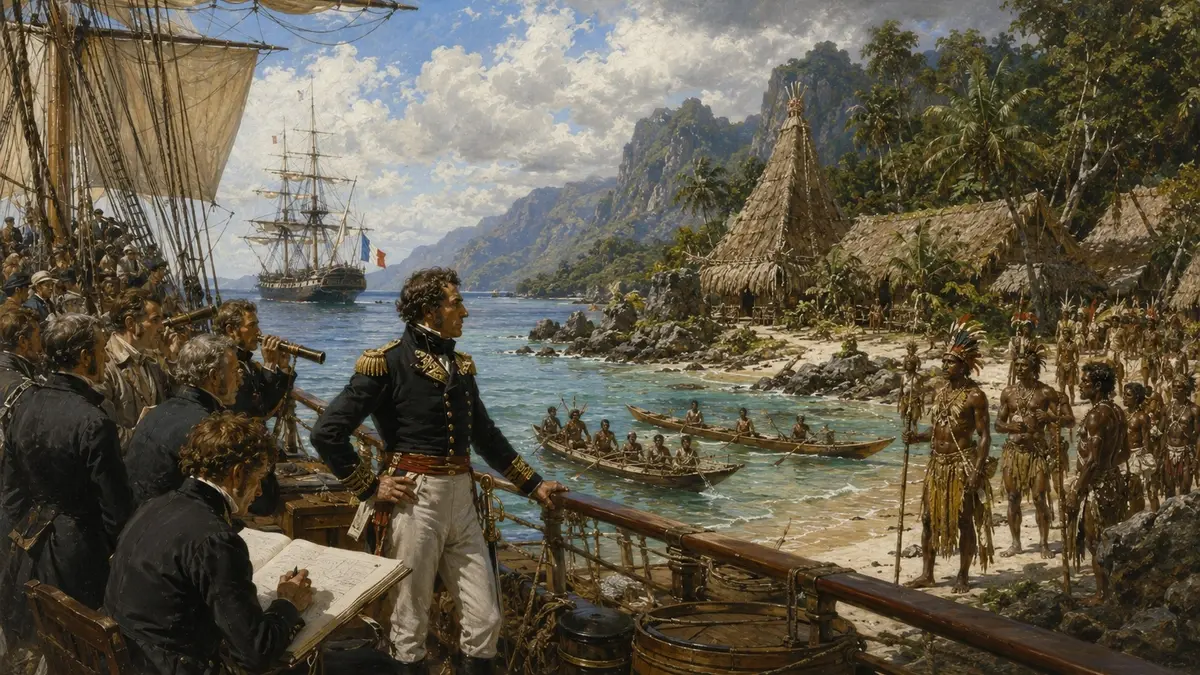
European explorers and naturalists developed the term “Melanesia” during the nineteenth century, classifying Pacific peoples according to contemporary racial theories.
Charles de Brosses was the first to classify dark-skinned Pacific islanders and light-skinned Polynesians in 1756. He assumed that the territory was initially occupied by the “black race,” which was later replaced by other tribes. Jean Baptiste Bory de Saint-Vincent provided a more relevant classification of the “Melanesians” in the early nineteenth century. He separated them from both Australians and Polynesians. The term Melanesia was popularized by the French naval officer Jules Dumont d’Urville. He divided the Australian region into four subregions: Melanesia, Micronesia, Polynesia, and Malaysia in 1832. The name Melanesia comes from the Greek words “black” and “islands.” The French anthropologist grouped both Islanders and Australians under the term “Melanesia.” Since then, it has been widely used in both academic and colonial settings. The problem with this classification is that it does not consider the diversity of the region, implying that all these people are a part of one “race.” Recent studies suggest that such theories do not adequately reflect the complexity of ancient societies. For instance, Bellwood noted that the wide range of languages and genetics renders the entire region a mosaic (Bellwood 2013, 26-30). Despite this, the term Melanesia survived because it still serves the purpose of emphasizing the region’s isolation. Scholars nowadays use it to define the region’s unique indigenous mix rather than its racial homogeneity. It reflects the diversity of the area in its time span and interaction with other regions, mainly the Austronesian one.