Pyrrhic victory — a win that costs you so much you'd have been better off losing. Almost everyone uses the phrase. Very few could tell you who Pyrrhus was, which is a shame, because he was one of the most gifted generals of the ancient world, Hannibal reportedly rated him second only to Alexander, and his career is a fifteen-year demonstration of what happens when tactical brilliance meets an opponent with deeper reserves and more patience. He beat the Roman army twice in open battle. Nobody had done that. It made no difference at all.
Who He Was
Pyrrhus was king of Epirus, a mountainous kingdom in north-western Greece, born around 319 BCE into the chaos after Alexander's death. He was a second cousin of Alexander through his mother's line, and he wanted the comparison made. He spent his life pursuing it: fighting in the wars of Alexander's successors, being deposed and restored more than once, spending time as a hostage in Egypt, briefly making himself king of Macedon, and generally treating the Mediterranean as a series of opportunities. Contemporaries agreed on two things about him. He was an exceptional battlefield commander and a superb military engineer — he wrote a treatise on tactics that Cicero and others still cited centuries later. And he could not finish anything. Plutarch's judgement is that he was like a gambler who makes many good throws and doesn't know how to use them.
Why He Went to Italy
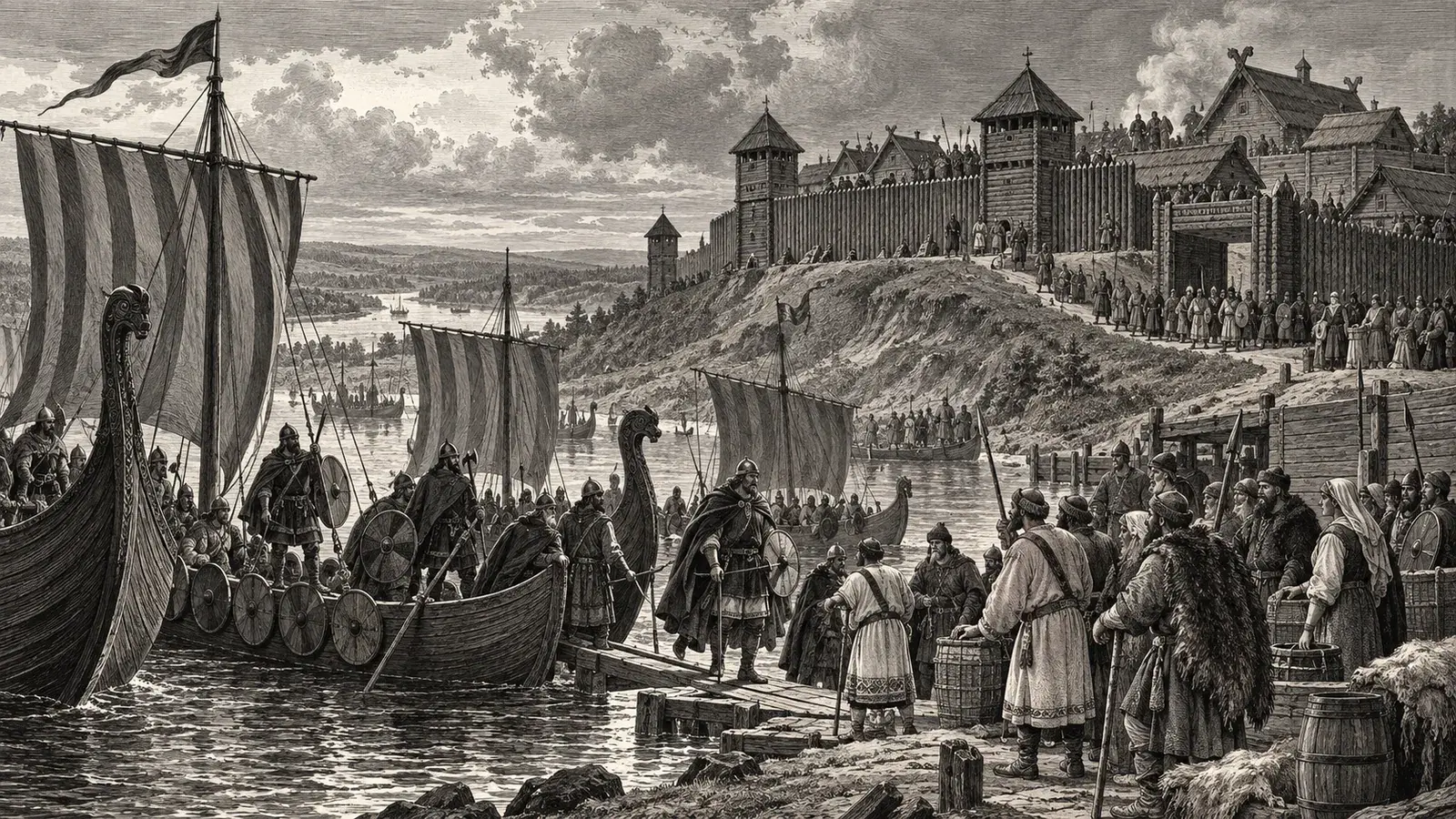
In 281 BCE the Greek city of Tarentum, in the heel of southern Italy, got into a war with Rome and realised it couldn't win. Southern Italy was full of old Greek colonies — Magna Graecia — and Rome had spent the previous century absorbing central Italy and was working its way down. Tarentum sank some Roman ships, insulted a Roman envoy, and then looked for a professional. They offered Pyrrhus command. He came with about 25,000 men and 20 war elephants. The elephants matter. Alexander's successors had adopted them from India and they were the Hellenistic superweapon. The Romans had never seen one.
Heraclea, 280 BCE
The first battle went as Pyrrhus intended, more or less. He fought the Roman consul Laevinus by the river Siris. The infantry engagement was long and even — and this was the surprise. Pyrrhus had expected to be facing barbarians and instead found a disciplined heavy infantry force that would not break. Plutarch has him remark, watching the Roman army deploy in order, that their discipline was not barbarous. The battle was decided by the elephants. Roman cavalry horses would not go near them, panicked, and fouled the infantry. The line broke and Pyrrhus's Thessalian cavalry finished it. The Romans called elephants Lucanian oxen afterwards, having no word for them. It was a clear win. It also cost Pyrrhus heavily among his officers and his professional Greek core — men he could not replace, because Epirus was small and his army was a long way from home. Rome, meanwhile, could raise more.
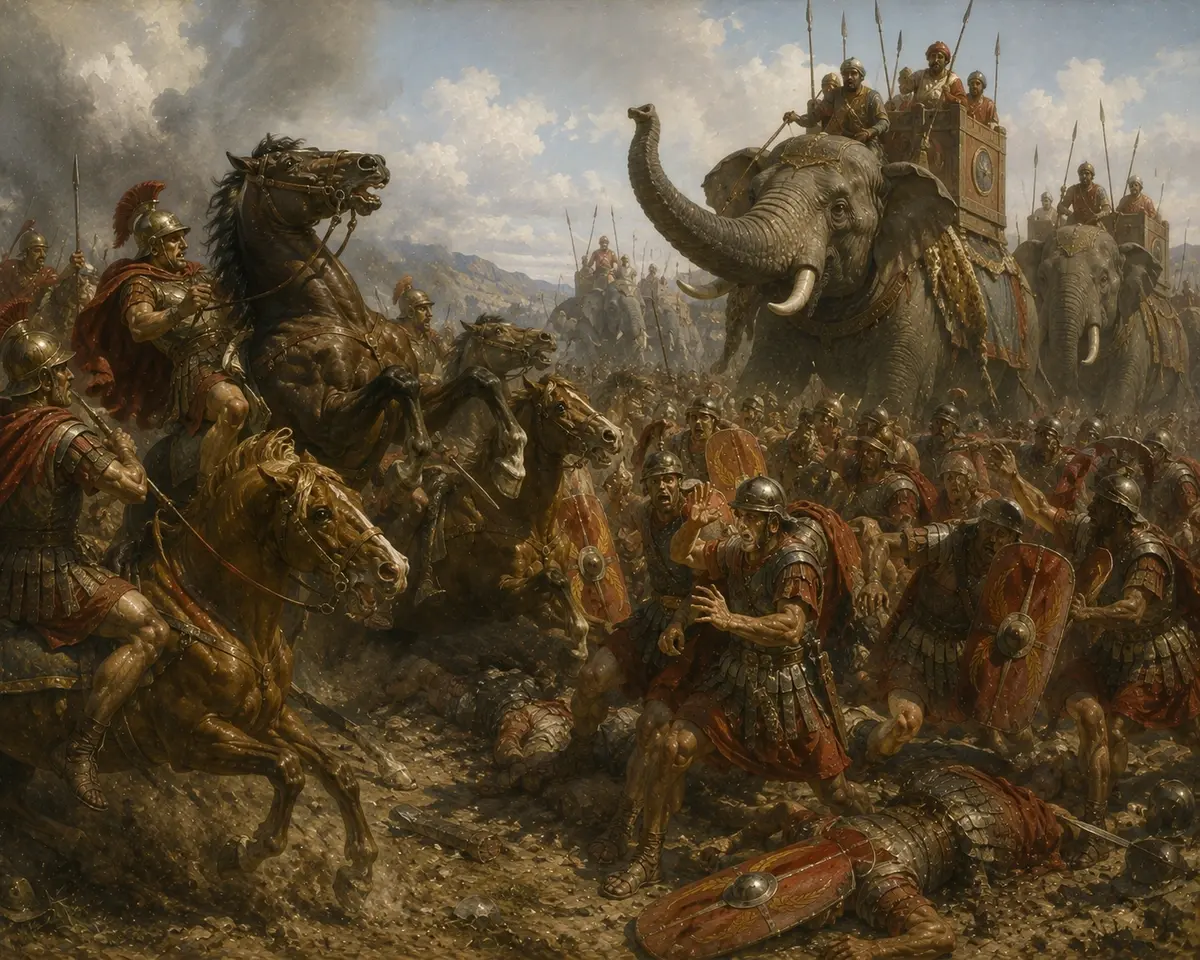
The Romans had never seen an elephant. Their horses would not go near them, panicked, and fouled the infantry. Afterwards the Romans called them Lucanian oxen, having no word for them.
Asculum, 279 BCE, and the Line
The following year Pyrrhus met the Romans again at Asculum. The Romans had learned. They'd built anti-elephant wagons fitted with spikes and braziers, and they picked ground broken enough to hamper both the elephants and the phalanx. The first day went badly for Pyrrhus. On the second he managed to force the fighting onto flatter ground, brought the elephants forward, and drove the Romans back to their camp. Another victory. Another catastrophic casualty list among the irreplaceable troops. And this is where the phrase comes from. Plutarch reports that when someone congratulated him on the win, Pyrrhus replied that another victory like that and he would be finished — one more such win over the Romans and he would be utterly ruined. The Greek is blunter than the English rendering usually suggests. What he identified was not that the battle was expensive but that his victories were structurally unsustainable. His losses could not be replaced, and Rome's could. That's the real insight, and it's why the phrase survived. A Pyrrhic victory isn't just a costly one. It's a win by someone who cannot afford to keep winning. Rome's response confirmed it: they refused to negotiate. Pyrrhus sent his envoy Cineas to Rome with generous terms and the Senate, on the advice of the aged and blind Appius Claudius, resolved that it would not treat with any enemy while he remained on Italian soil.
The Sicilian Detour
Rather than grind on in Italy, Pyrrhus took an offer from the Greek cities of Sicily, who wanted help against Carthage. He was brilliantly successful for about three years. He took nearly the whole island, drove the Carthaginians back to a single fortress at Lilybaeum, and had himself proclaimed king of Sicily. Then he lost it, and the way he lost it is characteristic. He started behaving like an autocrat, imposed garrisons, demanded money and men, executed prominent Sicilians who objected, and turned the cities that had invited him into enemies. Within a year they were negotiating with Carthage against him. He left in 276 BCE. Sailing away, according to Plutarch, he looked back at Sicily and said what a fine wrestling ground he was leaving for Rome and Carthage — which turned out to be an accurate forecast of the First Punic War, starting twelve years later.
Beneventum, 275 BCE
He came back to Italy to find Rome stronger, better organised and no longer intimidated by elephants. At Beneventum the Romans held. The elephants were driven back onto Pyrrhus's own lines — a recurring problem with the weapon, and one reason it eventually disappeared. The battle was at best a draw and functionally a defeat. Pyrrhus went home to Epirus with perhaps a third of the men he had brought over, having won two battles, taken most of Sicily, and achieved nothing permanent.
The Roof Tile
He could not stop. He invaded Macedon, took part of it, then intervened in a dynastic quarrel in the Peloponnese, failed to take Sparta — where, notably, the Spartan women helped dig the defensive trench overnight — and moved on to Argos in 272 BCE. He got into the city at night through a gate opened by a faction inside. And then his army had to fight in narrow streets in the dark, in a town it didn't know, with elephants that could not turn round and blocked the gateway when he tried to withdraw. In the confusion, an ordinary Argive soldier was fighting Pyrrhus in the street. The man's mother was watching from a rooftop. Seeing her son about to be killed by the king, she picked up a roof tile and threw it. It hit Pyrrhus on the neck below the helmet, stunned him or broke his vertebrae, and he went off his horse. He was recognised on the ground and killed. The greatest general of his generation, who had beaten Rome twice, killed by a tile thrown by an anonymous woman defending her son. Plutarch, who had a taste for this kind of ending, gives it the space it deserves.
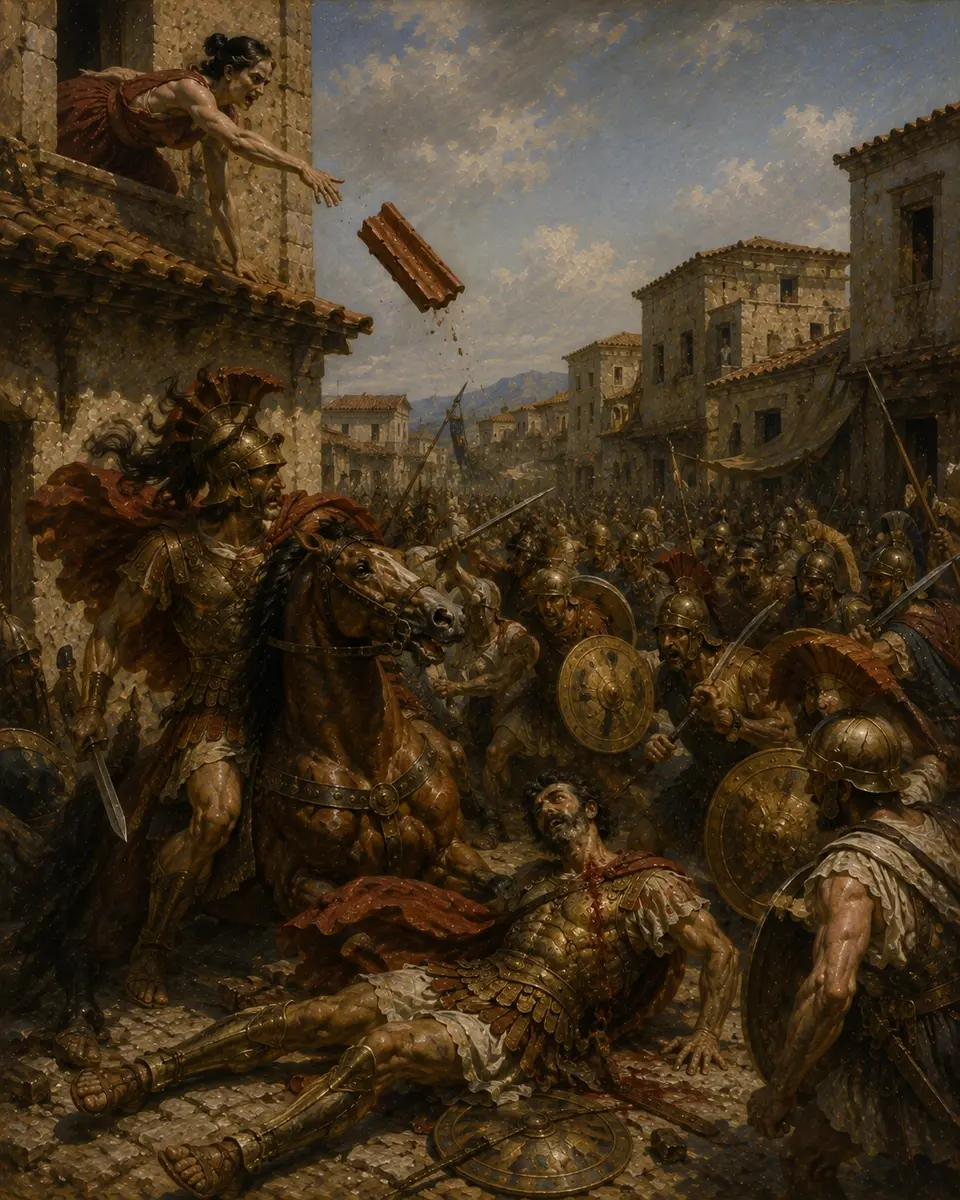
She saw her son about to be killed by the king, and threw. It hit Pyrrhus on the neck below the helmet. He went off his horse and was killed on the ground.
Why He Failed
No strategic aim. Pyrrhus fought for opportunities rather than objectives. Italy, then Sicily, then Macedon, then the Peloponnese — each abandoned when something else looked better. Rome had one objective and pursued it for centuries. No manpower base. Epirus was small. Every veteran he lost was gone. Rome fought on an alliance system across Italy that could absorb defeat after defeat and produce fresh legions, which is the same structural advantage that later destroyed Hannibal. And he couldn't govern what he took. Sicily invited him in and threw him out inside three years, entirely through his own behaviour. Taking territory was never his problem. The comparison he wanted with Alexander is instructive precisely because it fails. Alexander conquered an empire and immediately began the work of administering it as a legitimate successor. Pyrrhus won battles. There's also a story in Plutarch that reads like the whole thing in miniature. Before Italy, his advisor Cineas asked what he'd do after conquering Rome. Take Italy, said Pyrrhus. And then? Sicily. And then? Africa. And then? All Greece. And then, said Cineas, what will we do? Then, said Pyrrhus, we shall relax and drink and enjoy each other's company. And Cineas asked why they couldn't do that now.
What Rome Learned
Rome came out of the war with more than territory. It had faced a professional Hellenistic army with elephants and a first-rate commander, lost battles, and won anyway through sheer institutional persistence. It absorbed the Greek cities of southern Italy and with them a great deal of Greek culture, which reshaped Roman literature, religion and art permanently. And it had discovered a formula it would use for the next two hundred years: lose battles, refuse terms, replace the army, come back. That is exactly how Rome dealt with Hannibal fifty years later. Pyrrhus, without meaning to, gave Rome its first proof that it could survive being beaten in the field.