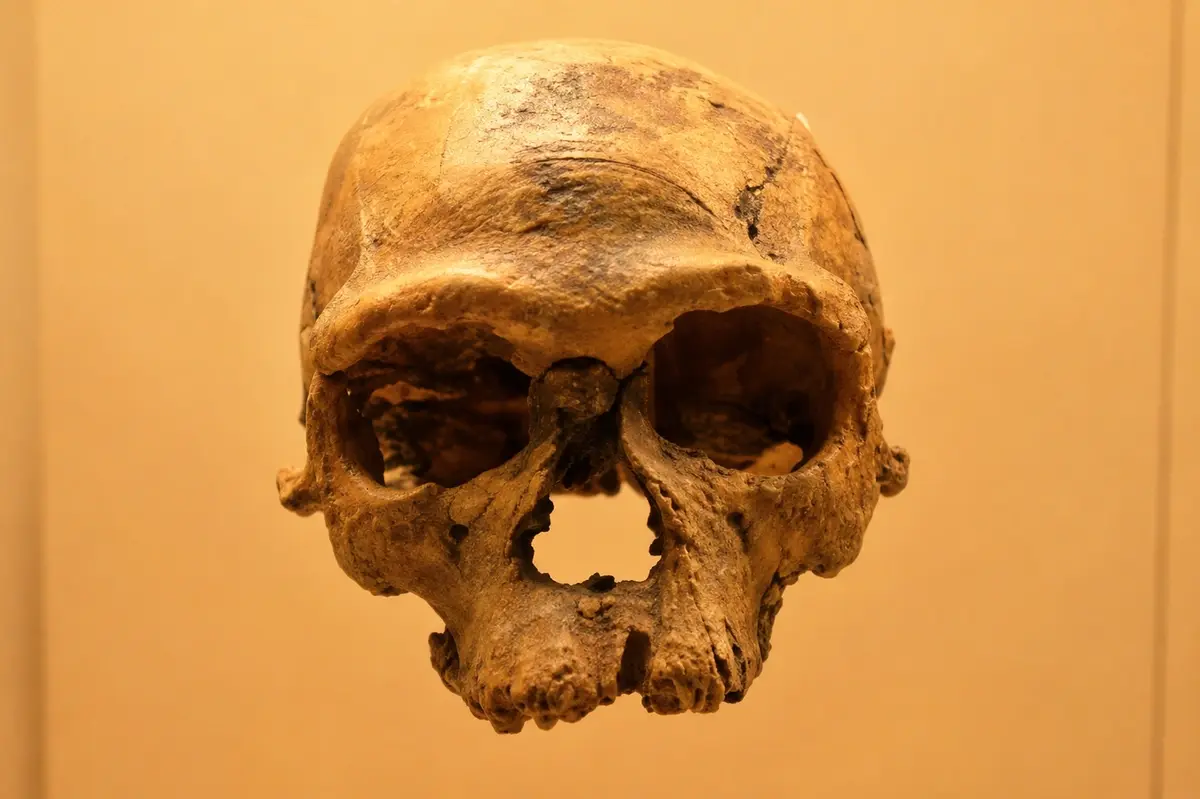
Recent African origin is the theory that explains the presence of people outside of Africa as a result of one immigration wave from this continent which happened between 70,000 and 50,000 years ago. This hypothesis is also familiar as “Out of Africa”, a theory that now dominates the discourse of paleoanthropology on the origins of our species, and the spread of Homo sapiens throughout the world. Earlier than the recent wave of immigration were two earlier hominin exodus, whose remnants were absorbed back into the African gene pool, with the exception of Homo erectus and the Neanderthals. The recent wave is connected with the appearance of anatomically modern humans somewhere between 300,000 and 200,000 years ago in Africa, and may have been non-exclusive, as various African populations possessed different modernizing features, which could have been combined together as this wave of immigration happened.
The simplest outline of the recent African origin is that there was more than one wave of the immigration, which occurred tens or hundreds of thousands of years apart, but most of them failed. Here is a more detailed overview.
Not One Migration Wave, But Several
There was more than one migration out of Africa. The first skeletons of Homo sapiens were discovered in Ethiopia’s Omo-Kibish, and dated back to approximately 233,000 years ago, while the second set of fossils found in Morocco belonged to Homo sapiens who lived 315,000 years ago. Later finds include humans who had migrated to China around 80,000 years ago, people who entered the Middle East somewhere between 130,000 and 115,000 years ago, and another group of people who crossed North Africa and the Middle East between 120,000 and 80,000 years ago. However, they all failed to establish permanent footholds outside of Africa, either dying out or returning to Africa. The wave of immigration, which successfully crossed the continent happened later around 70,000 to 50,000 years ago, following the coast of Asia, and reaching Australia somewhere between 65,000 and 50,000 years ago. According to one theory, the first Australians actually arrived at this date, however, the later genetic research suggested that their remains may have been covered by the later migration wave, which happened no later than 50,000 years ago. Another wave of people brought us to Europe, and happened later than 55,000 years ago.
The recent genetic research has also uncovered that not only were there multiple waves of migration, but that the interaction between Homo sapiens and numerous other hominin species occurred, with the consequence that almost every person outside of Africa has some DNA from Neanderthals in them.
Some of the most ancient remains of modern humans were found in Ethiopia’s Omo-Kibish. They date back to approximately 233,000 years ago. However, more recent discoveries in Jebel Irhoud, Morocco, suggest that there might have been some anatomically modern humans who lived 315,000 years ago.
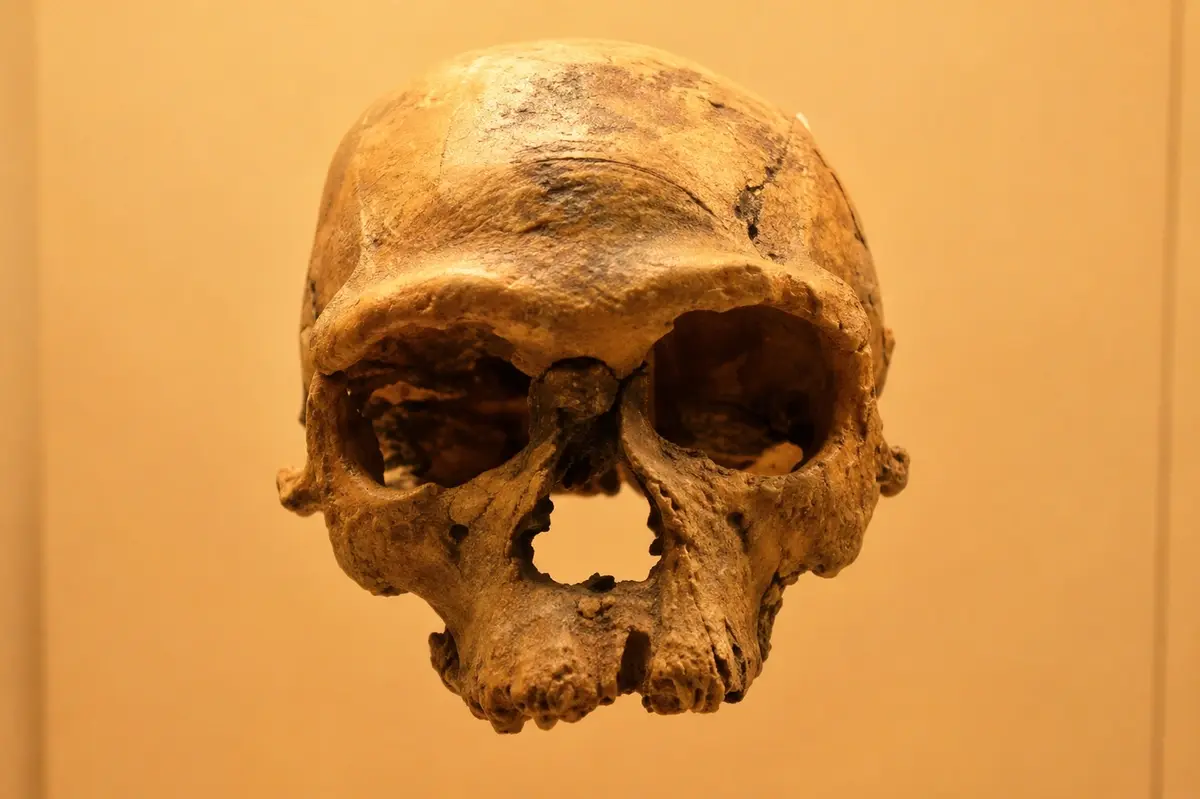
The Jebel Irhoud fossils, unearthed in Morocco, pushed the earliest known Homo sapiens remains back to roughly 315,000 years ago.
Northern Route Through Egypt and the Levant
The two main routes which humans could have taken to leave Africa are the northern one through the Nile Valley and the Red Sea, and the southern one through the Bab-el-Mandeb strait at the entrance to the Red Sea. The northern route has some fossil evidence to support it, most of which was found in Qafzeh and Es-Skhul caves in Israel and dated to between 80,000 and 120,000 years ago. However, this seemingly early incursion failed to result in any permanent settlement outside of Africa, as either these people failed to leave an impact on the local gene pool, or later returned to Africa. Their return might have been prompted by Neanderthals, who themselves came to the Levant after the last glacial period and interacted with H. sapiens.
A 2011 discovery of stone tools at the Faya-1 located in the UAE’s Sharjah has provided evidence which suggests that humans might have crossed the Persian Gulf at least 125,000 years ago. Tools of the same tradition as those found in Faya-1, dated to approximately 106,000 years ago were also discovered in Oman, which further supports the theory of an ancient northern route. Another piece of evidence for this theory comes from genetic research conducted by Kuhlwilm and his colleagues. They found that Neanderthals possessed some part of modern humans’ genome, which suggests that there was a genetic exchange between the species. These exchanges happened approximately 100,000 years ago, involving humans who had left Africa 200,000 years ago, and who already belonged to an exclusive group of H sapiens. This finding further suggests that there might have been an early attempt to leave Africa sometime around 100,000 years ago, which failed to gain any further following. Co-author Ilan Gronau even stated that their genetic discovery corroborated the finding of archaeologists, who had found signs of early humans outside of Africa long before the most recent wave of such an occurrence. These early humans had left Africa, but failed to leave a genetic legacy, despite having contributed to the gene pool of Neanderthals.
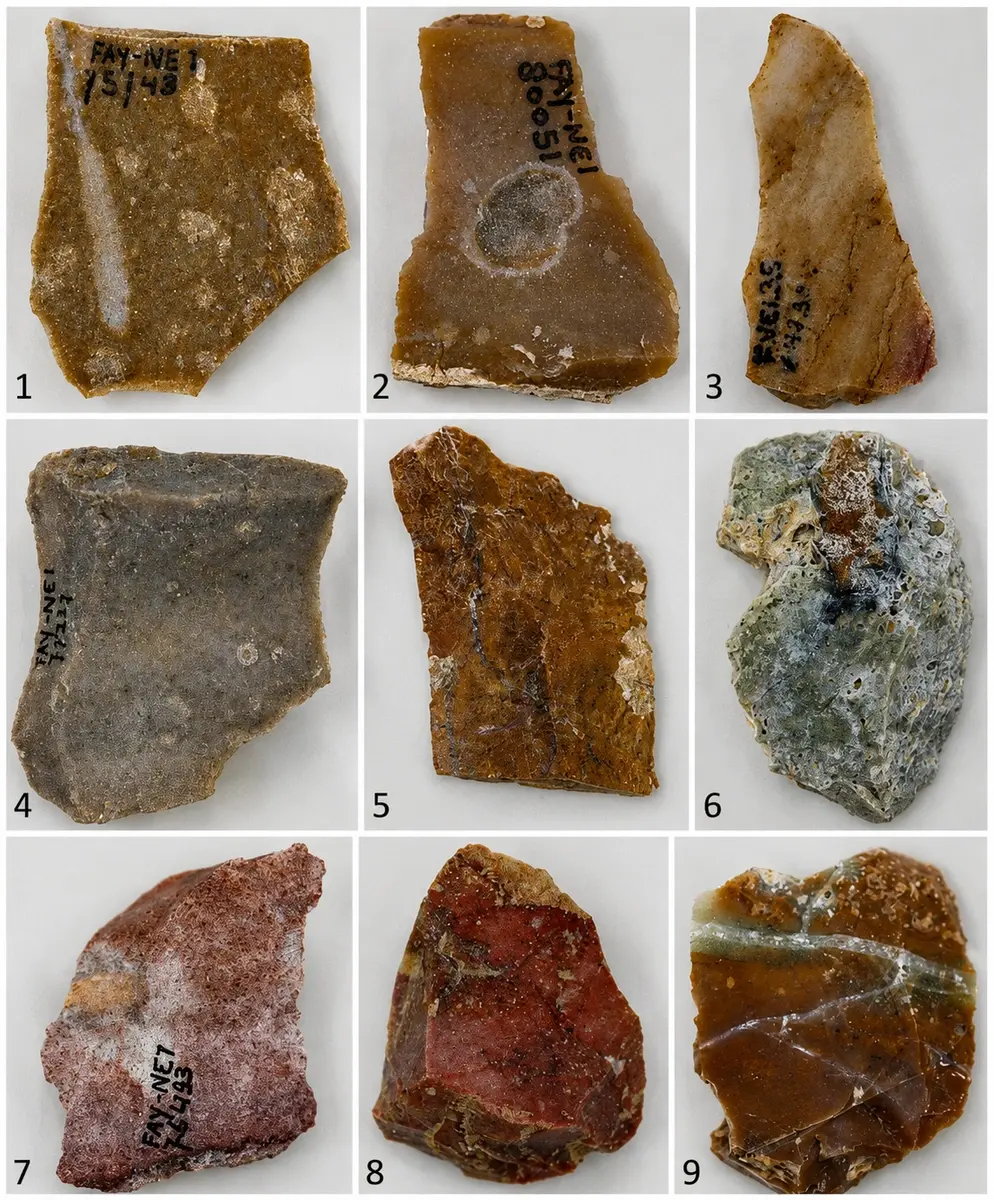
Stone tools recovered at Jebel Faya, dated to roughly 125,000 years ago, are among the oldest evidence for modern humans outside Africa.
Southern Route and the Toba Volcanic Eruption
The successful dispersion of Homo sapiens happened many thousands of years later. Around 60,000 or 70,000 years ago, some people of the mitochondrial lineage L3 migrated from East Africa into the Arabian Peninsula. This successful journey has been called ‘successful’, because the number of people who embarked on it was small – according to some estimates, the number of African emigrants was between 2,000 and 5,000, with only 150 to 1,000 of them crossing the Red Sea. The Red Sea crossing was possible due to the fact that sea levels were considerably lower than today – on average, they were 70 m lower due to the last glacial period. This further suggests that the water crossing could have been achieved using simple means, possibly by using the many islands which have since submerged. The shell middens which were found along the coast of Eritrea date back to 125,000 years ago, and suggest that the people who were the first to leave Africa had already been exploiting the Red Sea before attempting to cross it.
A long-standing controversy surrounds the timing of this exodus and the Toba eruption which occurred around 69,000 to 77,000 years ago. The question which occupies scientists is whether the human exodus begun before or after the eruption. The finding of stone tools buried under the tuff layers of the Toba in India suggests the former possibility. On the other hand, the genetic evidence places the exodus around the time of the eruption. The evidence for that comes from the fact that the L3 haplogroup, which gave rise to almost all non-African populations, appeared between 60,000 and 70,000 years ago. According to later genetic findings, the exodus might have happened even earlier than previously suggested – a 2012 study which suggested that the rate of human mutation was slower than previously thought placed it between 90,000 and 130,000 years ago. However, more recent studies have suggested a timeframe between 50,000 and 75,000 years ago, which continues to dominate the debate over the timing of the dispersal.

The Toba eruption, one of the largest volcanic events of the last two million years, coincided closely with the successful exodus out of Africa.
India, the Levant, and a 2023 Study
India is believed to be the penultimate destination on the journey which put Homo sapiens on the shores of Australia, because of the genetic diversity which can be observed amongst the local population. Specifically, Indian populations possess the greatest variety of the mitochondrial haplogroup M. According to Wells’ 2003 hypothesis, people who had exited Africa hugged the coast of Asia for approximately 250 km before reaching Australia.
The Levant seems to have a similarly complex history. The population of this region, represented by the Qafzeh and Es-Skhul skulls, stopped being present after the last wave of them died out, with no new wave of immigration until the Manot 1 discovery which dated back to 54,700 years ago. According to some anthropologists, this suggests that Neanderthals occupied the Levant throughout this period, and blocked the way out of Africa until modern humans came to displace them.
A 2023 study suggested even more astonishing facts about the Levant region and the history of the humans who inhabited it. According to it, Eurasian and African populations separated from each other around 100,000 years ago, and that the large group of Eurasian population spent the next tens of thousands of years isolated on the Arabian Peninsula, where they had existed between 85,000 and 54,000 years ago, before entering Eurasia proper. This separation lasted for tens of thousands of years, and makes the genetic differences between contemporary Eurasian and African populations even more astonishing, as the separation between humans and Neanderthals happened only half a million years ago.
Reaching Australia and the Wider Pacific
The arrival of people on the Australian continent is surrounded with controversy, as there evidence which suggests that Aboriginal Australians are descendants of the first people to exit Africa. The Madjedbebe rock shelter has revealed artifacts which date back to at least 65,000 years ago, although there are scholars who disagree with this assessment, and state that the first Australians might have arrived only 50,000 years ago, and that the 65,000-year-old artifacts belong to another culture. The remains which have been found in the Lake Mungo also date back to only 42,000 years ago, and are therefore considerably more recent.
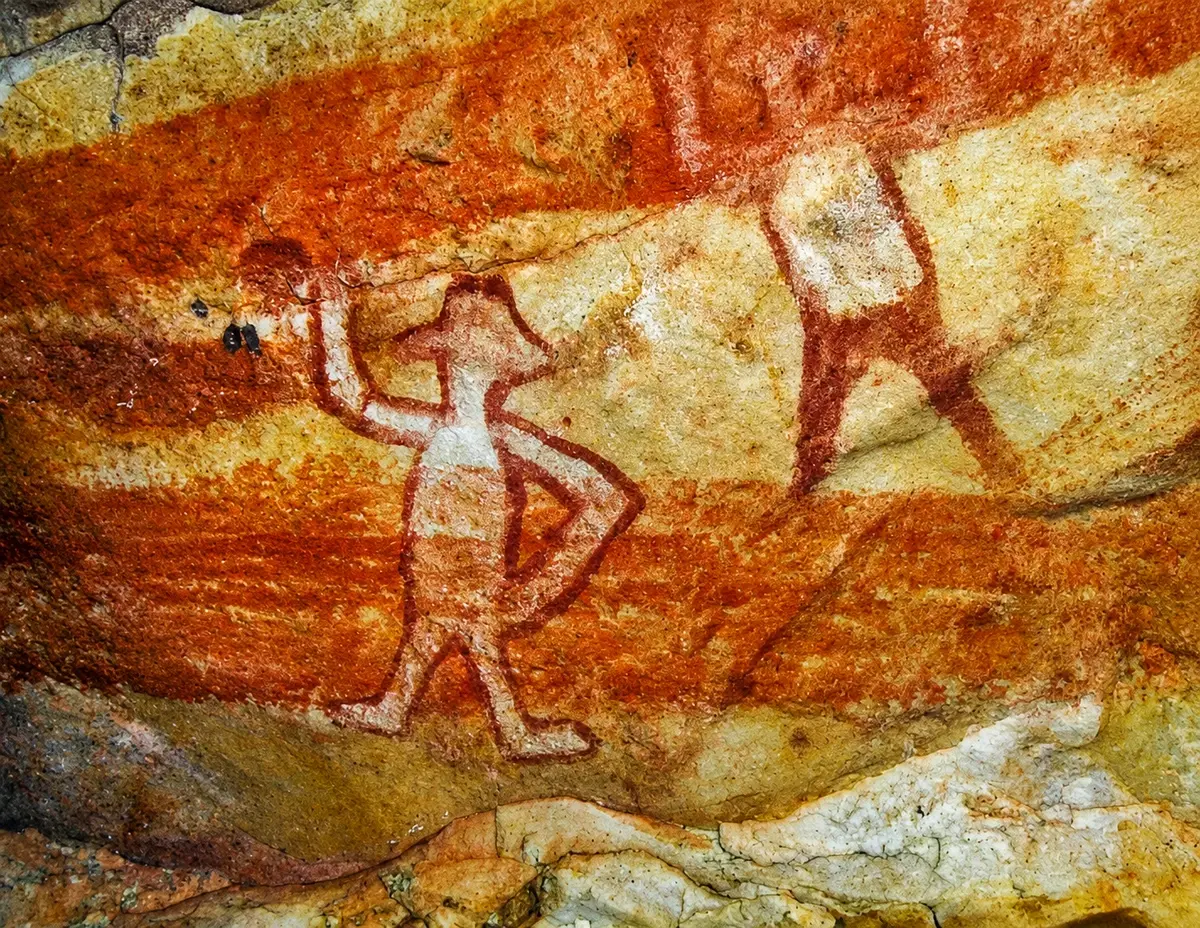
Artifacts at Madjedbebe have been dated to at least 65,000 years ago, making it a key site in the debate over when people first reached Australia.
According to genetic evidence, the eastern Eurasian population separated into three different branches around some time which can be approximated as not later than 65,000 years ago. These three branches are represented by the Australian Aboriginal people, the Papuan people, and the South Asian hunter-gatherers known as AASI. On the other hand, the people of East and Southeast Asia most likely represent a separate population which has also exited Africa, although not much is known about them, due to the fact that they either became extinct, or were absorbed by other groups. Interestingly, the Papuan people possess some genetic traces of yet another group, dating back to approximately 2% of an even earlier human population which exited Africa. It is believed that the majority of Aboriginal Australians’ genetic makeup belongs to this mysterious group, along with the ancient DNA traces which can be found in the Sahul region (the continent which included modern-day New Guinea, Australia, and Torres Strait Islands). A sample from South Sulawesi’s Leang Panninge dated to the Holocene epoch has revealed that the genetic makeup of this part of the world is roughly half Papuan-related and half East Asian-related. The combination of these fragments suggests that the early inhabitants of Southeast Asia and the adjacent Pacific islands were more genetically diverse and complex than the modern-day ones.
China, Japan, and the Americas
China also possesses some of the earliest remains of modern humans. Specifically, the Liujiang man, whose remains are some of the most ancient in China, was long dated to approximately 67,000 years ago, with some earlier methods suggesting it could be as old as 159,000 years. A 2024 redating study using U-series, radiocarbon, and luminescence methods overturned those figures, placing the Liujiang remains at just 23,000 to 33,000 years old – far younger than previously thought. In addition to these remains, some modern human teeth found in China date back to at least 80,000 years ago. The Tianyuan man, whose remains were discovered in China, is considerably more recent, dating back to between 38,000 and 42,000 years ago. His genetic makeup is closely related to many modern-day Asians, as well as the Native Americans – in 2021, a paper suggested that the genetic makeup of this man belonged to an East Asian group which originated in Mainland Southeast Asia around 50,000 years ago, and which subsequently divided into northern and southern populations. These two divisions further entered China, Oceania, and the Americas.

The Liujiang remains, unearthed in this cave in 1958, have been repeatedly redated as dating techniques improved.
This genetic information can also help explain the origins of Native Americans. Genetic research has suggested that they belong to an exclusive group of people who descended from a founding population. This population separated from the aforementioned group of East Asians around 36,000 years ago, and subsequently entered America, where they themselves split into northern and southern populations. The latter division seems to have happened much more recently, around 16,000 years ago. A sample of an individual who dated back to this period, and who was found in Idaho, showed genetic affinity towards East Asians and the Jōmon people – the latter of which were an early culture which inhabited Japan. This further suggests that the split between northern and southern Native Americans happened in either eastern Siberia or Japan.
How Were Europeans Reached?
Europe seems to have been reached only after several failed attempts, which have been discovered with the help of archaeology and genetics. One hypothesis suggests that an early population belonging to the N haplogroup exited Africa via the Nile, and proceeded to cross the Red Sea and the Middle East, from where they split – one population continuing their journey eastward, and the other entering Europe. A 2016 genetic analysis of 51 ancient European hunter-gatherers has provided further support for this hypothesis, with one geneticist claiming that all of these people belonged to one wave of migration which occurred no later than 55,000 years ago, rather than several discrete waves. The migration into Europe seems to have happened relatively quickly, as modern humans have been found in northwestern Europe already 45,000 years ago.
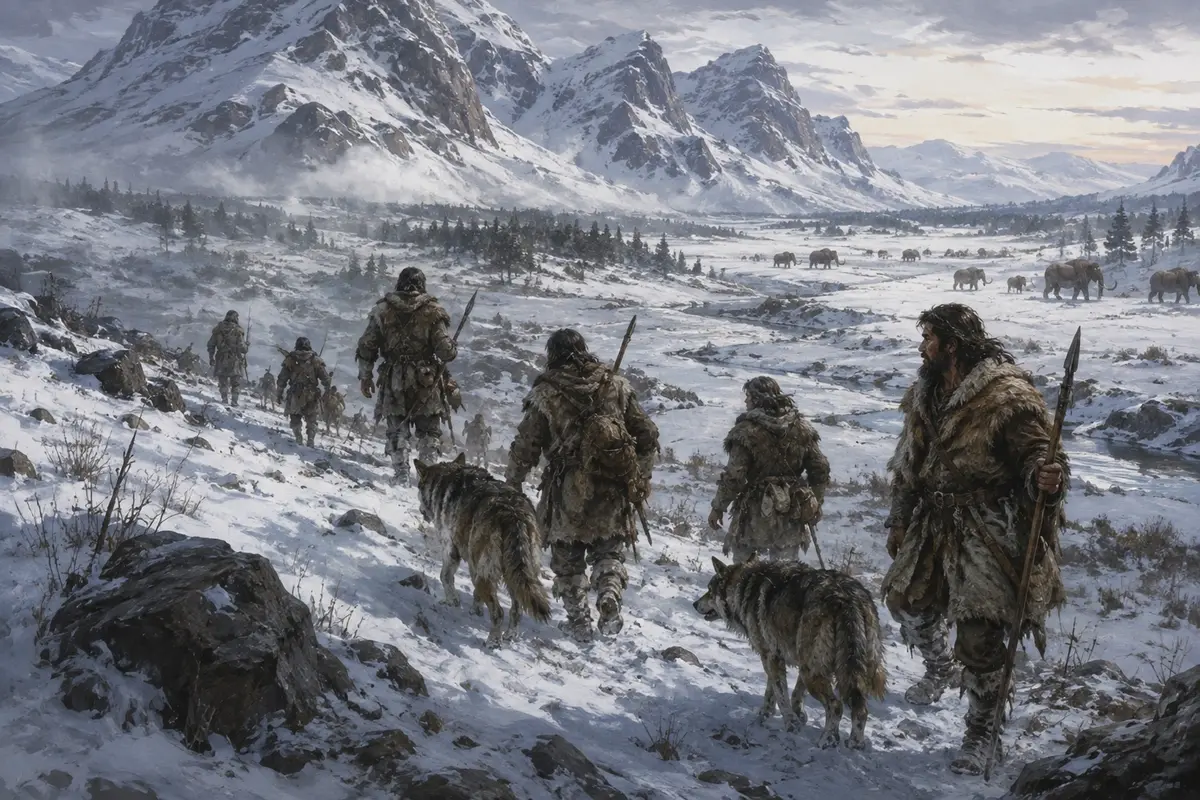
Genetic data from dozens of Ice Age Europeans show a single founding population took hold across the continent by around 37,000 years ago.
What DNA Says About the Whole Story
The genetic evidence which supports the recent African origin hypothesis comes from several different sources, and it all seems to corroborate each other. The most important findings were made through the analysis of mitochondrial DNA, which is inherited only from mothers. They suggest that all of the modern humans belong to the haplogroup L0, which is still present amongst the San people of southern Africa, as well as the Sandawe of East Africa and the Mbuti of Central Africa. These three populations represent the earliest branches of the human race, which had split off from the main branch. It has long been the subject of debate as to when and where this happened, although the genetic evidence suggests that it occurred very early on in our history. All of the mitochondrial DNA outside of Africa belong to the sub-haplogroup L3, which has been dated to have split off around 70,000 years ago. Two subgroups of it, namely the M and N haplogroups, have been dated to have split off around 55,000 to 65,000 years ago. The fact that all humans outside of Africa belong to only one subgroup suggests that they could have exited Africa only once, although there is genetic evidence which suggests otherwise.
The distribution of the M and N haplogroups also provides some interesting genetic evidence. The M haplogroup seems to be especially closely related to the Indian subcontinent, specifically the modern-day populations of India and the Andaman Islands, as well as highland New Guinea. These populations also possess a series of unique traits which suggest that they have considerable genetic uniqueness, such as their dark skin tone and woolly hair. These similarities have prompted researchers to classify them together as members of the same coastal migration route. The N haplogroup is found in Southeast Asia, but it reaches its diversity peak in Europe, where it is virtually the only haplogroup present, with the exception of the Melanesian and Australian populations. It has been suggested that the reason why the M haplogroup is absent in Europe is because of a small population of founders who lost it due to random chance.
Y-chromosome studies also provide genetic evidence, although they concern only the paternally inherited DNA. The research conducted by Stanford University’s geneticists, who analyzed the Y-chromosome DNA of 69 men from different populations, has suggested that the most recent paternal common ancestor lived between 120,000 and 156,000 years ago. In turn, the most recent maternal common ancestor lived between 99,000 and 148,000 years ago. This further corroborates the mitochondrial DNA findings, although the maternal common ancestor seems to have lived more recently. Both of them seem to have lived in Africa, according to genetic evidence. The wide diversity of the Y-chromosome DNA suggests that some sub-haplogroups of it may also have exited Africa alongside the population which belonged to the N mitochondrial haplogroup.
The autosomal DNA evidence concerns all of the DNA which is inherited from both parents, and therefore provides even more variety and genetic information. A 2002 study has suggested that Africans possess much more genetic diversity than what can be seen outside of the continent. The genetic diversity which can be seen outside of Africa is in fact similar to what can be observed within Africa, albeit only in certain populations, which further suggests that the migration outside of Africa was made by a small group of people. The genetic diversity which can be seen in these populations is believed to be the result of natural selection, which favored certain variations of genes. Specifically, researchers noted that the variations of pigmentation genes had been favored in West Eurasian and East Asian populations outside of Africa, causing them to acquire different skin colors after leaving the dark continent.
Interbreeding With Neanderthals, Denisovans and Other Ancient Humans
One of the biggest revelations of the last fifteen years concerns the relationships between Homo sapiens and other archaic humans. The genetic evidence suggests that almost every person outside of Africa and the Near East possesses Neanderthal DNA, which comprises 2 to 3 percent of it on average. Outside of this, the populations of Melanesia, Australia, and Southeast Asia possess even more fascinating genetic information, concerning the Denisovans, a population of hominins whose existence was discovered through genetic research. It has been determined that they are related to the Neanderthals, but their connection to Homo sapiens remains unclear.
Genetic evidence also suggests that outside of sub-Saharan Africa, all populations possess genetic markers of an unknown hominin group which exited Africa hundreds of thousands of years ago.
From Darwin to Mitochondrial Eve
The belief that people originally came from Africa was not unfounded – it has been suggested as early as the publication of Darwin’s “Descent of Man” in 1871, when the biologist theorized about it after comparing the anatomical characteristics of humans with those of African apes. There was little evidence to corroborate his theory for the next fifty years, until the first African hominin fossils were discovered. Even then, it was not widely accepted, as there were many other theories, one of which suggested that humanity originated from Asia. The debate about human origins raged between monogenists and polygenists for a long time, with the latter group suggesting that there were multiple human species, including the descendants of Homo erectus. It has taken until the 1960s for the theory of recent origin to gain much ground, as anthropologist Carleton Coon suggested that Homo sapiens only appeared on five different geographic regions.
It was the theory of multiregional evolution by Milford Wolpoff which suggested the most serious challenge to the recent African origin theory. This theory stated that Homo sapiens evolved continuously from Homo erectus throughout the entire Old World. This has been largely discredited due to genetic evidence, most of which concerns the analysis of mitochondrial DNA. It is inherited only from mothers, and it has been particularly useful in determining the depth of population roots. According to Allan Wilson and his colleagues Rebecca Cann and Mark Stoneking, whose research was conducted in the late 1970s, human mtDNA has lower diversity than that of chimpanzee mtDNA. This could only be explained by either the fact that all human mtDNA belonged to one single woman who possessed it, or to the fact that it had gone through a severe genetic bottleneck. It has been determined that the latter scenario was more plausible, although the genetic research has shown that it occurred alongside a rapid and recent evolutionary change. This has led to the identification of the Mitochondrial Eve, a woman who has lived between 150,000 and 200,000 years ago, and who belonged to an isolated population. By 1997, genetic research had placed her at approximately 150,000 years ago, with more recent dating narrowing the range to approximately 155,000 to 160,000 years ago.
Interesting Story Than the Textbook Version
All of this genetic and paleontological research does not disprove the recent African origin theory – its basic principles, such as the fact that humanity did originate from Africa, and that a relatively small group of people left it to populate the world, remain undisputed. What the research has suggested is that this happened more recently than previously assumed, and that there were multiple failed attempts at leaving it. Some of these attempts resulted in an impact on the genetic makeup of other hominin populations, such as the Neanderthals and Denisovans. Researchers have also discovered traces of other hominin populations in the modern genome. These concerns the populations of sub-Saharan Africa, whose genetic makeup suggests that they interbred with an unknown group of hominins who exited Africa hundreds of thousands of years ago, and who may have been Denisovans’ close relative. In addition to this, the early population of Eurasia may have been much more diverse than previously assumed. All of these genetic pieces of evidence concern the populations of Australia, the Americas and the Pacific region, whose inhabitants are among the earliest to have exited Africa several times following multiple failed attempts.