Sino-Vietnamese War is the name given to the short but bloody conflict that occurred in February 1979 between China and Vietnam. The one-month-long war saw the two communist nations turn against each other in an unprecedented manner. The reason why this happened was because China and Vietnam used to be allies for the period of one quarter of a century. For almost a quarter of a century, the two nations stood together in wars fought against France, America, and the so-called Western imperialism. But that turned out be insufficient to prevent Vietnam from declaring war on China.
Sino-Vietnamese War was not notable for what happened on the battlefield, where both sides suffered heavily but without either gaining a real victory. The real reason why the Sino-Vietnamese conflict took place, and the consequences it caused for both nations after it concluded are much more interesting topics to discuss. The war was one of the repercussions of the Sino-Soviet split, the aftermath of the Vietnam War, and the genocide that occurred in Cambodia with the support of China’s ally. This is why learning about the causes of the Sino-Vietnamese conflict and examining its consequences for both participants is essential in understanding what happened to these two nations in the 20th century.
China refers to the brief conflict with Vietnam as a self-defense counterattack, while Vietnam calls it a war of resistance against China’s expansionism. However, Western historians usually classify it as the Third Indochina War, which is also partially correct. So, what does actually happened in 1979?
In February 1979, People’s Republic of China launched a large-scale invasion of Vietnam. Approximately two hundred thousand Chinese PLA soldiers with two hundred tanks were sent to the front. They managed to occupy Vietnam’s border provinces of Cao Bằng, Lào Cai, and Lạng Sơn, and engage in several brutal urban battles before eventually capturing the city of Lạng Sơn on March 6. On the same day, China declared that its punitive mission had been completed and began withdrawing its forces. They were forced to withdraw from Vietnam’s border on March 16. Meanwhile, Vietnam claimed that its unorganized militia had resisted China’s well-prepared regular army, as well as scored several important victories. Thus, both sides’ claims have some reliability and credibility, which is why historians do not consider one or the other as a “winner” and “loser” of the Sino-Vietnamese conflict.
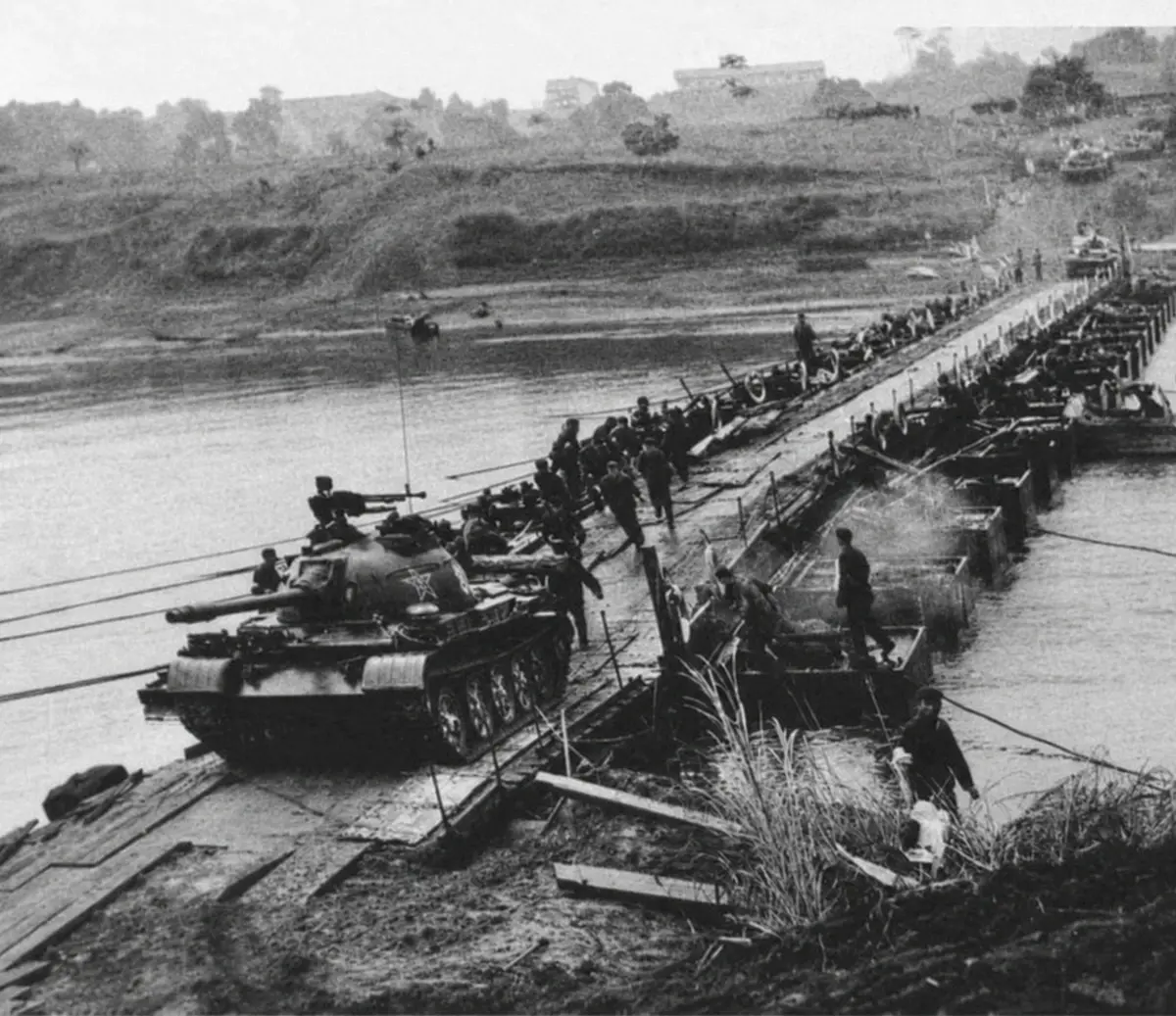
On February 17, 1979, roughly 200,000 PLA troops and 200 tanks crossed into Vietnam's northern border provinces.
The Relationship Between Two Communist Nations
To understand why China and Vietnam went to war with each other, it is necessary to return to the events of the early 1950s and the Sino-Soviet split. After Stalin’s death, Mao Zedong and Nikita Khrushchev began having serious disagreements, which eventually led to the split between the Communist Party of China and the Communist Party of the Soviet Union. Mao always saw Khrushchev’s 1956 speech about Stalin as an attempt to revise Marxism-Leninism. This explains the poor Sino-Soviet alliance during the Vietnam War. The two nations were allies, but not as close as they used to be during the early years of the PRC’s founding.
Practically, the split resulted in China bolstering its military at the Soviet border and stationing up to 1.5 million soldiers there. At the same time, Beijing reduced its support for Vietnam, which was an anti-China ally for the USSR and did not appreciate Mao’s attempts to improve relations between Vietnam and China. However, Vietnam eventually turned to the USSR for help, becoming one of the members of the Council for Mutual Economic Assistance (COMECON) in mid-1978. Subsequently, military aid from the Soviet Union to Vietnam grew significantly, from about $75 and $125 million in 1977 to $800 million in 1978. In addition, in November 1978, the Soviet Union and Vietnam signed a treaty of mutual assistance and defense for a period of twenty-five years. Therefore, China practically lost its strategic partner in Southeast Asia when Vietnam joined the USSR’s camp.
Vietnam War’s Legacy and China’s Relations With the USA
One of the most crucial reasons why China went to war with Vietnam was the legacy of the Vietnam War. Although American forces withdrew from South Vietnam in 1973, the People’s Army of Vietnam remained in the South, and the PAVN soldiers eventually captured Saigon in April 1975. During the war, China quietly pursued its foreign policy course, pursuing normalization of relations with the United States. For example, Kissinger held several meetings with Chinese leaders, and Nixon became the first President to visit the PRC. This foreign policy of opening up was particularly important for Deng Xiaoping when he had to decide whether to attack Vietnam.
As a result, when the Vietnam War ended and North Vietnam captured Saigon, China became even more reluctant to continue its alliance with Hanoi. For Deng Xiaoping, Vietnam was no longer a revolutionary communist ally but a competitor for regional hegemony.
Cambodia as the Immediate Cause of the Conflict
One of the most important reasons why China and Vietnam went to war in 1979 was the events in Cambodia. During the Vietnam War, PAVN and the Khmer Rouge were allies, but this relationship deteriorated significantly when Pol Pot and the Khmer Rouge came to power in Cambodia in 1975. Mao Zedong and the CCP supported the Khmer Rouge throughout their tenure, including military and political support. When the PAVN tried to occupy Cambodia, the KR offered only limited resistance, which made China suspicious.
In addition, China was not pleased that Vietnam did not support the KR when they were in power. However, these concerns were not the reason why China invaded Vietnam. After Pol Pot came to power, serious human rights abuses began in Cambodia, as well as mass executions of people. These atrocities made Vietnam decide to invade Cambodia, which officially began on Christmas Day in 1978. On December 25, PAVN troops occupied the capital of Cambodia, Phnom Penh, and managed to completely remove the KR from power within two weeks. However, these events had severe consequences for China, whose embassy in Phnom Penh had to evacuate to the jungle along with the KR leadership. Apparently, Chinese diplomats were in Cambodia for about two weeks, as well as several other Vietnamese citizens.
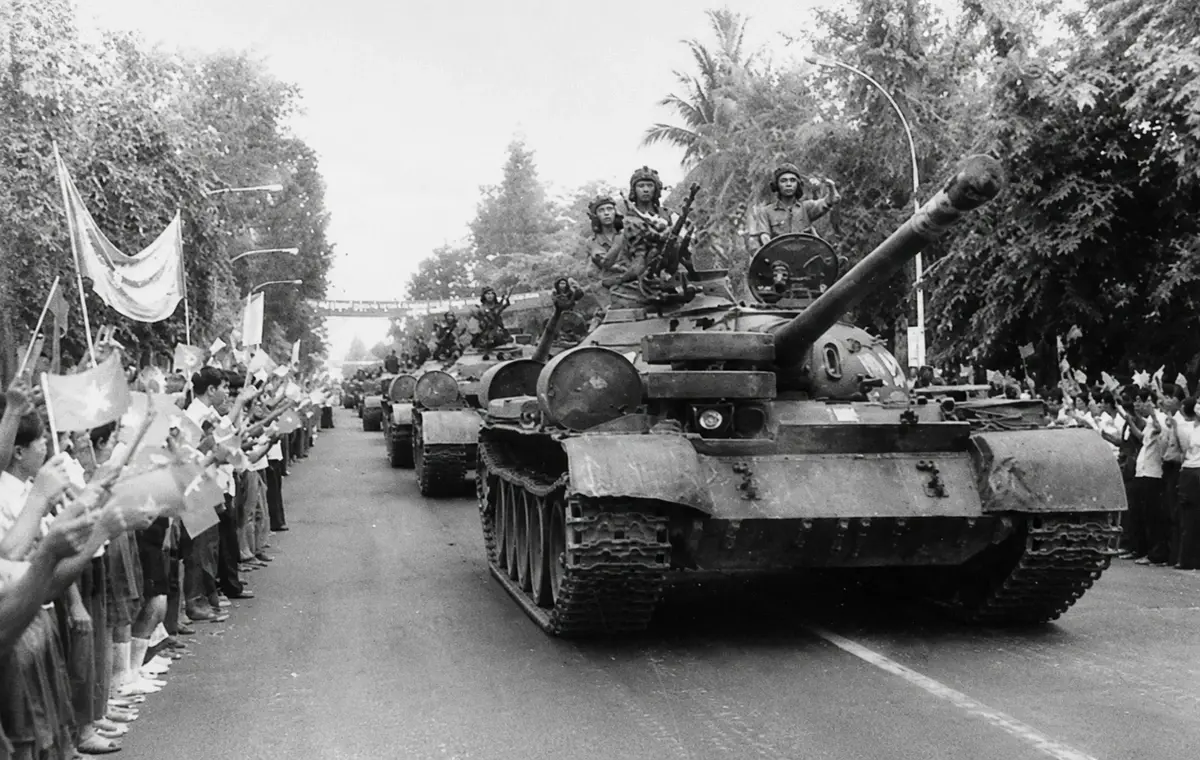
Vietnam's invasion toppled the China-backed Khmer Rouge within two weeks, an outcome that caught Beijing off guard.
According to Suisheng Zhao, an expert on Sino-Vietnamese relations, it was not the removal of the KR from power that contributed to the immediate cause of the China-Vietnam War, but rather the fact that Vietnam presented itself as the new power center in Indochina. For example, Vietnam claimed to be the world’s third-largest military power, which was especially annoying for China, considering that PAVN recently defeated the United States.
Ethnic Chinese in Vietnam
A few weeks before China invaded Vietnam, tensions between the two countries escalated, which is explained by Vietnam’s crackdown on ethnic Chinese. For example, in 1976, ethnic Chinese residents were forced to renounce their citizenship, indicating that they wanted to leave Vietnam. The following year, there was a “purification campaign” in Vietnam’s border areas with China. After that, in March 1978, Vietnam imposed more stringent restrictions on ethnic Chinese, forcing hundreds of thousands of people to return to China. The situation in Vietnam was so critical that both nations held several meetings to discuss ways to resolve this crisis. However, they could not reach an agreement.
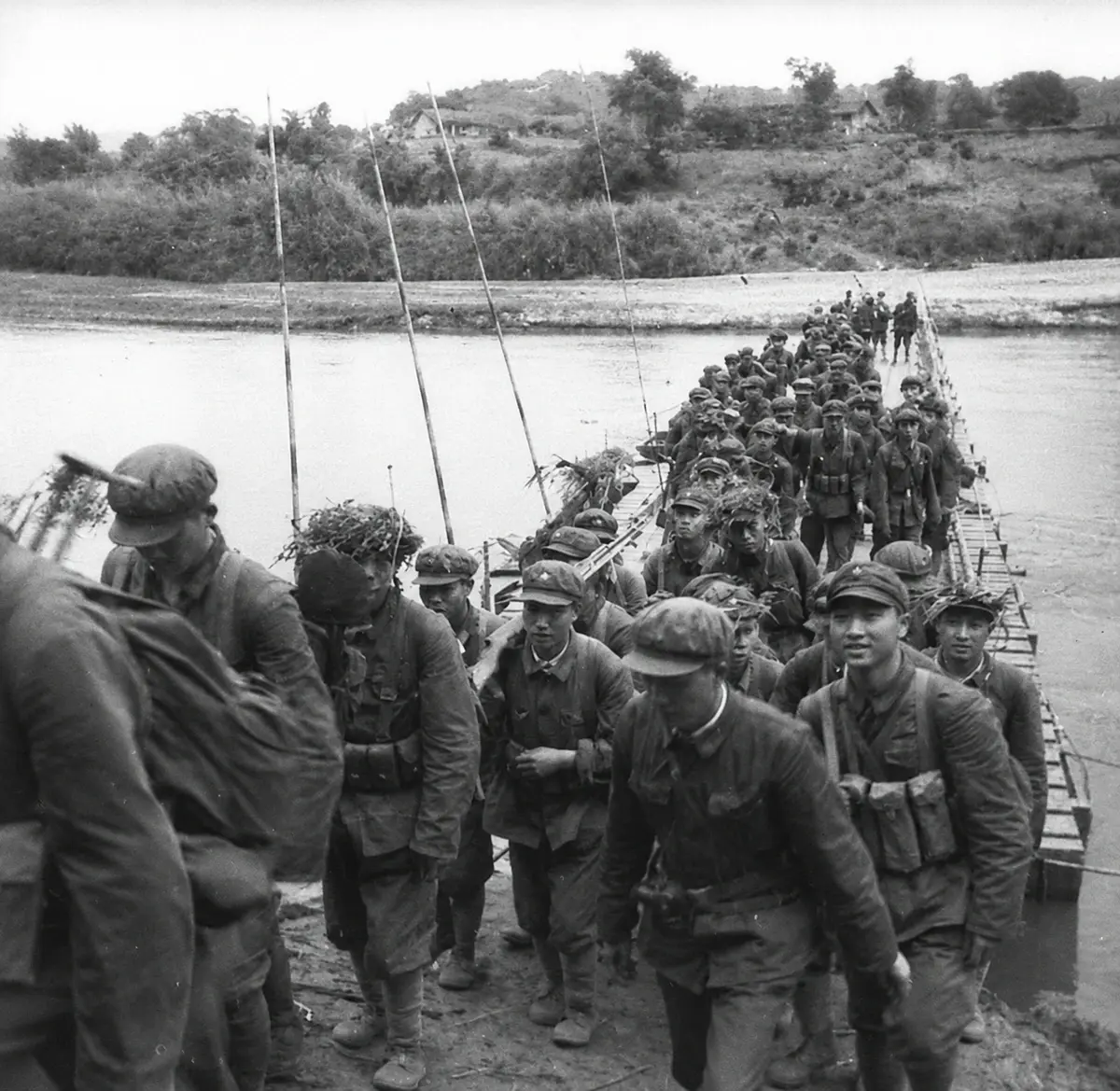
Vietnam's crackdown on its ethnic Chinese population drove tens of thousands of Hoa people across the border in 1978 alone.
It is impossible to say with great confidence whether ordinary Vietnamese people were deliberately hostile toward Chinese citizens. However, many sources indicate that Vietnam pursued a policy of repression against the Chinese minority. Suisheng Zhao points out that there was an exodus of Vietnamese from ethnic minorities to China as many as three times. In addition, it is possible that several entire villages from border areas were transferred to the Chinese authorities to improve the security situation along the border.
Disputes Over the Common Border
A dispute over the common border was another reason why China and Vietnam went to war with each other. Despite the fact that both nations were allies, they never officially established their common border. Consequently, there were 164 places in Vietnam and China, where their borders adjoined each other, which entailed periodic clashes along these areas. The situation was complicated by the fact that neither side officially recognized these borders, resulting in border incidents occurring frequently. Thus, in 1974, there were 125 border clashes, and already in 1978, there were 2,175 border clashes. During those years, two rounds of negotiations between China and Vietnam took place, but they did not yield any concrete results. For example, in one of the border incidents, Vietnam’s police drove 2,500 refugees back across the border and severely injured several Chinese border guards.
As a result, in mid-1978, China decided to withdraw its consul general from the Vietnamese city of Ho Chi Minh and suspended its aid to Vietnam. In addition, Vietnam’s military command issued orders for the general offensive against China in the summer of 1978. In addition, the party congress of Vietnam officially recognized China as a dangerous enemy. Therefore, it can be said that both nations entered the war with clear intentions and desires for its course.
Deng Xiaoping Makes a Decision to Invade Vietnam
In September 1978, Deng Xiaoping, the leader of the Communist Party of China, became fully aware of the need to wage a punitive war against Vietnam. The objectives of the Chinese attack were for Deng Xiaoping to convince Vietnam to withdraw troops from Cambodia, to stop the expansion of Vietnamese military power with the support of the Soviet Union, and to establish order on the common border between China and Vietnam. The Central Military Commission instructed two military regions to prepare for an invasion of Vietnam by early 1979.
Before invading Vietnam, Deng Xiaoping conducted a strategic foreign policy tour of several nations to determine how China would be perceived as an aggressor nation. In early 1979, Deng visited Washington to discuss the upcoming war with President Carter. On January 29, the President and Deng Xiaoping held talks in Washington, during which the Chinese leader once again expressed concern about Vietnam’s military buildup and territorial ambitions. According to National Security Advisor Zbigniew Brzezinski, Carter did not oppose China’s planned actions but did not support them either. Consequently, Chinese officials assumed that Carter fully approved of all of Deng Xiaoping’s decisions. On February 8, Deng Xiaoping returned to Beijing, having completed his tour of duty, and formally adopted the decision to declare war on Vietnam the next day. On the eve of the invasion, the People’s Daily published articles accusing Vietnam of persecuting China’s ethnic Chinese population, preparing to invade China, and waging a war against Chinese civilians living on the common border. In addition, to reassure the Soviet Union, Deng Xiaoping warned Leonid Brezhnev that China was prepared for a direct confrontation with the USSR, while the Chinese military along the Soviet border entered a combat-ready status. In addition, about three hundred thousand Chinese civilians were evacuated from the border areas with Mongolia and the Soviet Union. According to historian Suisheng Zhao, Deng Xiaoping may have timed his military adventures in order to take advantage of the good relations with the United States to intimidate the USSR with an imaginary ally.
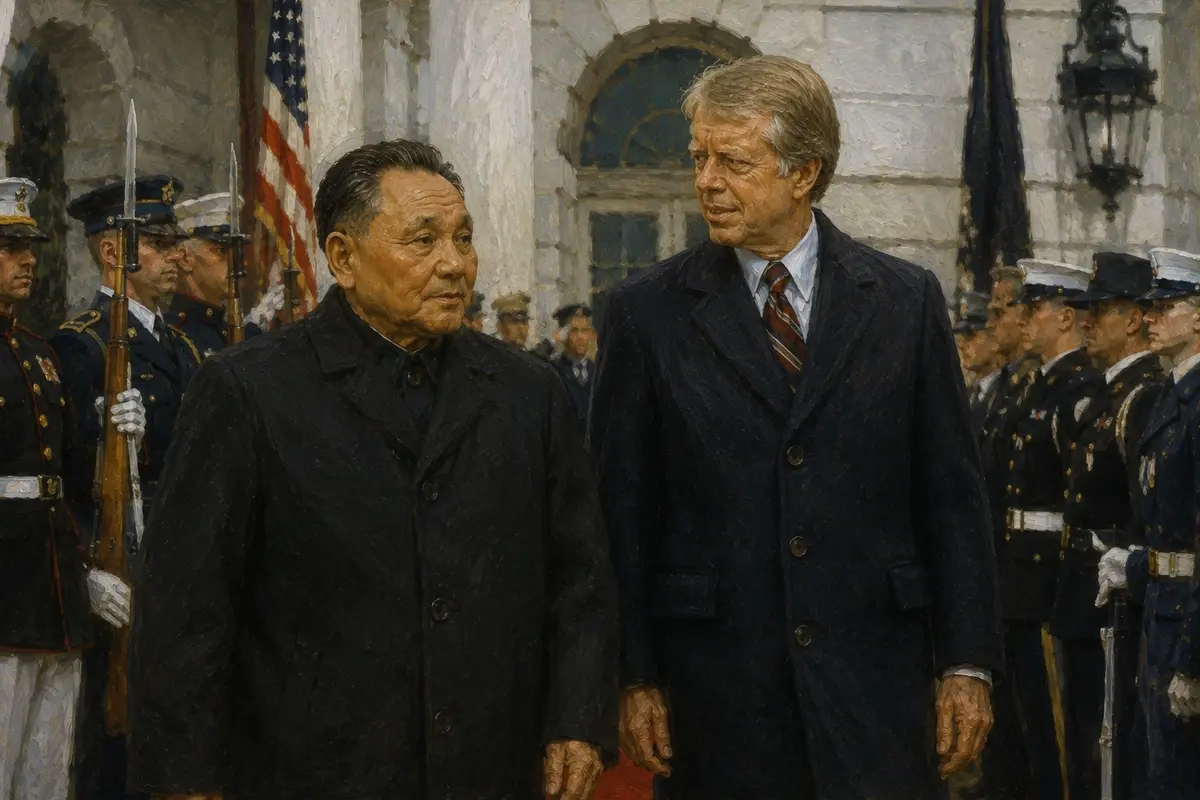
Deng's Washington visit, days before the invasion, was partly aimed at gauging how the US would react to a Chinese attack on Vietnam.
Invasion and Aftermath of the Sino-Vietnamese War
On February 17, 1979, the Chinese People’s Liberation Army (PLA) launched an invasion of Vietnam, deploying approximately two hundred thousand soldiers and two hundred tanks on two axes. One of them was led by Xu Shiyou and went through Cao Bằng, Lạng Sơn, and Quảng Ninh, while the other, commanded by Yang Dezhi, was aimed at the northwest of Vietnam along the border with China. This attack, marking the largest Chinese offensive since the Sino-Indian War of 1962, caused the Vietnamese government to transfer its main forces from Cambodia to the northern border to withstand the attack by the PRC. However, they avoided large-scale battles with the PLA, turning instead to using guerrilla and local militia tactics.
The initial advance of the Chinese troops consisted of only 15–20 km before the attacking forces ran into strong Vietnamese defenses. To overcome the resilient defense of the Vietnamese, the Chinese had to throw additional eight divisions into the fray. The most intense fighting took place in Lạng Sơn, which the PLA eventually captured after three days of devastating close-quarters fighting. Elsewhere, the Chinese were unable to make much progress in attempting to capture Quảng Ninh Province, with the exception of the capture of the small town of Mong Cai in the far east of Vietnam. On March 6, China announced the end of its counterattack, officially declaring its mission accomplished and beginning a disorganized retreat from Vietnam, during which the Chinese burned and looted everything behind them. Vietnam’s northern provinces were left in ruins after the month-long war. The last Chinese troops left Vietnam on March 16.
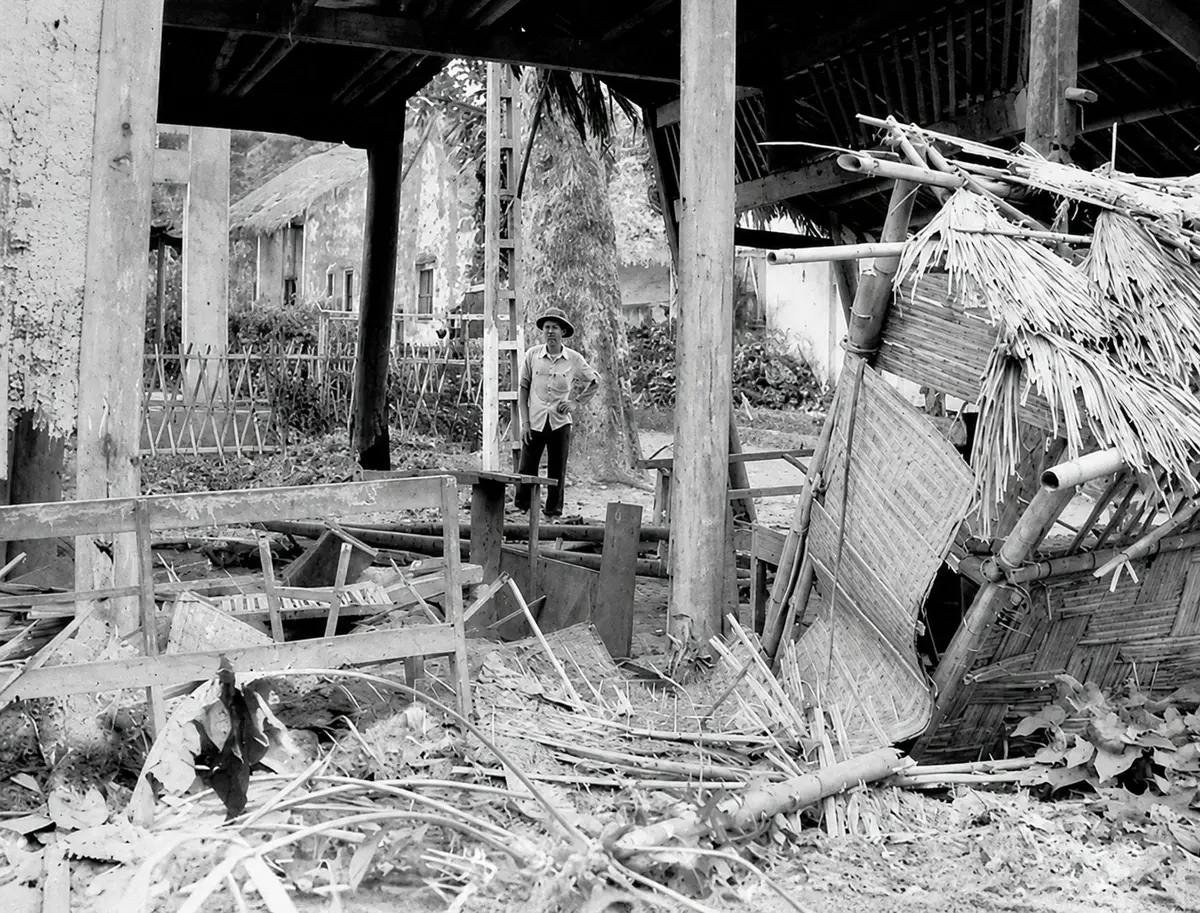
Lạng Sơn saw three days of close-quarters combat before falling, and was left in ruins by the retreating Chinese forces.
The outcome of the Sino-Vietnamese War is difficult to classify as a victory for either side. According to naval analyst Henry Kenny, most Western analysts agree that Vietnam fought China to a standstill, but the capture of the city of Lạng Sơn left the capital of Vietnam vulnerable. Moreover, Vietnam had five divisions in the Red River Delta ready to attack China, as well as thirty thousand troops that PAVN was able to transfer from Cambodia to the border with China. Therefore, it can be said that Vietnam was not as successful in this war as official Vietnamese newspapers claimed. At the same time, the New York Times published several articles analyzing this war, in which its military analysts argued that China had achieved its goal of tying up Vietnam in a prolonged war on the common border. Consequently, it can be said that, for all intents and purposes, both nations suffered defeat in the Sino-Vietnamese conflict.
Role of the Soviet Union During the Sino-Vietnamese War
Despite the fact that the Soviet Union did not declare open support for Vietnam, they sent military aid to Hanoi and evacuated Vietnamese soldiers from Cambodia. In addition, tanks, armored vehicles, rocket systems, aircraft, and military personnel were also sent to Vietnam. In addition, the Soviet Navy kept track of the movements of the Chinese along the coast of Vietnam. However, despite the support provided to Vietnam, the Soviet government did not risk an open conflict with China. The distance between the USSR and China was too great for a direct military confrontation, and besides, both nations agreed in advance that the conflict between China and Vietnam would be limited. Moreover, Deng Xiaoping deliberately restrained the actions of the Chinese military in Vietnam, which was due to his desire to preserve relations with the USSR. Thus, despite the presence of millions of troops on both sides, no open confrontation began between the PRC and the USSR. Moreover, when China withdrew from Vietnam, the Soviet Union did not take any measures to consolidate its position in Southeast Asia. Nevertheless, shortly after the end of the Sino-Vietnamese War, China reminded everyone that it was not an insignificant actor on the world stage, as the Soviet Union did not provide any military support to Vietnam during the war.
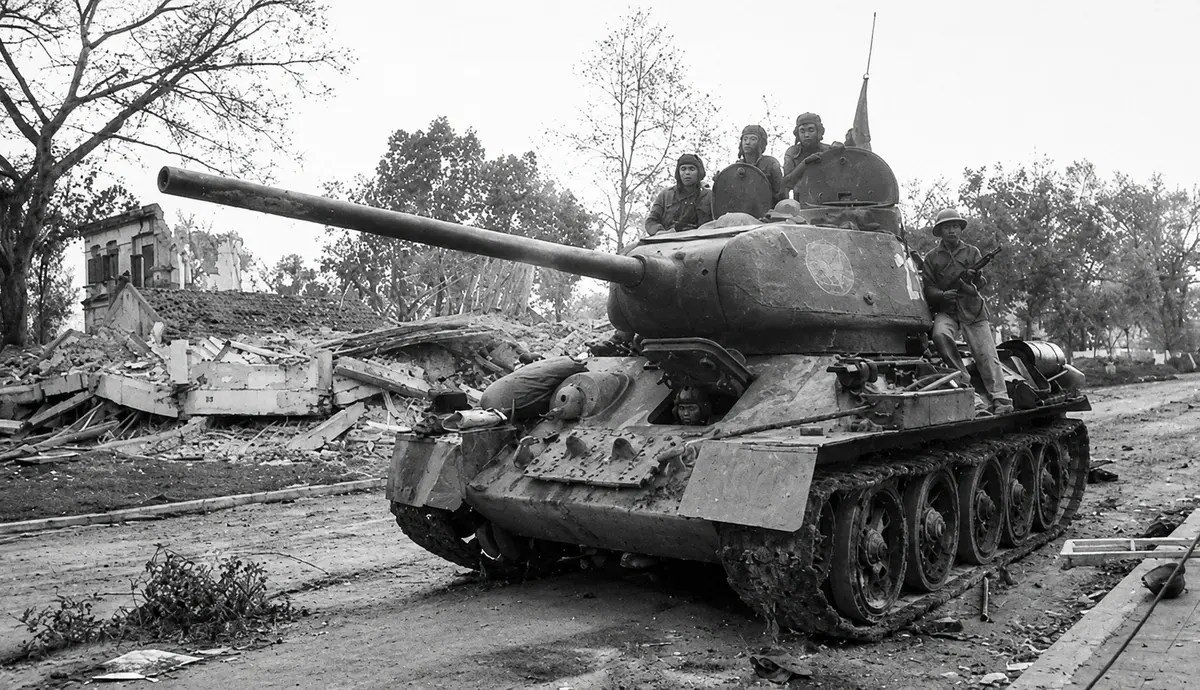
Moscow shipped tanks, rocket launchers, and surface-to-air missiles to Hanoi, but never committed troops to the fight.
Casus belli and Casualties of the Sino-Vietnamese Conflict
The causes of the Sino-Vietnamese War have been discussed, but what about its casualties? Unfortunately, no official information about the number of soldiers killed, wounded, or missing in action was released by either country for many years. Vietnam’s official news agency quoted China’s casualties as more than 44,000, however, this information was regarded as inaccurate by Western analysts. In addition, other Vietnamese newspapers write about 62,500 Chinese soldiers killed and wounded. At the same time, according to unclassified Chinese military documents, only 7,000 Chinese soldiers died during the Sino-Vietnamese War. In addition, Wu Xiuquan, deputy chief of the PLA’s General Staff, told a visiting French military delegation that Vietnam suffered 50,000 casualties and China suffered 20,000. Nevertheless, according to the historian Daniel Tretiak, China suffered greatly from this conflict, the scale of which can be seen from these numbers.
Many Vietnamese civilians also died as a result of the war. According to Vietnam’s state newspaper Nhân Dân, more than ten thousand Vietnamese citizens died during the conflict, and the country’s industrial enterprises in the border areas were closed down. In addition, about 1,600 Vietnamese and 240 Chinese prisoners of war were freed after the end of the hostilities.
Consequences of the War for Both Nations
Although China’s goals in invading Vietnam were not fully achieved by the end of the war, the consequences of the Sino-Vietnamese conflict were significant for both nations in the long run. First, Vietnam’s decision to occupy Cambodia led to a major shift in China’s foreign policy and military modernization. In addition, China demonstrated that the Soviet Union was not as reliable an ally as previously thought. Consequently, Vietnam was forced to continue to rely on the USSR, while China strengthened its partnerships with ASEAN countries, especially Thailand, which was extremely opposed to Vietnam’s aggressive policy.
It is difficult to overestimate the extent of the Sino-Vietnamese conflict in terms of international politics. Vietnam and China willfully conducted border clashes while officially being allies. Such a turn of events significantly strained the relations of both nations with the Soviet Union. On the one hand, Vietnam leaned even more heavily on the support of the USSR, which was forced to provide military and economic assistance to Vietnam. On the other hand, China continued to build friendly relations with ASEAN. According to Singapore’s Prime Minister Lee Kuan Yew, Vietnam’s actions in Cambodia have had a much more significant impact on China-Vietnam relations. However, he also believes that Vietnam’s confrontation with China, and especially the attacks on the Chinese population living in Vietnam, will lead to long-term deterioration in bilateral relations. Moreover, according to Henry Kissinger, the Chinese actions in Vietnam served as a warning sign for the Soviet Union, demonstrating the limitations of its foreign policy, which, according to Kissinger, is partially reflected in the USSR’s military intervention in Afghanistan the following year.
It is also important to note that historians such as Howard French believe that Deng Xiaoping may have waged this war deliberately, seeing it as a way to keep the military occupied. In addition, according to French, the war helped Deng Xiaoping to consolidate power among the People’s Liberation Army, which was eager to modernize China. In addition, the failure of the Chinese military to achieve the declared goal served as a powerful argument for introducing sweeping changes in the army.
A War That Made Friends of Former Enemies
Even after China withdrew its troops from Vietnam, the two nations continued to clash on the border. In addition, the Sino-Vietnamese conflict continued in 1984 and 1988, during which the two sides fought for control of Johnson South Reef. In addition, the main cause of the prolonged conflict between Vietnam and China was the fact that neither side was willing to give up territorial claims on the other. This struggle came to an end in 1989, when Vietnam agreed to remove its forces from Cambodia. At the same time, a secret meeting was held in Chengdu, which led to the normalization of relations between China and Vietnam the following year. However, the two nations did not completely restore their former alliance, as each pursued its own foreign policy. In particular, Vietnam continued to rely on the support of the Soviet Union, while China strengthened its ties with ASEAN.
Finally, in 1999, Vietnam and China were able to sign a border agreement to officially establish state boundaries. This document also stipulated that Vietnam would have to cede several territories to China, including the historically famous Ai Nam Quan Gate region, which the Vietnamese population regards as a symbol of Vietnam’s sovereignty. Therefore, despite the fact that the war between China and Vietnam ended more than a decade ago, its effects still affect the relationship between these two nations, which may take many years to fully fade away.
Perhaps the most striking demonstration of the improvement in Sino-Vietnamese relations was the announcement by both nations in 2007 of plans to construct a highway connecting Kunming and Hanoi. It cuts through the areas where the two countries once battled with each other, and it will provide an opportunity for thousands of people to find some measure of comfort and even prosperity.