The indigenous peoples of Taiwan were on the island for thousands of years before their first encounter with Dutch ships on the southwest coast. Today the government officially recognizes about 600,000 of them, or three percent of Taiwan's population, and including the lowland Plains peoples who still seek recognition, the number rises past 800,000. Counting those of mixed ancestry, their numbers may well exceed a million.
Those numbers understate their significance, however, since most linguists believe that Taiwan is where the Austronesian language family began. That family has since spread to hundreds of millions of people around the globe, among them Filipinos, Malaysians, Indonesians, the Malagasy of Madagascar, and the peoples of Micronesia and Polynesia. In one sense, the mountain villages of Taiwan represent the ancestral homeland of hundreds of millions of people.
But their recent history has been one of suppression. Dutch traders, Ming loyalists, Qing officials, Japanese soldiers and Nationalist bureaucrats have all arrived on the island with their own plans for the island and its first inhabitants, resulting in languages dying out, names changing, and communities being incorporated into the Han Chinese majority.
Some of those trends are being reversed, however. On July 30, 2026, the Siraya became the 17th officially recognized indigenous group in Taiwan, the result of a campaign that began more than three decades ago.
Who Taiwan's Indigenous Peoples Are
In the simplest terms, Taiwan's indigenous peoples are the Austronesian-speaking communities who lived on the island prior to large-scale Han Chinese settlement in the 17th century. They share linguistic, genetic and cultural roots with other Austronesian peoples around the world.
They were never one people, however, and that matters. When the Dutch arrived in 1624, there were independent villages of varying sizes trading with each other, marrying into each other's families, fighting each other and occasionally uniting against a common enemy. There was no kingdom, no unified tribe and no political authority. Anthropologists later categorized these villages into more than 20 broad ethnic groupings based on language and custom, and even those categories remain contested.
Today most live either in their traditional mountain villages or, increasingly, in Taiwan's cities. The Plains peoples, sometimes called Pingpu, have a different story altogether. They lived in the lowlands, and were directly in the path of every colonizer who came ashore.
Taiwan and the Origins of the Austronesian Expansion
People have been on Taiwan for at least 30,000 years. Tools of stone found at the Baxian Caves suggest that the island's first inhabitants were Paleolithic peoples who were not Austronesian at all.
Then, around 6,000 years ago, the archaeological record changes abruptly. Farming makes its appearance, along with domesticated animals, pottery and polished stone adzes. Many of those adzes were mass-produced on Penghu and neighboring islands using local volcanic rock, and tell you that there was already busy sea traffic across the Taiwan Strait.
From there, seafarers pushed south into Luzon in the Philippines, intermixing with the older populations they found there. That, in effect, began the Austronesian expansion. Over the following millennia, their descendants spread through the Philippines, the rest of Island Southeast Asia, Micronesia, Island Melanesia, Polynesia and all the way to Madagascar.
The connection did not end with them leaving the island. Eastern Taiwan supplied the jade for the lingling-o ornaments made in the Philippines and for the Sa Huỳnh culture of Vietnam. This trade network, now called the Maritime Jade Road, lasted about 3,000 years, from about 2000 BCE to 1000 CE. Few prehistoric trade networks built around a single material lasted this long.
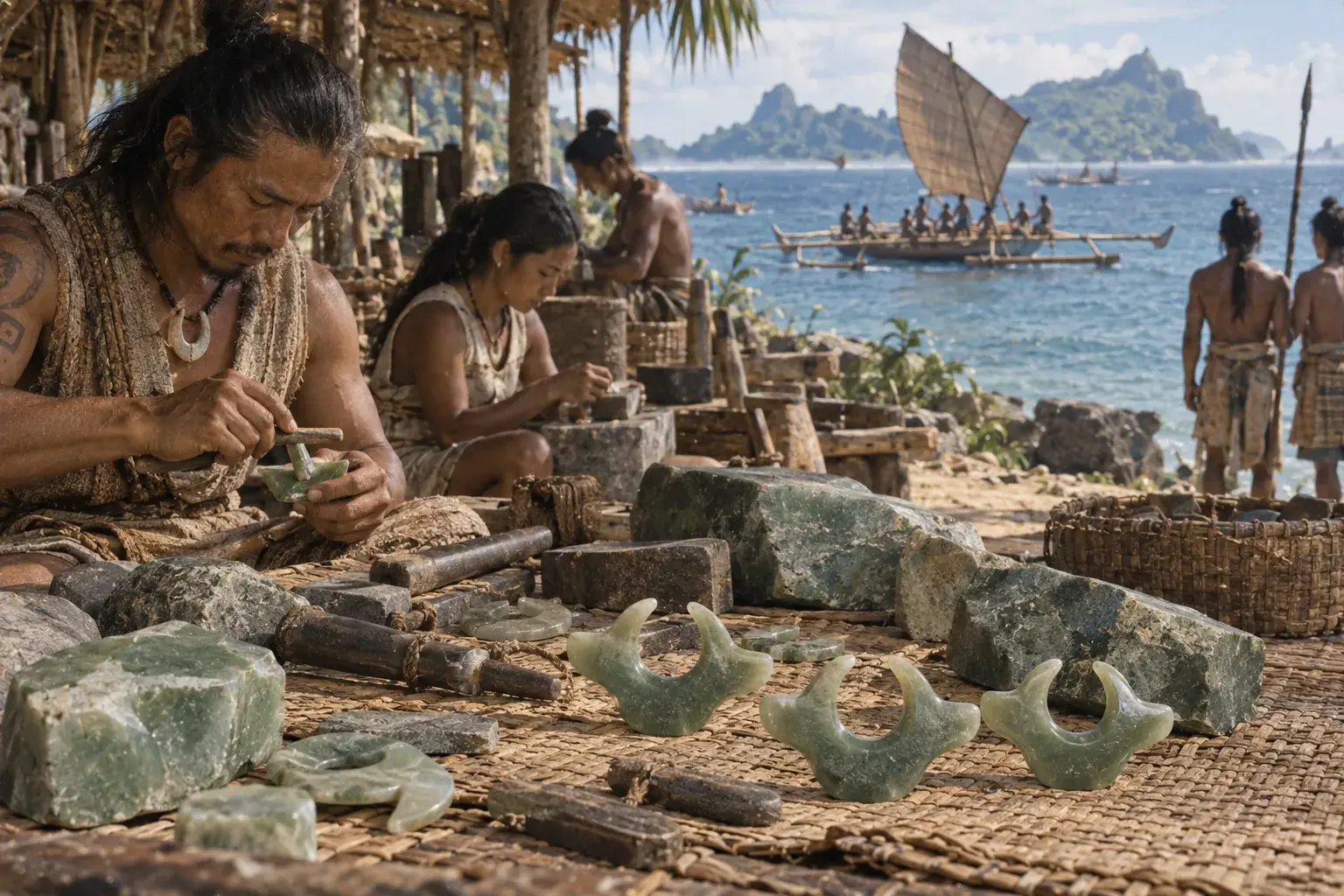
Jade from eastern Taiwan was carved into lingling-o ornaments traded across the Philippines and Vietnam for some 3,000 years.
The Formosan Languages and Why They Matter
It is known that approximately 26 indigenous languages have been spoken on Taiwan, collectively referred to as the Formosan languages. At least ten of these languages have gone extinct, and five more are moribund, with several more endangered.
Linguists are interested in these languages because the Austronesian family has several primary branches, and all of them except one exist only on Taiwan. The single exception, Malayo-Polynesian, is the branch that left the island and gave rise to every Austronesian language spoken elsewhere. Simply put, Taiwan holds more of the family's deep diversity than the rest of the Austronesian world combined. Every Formosan language that disappears takes a piece of that evidence with it.
From "Eastern Savages" to Yuanzhumin: Names Imposed on Taiwan's First Peoples
The labels used to refer to Taiwan's first peoples say much about who was doing the labeling. Chen Di, a Ming dynasty writer who visited the island in 1603, called them Dongfan, or "Eastern Savages." The Dutch called them "Indians" or "blacks," borrowing terms that had been used in their colonial experience in what is now Indonesia.
The Qing developed a more revealing system. People who paid a head tax and pledged loyalty were shufan, literally "cooked barbarians." Those who had not submitted were shengfan, "raw barbarians." The Chinese word sheng was also used for uncooked food, unworked land and unripe fruit. To be "cooked" meant adopting Han customs and living as a subject of the empire, but the label never lost its insulting edge.
These categories eventually hardened into geography. Pingpu came to mean the Plains peoples, and Gaoshan, or "high mountain peoples," meant everyone else. Japanese colonial anthropologists kept the split, and after the 1930 Musha Incident the Japanese government began to call the mountain peoples Takasago-zoku. The Nationalist government that followed invented yet another pair of terms, "mountain compatriots" and "plains compatriots."
None of these names came from the people themselves. The term most indigenous activists fought for was yuanzhumin, meaning "the people who lived here first." The Kuomintang government initially resisted it, and not by accident. Calling one group the original inhabitants implies that everyone else, government included, arrived later. The People's Republic of China still uses Gaoshan as its official name for Taiwan's indigenous peoples, a label that many of them dislike for erasing the Plains peoples entirely.
Official Recognition and the Council of Indigenous Peoples
The modern list of Taiwan's officially recognized groups traces directly to Japanese colonial ethnography. Ino Kanori, the ethnographer tasked with surveying the island's indigenous population, formalized eight peoples: the Atayal, Bunun, Saisiyat, Tsou, Paiwan, Puyuma, Amis and a catch-all Pingpu category. The Japanese went on to recognize nine groups before 1945, with the Tao (Yami) and Rukai added to the mountain list.
Recognition is handled by the Council of Indigenous Peoples, which has held ministry-level rank since 1996, and to receive formal recognition a community must gather signatures and supporting evidence, including genealogies, group histories and proof that a distinct language and culture have survived. Recognition brings legal rights and benefits, and the satisfaction of having reclaimed a separate identity.
This bar is brutal to clear for groups whose languages were wiped out by the very colonial policies they are trying to recover from. However, the list has grown. The Thao were recognized in 2001, the Kavalan in 2002 and the Truku in 2004. The Sakizaya followed in 2007, after years of being lumped in with the Amis, and the Sediq, previously counted as Atayal, in 2008. The Hla'alua and Kanakanavu became the 15th and 16th groups in 2014.
The Siraya are the newest addition, and a historic one. Taiwan passed the Pingpu Indigenous Peoples Status Act in October 2025, and on July 30, 2026, the Siraya became the first Plains group recognized under that law. Other plains peoples, including the Taivoan, Makatao, Pazeh and Taokas, still await recognition, although some have received it from local governments in places like Tainan, Pingtung and Fuli.
Notably, scholars largely agree that the 16 older groupings do not reflect any real social or political units from pre-modern Taiwan. They have simply become embedded in government policy and popular consciousness to the point that they now act as real distinctions. Naming disputes are not over either, as illustrated by the tangle of Seediq, Sediq, Truku and Taroko.
Plains Indigenous Society Before Colonization
The Plains peoples lived in permanent villages enclosed in bamboo defensive walls, with some villages in the south having more than 1,500 people and surrounded by smaller satellite settlements. Siraya homes were constructed of thatch and bamboo, raised about two meters off the ground on stilts, with a barn for livestock beside each house and a watchtower keeping watch for raiding parties from the mountains.
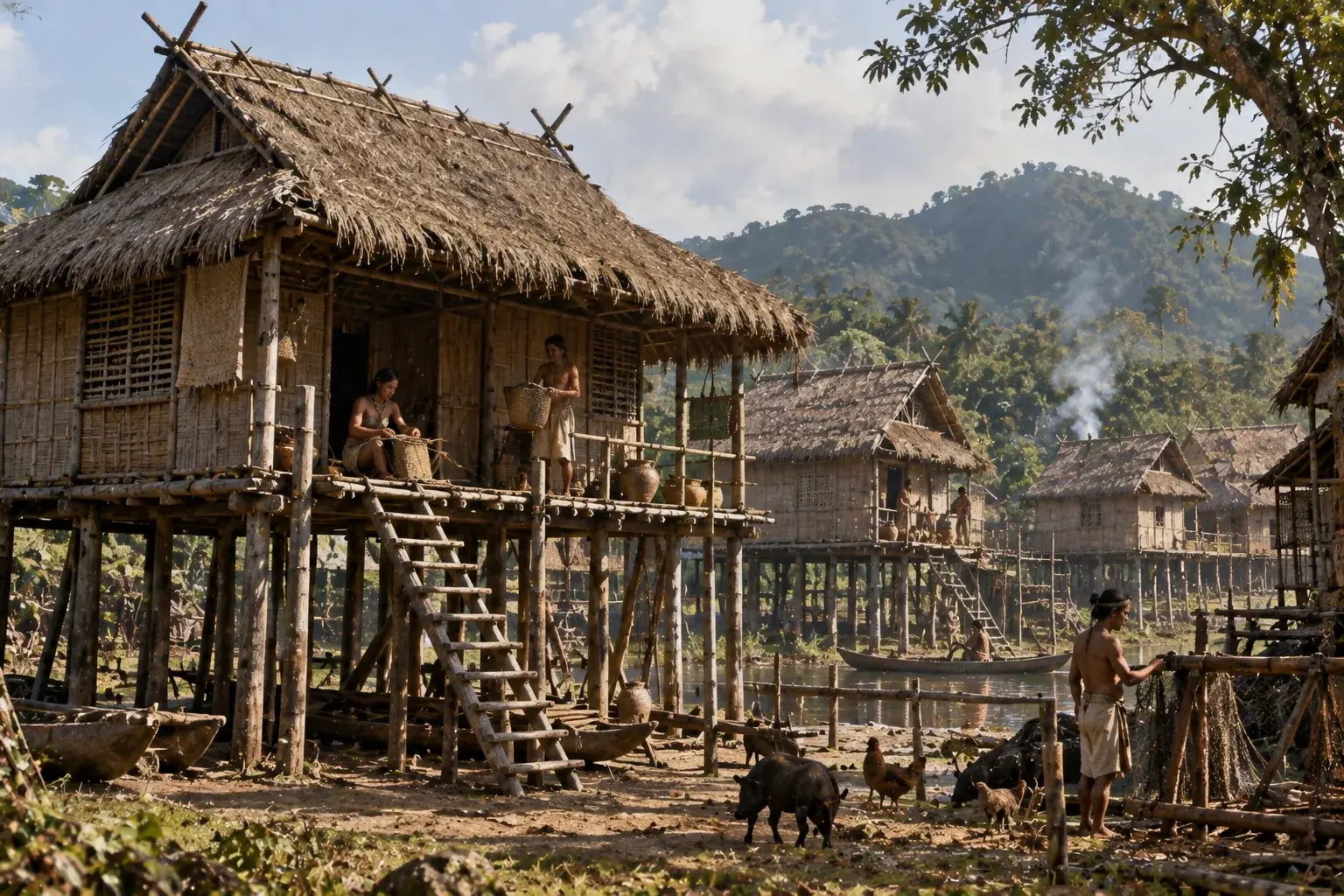
Plains villages like those of the Siraya raised their homes about two meters off the ground on stilts.
Land was organized in rings, with gardens and orchards closest to the village, which were rotated through fallow cycles. Beyond them were fields of fibers and plants reserved for the community's exclusive use, and beyond that, the shared hunting grounds. Deer were the center of the economy, with villagers hunting Formosan sika deer, sambar and Reeves's muntjac, and farming millet. Rice and sugar were grown, but mostly for making wine.
Many Plains societies were matrilineal, with a man marrying into his wife's household after a courtship in which the woman could reject as many suitors as she liked. Among the Siraya, couples did not marry until their mid-30s, once the man was done with military service and headhunting duties. Men hunted and fought while women farmed, cooked and sewed, and often served as priestesses. Among many Plains peoples, only women called inibs could communicate with the spirit world.
Early Chinese Contact With Taiwan
Chinese records make mentions of eastern islands for centuries before anyone settled Taiwan, but historians dispute which ones actually mean Taiwan. Troops from the Eastern Wu kingdom reached an island called Yizhou in 230 and brought back thousands of captives, losing most of their soldiers to disease. The Book of Sui describes expeditions in the early 7th century to a place called Liuqiu, whose people used stone blades, grew rice and millet, and had no writing. This may have been Taiwan or the Ryukyu Islands.
Firmer evidence comes later. Chinese pottery shows that merchants were visiting by the 1340s, and by the 16th century Fujianese fishermen, traders and pirates were regular visitors to the southwest. Some merchants knew the Formosan languages well enough to trade directly, exchanging iron, cloth, salt, porcelain and agate beads for deer meat, hides, horns, sulfur and gold. Deerskins became particularly valuable as they could be sold on to Japan at a large profit.
When the Dutch showed up in 1623, they found somewhere between 1,500 and 2,000 Chinese on the island, most of them seasonal fishermen, hunters and traders.
Dutch Colonial Rule and the Siraya (1624–1662)
The Dutch East India Company set its colony near modern-day Tainan, in the Siraya country. The villages of the Siraya were not a united front; Sinckan was at war with Mattau and its ally Baccluan, and Soulang was trying to stay neutral. In 1629, warriors of Mattau massacred a Dutch expeditionary force, and other villages were emboldened.
The Dutch retaliated with reinforcements from Batavia, burning Mattau to the ground. Mattau was the strongest village in the area, and its defeat brought a wave of peace offerings, and it marked the beginning of Dutch control over large parts of the island. The Spanish held a small outpost in the north around Keelung, but a combined Dutch and indigenous force drove them out in 1642.
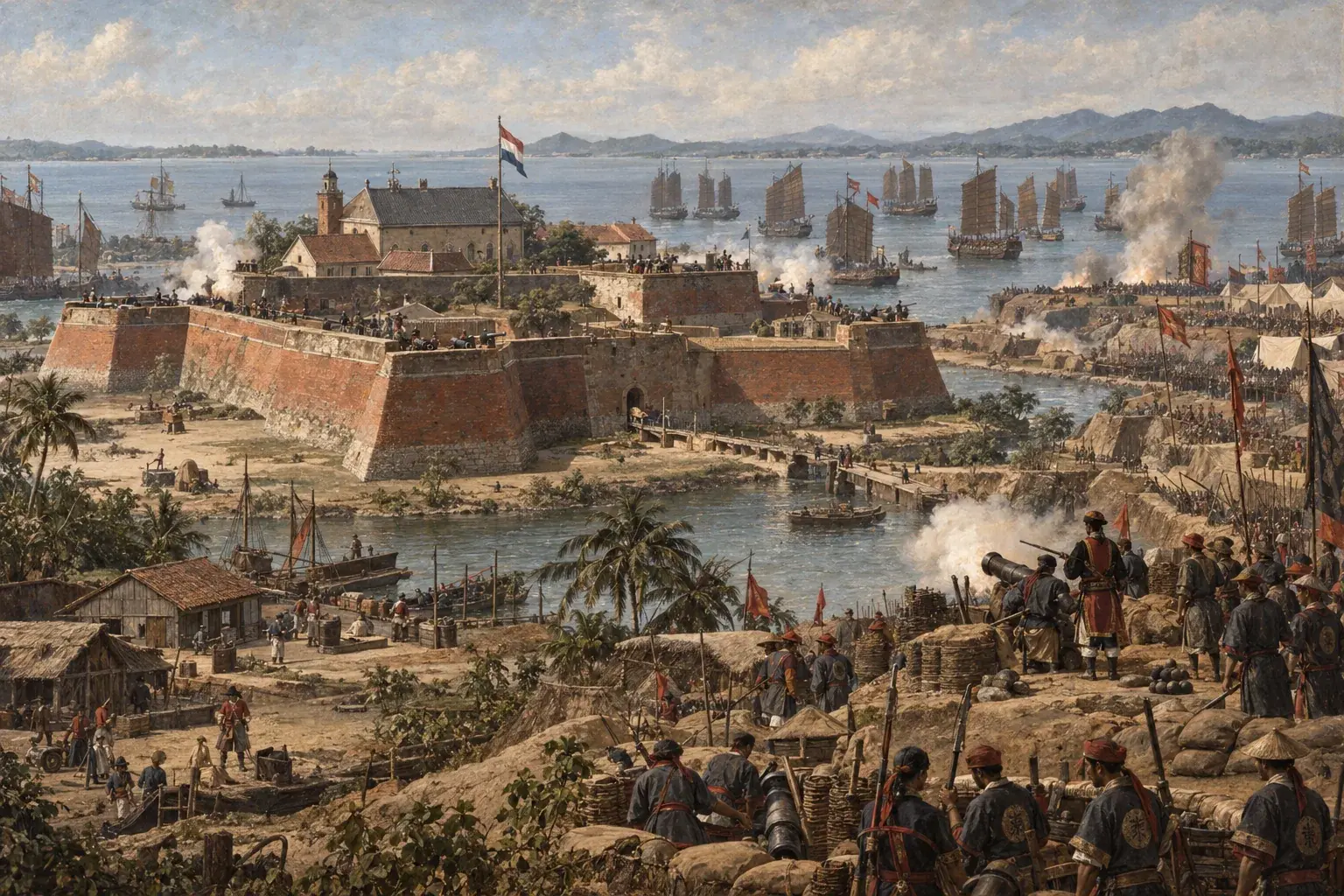
Fort Zeelandia in Anping was the Dutch East India Company's stronghold until Koxinga's siege ended Dutch rule in 1662.
The Dutch have a mixed legacy; they built schools and churches, and missionaries created a romanized script for the Siraya language, which was known as Sinckan writing and continued to be used into the 18th century. They also abolished Siraya marriage and childbirth taboos, and some younger Siraya adopted Dutch customs as a way to sidestep the age-grade system that prevented them from ascending to power.
The deer trade was far more damaging, with demand so great that by 1642, deer stocks were already collapsing, forcing many indigenous communities into farming just to survive. The Dutch encouraged Han Chinese immigration and used Han agents to collect taxes. Alliances, however, were not always along ethnic lines. When Han farmers rose up in the Guo Huaiyi Rebellion, it was crushed by 120 Dutch musketeers fighting alongside loyal Han and some 600 indigenous warriors.
Koxinga and the Kingdom of Tungning (1662–1683)
The Dutch era ended when the Ming loyalist Zheng Chenggong, better known as Koxinga, drove them out in 1662. Many indigenous villages that had fought for the Dutch switched sides during the siege of Fort Zeelandia. Some celebrated the end of compulsory Dutch schooling by hunting down Dutch residents and destroying their Christian textbooks.
Koxinga's son Zheng Jing sent teachers and farming instructors to indigenous villages and set up schools that taught Chinese and the Confucian classics. The Zheng regime also brought some 70,000 soldiers to the island and began clearing land at a furious rate to feed them. This expansion came at indigenous expense and triggered numerous rebellions. In a campaign against the Shalu people near modern Taichung, several hundred were killed. By 1684, farmland in Taiwan was three times greater than at the end of the Dutch era.
Qing Dynasty Rule and the Quarantine Policy (1683–1895)
After the Qing defeated the Zheng regime in 1683, Taiwan entered two centuries of imperial rule that were anything but calm. A popular saying captured the spirit of the time: an uprising every three years and a rebellion every five.
What few people realize is that for much of this period, the Qing actively limited settlement. Emperors Kangxi, Yongzheng and Qianlong were concerned that encouraging settlement would only cause more instability. Settlers needed permission to go beyond the Dajia River, marriage between settlers and indigenous people was banned as a means of obtaining land, and boundary lines marked by stone stelae kept Han farmers out of indigenous territory. Settlers continued to cross, however, and the boundaries had to be re-established in 1750, 1760, 1784 and 1790.
The Qing often recognized the claims of the Plains peoples to their deer fields, and communities commonly leased land to Han farmers while retaining ownership of the subsoil, an arrangement known as "two lords to a field." In practice, many Plains peoples were cheated or coerced into selling cheaply. Indigenous communities did rebel, however; the Taokas-led Dajiaxi revolt of 1731 to 1732 briefly drew five ethnic groups into rebellion. However, most uprisings in Qing Taiwan were initiated by Han settlers rather than indigenous people.
This cautious approach began to change in the 19th century, when pirate threats convinced the court to formally absorb Gamalan, the Kavalan homeland in today's Yilan County, in 1809 and 1810. By the end of the era, most Plains peoples had been largely assimilated into Han culture, and only about 20 to 30 percent could still speak their own languages.
The Mudan Incident and the Qing Push Into the Mountains
A shipwreck changed everything. In 1871, 54 Ryukyuan sailors who survived hitting southern Taiwan were killed by Paiwan villagers from Mudan. Japan used the killings as an excuse to invade southern Taiwan in 1874, occupying it for six months and arguing that the area was not truly part of the Qing empire at all. The Qing ended up paying an indemnity to get the Japanese to leave.
The lesson learned was simple - that Japan coveted Taiwan because the land was too empty. The Qing lifted its ban on travel to the island in 1875, built mountain roads and launched campaigns to bring indigenous peoples under control. Governor Liu Mingchuan pushed the issue further after 1885, sending 17,500 soldiers on more than 40 military campaigns between 1884 and 1891. A third of that force ended up killed or disabled. Few settlers were willing to follow and Liu resigned in 1891, having seen little return for the expense.
Did Taiwan's Mountain Peoples Flee the Plains?
A popular long-standing belief is that the Highland peoples were once Plains peoples driven into the mountains by Han settlers. Most researchers dismiss the stronger version of this theory. Highland peoples display physical traits and material cultures that have been adapted to life at high elevation, and linguistic and archaeological evidence points to indigenous peoples moving around the island for more than 3,000 years.
That being said, some Plains families did relocate inland into the Yilan plain in 1804 and the Puli basin in 1823 and 1875 in groups of hundreds rather than entire communities. The "displacement" may also reflect an older Plains habit of retreating into the foothills during headhunting season. When the Dutch attacked Mattau in 1636, most of the village simply withdrew to the hills. Anthropologist John Shepherd's detailed work shows that most Plains peoples actually stayed put, married Hakka and Hoklo immigrants and gradually took on a Han identity.
Headhunting Traditions Among Taiwan's Indigenous Peoples
Headhunting was practiced by nearly every indigenous group on Taiwan, with the Tao of Orchid Island being a notable exception. It was associated with notions of bravery and spiritual power. Groups that followed the Gaya belief system held that a man who had never taken a head would not be able to cross the rainbow bridge into the spirit world after death. Each group had its own origin story about how the practice began.
Taking a head was associated with good fortune and transferring the victim's spiritual strength to the hunter. Heads were often ceremonially "invited" to join the community and look after it. Han camphor workers pushing into mountain forests were frequent targets, and the practice did much to bolster the Qing-era stereotype of the "violent" indigenous highlander.
Some of the most lurid claims repeated about headhunting are based on thin sourcing and should be treated with caution. What is clear is that the practice was extinguished under Japanese rule by the 1930s, and as recently as the early 2000s, some elders could still remember it firsthand. The last groups to practice it were the Paiwan, Bunun and Atayal.
Japanese Colonial Rule and the Musha Incident (1895-1945)
Taiwan became Japanese property under the treaty of Shimonoseki in 1895, and the Aboriginal peoples who had largely kept their autonomy under the Qing suddenly found themselves in much more aggressive hands. The Japanese, stung by the Mudan massacre, described the Aboriginal people in early documents of their occupation as extermination targets.
Control was established by anthropologists, enforced through cultural conversion and achieved by military action. In 1906, Japanese troops fought off and expelled the Bngciq Atayal in order to reach valuable camphor forests; this is known as the Camphor War. Following the seizure of Aboriginal rifles in 1914, the Bunun chief Raho Ari led a guerrilla resistance which lasted two decades and involved attacking police stations from a mountain base at the source of the Laonong River. Armed guards and electric fences were installed throughout the mountains.
A famous revolt took place in 1930, when Seediq fighters under Mona Rudao attacked Japanese administrators. The Japanese reaction was overwhelming, involving field guns, bombing raids and poison gas. The revolt was suppressed and the Seediq community destroyed. The Aboriginal people's land was legally confiscated by the Japanese and they were confined to reserves one-eighth the size of their ancestors' territory.
Japanese authorities promoted a policy of cultural revolution, forbidding traditional tattooing and urging Aboriginal youths to replace headhunting with education. By the 1930s a concerted effort was being made to inculcate a Japanese identity, and by World War II young Aboriginal men whose fathers had died at Japan's hands were volunteering for special military units. Japanese troops also abducted Aboriginal women for service as "comfort women" in military brothels. The legacy of the Japanese occupation is complicated, with some elderly Aboriginal people still harboring a fondness for the Japanese.
Kuomintang Rule and Forced Assimilation (1945-1987)
When the Kuomintang (KMT) took over Taiwan in 1945 and retreated there in 1949 after losing the civil war, it had plans for building a single Chinese identity. The Aboriginal people were expected to accept Mandarin, Chinese history and KMT values, often taught by unqualified instructors. School curricula stressed the Wu Feng legend, a tale of a Han official who sacrificed himself to end headhunting, which many Aboriginal people now find distasteful. A 1951 campaign urged assimilation; one saying of the time was to "make the mountains like the plains."
Names were a particular issue, as from 1946 Aboriginal people could not use their traditional names on official documents. This was not rescinded until 1995, and even today household registration forms allow only 15 characters for a name, insufficient for many Aboriginal names written in Chinese characters. Prejudice was rife; a 1994 survey found that 71 percent of families would object to a daughter marrying an Aboriginal man.
The Indigenous Rights Movement and Taiwan's Democratic Transition
The lifting of martial law in 1987 opened the door for political activism, though the Aboriginal people had already begun organizing before then. In December 1984, with Presbyterian Church in Taiwan assistance, the Alliance of Taiwan Aborigines was formed to deal with issues of land rights, economic injustice, prostitution and racism.
The movement grew rapidly; the return our land campaign of 1988 sent an envoy to the UN Working Group on Indigenous Populations and campaigned for constitutional safeguards. These were largely successful, with school curricula changed from 1998 to reflect a more sympathetic view of the Aboriginal people, romanized names allowed on official documents and a constitutional amendment protecting Aboriginal languages and culture.
On August 1, 2016, President Tsai Ing-wen declared Indigenous Peoples' Day and made an official apology; many felt this was insufficient, coming as it did in the former seat of the Japanese governor-general and with mostly government figures in attendance. Kumu Hacyo, president of the Indigenous Transitional Justice Alliance, called it "a political show that was put on in an extremely bureaucratic fashion."
The courts have also taken steps to protect the Aboriginal people. In 2021, the Constitutional Court decided that while the government could regulate Aboriginal hunting and firearms, it should create new regulations which take traditional practices into account. This was in response to a 2015 conviction of a Bunun hunter, who was later pardoned by the president. In 2022 the court overturned a provision which meant that a child of mixed Aboriginal and non-Aboriginal heritage could not be considered Aboriginal unless they took an Aboriginal surname; since Taiwanese children usually take their father's surname, this was seen as unfair to mothers.
The Indigenous Voting Paradox in Taiwanese Politics
One curious aspect of indigenous politics is the apparent contradiction between indigenous voters and their political options. The six seats in the 113-member Legislative Yuan set aside for indigenous voters have long been dominated by the Kuomintang and its pan-blue allies, despite this party's assimilationist policies of the past.
Anthropologist Scott Simon has called this a "paradox of indigeneity". The Democratic Progressive Party (DPP) has adopted indigenous rhetoric and made public apologies, but many indigenous voters remain unconvinced. Part of the reason relates to economics, as indigenous areas tend to be poorer and more dependent on patronage networks established by the KMT over several decades. Another factor is ethnicity; many indigenous people view Taiwanese nationalism as favoring the Hoklo majority, who have historically been at odds with the indigenous population.
Land, Nuclear Waste and Economic Inequality
The economic boom in Taiwan in the late 20th century left many indigenous villages stranded. With poor educational opportunities, younger people moved to the cities for low-wage construction jobs and factory work, becoming renowned as expert ironworkers. These opportunities came at a price, however, as villages were depleted of their young people and the resulting isolation led to a loss of language. Unemployment among indigenous workers rose from about 4.6 percent in 2007 to nearly 8 percent in 2008.
The situation is most dire on Orchid Island, which is home to about 4,000 Tao. Construction began in 1978 on a facility the Tao were promised would be a fish cannery; when it was finished in 1982, it turned out to be a storage site for 97,000 barrels of low-level nuclear waste generated by Taiwan's power plants. The Tao have since been at the forefront of the anti-nuclear movement in Taiwan. The lease on the land has expired, but a new location has yet to be chosen.
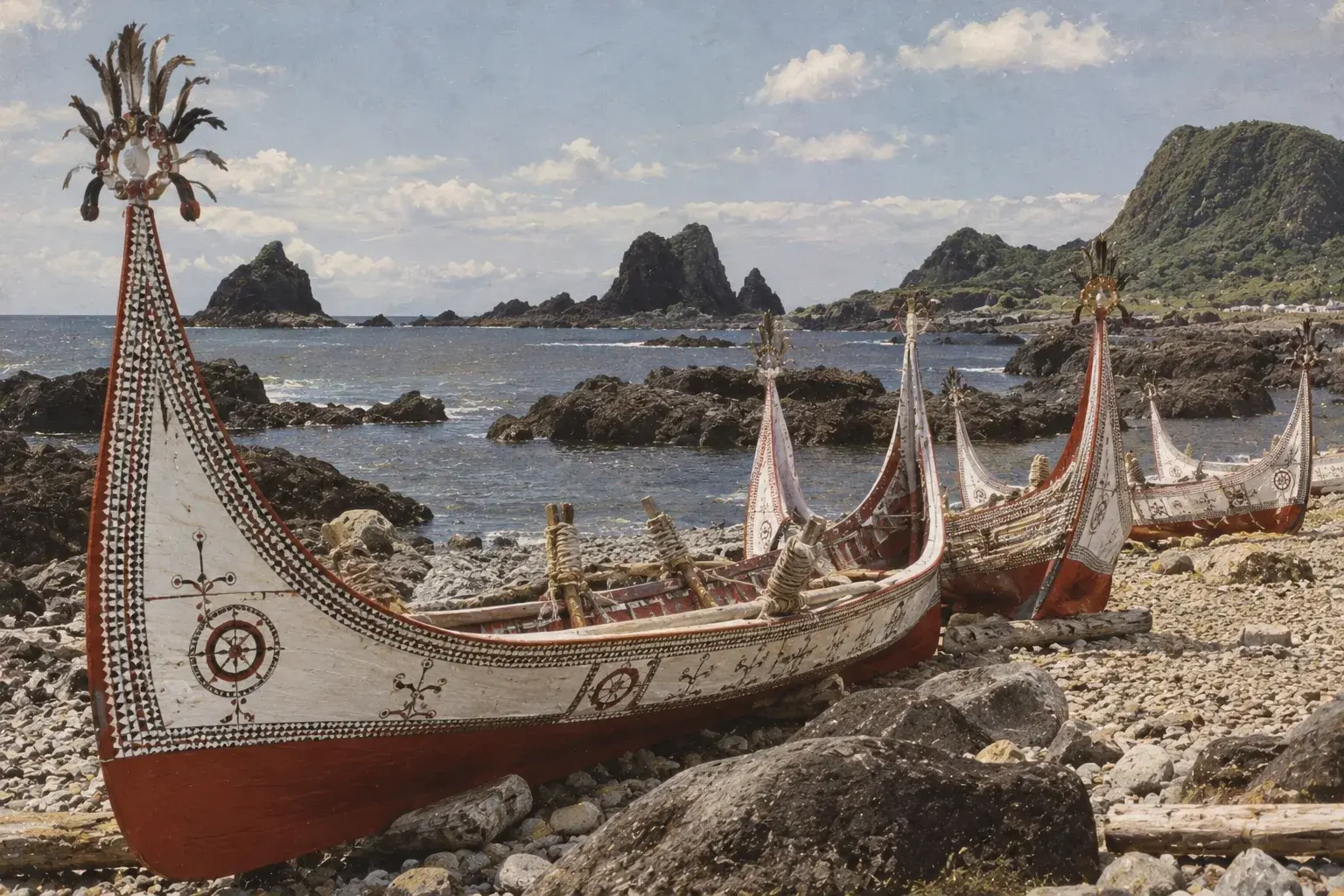
The Tao of Orchid Island, known for their painted plank canoes, have fought the island's nuclear waste site since the 1980s.
National parks have been another thorn in the side of the indigenous population, as they have been established on indigenous land against the wishes of the inhabitants and occasionally forced them to relocate; one Taroko activist referred to the national park as environmental colonialism.
Christianity, Traditional Belief and Indigenous Religion in Taiwan
About 70 percent of Taiwan's indigenous population is Christian, mainly of the Catholic and Presbyterian faiths. This is in part because when European missionaries returned to Taiwan in the 1860s, many of the early converts were displaced Plains Aboriginal people seeking protection from Han settlers, and the missionaries' legal privileges allowed them to deal with the Qing authorities. Many of these congregations have preserved indigenous languages and cultures.
Traditional beliefs varied widely among the different groups, although in general many attached spiritual significance to birds and their habits. The Paiwan and other southern tribes revere the hundred-pacer snake and incorporate the diamond pattern of its scales into their designs. Some elements have been incorporated into Han beliefs; the Siraya fertility spirit Ali-zu has been adopted into the local Han pantheon in some areas and female spirit mediums in the Han tradition may derive from the inibs of the Plains Aboriginal people.
Indigenous Pop Music and the "Return to Innocence" Lawsuit
Indigenous musicians have proven to be some of Taiwan's most successful performers. A-mei, of Puyuma heritage, is one of the best-known singers in the Chinese-speaking world, and performers such as Samingad, A-Lin and Landy Wen have spearheaded a new wave of indigenous pop music, while a dedicated radio station broadcast indigenous music from 2005.
The most famous indigenous recording, however, was made without the knowledge or permission of its singers. The German group Enigma sampled an Amis chant provided by Difang and his wife Igay for the song Return to Innocence, which was played at the Atlanta Olympics in 1996. The two singers took the record company to court and reached an out-of-court settlement in 1999, which gave them credit on the track and an undisclosed payment. Contemporary indigenous art has its own major showcase in the Pulima Art Festival, a biennial event begun in 2012 which takes its name from a Paiwan word meaning highly skilled creative people.
The Genetics Debate Over Taiwanese Han Ancestry
Genetics has proven to be a contentious issue in Taiwan, where researcher Marie Lin found in 2007 that 85 percent of Taiwanese Han had some Aboriginal ancestry, a figure which has been eagerly adopted by people wishing to prove that Taiwanese are a distinct people from the Chinese.
While the theory has been popular, especially among those who believe Taiwanese Han have indigenous roots, genetics research has not been supportive. Other researchers have found errors in Lin's calculations and her highest percentage was published in an editorial which had not been peer-reviewed. Whole genome studies have since shown that Taiwanese Han are overwhelmingly of mainland Chinese origin, with very little Aboriginal admixture, and a 2021 study co-authored by Lin herself found Austronesian-related genes in the Taiwanese Han population, but these are also found in the mainland Han and may date from southern China's indigenous population mixing with Han migrants some 4,000 years ago. Historian Su-Jen Huang has also questioned the idea that there was substantial intermarriage between Han men and Aboriginal women.
The Pingpu Indigenous Peoples Cultural Association's Alak Akatuang has been one of the fiercest critics of the "we are all Indigenous" idea. He argued that Taiwanese identity should not be founded on bloodlines at all. For the Plains Aboriginal people, who were dispossessed of their land and language by Han settlers, to hear that they were all one people with the same ancestry came as something of a shock.
What the Siraya Recognition Means for Taiwan's Indigenous Future
Over four centuries of colonial rule in Taiwan, almost every government decided for itself what constituted an indigenous people and what they should be called - "cooked" and "raw", Takasago or "mountain compatriots". The significance of the Siraya recognition lies in its breaking of the pattern, as a Plains people long considered fully assimilated with a language thought extinct won official status by virtue of their own research and advocacy. It will not be the end of the story, as other Plains groups await recognition, legislative seats remain a bone of contention between political parties and the Aboriginal people still have to deal with the legacy of nuclear waste on Orchid Island, but in a country where the first peoples are the ancestors of one of the world's largest language families, the fact that more of them are reclaiming their heritage is something to take notice of.