Wang Khan was the most powerful man on the Mongolian steppe when Genghis Khan was still a penniless young man with a borrowed reputation. His name was Toghrul, he led the Kereit, and for roughly two decades he was the patron who made Temujin's career possible. In 1203 his protege destroyed him.
He was also, according to a great deal of medieval European writing, Prester John: the fabulously rich Christian priest-king of the East whose forged letters circulated through Europe for centuries. That identification is wrong in its details and revealing in its origins, and it rests on one genuine fact. The Kereit really were Christian, and had been for close to two hundred years.
The Kereit left no chronicle of their own. What we know comes from the Mongols who conquered them, the Persian historian Rashid al-Din who wrote for their conquerors' descendants, Chinese court records, and a handful of Syriac church letters preserved by a thirteenth-century bishop. Those sources disagree with each other often enough that several dates below are approximate, and the article says so where it matters.
Who the Kereit Were
The Kereit were one of the five dominant confederations on the twelfth-century steppe, alongside the Naiman, the Merkit, the Tatars and the Mongols. Their territory was large, covering much of what is now Mongolia, and they are usually located along the Orkhon and Tuul rivers and the upper reaches of the Onon and Kherlen. Whether they were Turkic or Mongol in origin is still argued; their rulers bore the Turkic title buiruk, meaning commander, and scholars have taken that both ways.
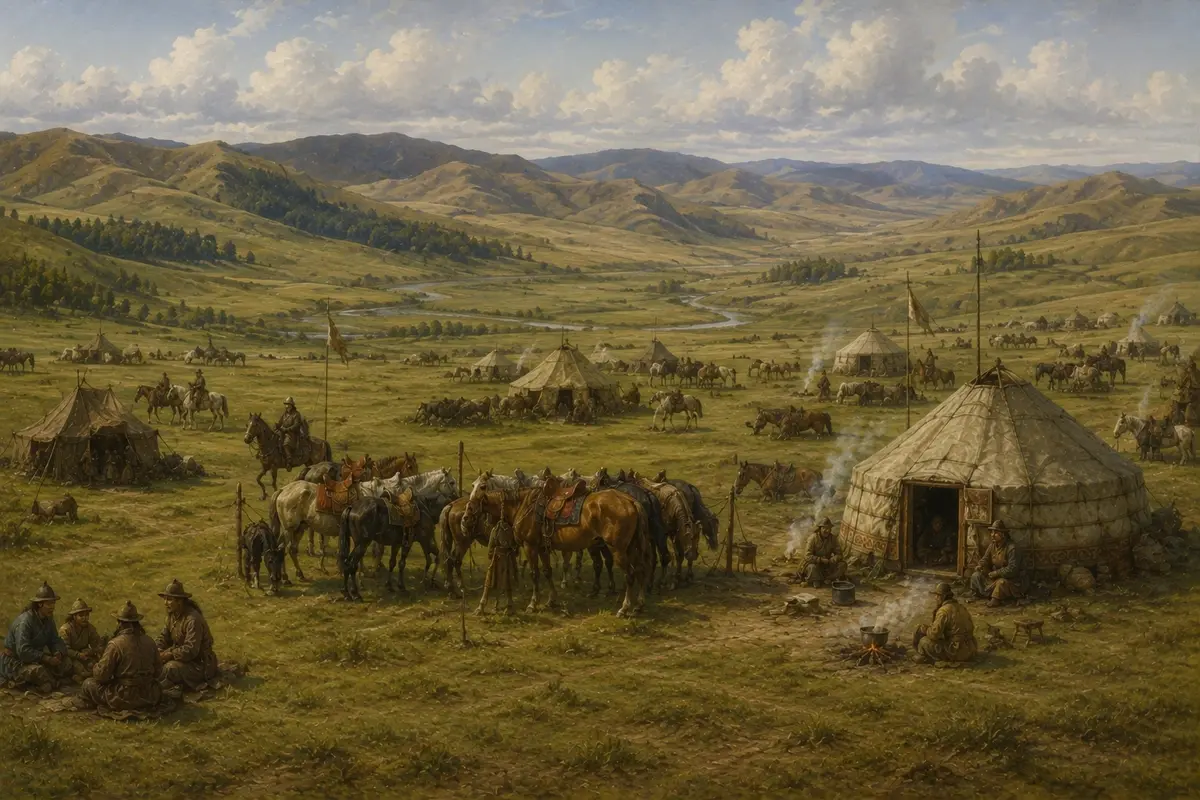
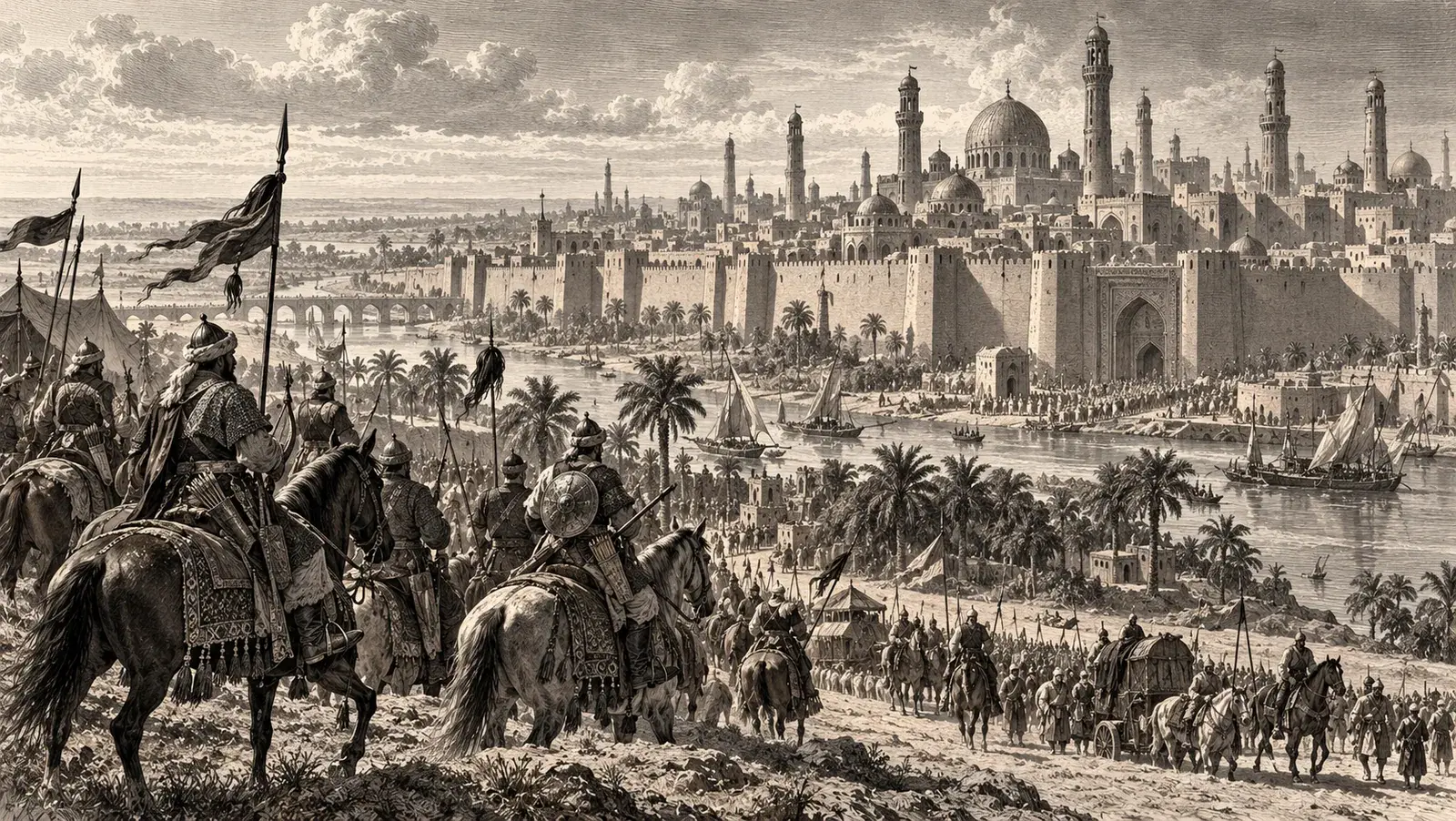
The Kereit heartland lay along the Orkhon and Tuul rivers, close enough to the Jin frontier for its khans to matter in northern China.
Toghrul's own court sat in the Black Forest on the Tuul, near the site of modern Ulaanbaatar. It is worth being precise about that, because Kereit power is often placed at Karakorum, and it was not there. Karakorum was built as the Mongol imperial capital on Ogedei Khan's orders in 1235, more than three decades after Toghrul's death. The Orkhon valley had held capitals long before that, including the Uyghur city of Ordu-Baliq in the eighth and ninth centuries, so the region was a seat of power for centuries. The specific city was not.
A Letter to Baghdad About Lent
The Kereit conversion to Christianity is one of the better-documented events in early steppe history, and the document is a piece of ecclesiastical correspondence about diet.
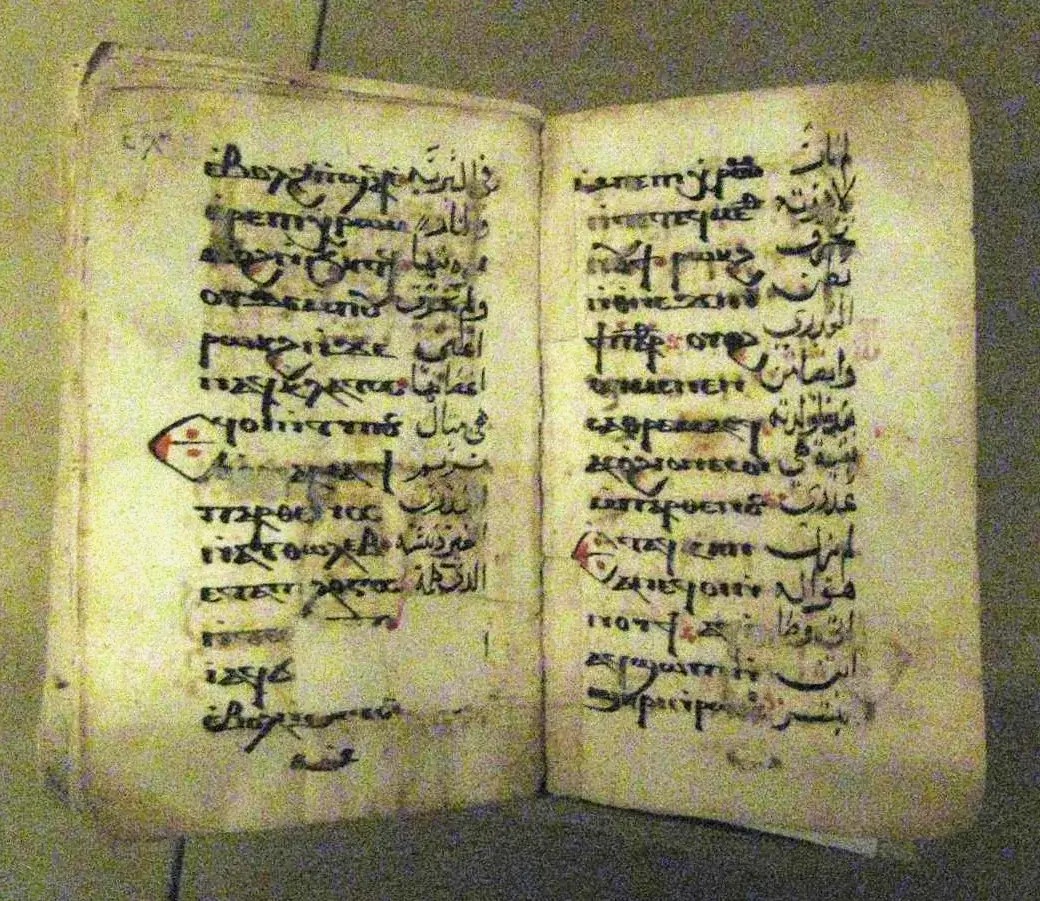
Between 1007 and 1009, Abdisho, the Metropolitan of Merv, wrote to Yohannan V, Patriarch of the Church of the East in Baghdad, reporting that around two hundred thousand Kereit had converted. His letter asked for guidance on a practical problem. The Kereit lived almost entirely on milk and meat, and Lent required them to give up both. The patriarch's answer permitted them a modified fast.
The tradition they joined was the Church of the East, which Europeans called Nestorian after the doctrinal split at the Council of Ephesus in 431. It had spread east along the trade routes for centuries, and its missionaries had real success among Turkic peoples. The Kereit are the most famous case but not the only one; the Naiman and Merkit were also evangelised in the same period.
The effect is visible in the ruling family's names. Toghrul's grandfather was Marqus, which is Marcus. His father was Qurchaqus, which is Cyriacus. A Syriac Orthodox historian, Bar Hebraeus, preserved both the letter and a founding legend in which a Kereit khan lost his way hunting in a snowstorm and vowed to convert if he survived.
What none of this establishes is that Toghrul himself was a practising Christian. The Mongol sources say nothing at all about his religion. The Kereit were a Christian people, and their last khan came from a Christian family, and that is as far as the evidence goes.
Marcus Buyruq Khan and the Kumis Skins
Toghrul's grandfather Marcus is treated as the founder of the Kereit khanate, ruling around 1100, and he also led the Zubu confederation against the Liao dynasty of northern China. That combination got him killed. He was seized and executed around 1100, with the sources crediting the Liao court with the killing and Tatar betrayal with handing him over.
It was the standard fate of a steppe khan who became inconvenient to a Chinese dynasty. A generation later the Mongol khan Ambaghai was taken by Tatars, sent to the Jin court and nailed to a wooden donkey, which was the prescribed execution for a rebel of his rank.
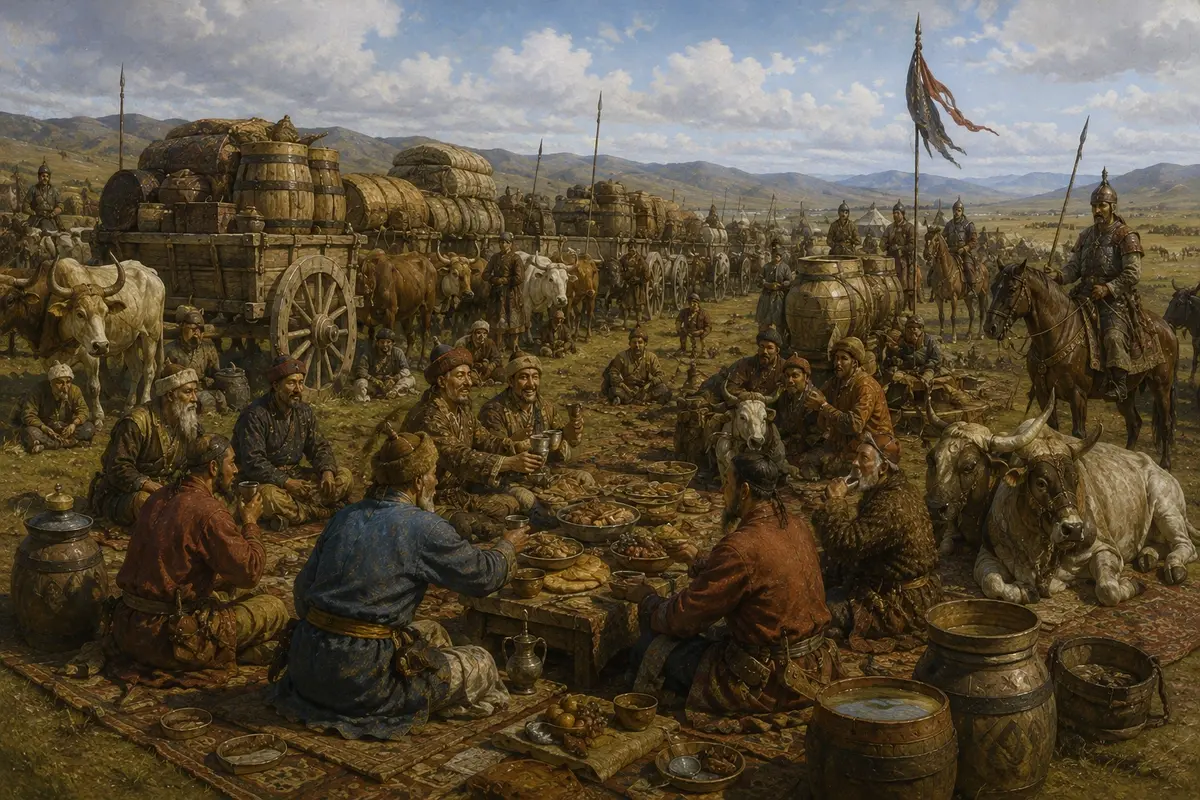
The sources describe a hundred great skins of kumis brought to the feast, and what came out of them when the drinking was well under way.
His widow's response is the best story in the Kereit record. She sent word to the Tatar khan proposing a banquet in his honour, and offered the makings of it: a hundred sheep, ten mares and a hundred large skins of kumis, the fermented mare's milk the steppe ran on. The Tatars read the whole thing as a gesture of Kereit submission and accepted.
The skins were full of armed men. When they were carried forward at the height of the feast the warriors came out of them and killed everyone present, the khan included. It is a story with obvious literary polish on it, and it is also the kind of thing that plainly did happen in that world often enough for the shape to be familiar.
Toghrul's Very Bad Childhood
Toghrul was born around 1130 near the Tuul, into a family that was about to spend forty years tearing itself apart.
He was captured by the Merkit as a small child and reduced to slavery, then either ransomed or escaped. At thirteen he was captured again, this time by the Tatars, who also took his mother. He got back to the Kereit eventually, which is more than most people in that position managed.
His father Cyriacus had a great many sons, forty by one account, and tried to solve the succession by dividing the khanate between them, with Toghrul given the western portion as a subordinate to his uncle. Cyriacus died in 1165, and Toghrul declined to accept the arrangement.
Killing His Brothers to Take the Throne
Between 1165 and about 1171 he killed a number of his brothers and claimed sole rule. The remaining opposition gathered around his uncle, remembered by the title Gur Khan, who eventually outmanoeuvred him and drove him out of his own country.
What restored him was a Mongol army. Yesugei, chief of the Borjigin and the leading man among the Mongols at that point, took Toghrul in, supplied him with troops, helped him recover the khanate and drove the uncle into exile in his turn.
The two men then swore the anda bond, the formal oath of blood brotherhood, which on the steppe carried obligations closer to kinship than to friendship. Yesugei was poisoned by Tatars a few years later. The debt outlived him, and his son collected on it.
The Sable Coat and a Restored Alliance
Temujin came to Toghrul around 1178, roughly sixteen years old, with no herds, no following and nothing to offer except a claim on an old obligation. What he did have was a black sable coat, given as a wedding gift by his new mother-in-law, and it was the most valuable object he owned.
He gave it away. Presenting it to Toghrul, he asked for protection on the strength of the anda bond with his father, and Toghrul accepted, taking to calling him son. It was the first genuinely shrewd political act on record from him: a man with one asset traded it for a patron with an army.
The patron paid out almost immediately. When the Merkit raided Temujin's camp and carried off his wife Borte, Toghrul supplied a reported twenty thousand Kereit horsemen and suggested bringing in Jamukha of the Jadaran as well. The Merkit were scattered and Borte was recovered. For the next two decades the two men campaigned together against the Merkit, the Tatars and the Naiman, and Temujin was consistently the junior partner.
Erke Qara and the Years in Exile
The exile in this story belongs to Toghrul, not to Temujin, and it came in 1194.
One of the brothers who had survived the purge of the 1160s was Erke Qara. He had taken refuge with the Naiman, and he came back with Naiman backing and drove Toghrul out of the khanate. Toghrul spent the following years wandering, reportedly getting as far as the territory of the Kara Khitai in the west before turning back with almost nothing.
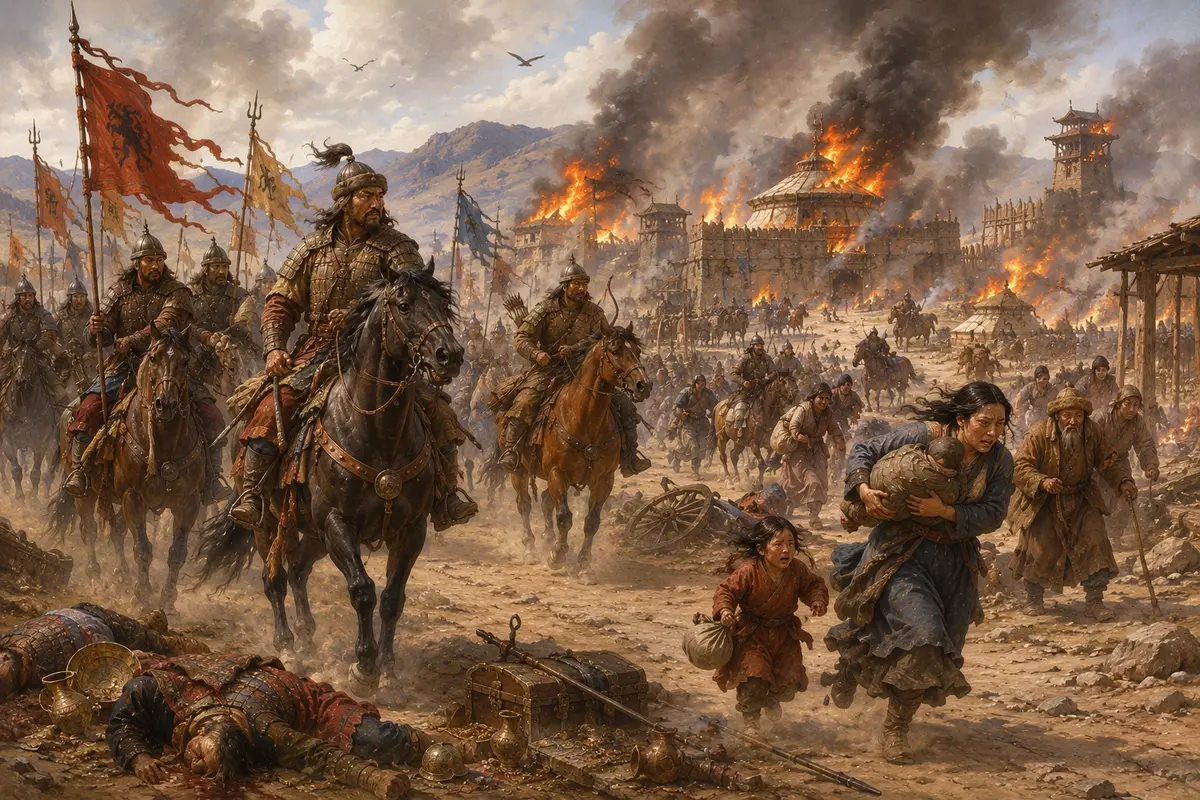
Erke Qara returned in 1194 with Naiman troops behind him and took the khanate from his brother, who spent the next four years landless.
What brought him back was Temujin, repaying the arrangement in the same currency he had received it. He raided the Merkit, handed the plunder to Toghrul, and let him distribute it among Kereit chiefs to buy their loyalty back. It worked. The Kereit returned to Toghrul in full by about 1198, and Erke Qara fled to the Naiman a second time.
This is the point at which the relationship inverts. Toghrul had begun as the great man doing a favour for a dead friend's son. By 1198 he held his throne because that son had bought it back for him.
How Toghrul Became Wang Khan
The title he is remembered by did not come from the steppe. It came from Beijing.
In 1195 the Tatars rebelled against the Jin dynasty, and the Jin commander on the frontier sent to Temujin for help. Temujin and Toghrul joined the campaign and crushed the Tatars, which suited all three parties: the Jin got a rebellion put down, Toghrul got a victory, and Temujin got revenge on the people who had poisoned his father.
In 1196 the Jin court rewarded Toghrul with the Chinese title Wang, meaning king or prince. From then on he appears in the records as Wang Khan, or Ong Khan in the Mongol form. He was somewhere around sixty-five years old, and it was the high point of his life.
Wang Khan and the Prester John Legend
Europe's Prester John was a Christian priest-king somewhere beyond Persia, ruler of an impossibly wealthy eastern kingdom, and a potential ally against Islam. The identification of him with Wang Khan is very well travelled and cannot be right, for a simple reason: the legend was already circulating before Toghrul came to power.
The first record of it is in the Chronicon of Otto of Freising, written in 1145. Otto had met Hugh, bishop of Jabala, at the papal court in Viterbo, and Hugh reported a Nestorian ruler beyond Persia and Armenia who was both priest and king, and who had beaten the kings of the Medes and Persians in battle.
The likeliest real event underneath that report is the Battle of Qatwan in 1141, fought north of Samarkand, in which Yelu Dashi of the Kara Khitai destroyed a Seljuq army. Yelu Dashi was a Buddhist of Chinese origin, not a Christian, but a number of his vassals were Nestorians, and it has been suggested that his title Gur-khan was twisted phonetically toward Yohanan and then Johannes. News of a great eastern ruler crushing Muslim armies was exactly what Crusader Europe wanted to hear, and it filled in the rest.
Around 1165 a letter began circulating, addressed to the Byzantine emperor Manuel I Komnenos and reaching Frederick Barbarossa and Pope Alexander III. In it, Prester John describes ruling the three Indias, living in a palace of ebony and precious stones, feeding thirty thousand people daily at his tables, and commanding seventy-two tributary kings, along with a fountain of youth and a supporting cast of giants and unicorns. It is a straightforward forgery, probably produced in Europe or Antioch, and it was believed for four hundred years.
Wang Khan was attached to the story only in the thirteenth century, once Europeans actually met the Mongols and started looking for the Christian king among them. William of Rubruck heard a version in which a lord of the Kereit was brother to King John. Marco Polo made Prester John the ruler Genghis Khan overthrew, which at least has the merit of pointing at a real man.
So the honest verdict is neither yes nor no. A genuinely Christian steppe confederation existed, its khan was genuinely powerful, and a legend that had nothing to do with him was draped over him afterwards by people who needed it to be true. By the mid-1300s the search had moved to Ethiopia and Wang Khan was dropped.
What Happened in 1203
The alliance came apart over the succession. Toghrul's son Senggum saw correctly that his father's protege had become more powerful than the Kereit and pressed him to break with Temujin. A marriage was proposed between the two families, and an ambush was laid for Temujin on his way to the wedding.
He was warned in time. The war that followed went badly for him at first and then decisively against the Kereit, and in 1203 the confederation was destroyed and absorbed into Temujin's following. Toghrul fled west with almost nobody. He ran into a Naiman patrol that did not recognise him, or did not believe him, and was killed on the spot at around seventy-three.
Three years later Temujin was proclaimed Genghis Khan. The Kereit, though, were not finished. Toghrul's brother Jaqa Gambu had a granddaughter, Sorghaghtani Beki, who was married to Genghis Khan's youngest son Tolui and became the mother of Mongke, Kublai and Hulagu. Within two generations the Christian Kereit line that Temujin destroyed was supplying the men who ruled from Beijing to Baghdad.